The Rover 75 (facelift 2004): A Swan Song of British Luxury
The Rover 75 (facelift 2004) represents a significant, albeit final, chapter in the storied history of the British automaker Rover. Introduced in 2004, this refreshed iteration of the executive sedan sought to refine an already distinctive package, offering a blend of traditional British elegance and contemporary engineering. Produced for a brief period from 2004 to 2005, the facelifted Rover 75 was a mid-size, four-door sedan primarily aimed at the European market, where it competed in a segment dominated by more established German rivals. Despite its relatively short production run, this final version of the 75, particularly the 1.8 T variant, encapsulated Rover’s ambition to deliver a refined and comfortable driving experience, serving as a poignant farewell to a brand that had been a cornerstone of the British automotive industry for decades.
The Rover 75, first launched in 1998, was lauded for its retro-inspired styling, luxurious interior, and comfortable ride. The 2004 facelift aimed to modernize its aesthetic while preserving its core identity. This particular model, equipped with the 1.8-liter turbocharged engine, offered a compelling balance of performance and efficiency, making it a practical choice for discerning buyers in its home market and across Europe. As a front-wheel-drive vehicle with an internal combustion engine, it adhered to conventional architecture, focusing on proven reliability and comfort over groundbreaking innovation, a characteristic often associated with the Rover brand.
Powertrain and Performance of the Rover 75 (facelift 2004) 1.8 T
At the heart of the Rover 75 (facelift 2004) 1.8 T model was Rover’s own 1.8-liter (1796 cm³ or 109.6 cu. in.) inline four-cylinder engine, designated by the code 18K4G. This unit was a testament to Rover’s engineering capabilities, featuring a DOHC (Double Overhead Camshaft) valvetrain with four valves per cylinder and a multi-port manifold injection system. What truly set this variant apart was the inclusion of a turbocharger and intercooler, which significantly boosted its output compared to the naturally aspirated 1.8-liter engine also available in the range.
The turbocharged engine produced a respectable 150 horsepower at 5500 rpm, translating to a power-per-liter figure of 83.5 Hp/l. More impressively, it delivered 158.58 lb.-ft. (215 Nm) of torque from a low 2100 rpm, providing excellent mid-range pull and making the car feel responsive in everyday driving conditions. This robust torque output contributed to a weight-to-torque ratio of 6.6 kg/Nm, indicating strong acceleration characteristics for its class.
Power was delivered to the front wheels via a smooth-shifting 5-speed manual transmission, offering direct engagement for the driver. This powertrain enabled the Rover 75 1.8 T to accelerate from 0 to 60 mph in a brisk 9.1 seconds, with a maximum speed of 130.49 mph (210 km/h). These figures placed it competitively within its segment, offering a sporty yet refined driving experience.
Despite its turbocharged performance, the 1.8 T engine demonstrated reasonable fuel efficiency for its time. The combined fuel consumption was rated at 29.4 US mpg (8.0 l/100 km), while extra-urban driving could see figures as high as 38.6 US mpg (6.1 l/100 km). In urban settings, consumption naturally increased to 20.8 US mpg (11.3 l/100 km). With CO2 emissions of 193 g/km, the vehicle met the Euro 3 emission standard, reflecting the environmental regulations of the early 2000s.
Design Philosophy and Interior Appointments
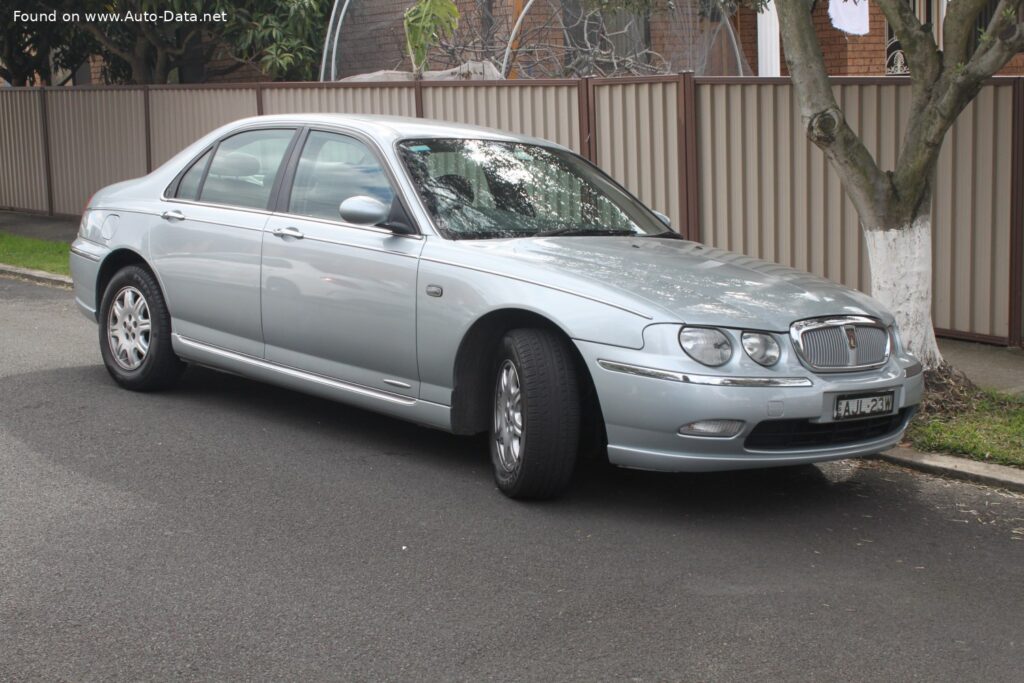
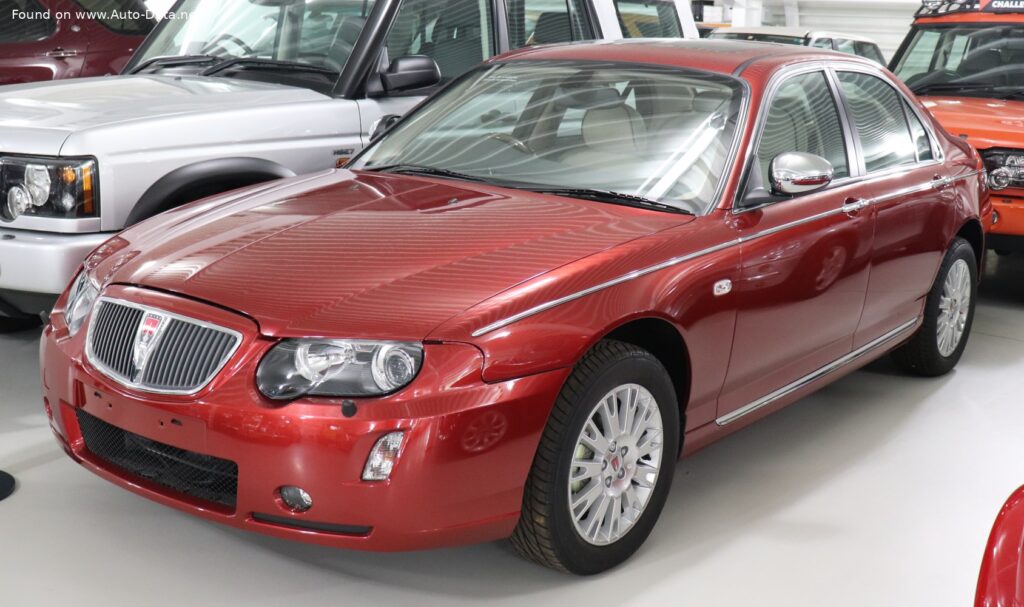
The Rover 75 (facelift 2004) maintained the distinctive and elegant styling that had garnered it praise since its original launch. Its body type remained a classic four-door sedan, designed to comfortably seat five occupants. The facelift introduced subtle changes, primarily to the front and rear fascias, aimed at giving the car a slightly more contemporary edge without abandoning its much-loved retro charm. These revisions included redesigned headlamps, a revised grille, and updated bumpers, which contributed to a more modern, yet still unmistakably British, appearance.
Measuring 186.97 inches (4749 mm) in length, 70 inches (1778 mm) in width (77.56 inches or 1970 mm including mirrors), and 54.84 inches (1393 mm) in height, the Rover 75 possessed a substantial road presence. Its long 108.11-inch (2746 mm) wheelbase contributed to both its spacious interior and its renowned ride comfort. The front and rear tracks, at 59.49 inches (1511 mm) and 59.21 inches (1504 mm) respectively, provided a stable and planted stance.
Inside, the Rover 75 continued its tradition of offering a refined and luxurious cabin. While specific material details are not provided in the technical data, Rover was known for its attention to detail, using high-quality fabrics, wood trim, and optional leather upholstery to create an inviting atmosphere. The emphasis was on comfort and quietness, with excellent sound insulation and ergonomically designed seating. Practicality was also a strong point, with a generous trunk capacity ranging from 15.26 cu. ft. (432 liters) to 23.8 cu. ft. (674 liters) with the rear seats folded (though the data specifies minimum and maximum, implying a flexible cargo space rather than just folded seats for a sedan).
In terms of chassis and safety, the Rover 75 featured an independent suspension setup both front and rear. The front utilized a McPherson strut system with coil springs and an anti-roll bar, while the rear employed an independent multi-link spring suspension with a stabilizer. This sophisticated arrangement contributed significantly to the car’s compliant ride and composed handling. Braking was handled by ventilated discs at the front and solid discs at the rear, complemented by an Anti-lock Braking System (ABS) for enhanced safety. The hydraulic power steering, a rack and pinion system, offered precise feedback and effortless maneuverability, with a minimum turning circle of 37.17 feet (11.33 meters).
Comprehensive Technical Specifications
| Category | Specification | Value (US/Imperial) |
|---|---|---|
| General Information | ||
| Brand | Rover | – |
| Model | 75 (facelift 2004) | – |
| Type (Engine) | 1.8 T (150 Hp) | – |
| Production Start | 2004 | – |
| Production End | 2005 | – |
| Powertrain Architecture | Internal Combustion engine | – |
| Body Type | Sedan | – |
| Seats | 5 | – |
| Doors | 4 | – |
| Performance Specifications | ||
| Fuel Consumption (Urban) | 11.3 l/100 km | 20.8 US mpg |
| Fuel Consumption (Extra Urban) | 6.1 l/100 km | 38.6 US mpg |
| Fuel Consumption (Combined) | 8.0 l/100 km | 29.4 US mpg |
| CO2 Emissions | 193 g/km | – |
| Fuel Type | Petrol (Gasoline) | – |
| Acceleration 0 – 60 mph | 9.1 sec | – |
| Maximum Speed | 210 km/h | 130.49 mph |
| Emission Standard | Euro 3 | – |
| Weight-to-Power Ratio | 9.4 kg/Hp | 106 Hp/tonne |
| Weight-to-Torque Ratio | 6.6 kg/Nm | 151.9 Nm/tonne |
| Engine Specifications | ||
| Power | 150 Hp @ 5500 rpm | – |
| Power per Liter | 83.5 Hp/l | – |
| Torque | 215 Nm @ 2100 rpm | 158.58 lb.-ft. @ 2100 rpm |
| Engine Layout | Front, Transverse | – |
| Engine Model/Code | 18K4G | – |
| Engine Displacement | 1796 cm³ | 1.8 Liters / 109.6 cu. in. |
| Number of Cylinders | 4 | – |
| Engine Configuration | Inline | – |
| Cylinder Bore | 80 mm | 3.15 in. |
| Piston Stroke | 89.3 mm | 3.52 in. |
| Compression Ratio | 9.2:1 | – |
| Valves per Cylinder | 4 | – |
| Fuel Injection System | Multi-port manifold injection | – |
| Engine Aspiration | Turbocharger, Intercooler | – |
| Valvetrain | DOHC | – |
| Engine Oil Capacity | 4.5 l | 4.76 US qt |
| Engine Oil Specification | Not specified in data | – |
| Coolant Capacity | 6.2 l | 6.55 US qt |
| Space, Volume and Weights | ||
| Kerb Weight | 1415-1530 kg | 3119.54 – 3373.07 lbs. |
| Max. Weight (GVWR) | 1940 kg | 4276.97 lbs. |
| Max. Load | 410-525 kg | 903.9 – 1157.43 lbs. |
| Trunk (Boot) Space – Minimum | 432 l | 15.26 cu. ft. |
| Trunk (Boot) Space – Maximum | 674 l | 23.8 cu. ft. |
| Fuel Tank Capacity | 65 l | 17.17 US gal |
| Max. Roof Load | 80 kg | 176.37 lbs. |
| Permitted Trailer Load (with brakes) | 1450 kg | 3196.7 lbs. |
| Permitted Trailer Load (without brakes) | 750 kg | 1653.47 lbs. |
| Permitted Towbar Download | 100 kg | 220.46 lbs. |
| Dimensions | ||
| Length | 4749 mm | 186.97 in. |
| Width | 1778 mm | 70 in. |
| Width (including mirrors) | 1970 mm | 77.56 in. |
| Height | 1393 mm | 54.84 in. |
| Wheelbase | 2746 mm | 108.11 in. |
| Front Track | 1511 mm | 59.49 in. |
| Rear Track | 1504 mm | 59.21 in. |
| Front Overhang | 915 mm | 36.02 in. |
| Rear Overhang | 1087 mm | 42.8 in. |
| Minimum Turning Circle | 11.33 m | 37.17 ft. |
| Drivetrain, Brakes and Suspension Specs | ||
| Drivetrain Architecture | Internal combustion engine drives front wheels | – |
| Drive Wheel | Front wheel drive | – |
| Number of Gears / Gearbox Type | 5 gears, manual transmission | – |
| Front Suspension | Independent, McPherson with coil spring and anti-roll bar | – |
| Rear Suspension | Independent multi-link spring suspension with stabilizer | – |
| Front Brakes | Ventilated discs | – |
| Rear Brakes | Disc | – |
| Assisting Systems | ABS (Anti-lock braking system) | – |
| Steering Type | Rack and pinion | – |
| Power Steering | Hydraulic Steering | – |
| Tire Size | 195/65 R15; 205/60 R15; 215/55 R16 | – |
| Wheel Rim Size | 6J x 15; 6.5J x 16 | – |
Legacy and Market Impact
The Rover 75, especially in its facelift 2004 guise, holds a unique and somewhat melancholic place in automotive history. It was one of the last new models to be developed under BMW’s ownership of Rover and represented a genuine effort to bring the brand into the 21st century with a competitive, premium offering. In its primary European market, the Rover 75 competed against established players like the Ford Mondeo, Vauxhall Vectra (Opel Insignia), and even entry-level models from premium brands such as the BMW 3-Series, Audi A4, and Mercedes-Benz C-Class. While it couldn’t match the sales volume or brand prestige of its German rivals, the Rover 75 carved out a niche for itself by offering a distinctive blend of old-world charm, unparalleled ride comfort, and a decidedly British aesthetic.
Its reputation was built on its refined driving dynamics, quiet cabin, and luxurious interior appointments, which often felt a cut above its direct mass-market competitors. The 1.8 T engine, in particular, offered a strong combination of performance and running costs that appealed to a broad segment of buyers seeking a sophisticated and understated executive sedan. However, the car’s legacy is inextricably linked to the financial troubles and eventual collapse of MG Rover Group in April 2005. The 2004 facelift, therefore, stands as the final iteration of the Rover 75, and indeed one of the very last new models from the original Rover company before its demise.
Today, the Rover 75 is remembered fondly by enthusiasts and owners as a comfortable, elegant, and somewhat idiosyncratic choice. It represents a poignant reminder of what might have been for the Rover brand. Its unique styling and emphasis on comfort over outright sportiness set it apart, making it a cult classic in its native UK and other European markets. While it never officially made it to the American market, its design philosophy and engineering ethos offered a fascinating glimpse into a distinctively British approach to automotive luxury, leaving behind a legacy of comfort, style, and a touch of melancholy for the end of an era.