The Volkswagen Polo II (86C) 1.0 (45 Hp): A European Supermini Icon
The Volkswagen Polo II, internally designated as the 86C, represents a pivotal chapter in the history of Volkswagen’s compact car offerings. Launched in 1981, this second-generation Polo built upon the success of its predecessor, evolving into a more refined and versatile supermini. The specific variant under discussion, the Volkswagen Polo II (86C) 1.0 (45 Hp), was a core entry-level model produced from 1985 to 1992. While never officially sold in the United States, the Polo II became a ubiquitous sight on European roads, celebrated for its robust build quality, economical operation, and practical design. It firmly established the Polo’s reputation as a reliable and affordable option in the highly competitive European B-segment, catering to a wide range of drivers from first-time car owners to urban commuters seeking efficiency and ease of maneuverability.
This generation of the Polo was significant for its expanded body styles, moving beyond a simple hatchback to include a ‘coupe’ (a sportier three-door hatchback with a more sloped rear window) and a ‘derby’ sedan variant (later renamed Polo Classic). The 1.0 (45 Hp) engine, specifically the HZ code, was a testament to Volkswagen’s engineering philosophy of providing dependable, no-frills powertrains that prioritized longevity and fuel efficiency over outright performance. It epitomized the practical motoring ethos of the 1980s and early 1990s in Europe, where compact dimensions, low running costs, and reliability were paramount for daily transport.
Engine and Performance of the Volkswagen Polo II (86C) 1.0 (45 Hp)
At the heart of the Volkswagen Polo II (86C) 1.0 (45 Hp) was a modest yet highly durable 1.0-liter (1043 cm³ or 63.65 cu. in.) inline four-cylinder engine. Codenamed HZ, this naturally aspirated petrol unit was a direct descendant of Volkswagen’s long-standing small-displacement engine family, known for its simplicity and robustness. Power output stood at 45 horsepower, delivered at a relatively low RPM, emphasizing its design for consistent torque delivery in urban environments rather than high-speed cruising.
Fueling was managed by a carburettor system, a common technology for the era, which provided reliable if not always perfectly optimized fuel delivery. Despite its low power output of 43.1 Hp per liter, the engine’s lightweight construction and the Polo’s overall low curb weight of 1829.84 lbs. (830 kg) resulted in a respectable weight-to-power ratio of 18.4 kg/Hp. This allowed the 1.0 (45 Hp) Polo to achieve a top speed of 90.1 mph (145 km/h), making it perfectly adequate for European highway speeds of the time, though certainly not a performance leader.
Acceleration figures reflected its economical nature, with a 0 to 60 mph sprint taking approximately 20 seconds (0-100 km/h in 21 seconds). While this may seem leisurely by today’s standards, it was competitive for an entry-level supermini of its vintage. The powertrain was mated to a 4-speed manual transmission, which was standard for the base model, though a 5-speed option was available on higher trims or later in the production run (indicated by ‘/5’ in some specifications). This transmission choice further underscored the car’s focus on economy and ease of use, with well-chosen gear ratios for city driving.
Fuel economy was a strong suit for the 1.0-liter Polo. Volkswagen quoted urban consumption at around 23.5 US mpg (10 l/100 km), while extra-urban driving could yield an impressive 44.4 US mpg (5.3 l/100 km). These figures were highly competitive and contributed significantly to the car’s appeal as an affordable vehicle to run, especially important during periods of fluctuating fuel prices in Europe. The engine oil capacity was 3.5 liters (3.7 US qt), and the cooling system held 5.6 liters (5.92 US qt), indicating a compact and efficient engine design.
Design and Features
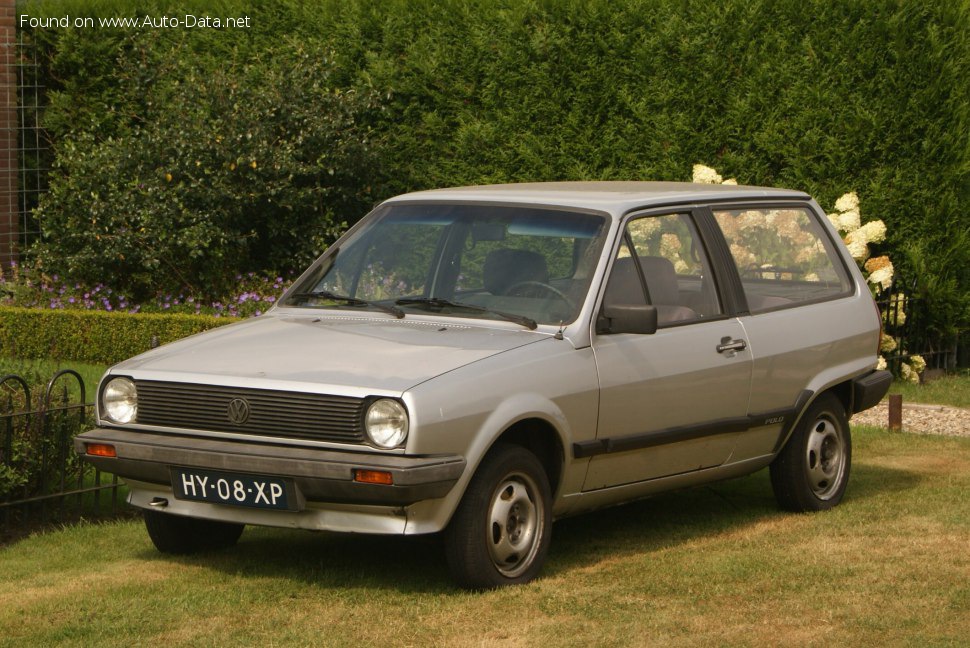
The Volkswagen Polo II (86C) 1.0 (45 Hp) adopted a classic three-door hatchback body style, a highly practical and popular configuration in Europe. Its design, while understated, was unmistakably Volkswagen: clean lines, a relatively upright stance, and a functional aesthetic that prioritized interior space and visibility. The 3-door layout, coupled with its compact dimensions, made it an excellent choice for navigating narrow city streets and fitting into tight parking spaces. Despite its small exterior footprint, the Polo II managed to comfortably seat four occupants, making it a viable option for small families or groups of friends.
The interior of the Polo II (86C) was characterized by its simplicity and durability. Materials were chosen for their hard-wearing nature, designed to withstand years of daily use. While devoid of modern luxuries, the cabin layout was ergonomic and straightforward, with all essential controls within easy reach of the driver. The large glass area provided excellent all-around visibility, a significant safety and convenience feature in busy urban environments. The hatchback design offered a practical cargo area, which could be expanded by folding down the rear seats, further enhancing its utility for shopping trips or carrying luggage.
In terms of safety, the Polo II, like many cars of its era, relied primarily on its robust construction and basic passive safety features. Disc brakes were fitted at the front, offering reliable stopping power, while drum brakes were utilized at the rear, a common and cost-effective setup for light vehicles. The standard tire size was 155/70 R13 on 13-inch wheel rims, providing a comfortable ride and predictable handling characteristics for a car of its class. While features such as airbags, ABS, or electronic stability control were still years away for this segment, the Polo II offered a solid, dependable platform that earned the trust of its owners.
Technical Specifications
| Category | Specification |
|---|---|
| General Information | |
| Brand | Volkswagen |
| Model | Polo |
| Generation | Polo II (86C) |
| Type (Engine) | 1.0 (45 Hp) |
| Start of production | 1985 year |
| End of production | 1992 year |
| Powertrain Architecture | Internal Combustion engine |
| Body type | Hatchback |
| Seats | 4 |
| Doors | 3 |
| Performance Specs | |
| Fuel consumption (economy) – urban | 10 l/100 km (23.5 US mpg) |
| Fuel consumption (economy) – extra urban | 5.3 l/100 km (44.4 US mpg) |
| Fuel Type | Petrol (Gasoline) |
| Acceleration 0 – 100 km/h | 21 sec |
| Acceleration 0 – 62 mph | 21 sec |
| Acceleration 0 – 60 mph (Calculated) | 20 sec |
| Maximum speed | 145 km/h (90.1 mph) |
| Weight-to-power ratio | 18.4 kg/Hp, 54.2 Hp/tonne |
| Engine Specs | |
| Power | 45 Hp |
| Power per liter | 43.1 Hp/l |
| Engine Model/Code | HZ |
| Engine displacement | 1043 cm³ (63.65 cu. in.) |
| Number of cylinders | 4 |
| Engine configuration | Inline |
| Fuel injection system | Carburettor |
| Engine aspiration | Naturally aspirated engine |
| Engine oil capacity | 3.5 l (3.7 US qt) |
| Coolant | 5.6 l (5.92 US qt) |
| Space, Volume and Weights | |
| Kerb Weight | 830 kg (1829.84 lbs.) |
| Fuel tank capacity | 42 l (11.1 US gal) |
| Drivetrain, Brakes and Suspension Specs | |
| Number of gears and type of gearbox | 4 gears, manual transmission (5-speed option available) |
| Front brakes | Disc |
| Rear brakes | Drum |
| Tires size | 155/70 R13 |
| Wheel rims size | 13 inches |
Legacy and Market Impact
The Volkswagen Polo II (86C), and particularly its economical 1.0 (45 Hp) variant, carved out a significant niche in the European automotive landscape. It was a direct competitor to other popular European superminis of the era, such as the Ford Fiesta, Fiat Uno, Renault 5, and Opel Corsa (Vauxhall Nova in the UK). What set the Polo apart was its reputation for solid German engineering, perceived higher build quality compared to some rivals, and a driving experience that, while not exhilarating, was reassuringly dependable.
Its historical significance lies in its role in cementing the Polo as a core model within Volkswagen’s lineup, positioned below the Golf but offering much of the same practical appeal in a smaller package. The 86C generation significantly broadened the Polo’s appeal by introducing more body styles and a wider range of engines, from the basic 1.0-liter to more potent GT variants. The 1.0 (45 Hp) model, however, was the workhorse, providing accessible and reliable transportation for millions of Europeans. It was often chosen by young drivers, urban dwellers, and budget-conscious consumers who valued low running costs and a no-nonsense approach to motoring.
The Polo II’s legacy is also tied to its incredible longevity. Many examples of the 86C generation remained on European roads well into the 21st century, a testament to their robust construction and ease of maintenance. Its simple mechanicals meant that repairs were often straightforward and affordable, further enhancing its appeal as a long-term ownership proposition. While it lacked the stylistic flair or technological innovation of some of its contemporaries, the Polo II excelled in its primary mission: providing reliable, economical, and practical transport.
Today, the Volkswagen Polo II (86C) 1.0 (45 Hp) is remembered as a classic example of an unpretentious, well-engineered European supermini. It represents an era where cars were simpler, more mechanically focused, and built to last. For collectors and enthusiasts of classic Volkswagens, it offers a tangible link to the brand’s heritage of producing dependable, mass-market vehicles that became integral to daily life across the continent.