Introduction to the Mitsubishi Lancer IX 2.0 DI-D
The Mitsubishi Lancer, a nameplate synonymous with rally heritage and accessible performance for decades, evolved significantly with its ninth generation, introduced in 2007. Known internationally as the Lancer EX in some markets, the Lancer IX represented a bold design departure and a strategic shift for Mitsubishi’s compact sedan offering. While gasoline-powered variants were the primary focus in North America, the European and Asian markets saw the introduction of more diverse powertrain options, including the highly relevant diesel engine. This article focuses on a specific, efficiency-oriented variant: the Mitsubishi Lancer IX 2.0 DI-D (140 Hp), produced from November 2007 to October 2010.
This particular model, a four-door, five-seat sedan, was engineered to compete in the fiercely contested C-segment in Europe, where diesel powertrains were a cornerstone of the market. It combined the Lancer’s newfound aggressive styling, heavily influenced by the Lancer Evolution X concept car, with the practicality and fuel economy demanded by European consumers. The 2.0 DI-D variant offered a compelling blend of robust performance, commendable fuel efficiency, and Mitsubishi’s reputation for reliability, positioning it as a practical choice for families and business commuters seeking a more distinctive alternative to established segment leaders.
Engine and Performance: The Mitsubishi Lancer IX 2.0 DI-D Powertrain
At the heart of the Mitsubishi Lancer IX 2.0 DI-D (140 Hp) was a sophisticated 2.0-liter (1968 cm3 or 120.09 cubic inches) Inline-4 diesel engine. This unit, designated “DI-D” for Direct Injection Diesel, featured a common rail fuel injection system, a turbocharger, and an intercooler, technologies crucial for maximizing both power and efficiency in a diesel engine of its era. With a compression ratio of 18:1 and a DOHC (Dual Overhead Camshaft) valvetrain with four valves per cylinder, the engine was designed for optimal combustion and airflow.
The engine produced a respectable 140 horsepower at 4000 rpm, delivering ample power for everyday driving and highway cruising. More impressively, it generated a substantial 228.64 lb.-ft. (310 Nm) of torque at a low 1750 rpm. This characteristic low-end torque is a hallmark of diesel engines, providing strong acceleration from a standstill and excellent in-gear flexibility, making overtaking maneuvers confident and reducing the need for frequent downshifts.
Power was transmitted to the front wheels via a smooth-shifting 6-speed manual transmission, a common and preferred choice in European markets for its engagement and efficiency. This powertrain combination allowed the Lancer IX 2.0 DI-D to accelerate from 0 to 60 mph in a brisk 9.1 seconds, with a top speed of 128.62 mph (207 km/h). These figures placed it competitively within its segment, offering a sporty edge without sacrificing practicality.
Fuel economy was a major selling point for this diesel variant. The combined fuel consumption was rated at an impressive 38.6 US mpg (6.1 l/100 km). Urban driving yielded 28.7 US mpg (8.2 l/100 km), while extra-urban (highway) driving could achieve an outstanding 48 US mpg (4.9 l/100 km). These figures underscored the Lancer DI-D’s efficiency, making it an economical choice for long-distance commuters. Furthermore, the vehicle complied with Euro 4 emission standards, reflecting its commitment to environmental performance at the time. The engine oil capacity was 5.3 liters, and the cooling system held 7.5 liters of coolant.
Design and Features: Mitsubishi Lancer IX Sedan
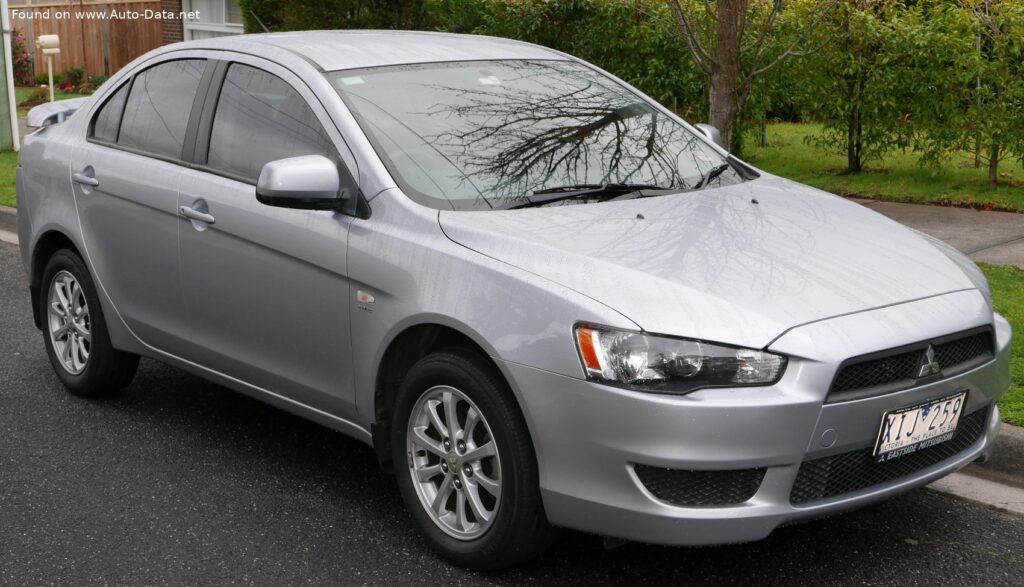
The ninth-generation Mitsubishi Lancer sedan marked a significant aesthetic departure from its predecessors. Its design was heavily influenced by the aggressive “shark nose” styling first seen on the Lancer Evolution X concept. This gave the Lancer IX a distinctive, assertive front fascia with a large, trapezoidal grille and sharply sculpted headlights, setting it apart from its more conservative competitors. The sedan body type, measuring 179.92 inches (4570 mm) in length, 69.29 inches (1760 mm) in width, and 59.25 inches (1505 mm) in height, offered a commanding presence on the road. Its wheelbase of 103.74 inches (2635 mm) contributed to a stable ride and a spacious cabin.
Inside, the Lancer IX was designed to be functional and comfortable for its five occupants. While specific interior features varied by trim level, the cabin generally offered a clean, driver-focused layout. Standard features for a 2007-2010 model often included air conditioning, power windows, and a decent audio system. Safety was also a priority, with the Lancer IX featuring an Anti-lock Braking System (ABS) as standard, along with a robust body structure designed to protect occupants in a collision.
The chassis of the Lancer IX was engineered to provide a balance of comfort and dynamic handling. It featured a Spring Strut suspension at the front and a Wishbone setup at the rear, a configuration that aimed to deliver a responsive driving experience without compromising ride quality. Braking performance was handled by ventilated discs at the front and solid discs at the rear, ensuring confident stopping power. The vehicle was equipped with 205/60 R16 tires mounted on 6J x 16-inch wheel rims, providing a good balance of grip and ride comfort. The hydraulic power steering, with its rack and pinion setup, offered precise control and feedback to the driver. With a minimum turning circle of 35.43 feet (10.8 meters), the Lancer IX was reasonably maneuverable for its size.
Technical Specifications
| Category | Specification |
|---|---|
| General Information | |
| Brand | Mitsubishi |
| Model | Lancer |
| Generation | Lancer IX |
| Type (Engine) | 2.0 DI-D (140 Hp) |
| Production Start | November, 2007 |
| Production End | October, 2010 |
| Powertrain Architecture | Internal Combustion Engine |
| Body type | Sedan |
| Seats | 5 |
| Doors | 4 |
| Performance Specs | |
| Fuel Consumption (Urban) | 28.7 US mpg (8.2 l/100 km) |
| Fuel Consumption (Extra Urban) | 48 US mpg (4.9 l/100 km) |
| Fuel Consumption (Combined) | 38.6 US mpg (6.1 l/100 km) |
| Fuel Type | Diesel |
| Acceleration 0-60 mph | 9.1 sec |
| Maximum Speed | 128.62 mph (207 km/h) |
| Emission Standard | Euro 4 |
| Weight-to-Power Ratio | 9.8 kg/Hp (102.6 Hp/tonne) |
| Weight-to-Torque Ratio | 4.4 kg/Nm (227.1 Nm/tonne) |
| Engine Specs | |
| Power | 140 Hp @ 4000 rpm |
| Power per liter | 71.1 Hp/l |
| Torque | 228.64 lb.-ft. (310 Nm) @ 1750 rpm |
| Engine Layout | Front, Transverse |
| Engine Displacement | 2.0 Liters (1968 cm3 / 120.09 cu. in.) |
| Number of Cylinders | 4 |
| Engine Configuration | Inline |
| Cylinder Bore | 3.19 in. (81 mm) |
| Piston Stroke | 3.76 in. (95.5 mm) |
| Compression Ratio | 18:1 |
| Valves per Cylinder | 4 |
| Fuel Injection System | Diesel Commonrail |
| Engine Aspiration | Turbocharger, Intercooler |
| Valvetrain | DOHC |
| Engine Oil Capacity | 5.6 US qt (5.3 l) |
| Coolant Capacity | 7.93 US qt (7.5 l) |
| Dimensions and Weights | |
| Kerb Weight | 3009.31 lbs. (1365 kg) |
| Max. Weight | 4078.55 lbs. (1850 kg) |
| Max Load | 1069.24 lbs. (485 kg) |
| Fuel Tank Capacity | 15.59 US gal (59 l) |
| Length | 179.92 in. (4570 mm) |
| Width | 69.29 in. (1760 mm) |
| Height | 59.25 in. (1505 mm) |
| Wheelbase | 103.74 in. (2635 mm) |
| Front Track | 60.24 in. (1530 mm) |
| Rear Track | 60.24 in. (1530 mm) |
| Minimum Turning Circle | 35.43 ft. (10.8 m) |
| Drivetrain, Brakes, and Suspension | |
| Drivetrain Architecture | Front-wheel drive (ICE drives front wheels) |
| Drive Wheel | Front wheel drive |
| Number of Gears | 6 |
| Type of Gearbox | Manual transmission |
| Front Suspension | Spring Strut |
| Rear Suspension | Wishbone |
| Front Brakes | Ventilated discs |
| Rear Brakes | Disc |
| Assisting Systems | ABS (Anti-lock braking system) |
| Steering Type | Steering rack and pinion |
| Power Steering | Hydraulic Steering |
| Tires Size | 205/60 R16 |
| Wheel Rims Size | 6J x 16 |
Legacy and Market Impact: The Mitsubishi Lancer IX 2.0 DI-D
The Mitsubishi Lancer IX 2.0 DI-D (140 Hp) played a crucial role in Mitsubishi’s strategy for the European market during its production run. While the Lancer nameplate often conjures images of the high-performance Evolution models in the minds of American enthusiasts, the standard Lancer, particularly its diesel variant, was a pragmatic offering aimed at a broader audience. In Europe, where diesel engines were highly popular due to their superior fuel economy and favorable taxation in many countries, this Lancer variant allowed Mitsubishi to compete directly with well-established rivals in the compact sedan segment.
Competitors for the Lancer IX 2.0 DI-D included a formidable array of European and Asian compact sedans and hatchbacks that offered diesel powertrains. These would have included models like the Volkswagen Jetta (or Golf Diesel), Ford Focus, Opel Astra, Peugeot 308, Renault Mégane, Toyota Corolla, and Honda Civic. The Lancer distinguished itself with its sharp, aggressive styling, which was a significant departure from the often more conservative designs of its competitors, and its reputation for robust engineering and reliability, a hallmark of the Mitsubishi brand.
The reputation of the Lancer IX 2.0 DI-D was largely positive, particularly among those who valued its combination of distinctive looks, strong diesel torque, and excellent fuel efficiency. It offered a compelling alternative for buyers who wanted something beyond the ubiquitous choices, providing a touch of Mitsubishi’s sporting DNA in a practical, economical package. The 6-speed manual transmission and front-wheel-drive setup delivered an engaging, yet predictable, driving experience that appealed to everyday drivers.
Historically, the Lancer IX represented Mitsubishi’s attempt to rejuvenate its presence in the global compact car market. The introduction of the 2.0 DI-D engine specifically addressed the demands of key international markets where diesel power was dominant. It showcased Mitsubishi’s engineering capability beyond its traditional strengths in SUVs and performance cars, demonstrating a commitment to efficiency and environmental standards (Euro 4) that were becoming increasingly important. Although the Lancer IX, in general, did not achieve the sales dominance of some of its rivals, the 2.0 DI-D variant solidified its position as a competent and appealing option for a specific segment of the market. Its legacy is one of a stylish, reliable, and remarkably fuel-efficient compact sedan that offered a unique proposition in a crowded international market.