The Rover 75 (facelift 2004) 1.8 T (150 Hp) Automatic: A Refined British Saloon
The Rover 75 (facelift 2004) 1.8 T (150 Hp) Automatic represents a significant chapter in the history of the British automotive industry, serving as Rover’s flagship executive sedan during its final years of independent production. Launched in 1998, the Rover 75 was conceived under BMW ownership, aiming to blend traditional British luxury and styling with German engineering prowess. The facelifted model, introduced in 2004, sought to modernize its appearance and maintain its competitive edge in the fiercely contested European mid-size luxury segment, just a year before the venerable Rover Group ceased operations. This particular variant, equipped with the turbocharged 1.8-liter engine and an automatic transmission, offered a compelling blend of performance, comfort, and efficiency for its target market.
Designed primarily for the European and Asian markets, where its blend of classic aesthetics and comfortable ride found a dedicated following, the Rover 75 never officially made its way to the United States. However, its engineering and design principles resonate with global automotive standards. It was positioned as a premium offering, competing with established European rivals by emphasizing a distinctive, luxurious, and somewhat retro-inspired character, rather than outright sporty dynamics. The 2004 facelift brought subtle but noticeable changes, primarily to the exterior styling, aimed at giving the car a more contemporary and less overtly traditional look, without alienating its loyal customer base.
Engine and Performance of the Rover 75
Under the hood, the Rover 75 1.8 T (150 Hp) Automatic featured a transversely mounted 1.8-liter (1796 cm³ or 109.6 cu. in.) inline-four engine, designated by the code 18K4G. This powerplant was a turbocharged and intercooled unit, a departure from the naturally aspirated K-series engines commonly found in other Rover models. The addition of a turbocharger significantly boosted its output, delivering a respectable 150 horsepower at 5500 rpm and a robust 215 Nm (158.58 lb.-ft.) of torque at a low 2100 rpm. This low-end torque characteristic made the car particularly tractable and responsive in everyday driving conditions, a desirable trait for an executive sedan.
Power was channeled to the front wheels via a 5-speed automatic transmission, providing smooth and effortless gear changes, further enhancing the car’s refined driving experience. Despite its emphasis on comfort, the 1.8 T variant offered commendable performance for its class. It could accelerate from 0 to 60 mph in 9.7 seconds and achieve a maximum speed of 126.76 mph (204 km/h). These figures placed it competitively within its segment, offering sufficient pace for highway cruising and confident overtaking maneuvers.
In terms of fuel economy, the Rover 75 1.8 T Automatic delivered a combined rating of 8.9 liters per 100 kilometers, translating to approximately 26.4 US mpg (31.7 UK mpg). Urban consumption stood at 12.8 l/100 km (18.4 US mpg), while extra-urban driving yielded a more efficient 6.6 l/100 km (35.6 US mpg). With CO2 emissions of 214 g/km, the vehicle complied with the Euro 3 emission standard of its time. The engine’s architecture included a DOHC valvetrain, four valves per cylinder, and a multi-port manifold injection system, all contributing to its efficiency and power delivery.
Design and Features
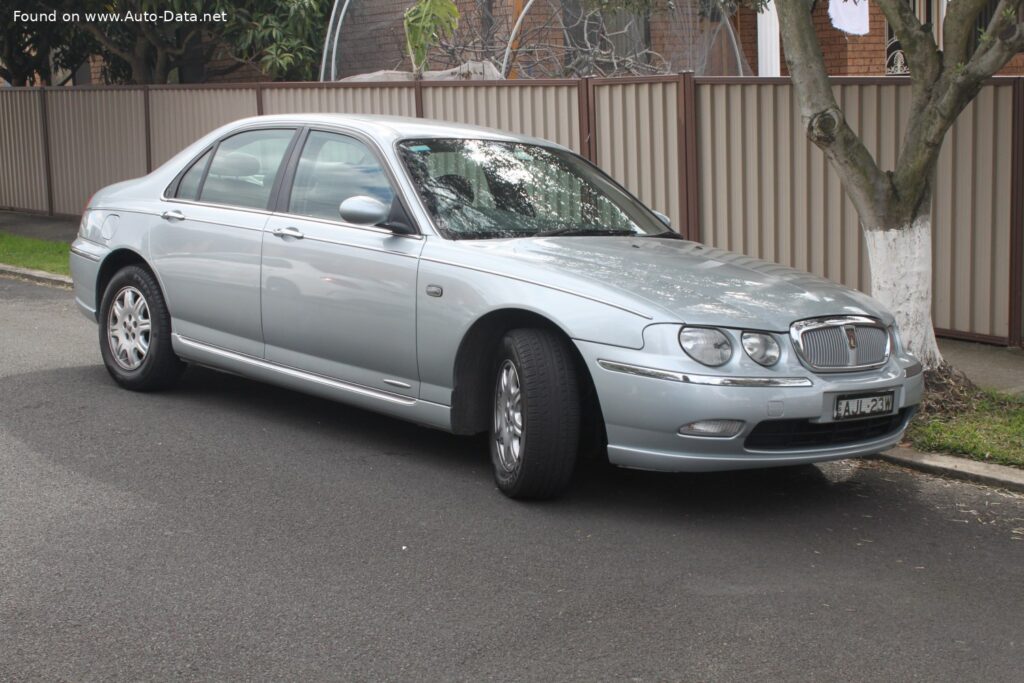
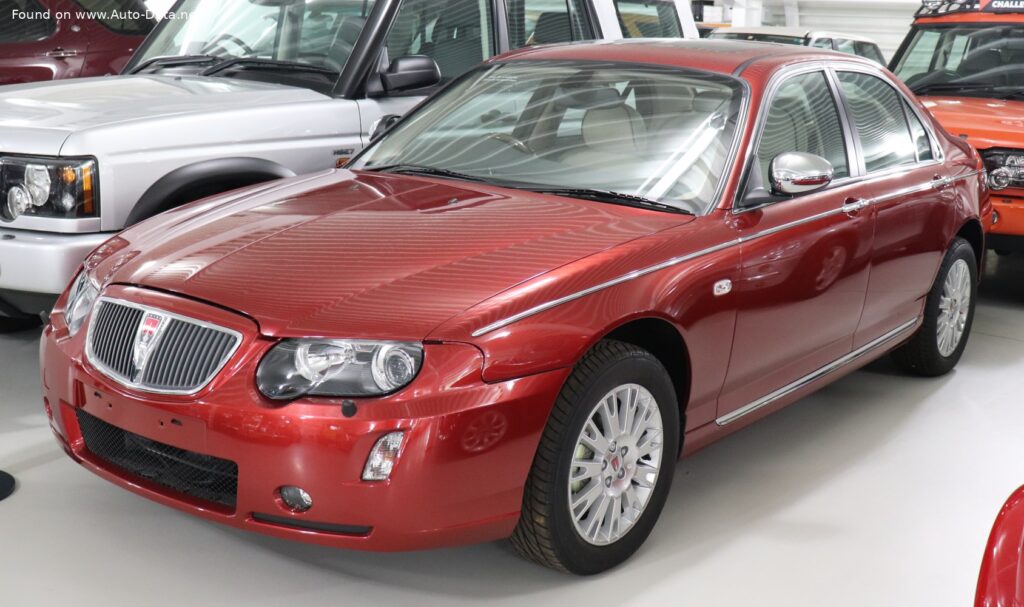
The 2004 facelift of the Rover 75 retained the car’s distinctive “retro-modern” styling, a hallmark that set it apart from its German and Japanese competitors. The changes were subtle yet effective, primarily focusing on the front and rear fascias. The front received a larger, more prominent grille and revised headlamp units, giving the car a slightly more assertive and contemporary presence. At the rear, new taillight clusters and a reshaped trunk lid provided a cleaner, more updated look. The overall silhouette remained elegant and stately, characterized by its flowing lines, long hood, and classic sedan proportions.
Inside, the Rover 75 continued to offer a cabin renowned for its comfort, quality, and traditional British ambiance. The interior featured high-quality materials, often including wood trim and chrome accents, creating a warm and inviting environment. The sedan body style provided ample space for five occupants, with comfortable seating and generous legroom for a car of its class. The trunk offered a respectable 15.26 cubic feet (432 liters) of cargo space, expandable to 23.8 cubic feet (674 liters) with the rear seats folded, making it practical for family use or extended journeys.
Standard features for the 2004 model year included a comprehensive safety package with ABS (Anti-lock Braking System), a crucial assisting system for vehicle stability. The steering system was a hydraulic rack and pinion setup, known for providing good feedback and a comfortable driving experience. The suspension system comprised an independent McPherson strut arrangement with coil springs and an anti-roll bar at the front, paired with an independent multi-link spring suspension with a stabilizer at the rear. This sophisticated setup contributed to the Rover 75’s reputation for a smooth, compliant ride, effectively absorbing road imperfections.
Technical Specifications
| Category | Specification | US Equivalent / Notes |
|---|---|---|
General Information |
||
| Brand | Rover | |
| Model | 75 | |
| Generation | 75 (facelift 2004) | |
| Type (Engine) | 1.8 T (150 Hp) Automatic | |
| Start of Production | 2004 year | |
| End of Production | 2005 year | |
| Powertrain Architecture | Internal Combustion engine | |
| Body type | Sedan | 4 Doors, 5 Seats |
| Drive wheel | Front wheel drive | |
| Number of gears and type of gearbox | 5 gears, automatic transmission | |
Performance Specifications |
||
| Fuel consumption (economy) – urban | 12.8 l/100 km | 18.4 US mpg |
| Fuel consumption (economy) – extra urban | 6.6 l/100 km | 35.6 US mpg |
| Fuel consumption (economy) – combined | 8.9 l/100 km | 26.4 US mpg |
| CO2 emissions | 214 g/km | Euro 3 Standard |
| Fuel Type | Petrol (Gasoline) | |
| Acceleration 0 – 60 mph | 9.7 sec | |
| Maximum speed | 204 km/h | 126.76 mph |
| Weight-to-power ratio | 9.7 kg/Hp | 103.4 Hp/tonne |
| Weight-to-torque ratio | 6.7 kg/Nm | 148.3 Nm/tonne |
Engine Specifications |
||
| Power | 150 Hp @ 5500 rpm | |
| Power per liter | 83.5 Hp/l | |
| Torque | 215 Nm @ 2100 rpm | 158.58 lb.-ft. @ 2100 rpm |
| Engine layout | Front, Transverse | |
| Engine Model/Code | 18K4G | |
| Engine displacement | 1796 cm³ | 1.8 Liters / 109.6 cu. in. |
| Number of cylinders | 4 | Inline configuration |
| Cylinder Bore | 80 mm | 3.15 in. |
| Piston Stroke | 89.3 mm | 3.52 in. |
| Compression ratio | 9.2:1 | |
| Number of valves per cylinder | 4 | |
| Fuel injection system | Multi-port manifold injection | |
| Engine aspiration | Turbocharger, Intercooler | |
| Valvetrain | DOHC | |
| Engine oil capacity | 4.5 l | 4.76 US qt |
| Coolant capacity | 6.2 l | 6.55 US qt |
Space, Volume and Weights |
||
| Kerb Weight | 1450-1570 kg | 3196.7 – 3461.26 lbs. |
| Max. weight (GVWR) | 2000 kg | 4409.25 lbs. |
| Max load | 430-550 kg | 947.99 – 1212.54 lbs. |
| Trunk (boot) space – minimum | 432 l | 15.26 cu. ft. |
| Trunk (boot) space – maximum | 674 l | 23.8 cu. ft. |
| Fuel tank capacity | 65 l | 17.17 US gal |
| Max. roof load | 80 kg | 176.37 lbs. |
| Permitted trailer load with brakes (12%) | 1450 kg | 3196.7 lbs. |
| Permitted trailer load without brakes | 750 kg | 1653.47 lbs. |
| Permitted towbar download | 100 kg | 220.46 lbs. |
Dimensions |
||
| Length | 4749 mm | 186.97 in. |
| Width | 1778 mm | 70 in. |
| Width including mirrors | 1970 mm | 77.56 in. |
| Height | 1393 mm | 54.84 in. |
| Wheelbase | 2746 mm | 108.11 in. |
| Front track | 1511 mm | 59.49 in. |
| Rear (Back) track | 1504 mm | 59.21 in. |
| Front overhang | 915 mm | 36.02 in. |
| Rear overhang | 1087 mm | 42.8 in. |
| Minimum turning circle (turning diameter) | 11.33 m | 37.17 ft. |
Drivetrain, Brakes and Suspension Specs |
||
| Drivetrain Architecture | Front-wheel drive with Internal Combustion engine | |
| Front suspension | Independent, type McPherson with coil spring and anti-roll bar | |
| Rear suspension | Independent multi-link spring suspension with stabilizer | |
| Front brakes | Ventilated discs | |
| Rear brakes | Disc | |
| Assisting systems | ABS (Anti-lock braking system) | |
| Steering type | Steering rack and pinion | |
| Power steering | Hydraulic Steering | |
| Tires size | 195/65 R15; 205/60 R15; 215/55 R16 | |
| Wheel rims size | 6J x 15; 6.5J x 16 | |
Legacy and Market Impact of the Rover 75
The Rover 75, including its 2004 facelifted variants like the 1.8 T Automatic, occupied a unique niche in the European automotive landscape. It was often lauded for its exceptional ride comfort, quiet cabin, and distinctive styling, which many found to be a refreshing alternative to the more anodyne designs of its German rivals. Its primary competitors included the BMW 3 Series, Audi A4, Mercedes-Benz C-Class, as well as mainstream executive cars like the Ford Mondeo and Vauxhall Vectra (Opel Vectra in continental Europe). While it couldn’t match the dynamic prowess or brand cachet of the premium German marques, it offered a compelling package of traditional British luxury and refinement at a more accessible price point.
The Rover 75 is historically significant as one of the last truly new models developed by the Rover Group before its eventual collapse in 2005. Its development under BMW’s stewardship initially promised a bright future, blending British charm with German engineering discipline. However, constant ownership changes and financial instability plagued the company, ultimately leading to its demise. Despite these corporate struggles, the Rover 75 itself was widely regarded as a well-engineered and attractive car, earning praise for its quality and driving experience.
Following Rover’s collapse, the rights to the 75 platform and tooling were acquired by Nanjing Automobile Group (NAC) in China. Production of a modified version, known as the Roewe 750, continued in China, and later under SAIC Motor, underscoring the enduring appeal and robust engineering of the original design. This post-Rover life in China cemented the 75’s legacy as a car that transcended the fate of its original manufacturer.
Today, the Rover 75 retains a dedicated following, particularly in the UK and parts of Europe, where it is appreciated for its classic lines, comfortable ride, and the nostalgic connection to a bygone era of British motoring. The 1.8 T Automatic variant, in particular, offers a balance of modern performance and traditional luxury, making it a desirable classic for enthusiasts looking for a distinctive and comfortable executive car from the early 2000s.