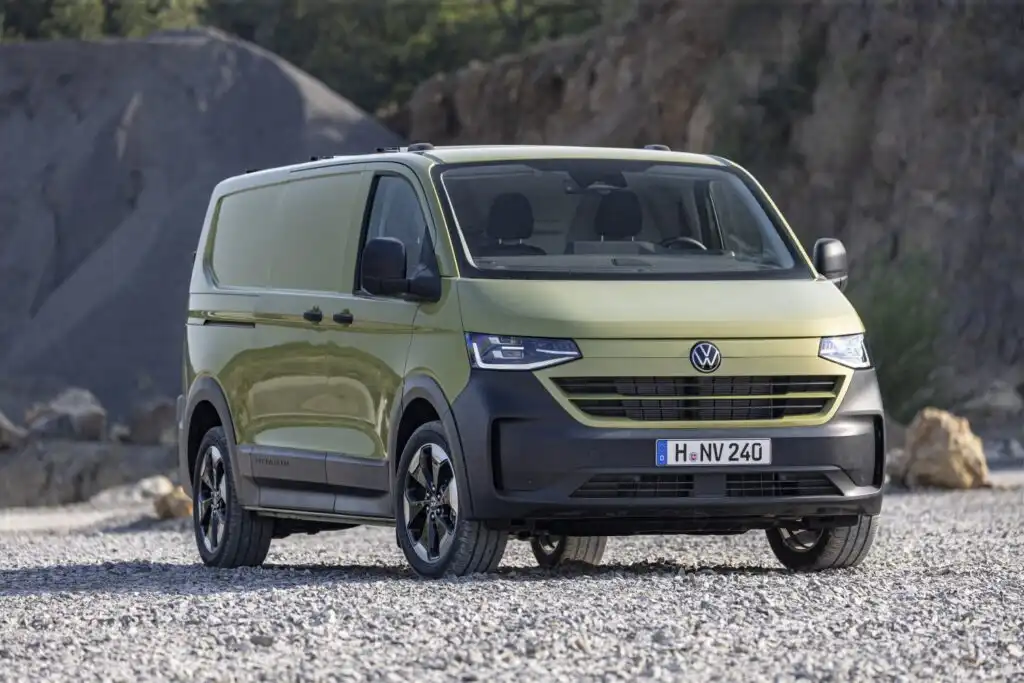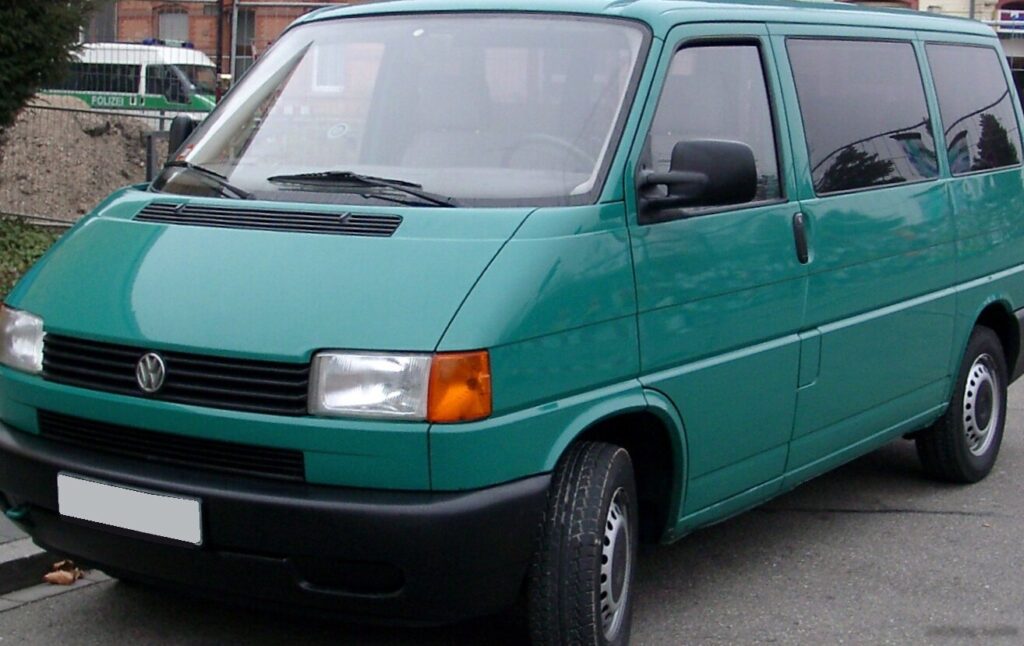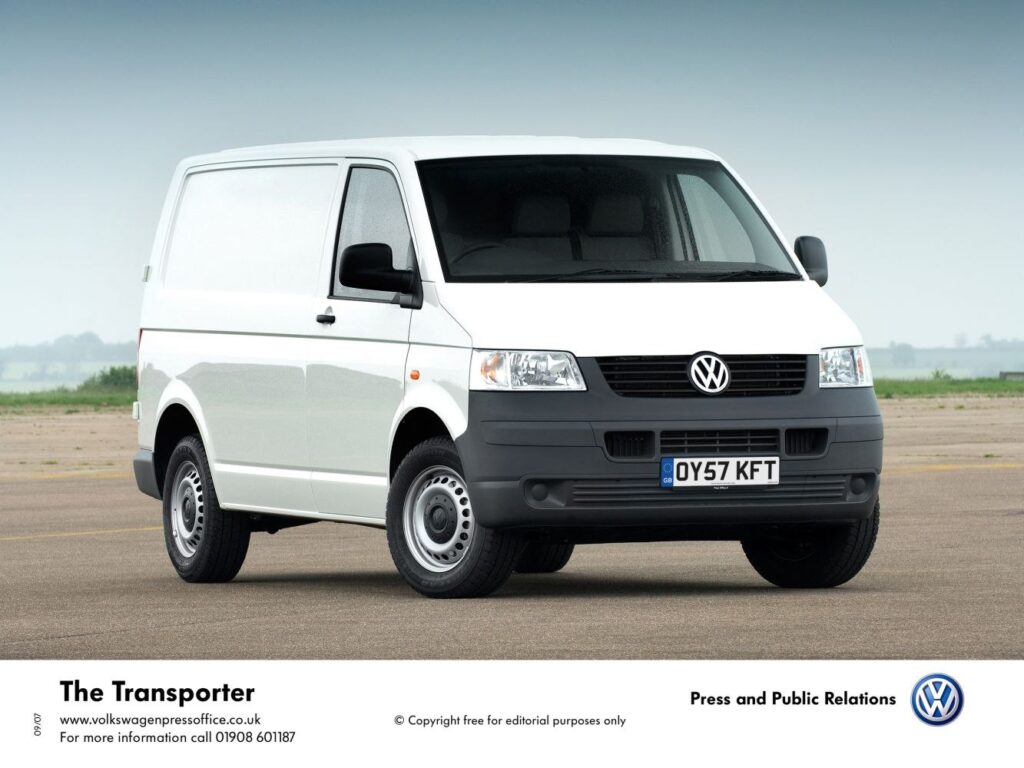
The Volkswagen Transporter (T5) Panel Van: A Workhorse Defined
The Volkswagen Transporter (T5) Panel Van 1.9 TDI (105 Hp) L1H2 represents a pivotal generation in Volkswagen’s storied lineage of commercial vehicles. Produced from 2003 to 2009, the T5 series built upon decades of Transporter heritage, cementing its reputation as a highly versatile and dependable light commercial vehicle (LCV) in markets predominantly outside the United States. While the Transporter has a dedicated following globally, its specific panel van variants like this L1H2 configuration were primarily tailored for the demanding European and Asian commercial sectors, where efficiency, load capacity, and robust engineering are paramount. This particular model, with its 1.9-liter TDI engine and L1H2 body, offered a compelling blend of power, economy, and practicality for businesses requiring a reliable workhorse.
The T5 generation marked a significant evolution in design, technology, and ergonomics compared to its predecessors. It moved away from the slightly more utilitarian aesthetics of earlier models, adopting a more modern and car-like interior while retaining its core commercial vehicle attributes. The L1H2 designation is crucial: ‘L1’ signifies the standard wheelbase length, while ‘H2’ denotes a high roof configuration, greatly enhancing its cargo volume and making it suitable for a wide array of professional applications, from courier services to tradespeople.
Engine and Performance of the Volkswagen Transporter (T5) Panel Van
At the heart of this specific Volkswagen Transporter (T5) Panel Van 1.9 TDI (105 Hp) L1H2 lies the venerable 1.9-liter (115.7 cu. in.) TDI (Turbocharged Direct Injection) engine, a powerplant renowned for its durability and fuel efficiency. This inline four-cylinder diesel engine, designated with the EA188 / AXB code, delivers a respectable 105 horsepower at 3500 revolutions per minute. More importantly for a commercial vehicle, it produces a robust 184.39 lb.-ft. of torque at a low 2000 rpm, providing excellent pulling power crucial for hauling heavy loads or navigating urban environments.
The engine’s architecture features a front, transverse layout and a SOHC (Single Overhead Camshaft) valvetrain with two valves per cylinder. Its fuel injection system utilizes a “Pump-nozzle” or unit injector design, a characteristic of many Volkswagen TDI engines of that era, known for precise fuel delivery and efficiency. Coupled with a turbocharger and intercooler, this setup ensures strong performance across the rev range and improved combustion efficiency.
Performance figures, while not sports-car-like, are entirely appropriate for a panel van. The Transporter 1.9 TDI L1H2 can accelerate from 0 to 60 mph in approximately 18 seconds, reaching a maximum speed of 95.69 mph. Its fuel economy is a standout feature for a vehicle of its size and capability, achieving an impressive 37.3 US mpg in extra-urban driving conditions. The 80-liter (21.13 US gallon) fuel tank ensures a substantial range between fill-ups, minimizing downtime for commercial operators. Adhering to the Euro 3 emission standard, it reflects the environmental regulations of its production period.
Design and Features
The design of the Volkswagen Transporter (T5) Panel Van 1.9 TDI (105 Hp) L1H2 is fundamentally practical, prioritizing utility and robustness. As a panel van, its primary function is cargo transport, reflected in its spacious interior and functional layout. The L1H2 configuration provides a significant maximum trunk (boot) space of 6700 liters (236.61 cu. ft.), making it highly capable for various professional needs. With a maximum payload capacity of 2138.48 lbs., it can handle substantial cargo. The Transporter also boasts impressive towing capabilities, rated for a permitted trailer load with brakes (12%) of 4850.17 lbs., extending its utility even further.
Externally, the T5 generation adopted a more modern and aerodynamic aesthetic than its predecessors, contributing to better fuel efficiency and reduced wind noise. The dimensions of this L1H2 model are substantial: 192.52 inches in length, 74.96 inches in width (88.27 inches including mirrors), and a height of 85.04 inches. The 118.11-inch wheelbase provides stability and a comfortable ride, while the minimum turning circle of 39.04 ft. aids maneuverability in urban environments.
Underneath, the T5 Transporter features a sophisticated suspension setup for a commercial vehicle, contributing to its car-like driving dynamics. It utilizes an independent McPherson strut system with coil springs and an anti-roll bar at the front, paired with an independent coil spring, transverse stabilizer, and trailing arm arrangement at the rear. This combination provides a good balance of ride comfort, handling, and load-carrying capability. Braking is handled by ventilated discs at both the front (308×29.5 mm) and rear (294×22 mm), complemented by an Anti-lock Braking System (ABS) for enhanced safety. The hydraulic power steering system ensures ease of control, especially when fully loaded.
Technical Specifications
| Category | Specification |
|---|---|
General Information |
|
| Brand | Volkswagen |
| Model | Transporter |
| Generation | Transporter (T5) Panel Van |
| Engine Type | 1.9 TDI (105 Hp) L1H2 |
| Production Start | 2003 |
| Production End | 2009 |
| Powertrain Architecture | Internal Combustion Engine |
| Body Type | Van |
| Seats | 2-3 |
| Doors | 4-5 |
Performance Specifications |
|
| Fuel Consumption (Extra Urban) | 6.3 l/100 km (37.3 US mpg) |
| Fuel Type | Diesel |
| Acceleration 0-60 mph | 18 sec |
| Maximum Speed | 154 km/h (95.69 mph) |
| Emission Standard | Euro 3 |
| Weight-to-Power Ratio | 17.4 kg/Hp (57.4 Hp/tonne) |
| Weight-to-Torque Ratio | 7.3 kg/Nm (136.6 Nm/tonne) |
Engine Specifications |
|
| Power | 105 Hp @ 3500 rpm |
| Power per Liter | 55.4 Hp/l |
| Torque | 250 Nm (184.39 lb.-ft.) @ 2000 rpm |
| Engine Layout | Front, Transverse |
| Engine Model/Code | EA188 / AXB |
| Engine Displacement | 1896 cm3 (1.9 l / 115.7 cu. in.) |
| Number of Cylinders | 4 |
| Engine Configuration | Inline |
| Cylinder Bore | 79.5 mm (3.13 in.) |
| Piston Stroke | 95.5 mm (3.76 in.) |
| Compression Ratio | 18:1 |
| Valves per Cylinder | 2 |
| Fuel Injection System | Pump-nozzle (Unit Injector) |
| Engine Aspiration | Turbocharger, Intercooler |
| Valvetrain | SOHC |
| Engine Oil Capacity | 5.8 l (6.13 US qt) |
| Coolant Capacity | 7.1 l (7.5 US qt) |
Space, Volume and Weights |
|
| Kerb Weight | 1830-2030 kg (4034.46 – 4475.38 lbs.) |
| Max. Weight (GVWR) | 2800-3000 kg (6172.94 – 6613.87 lbs.) |
| Max Load | 970 kg (2138.48 lbs.) |
| Trunk (Boot) Space – Maximum | 6700 l (236.61 cu. ft.) |
| Fuel Tank Capacity | 80 l (21.13 US gal) |
| Permitted Trailer Load with Brakes (8%) | 2500 kg (5511.56 lbs.) |
| Permitted Trailer Load with Brakes (12%) | 2200 kg (4850.17 lbs.) |
| Permitted Trailer Load without Brakes | 750 kg (1653.47 lbs.) |
| Permitted Towbar Download | 100 kg (220.46 lbs.) |
Dimensions |
|
| Length | 4890 mm (192.52 in.) |
| Width | 1904 mm (74.96 in.) |
| Width Including Mirrors | 2242 mm (88.27 in.) |
| Height | 2160 mm (85.04 in.) |
| Wheelbase | 3000 mm (118.11 in.) |
| Front Track | 1628 mm (64.09 in.) |
| Rear Track | 1628 mm (64.09 in.) |
| Front Overhang | 894 mm (35.2 in.) |
| Rear Overhang | 996 mm (39.21 in.) |
| Ride Height (Ground Clearance) | 165 mm (6.5 in.) |
| Minimum Turning Circle | 11.9 m (39.04 ft.) |
| Approach Angle | 22° |
| Departure Angle | 16° |
| Ramp-over (Brakeover) Angle | 14° |
| Wading Depth | 300 mm (11.81 in.) |
Drivetrain, Brakes and Suspension Specs |
|
| Drivetrain Architecture | Internal combustion engine drives the front wheels. |
| Drive Wheel | Front-wheel drive |
| Number of Gears & Gearbox Type | 5 gears, manual transmission |
| Front Suspension | Independent, McPherson type with coil spring and anti-roll bar |
| Rear Suspension | Independent coil spring, Transverse stabilizer, Trailing arm |
| Front Brakes | Ventilated discs, 308×29.5 mm |
| Rear Brakes | Ventilated discs, 294×22 mm |
| Assisting Systems | ABS (Anti-lock Braking System) |
| Steering Type | Steering rack and pinion |
| Power Steering | Hydraulic Steering |
| Tire Size | 205/65 R16; 215/65 R16 |
| Wheel Rims Size | 6.5J x 16 |
Legacy and Market Impact
The Volkswagen Transporter, and specifically the T5 generation, holds a significant place in the global light commercial vehicle market, particularly in Europe and other regions where it was widely distributed. The Volkswagen Transporter (T5) Panel Van 1.9 TDI (105 Hp) L1H2 was a cornerstone of this success, embodying the brand’s commitment to reliability, practicality, and efficiency. Its reputation as a robust and long-lasting vehicle made it a favorite among small businesses, large fleets, and tradespeople alike.
In its primary markets, the T5 Transporter faced stiff competition from rivals such as the Mercedes-Benz Vito, Ford Transit Custom, Renault Trafic, and Opel Vivaro. However, the Transporter consistently stood out due to its strong resale value, extensive dealer network, and the perceived quality and engineering excellence associated with the Volkswagen brand. The 1.9 TDI engine, in particular, was lauded for its blend of low running costs, dependable performance, and ease of maintenance, which are critical factors for commercial operators.
The T5’s modular design also contributed to its widespread appeal. Beyond the panel van configuration, the platform spawned numerous variants, including passenger-carrying Caravelle and Multivan models, chassis cabs for custom bodywork, and even recreational camper vans like the California. This versatility allowed the Transporter to cater to an incredibly diverse range of customers and uses, further solidifying its market presence. The L1H2 high-roof panel van, in particular, offered an ideal balance for those needing substantial cargo volume without opting for the longest wheelbase, making it highly maneuverable yet capacious.
The T5 generation continued the Transporter’s legacy as an icon of utilitarian design and engineering. Its impact is evident in the countless examples still operating on roads today, a testament to its enduring build quality and the foresight in its design. For many businesses, the T5 Transporter was not just a vehicle; it was an indispensable tool that contributed directly to their operational efficiency and success. Its influence can still be seen in subsequent Transporter generations, which continue to refine the successful formula established by models like the Volkswagen Transporter (T5) Panel Van 1.9 TDI (105 Hp) L1H2.