The Volkswagen Polo II (86C) 1.0 CAT (45 Hp): A European Subcompact Icon
The Volkswagen Polo II, internally designated as the 86C, represents a significant chapter in the history of compact European automobiles. Launched in 1981, this generation of the Polo served as a cornerstone of Volkswagen’s offerings in the supermini segment for over a decade. The specific variant under review, the Volkswagen Polo II (86C) 1.0 CAT (45 Hp), produced between 1989 and 1994, highlights a period of increasing environmental awareness with its catalytic converter (CAT) equipped engine. While never officially sold in the United States, the Polo II was a ubiquitous sight on European roads, celebrated for its practicality, robust engineering, and economical operation, embodying the “people’s car” philosophy in a compact, accessible package.
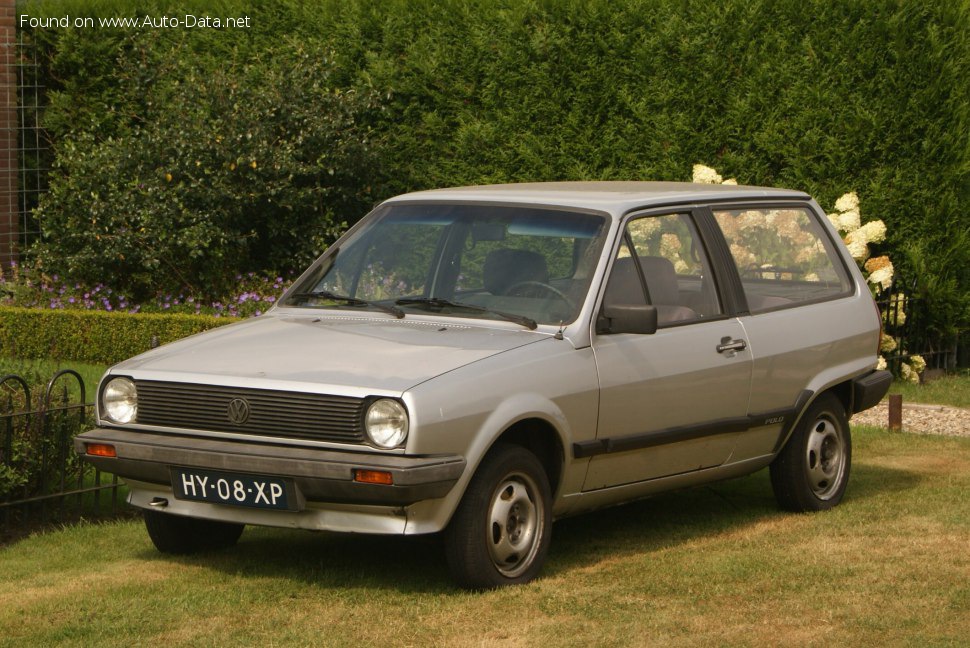
This particular model, a 3-door hatchback, was designed to navigate the congested urban landscapes of Europe with ease while still offering enough versatility for light family duties. Its longevity in production, spanning from 1981 to 1994 (with a significant facelift in 1990), speaks volumes about its enduring appeal and the solid foundation of its design. The 1.0 CAT variant, introduced later in its production run, reflected a growing trend toward more environmentally friendly powertrains, even in the entry-level segments.
Engine & Performance: The Heart of the Volkswagen Polo II (86C) 1.0 CAT (45 Hp)
Powering the Volkswagen Polo II (86C) 1.0 CAT (45 Hp) was a modest yet highly efficient 1.0-liter (1043 cm3 or 63.65 cu. in.) naturally aspirated inline-four gasoline engine. Codenamed AAK or AAU, this powerplant was meticulously engineered for reliability and fuel economy, rather than outright speed. It delivered a respectable 45 horsepower at 5200 rpm, a figure perfectly adequate for its intended urban and suburban environment. Torque output stood at 56.05 lb.-ft. (76 Nm) at a low 2800 rpm, providing sufficient grunt for city driving and minimizing the need for constant gear changes.
The engine’s design featured a classic inline configuration with two valves per cylinder, a 10:1 compression ratio, and a single-point fuel injection system. This setup, combined with the catalytic converter, was a testament to Volkswagen’s commitment to meeting evolving emissions standards of the late 1980s and early 1990s. Power was transmitted to the front wheels via a smooth-shifting 5-speed manual transmission, a common and reliable choice for vehicles in this class.
Performance figures, while not exhilarating by modern standards, were entirely competitive for its segment at the time. The Polo II 1.0 CAT could accelerate from 0 to 60 mph in approximately 19.3 seconds, with a top speed of 90.1 mph (145 km/h). These numbers underscored its role as a practical commuter. Where the Polo truly shone was in its fuel efficiency. It achieved an impressive combined fuel economy of 35.1 US mpg (6.7 l/100 km), with extra-urban driving pushing that figure to 47 US mpg (5 l/100 km). This economy, coupled with a 11.1 US gallon (42 liter) fuel tank, offered a commendable cruising range, a crucial factor for European drivers.
Design & Features: Form Follows Function
The design of the Volkswagen Polo II (86C) 1.0 CAT (45 Hp) was quintessentially European – functional, understated, and practical. The 3-door hatchback body style was a popular choice for its compact dimensions and versatile cargo capacity. Measuring 148.23 inches (3765 mm) in length, 61.81 inches (1570 mm) in width, and 53.15 inches (1350 mm) in height, the Polo was perfectly sized for navigating narrow streets and tight parking spaces. Its wheelbase of 91.93 inches (2335 mm) contributed to its nimble handling characteristics.
Despite its compact exterior, the Polo II offered a surprisingly spacious interior for five occupants. The hatchback configuration meant exceptional cargo flexibility. With the rear seats in place, it provided 8.48 cubic feet (240 liters) of trunk space, which could be expanded to a substantial 36.37 cubic feet (1030 liters) by folding down the rear seats. This made it a highly practical vehicle for everything from weekly grocery runs to hauling larger items.
Underneath its unassuming exterior, the Polo featured a robust chassis with coil spring suspension at both the front and rear, providing a comfortable ride quality for its class. Braking duties were handled by disc brakes at the front and drum brakes at the rear, a common and cost-effective setup for superminis of the era. Steering was managed by a rack and pinion system, offering direct and predictable control. The vehicle rode on 155/70 R13 tires mounted on 4.5J x 13 wheel rims, a specification geared towards comfort and efficiency rather than high-performance grip.
Technical Specifications
| Category | Specification | US Equivalent |
|---|---|---|
| General Information | ||
| Brand | Volkswagen | Volkswagen |
| Model | Polo | Polo |
| Generation | Polo II (86C) | Polo II (86C) |
| Type (Engine) | 1.0 CAT (45 Hp) | 1.0 CAT (45 Hp) |
| Start of Production | 1989 year | 1989 |
| End of Production | 1994 year | 1994 |
| Powertrain Architecture | Internal Combustion Engine | Internal Combustion Engine |
| Body Type | Hatchback | Hatchback |
| Seats | 5 | 5 |
| Doors | 3 | 3 |
| Performance Specs | ||
| Fuel Consumption (Urban) | 7.2 l/100 km | 32.7 US mpg |
| Fuel Consumption (Extra Urban) | 5 l/100 km | 47 US mpg |
| Fuel Consumption (Combined) | 6.7 l/100 km | 35.1 US mpg |
| Fuel Type | Petrol (Gasoline) | Gasoline |
| Acceleration 0 – 62 mph (0-100 km/h) | 20.3 sec | 20.3 sec |
| Acceleration 0 – 60 mph (Calculated) | 19.3 sec | 19.3 sec |
| Maximum Speed | 145 km/h | 90.1 mph |
| Weight-to-Power Ratio | 17 kg/Hp | 37.48 lbs/Hp |
| Weight-to-Torque Ratio | 10.1 kg/Nm | 22.27 lbs/Nm |
| Engine Specs | ||
| Power | 45 Hp @ 5200 rpm | 45 Hp @ 5200 rpm |
| Power per Liter | 43.1 Hp/l | 43.1 Hp/l |
| Torque | 76 Nm @ 2800 rpm | 56.05 lb.-ft. @ 2800 rpm |
| Engine Layout | Front, Transverse | Front, Transverse |
| Engine Model/Code | AAK, AAU | AAK, AAU |
| Engine Displacement | 1043 cm3 | 1.0 Liter (63.65 cu. in.) |
| Number of Cylinders | 4 | 4 |
| Engine Configuration | Inline | Inline |
| Cylinder Bore | 75 mm | 2.95 in. |
| Piston Stroke | 59 mm | 2.32 in. |
| Compression Ratio | 10:1 | 10:1 |
| Number of Valves per Cylinder | 2 | 2 |
| Fuel Injection System | Single-point injection | Single-point injection |
| Engine Aspiration | Naturally aspirated engine | Naturally aspirated engine |
| Engine Oil Capacity | 3.5 l | 3.7 US qt |
| Coolant Capacity | 5.6 l | 5.92 US qt |
| Space, Volume and Weights | ||
| Kerb Weight | 765 kg | 1686.54 lbs. |
| Max. Weight (GVWR) | 1230 kg | 2711.69 lbs. |
| Max Load | 465 kg | 1025.15 lbs. |
| Trunk (Boot) Space – Minimum | 240 l | 8.48 cu. ft. |
| Trunk (Boot) Space – Maximum | 1030 l | 36.37 cu. ft. |
| Fuel Tank Capacity | 42 l | 11.1 US gal |
| Dimensions | ||
| Length | 3765 mm | 148.23 in. |
| Width | 1570 mm | 61.81 in. |
| Height | 1350 mm | 53.15 in. |
| Wheelbase | 2335 mm | 91.93 in. |
| Front Track | 1320 mm | 51.97 in. |
| Rear (Back) Track | 1345 mm | 52.95 in. |
| Drivetrain, Brakes and Suspension | ||
| Drivetrain Architecture | Internal combustion engine drives front wheels | Front-wheel drive (FWD) |
| Drive Wheel | Front wheel drive | Front-wheel drive |
| Number of Gears and Type of Gearbox | 5 gears, manual transmission | 5-speed manual transmission |
| Front Suspension | Coil spring | Coil spring |
| Rear Suspension | Coil spring | Coil spring |
| Front Brakes | Disc | Disc |
| Rear Brakes | Drum | Drum |
| Steering Type | Steering rack and pinion | Rack and pinion |
| Tires Size | 155/70 R13 | 155/70 R13 |
| Wheel Rims Size | 4.5J x 13 | 4.5J x 13 |
Legacy & Market Impact of the Volkswagen Polo II (86C)
The Volkswagen Polo II (86C), particularly variants like the 1.0 CAT (45 Hp), carved out a significant legacy in the European automotive landscape. It was a car that perfectly encapsulated the needs of a continent valuing economy, durability, and compact utility. Its reputation was built on unwavering reliability and low running costs, traits that cemented its place as a favorite among first-time car buyers, urban commuters, and small families.
In its primary markets, the Polo II faced stiff competition from a host of other European superminis. Key rivals included the Ford Fiesta, Opel Corsa (known as the Vauxhall Nova in the UK), Fiat Uno, and later, the Renault Clio and Peugeot 205. While some competitors offered more flamboyant styling or sportier variants, the Polo consistently stood out for its solid, no-nonsense engineering and perceived build quality, a hallmark of the Volkswagen brand.
The introduction of the catalytic converter in models like the 1.0 CAT (45 Hp) was a pivotal step in the Polo’s evolution. It signaled a broader industry shift towards addressing environmental concerns, making cleaner emissions accessible to the mass market. This move not only helped Volkswagen comply with increasingly stringent European regulations but also enhanced the Polo’s appeal to an environmentally conscious public.
Historically, the Polo II (86C) serves as an important bridge between the earlier, more basic iterations of the supermini and the sophisticated, feature-rich compacts of today. It demonstrated that a small car could be practical, reliable, and efficient without sacrificing the core tenets of German engineering. Its enduring design, robust mechanicals, and widespread availability ensured that it remained a common sight on European roads well into the 21st century, often serving as a testament to its longevity. The Polo II’s success laid crucial groundwork for the subsequent generations of the Polo, which continued to evolve and capture market share, building upon the solid foundation of practicality and quality established by the 86C.