The Opel Senator B 3.0i (177 Hp): A European Executive Sedan of the Late 1980s
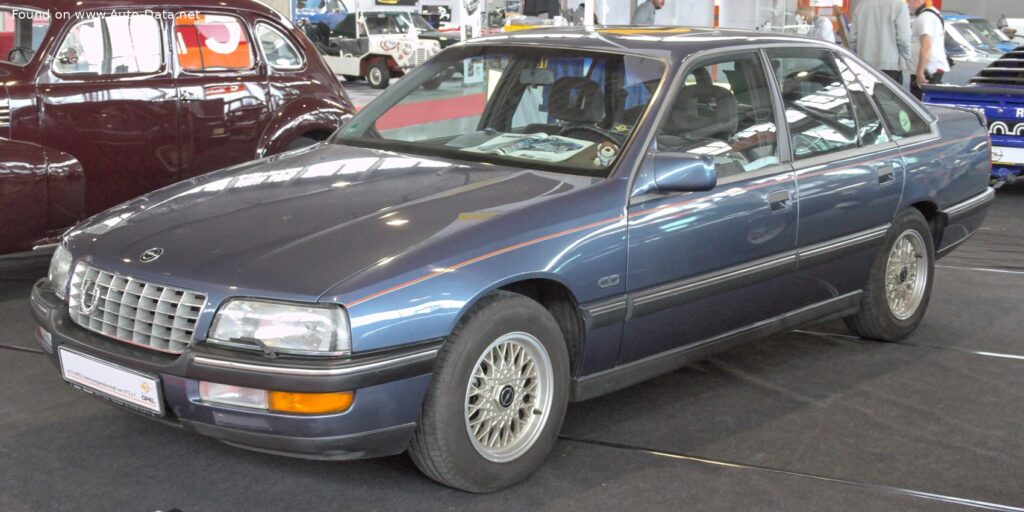
The Opel Senator B 3.0i (177 Hp) represents the second generation of Opel’s flagship full-size executive sedan, a vehicle designed to compete with established luxury marques in the European market during the late 1980s. Produced from September 1987 to August 1990, the Senator B was a sophisticated and comfortable four-door, five-seat sedan that embodied Opel’s engineering prowess and commitment to the premium segment. While never officially sold under the Opel badge in the United States, its mechanical underpinnings and design philosophy were indicative of General Motors’ global strategies, often appearing rebadged as a Vauxhall Senator in the United Kingdom or a Holden Commodore/Calais in Australia. This particular variant, powered by a robust 3.0-liter inline-six engine, was a popular choice for those seeking a blend of performance, space, and understated luxury.
Engineering and Performance: The Heart of the Opel Senator B 3.0i
At the core of the Opel Senator B 3.0i‘s appeal was its powertrain. The vehicle was equipped with a naturally aspirated 3.0-liter (2969 cm3 or 181.18 cu. in.) inline-six gasoline engine, designated by the code 30NE. This engine, a hallmark of Opel’s larger offerings, featured a robust cast-iron block and a “Cam-in-Head” (CIH) valvetrain design, which was somewhat unique, blending overhead valve principles with a camshaft positioned directly above the cylinder head, actuating valves via short rocker arms. This configuration contributed to a compact engine design and reliable operation.
The engine produced a respectable 177 horsepower at 5600 rpm, delivering a power output of 59.6 horsepower per liter. Torque figures stood at 240 Nm (177.01 lb-ft) at 4400 rpm, providing ample pulling power across a broad rev range. Power was transmitted to the rear wheels via a standard 5-speed manual transmission, offering engaging driving dynamics that were appreciated by enthusiasts. This rear-wheel-drive architecture was traditional for executive sedans of the era, emphasizing balanced handling and a refined driving experience.
Performance metrics for the Senator B 3.0i were competitive for its class. It could accelerate from 0 to 60 mph in an estimated 8.6 seconds, and its top speed reached 136.7 mph (220 km/h). Fuel economy was rated at 23.1 US mpg (10.2 liters per 100 km) combined, which was reasonable for a large, powerful sedan of its time. The vehicle’s weight-to-power ratio was 8.1 kg/Hp (123.3 Hp/tonne), indicating a solid balance between mass and propulsion.
Design and Features: Executive Comfort and Late-80s Innovation
The design of the Opel Senator B was characterized by its clean, aerodynamic lines, a significant evolution from its more angular predecessor. With a drag coefficient (Cd) of 0.30, it was quite slippery for a sedan of its size, contributing to both fuel efficiency and reduced wind noise at higher speeds. The four-door sedan body offered a spacious and comfortable cabin for five occupants, making it an ideal long-distance cruiser.
Dimensions were generous, with a length of 190.75 inches (4845 mm), a width of 69.41 inches (1763 mm), and a height of 57.09 inches (1450 mm). A long wheelbase of 107.48 inches (2730 mm) contributed to excellent ride comfort and stable handling. The trunk space was substantial, ranging from 18.72 cu. ft. (530 liters) to a maximum of 32.84 cu. ft. (930 liters) with the rear seats folded, offering practical utility for luggage or larger items.
In terms of features, the Senator B was well-equipped for its time. It boasted an independent suspension system all around, with McPherson struts at the front and an independent coil spring setup with trailing arms and a transverse stabilizer at the rear, ensuring a smooth ride and competent handling. Braking was handled by ventilated discs at the front and solid discs at the rear, augmented by an Anti-lock Braking System (ABS), which was a significant safety feature in the late 1980s. Hydraulic power steering, utilizing a cone worm with recirculation balls, provided precise and effortless maneuverability. The car rode on 205/65 R15 tires mounted on 6J x 15-inch wheel rims, a common specification for executive cars of the era, balancing grip with ride comfort.
Technical Specifications
| Category | Specification | US/Imperial Equivalent |
|---|---|---|
| General Information | ||
| Brand | Opel | |
| Model | Senator | |
| Generation | Senator B | |
| Type (Engine) | 3.0i (177 Hp) | |
| Start of Production | September, 1987 | |
| End of Production | August, 1990 | |
| Powertrain Architecture | Internal Combustion engine | |
| Body Type | Sedan | |
| Seats | 5 | |
| Doors | 4 | |
| Performance Specs | ||
| Fuel Consumption (Combined) | 10.2 l/100 km | 23.1 US mpg |
| Fuel Type | Petrol (Gasoline) | |
| Acceleration 0-60 mph | 8.6 sec | |
| Acceleration 0-100 km/h | 9 sec | |
| Maximum Speed | 220 km/h | 136.7 mph |
| Weight-to-Power Ratio | 8.1 kg/Hp | 123.3 Hp/tonne |
| Weight-to-Torque Ratio | 6 kg/Nm | 167.2 Nm/tonne |
| Engine Specs | ||
| Power | 177 Hp @ 5600 rpm | |
| Power per liter | 59.6 Hp/l | |
| Torque | 240 Nm @ 4400 rpm | 177.01 lb.-ft. @ 4400 rpm |
| Maximum Engine Speed | 6300 rpm | |
| Engine Layout | Front, Longitudinal | |
| Engine Model/Code | 30NE | |
| Engine Displacement | 2969 cm3 | 3.0 Liters / 181.18 cu. in. |
| Number of Cylinders | 6 | |
| Engine Configuration | Inline | |
| Cylinder Bore | 95 mm | 3.74 in. |
| Piston Stroke | 69.8 mm | 2.75 in. |
| Compression Ratio | 9.4:1 | |
| Number of Valves per Cylinder | 2 | |
| Fuel Injection System | Multi-port manifold injection | |
| Engine Aspiration | Naturally aspirated engine | |
| Valvetrain | CIH (Cam-in-Head) | |
| Engine Oil Capacity | 5.5 l | 5.81 US qt |
| Coolant Capacity | 10.1 l | 10.67 US qt |
| Space, Volume, and Weights | ||
| Kerb Weight | 1435 kg | 3163.63 lbs. |
| Max. Weight (GVWR) | 2005 kg | 4420.27 lbs. |
| Max Load | 570 kg | 1256.63 lbs. |
| Trunk (Boot) Space – Minimum | 530 l | 18.72 cu. ft. |
| Trunk (Boot) Space – Maximum | 930 l | 32.84 cu. ft. |
| Fuel Tank Capacity | 75 l | 19.81 US gal |
| Max. Roof Load | 100 kg | 220.46 lbs. |
| Permitted Trailer Load with Brakes (12%) | 1700 kg | 3747.86 lbs. |
| Permitted Trailer Load without Brakes | 720 kg | 1587.33 lbs. |
| Permitted Towbar Download | 75 kg | 165.35 lbs. |
| Dimensions | ||
| Length | 4845 mm | 190.75 in. |
| Width | 1763 mm | 69.41 in. |
| Height | 1450 mm | 57.09 in. |
| Wheelbase | 2730 mm | 107.48 in. |
| Front Track | 1450 mm | 57.09 in. |
| Rear (Back) Track | 1468 mm | 57.8 in. |
| Ride Height (Ground Clearance) | 140 mm | 5.51 in. |
| Drag Coefficient (Cd) | 0.30 | |
| Minimum Turning Circle (Diameter) | 10.95 m | 35.93 ft. |
| Drivetrain, Brakes, and Suspension Specs | ||
| Drivetrain Architecture | Internal combustion engine drives rear wheels | Rear-wheel drive |
| Drive Wheel | Rear wheel drive | |
| Number of Gears and Type of Gearbox | 5 gears, manual transmission | |
| Front Suspension | Independent, McPherson with coil spring and anti-roll bar | |
| Rear Suspension | Independent coil spring, Transverse stabilizer, Trailing arm | |
| Front Brakes | Ventilated discs | |
| Rear Brakes | Disc | |
| Assisting Systems | ABS (Anti-lock braking system) | |
| Steering Type | Cone worm with recirculation balls | |
| Power Steering | Hydraulic Steering | |
| Tire Size | 205/65 R15 | |
| Wheel Rims Size | 6J x 15 |
Legacy and Market Impact of the Opel Senator B 3.0i
The Opel Senator B 3.0i occupied a significant niche in the European automotive landscape. It was positioned as a comfortable, robust, and well-appointed executive sedan, offering a compelling alternative to its more expensive German rivals such as the BMW 5 Series (E28/E34 generation) and the Mercedes-Benz W124 (E-Class). While it might not have commanded the same brand prestige as its premium competitors, the Senator B carved out a reputation for its excellent value, solid engineering, and understated elegance. It was particularly favored by fleet buyers, company executives, and families seeking a spacious and reliable vehicle for long-distance travel.
Competitors for the Senator B included not only the aforementioned BMW and Mercedes-Benz but also other European large sedans like the Ford Scorpio/Granada and various models from Volvo and Saab. The Senator distinguished itself with its smooth inline-six engines, comfortable ride, and relatively high levels of standard equipment for its price point. Its rear-wheel-drive platform and independent suspension also gave it a dynamic edge over some front-wheel-drive rivals, appealing to drivers who appreciated traditional handling characteristics.
The Senator B’s production run coincided with a period of intense competition and evolving consumer tastes in the executive segment. Although it was a strong contender, the market began to shift towards more overtly luxurious or sportier offerings, and Opel’s strategy eventually moved towards consolidating its large car efforts. The Senator B was effectively replaced by the Omega B, which continued Opel’s presence in the executive segment but also marked a slight shift in market positioning. Today, the Opel Senator B 3.0i is remembered as a testament to Opel’s capability in producing a refined and powerful executive car, a comfortable cruiser that delivered strong performance and reliable service to its owners across Europe.