Introduction to the Suzuki Ignis II 1.2 DualJet (90 Hp) ALLGRIP + SHVS 5 Seat
The Suzuki Ignis II 1.2 DualJet (90 Hp) ALLGRIP + SHVS 5 Seat represents a distinctive entry in the burgeoning subcompact SUV, or “micro-SUV,” segment. Launched in 2016 as the second generation of the Ignis nameplate, this particular variant quickly distinguished itself in its primary markets, which predominantly included Europe, Japan, and India. While not directly offered in the United States, the Ignis II exemplifies Suzuki’s engineering philosophy of creating lightweight, highly efficient, and surprisingly capable vehicles tailored for urban environments with a hint of adventurous spirit. This model, produced until December 2019, combined a fuel-efficient gasoline engine with Suzuki’s mild-hybrid SHVS (Smart Hybrid Vehicle by Suzuki) technology and an intelligent ALLGRIP all-wheel-drive system, making it a compelling package for consumers seeking practicality, economy, and enhanced traction in a compact footprint. Its unique styling and robust feature set allowed it to carve out a significant niche among city dwellers and those navigating varied terrains.
Engine and Performance: The Heart of the Suzuki Ignis II 1.2 DualJet (90 Hp) ALLGRIP + SHVS 5 Seat
At the core of the Suzuki Ignis II 1.2 DualJet (90 Hp) ALLGRIP + SHVS 5 Seat lies a sophisticated K12C 1.2-liter (1242 cm³) DualJet gasoline engine. This naturally aspirated, inline four-cylinder powerplant is renowned for its efficiency and smooth power delivery. It produces a respectable 90 horsepower at 6000 rpm and 88.51 lb.-ft. of torque at 4400 rpm, figures that might seem modest on paper but are perfectly suited for the Ignis’s exceptionally light curb weight, which ranges from 1951 to 2028 lbs. This translates to a commendable weight-to-power ratio of 9.8 kg/Hp, ensuring sprightly performance for its class.
A key differentiator for this Ignis variant is the integration of Suzuki’s SHVS mild-hybrid system. This innovative technology utilizes an Integrated Starter Generator (ISG) that assists the engine during acceleration, recovers energy during deceleration through regenerative braking, and enables an advanced idle stop/start function. The SHVS system significantly contributes to the Ignis’s outstanding fuel economy, boasting an impressive combined rating of 50 US mpg (4.7 l/100 km). Furthermore, it helps reduce CO2 emissions to just 106 g/km, allowing the vehicle to meet stringent Euro 6 emission standards.
Power is channeled through a precise 5-speed manual transmission, offering engaging control for the driver. The ALLGRIP all-wheel-drive system further enhances the vehicle’s versatility. Unlike traditional full-time AWD, Suzuki’s ALLGRIP system primarily drives the front wheels, engaging the rear wheels via an electrically or mechanically operated clutch only when slippage is detected or anticipated. This on-demand system optimizes fuel efficiency while providing added traction in adverse conditions, making the Ignis surprisingly capable on light trails or in snowy urban environments. Performance figures include an acceleration from 0 to 60 mph in 10.9 seconds and a top speed of 102.53 mph, perfectly adequate for its intended use as an urban and light-adventure crossover.
Design and Features: Micro-SUV Aesthetics and Practicality
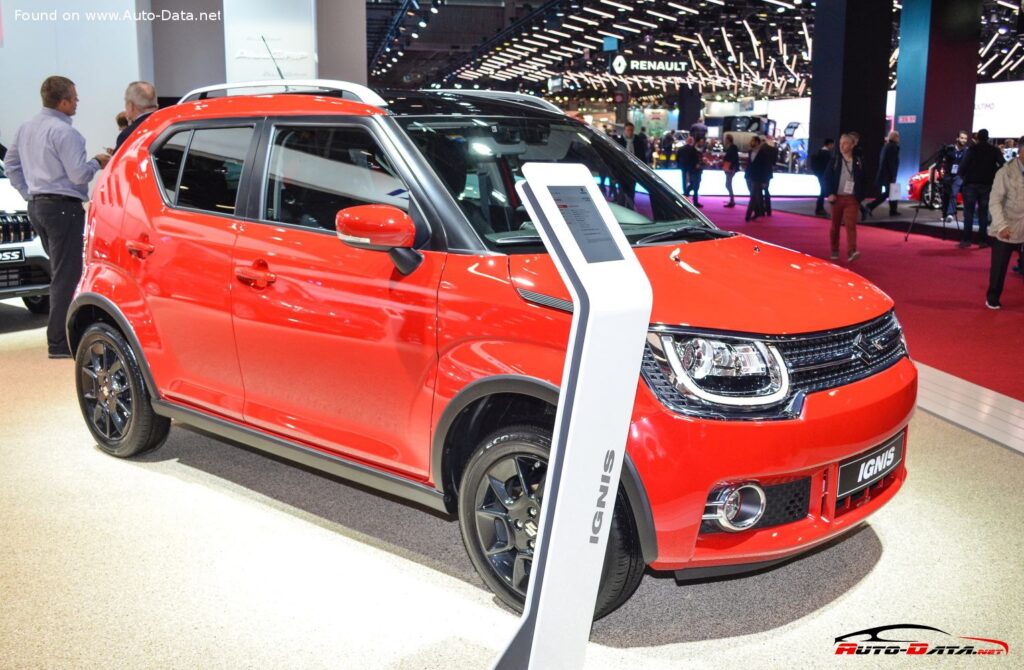
The design of the Suzuki Ignis II is undeniably distinctive, blending retro cues with modern proportions to create a unique “micro-SUV” aesthetic. With its compact dimensions – a length of 145.67 inches, a width of 66.54 inches, and a height of 62.8 inches – the Ignis is exceptionally agile and easy to maneuver in tight city spaces. Despite its small footprint, the vehicle offers a surprisingly commanding presence with its tall stature, prominent wheel arches, and a unique C-pillar design featuring three slashes, a nod to Suzuki’s classic models. Its generous ground clearance of 7.09 inches further underscores its SUV aspirations, allowing it to confidently tackle uneven urban terrain or unpaved roads.
Inside, the Ignis II is configured as a 5-door, 5-seat SUV, prioritizing practicality and intelligent packaging. The interior space is optimized to offer ample headroom and legroom for its size. The trunk space is versatile, offering a minimum of 8.02 cubic feet (227 liters), which can expand significantly to 37.29 cubic feet (1056 liters) with the rear seats folded down, making it suitable for varying cargo needs. Key features include an electric power steering system for effortless maneuverability, a robust suspension setup with independent McPherson struts at the front and a semi-independent coil spring system at the rear, providing a comfortable yet stable ride. Braking is handled by ventilated discs upfront and reliable drums at the rear, augmented by an Anti-lock Braking System (ABS) for enhanced safety. The vehicle rides on 175/60 R16 tires, mounted on 16-inch wheel rims, which contribute to both its visual appeal and handling dynamics.
Technical Specifications
| Category | Specification |
|---|---|
| Brand | Suzuki |
| Model | Ignis |
| Generation | Ignis II |
| Type (Engine) | 1.2 DualJet (90 Hp) ALLGRIP + SHVS 5 Seat |
| Production Start | 2016 year |
| Production End | December, 2019 year |
| Powertrain Architecture | Internal Combustion engine + Mild-Hybrid (SHVS) |
| Body Type | SUV |
| Seats | 5 |
| Doors | 5 |
| Performance Specifications | |
| Fuel Consumption (Urban) | 5.2 l/100 km (45.2 US mpg) |
| Fuel Consumption (Extra Urban) | 4.4 l/100 km (53.5 US mpg) |
| Fuel Consumption (Combined) | 4.7 l/100 km (50 US mpg) |
| CO2 Emissions | 106 g/km |
| Fuel Type | Petrol (Gasoline) |
| Acceleration 0-60 mph | 10.9 sec |
| Maximum Speed | 102.53 mph (165 km/h) |
| Emission Standard | Euro 6 |
| Weight-to-Power Ratio | 9.8 kg/Hp (101.7 Hp/tonne) |
| Weight-to-Torque Ratio | 7.4 kg/Nm (135.6 Nm/tonne) |
| Engine Specifications | |
| Power | 90 Hp @ 6000 rpm |
| Torque | 88.51 lb.-ft. @ 4400 rpm (120 Nm) |
| Engine Layout | Front, Transverse |
| Engine Model/Code | K12C |
| Engine Displacement | 1.2 Liters (1242 cm³, 75.79 cu. in.) |
| Number of Cylinders | 4 |
| Engine Configuration | Inline |
| Cylinder Bore | 2.87 in. (73 mm) |
| Piston Stroke | 2.92 in. (74.2 mm) |
| Compression Ratio | 12.5:1 |
| Valves per Cylinder | 4 |
| Fuel Injection System | Multi-port manifold injection |
| Engine Aspiration | Naturally aspirated |
| Engine Oil Capacity | 3.49 US qt (3.3 l) |
| Coolant Capacity | 4.23 US qt (4 l) |
| Dimensions, Volume, and Weights | |
| Kerb Weight | 1951.09 – 2028.25 lbs (885-920 kg) |
| Max. Weight | 2932.15 lbs (1330 kg) |
| Max Load | 903.9 – 981.06 lbs (410-445 kg) |
| Trunk Space (Minimum) | 8.02 cu. ft. (227 l) |
| Trunk Space (Maximum) | 37.29 cu. ft. (1056 l) |
| Fuel Tank Capacity | 7.93 US gal (30 l) |
| Permitted Trailer Load (with brakes) | 2204.62 lbs (1000 kg) |
| Permitted Trailer Load (without brakes) | 881.85 lbs (400 kg) |
| Permitted Towbar Download | 110.23 lbs (50 kg) |
| Length | 145.67 in. (3700 mm) |
| Width | 66.54 in. (1690 mm) |
| Height | 62.8 in. (1595 mm) |
| Wheelbase | 95.87 in. (2435 mm) |
| Front Track | 57.48 in. (1460 mm) |
| Rear Track | 57.48 in. (1460 mm) |
| Ride Height (Ground Clearance) | 7.09 in. (180 mm) |
| Minimum Turning Circle | 30.84 ft. (9.4 m) |
| Approach Angle | 20° |
| Departure Angle | 38.3° |
| Ramp-over (Brakeover) Angle | 19.2° |
| Drivetrain, Brakes, and Suspension | |
| Drivetrain Architecture | ICE drives front wheels permanently; rear wheels driven via clutch when necessary. |
| Drive Wheel | All-wheel drive (4×4) |
| Gearbox Type | 5-speed manual transmission |
| Front Suspension | Independent type McPherson |
| Rear Suspension | Semi-independent, coil spring |
| Front Brakes | Ventilated discs |
| Rear Brakes | Drum |
| Assisting Systems | ABS (Anti-lock braking system) |
| Steering Type | Steering rack and pinion |
| Power Steering | Electric Steering |
| Tires Size | 175/60 R16 |
| Wheel Rims Size | 16 inches |
Legacy and Market Impact
The Suzuki Ignis II 1.2 DualJet (90 Hp) ALLGRIP + SHVS 5 Seat carved a unique and successful niche in markets where it was sold. Its primary appeal lay in its exceptional blend of compact dimensions, robust design, impressive fuel efficiency, and the added capability of an all-wheel-drive system. In Europe, it competed against other small crossovers and city cars, such as the Fiat Panda 4×4, Dacia Sandero Stepway, and even smaller versions of the Renault Captur. Its distinctive styling, which many found endearing, also helped it stand out in a crowded segment.
Suzuki’s reputation for building reliable, economical, and durable small cars was significantly bolstered by the Ignis II. The integration of the SHVS mild-hybrid system demonstrated Suzuki’s commitment to eco-friendly technologies without compromising on affordability or practicality. This made the Ignis an attractive option for environmentally conscious buyers and those looking to minimize running costs. The ALLGRIP system, while not intended for serious off-roading, provided a significant advantage in areas with challenging weather conditions or unpaved roads, enhancing the vehicle’s versatility and appeal.
Ultimately, the second-generation Ignis with its DualJet engine, SHVS, and ALLGRIP system became a testament to Suzuki’s expertise in designing and manufacturing compact, efficient, and surprisingly capable vehicles. It successfully revived a dormant nameplate and solidified Suzuki’s position as a leader in the global small car market, particularly in segments that prioritize value, efficiency, and a touch of adventurous spirit. Its legacy endures as a practical, economical, and charming urban crossover that punched above its weight in terms of features and capability.