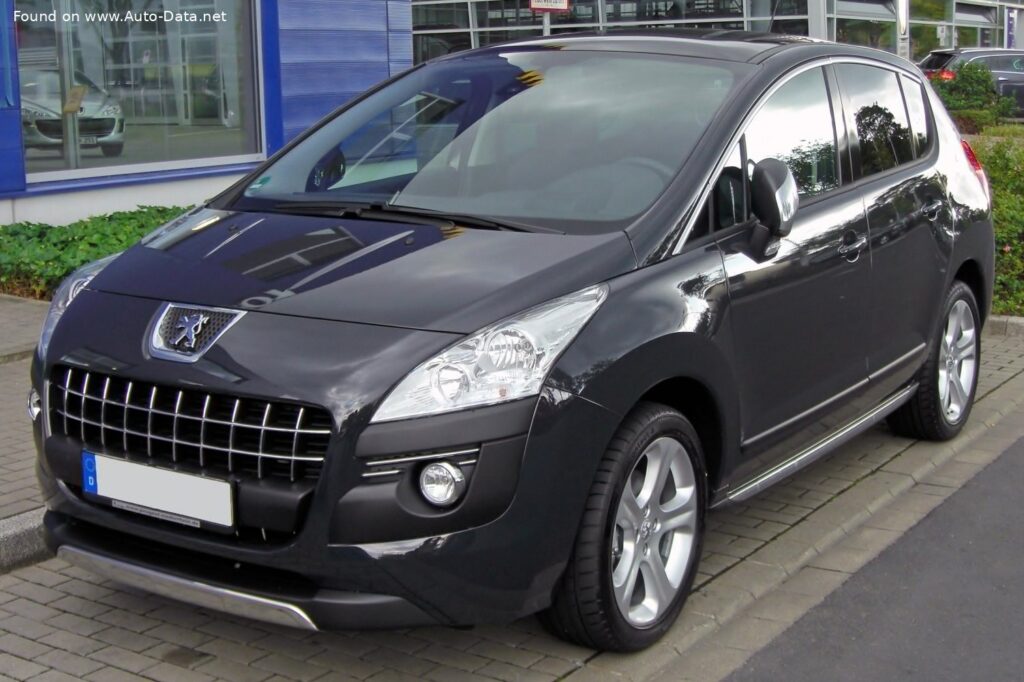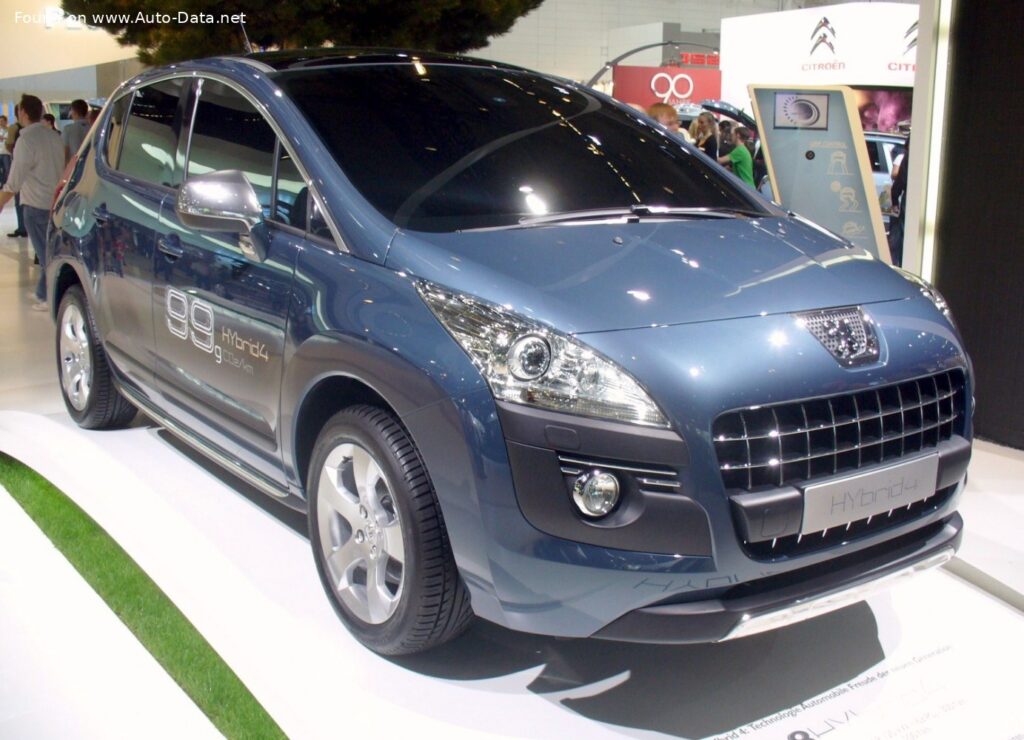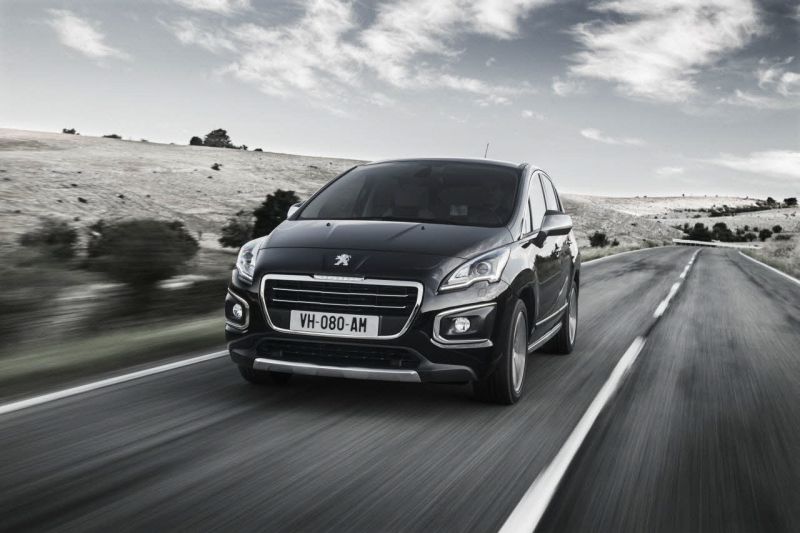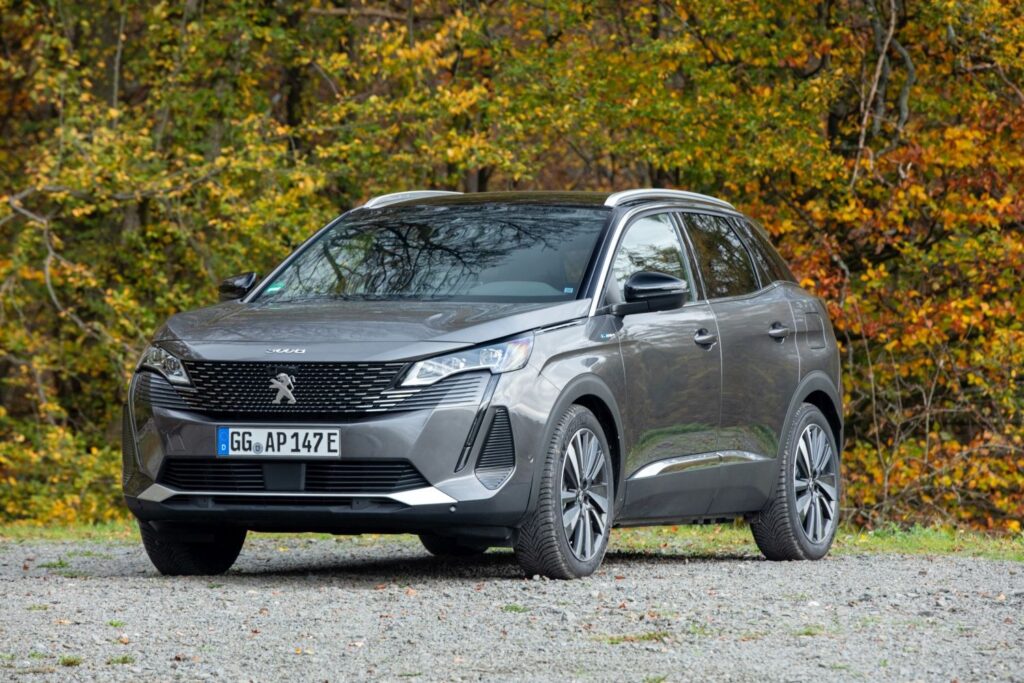
Peugeot 3008 II (Phase II, 2020) 1.2 PureTech (131 Hp)
The Peugeot 3008 II (Phase II, 2020) 1.2 PureTech (131 Hp) represents a significant evolution in the French automaker’s foray into the highly competitive compact SUV segment. Launched in September 2020 as a facelifted version of the second-generation 3008, this model solidified Peugeot’s reputation for combining distinctive design, innovative technology, and impressive efficiency. While Peugeot models are not widely available in the United States market, the 3008 has been a runaway success in its primary European and Asian markets, earning accolades for its stylish aesthetics and refined driving experience. This particular iteration, powered by a compact yet potent 1.2-liter PureTech gasoline engine, offered an appealing balance of performance and fuel economy, catering to a broad demographic looking for a practical, family-friendly vehicle with a premium feel.
The second-generation Peugeot 3008, initially introduced in 2016, marked a dramatic shift from its more MPV-like predecessor, embracing the growing trend towards SUV styling. The Phase II refresh in 2020 brought sharper exterior lines, updated lighting signatures, and enhanced interior technology, keeping the model fresh against a wave of new competitors. This specific 1.2 PureTech variant, produced until September 2023, exemplifies modern European automotive engineering, focusing on downsizing and turbocharging to deliver efficient power output while meeting stringent emission standards like Euro 6d-ISC-FCM.
Engine and Performance of the Peugeot 3008 II (Phase II, 2020)
At the heart of this particular Peugeot 3008 II (Phase II, 2020) lies the acclaimed 1.2-liter PureTech gasoline engine, a three-cylinder, inline configuration known for its surprising vigor and refinement. Despite its modest displacement of 1199 cubic centimeters (approximately 73.17 cubic inches), this engine is a testament to modern powertrain technology. Featuring direct fuel injection, a turbocharger, and an intercooler, it delivers a robust 131 horsepower at 5500 rpm. This power output, coupled with a healthy torque figure of 230 Nm (169.64 lb.-ft.) available at a low 1750 rpm, ensures responsive acceleration and confident overtaking maneuvers, especially in urban and highway environments.
Power is transmitted to the front wheels via a smooth-shifting 6-speed manual transmission, offering engaging control for the driver. The vehicle’s powertrain architecture is a conventional front, transverse engine layout, driving the front wheels. This setup, combined with a relatively low curb weight of 2910.1 pounds, contributes to its agile handling characteristics. Performance figures include an acceleration from 0 to 60 mph in approximately 9 seconds, and a top speed of 116.82 mph, which are respectable for a compact SUV with a small-displacement engine.
Fuel efficiency is a strong suit for the 1.2 PureTech engine. Under the WLTP (Worldwide Harmonized Light Vehicles Test Procedure) cycle, the combined fuel consumption ranges from 5.9 to 7.2 liters per 100 kilometers, which translates to an impressive 39.9 to 32.7 US miles per gallon. This efficiency is further bolstered by modern engine systems such as a Start & Stop system, which conserves fuel during idling, and a particulate filter to reduce emissions. The vehicle adheres to the stringent Euro 6d-ISC-FCM emission standard, underscoring its commitment to environmental performance.
Design and Features
The Peugeot 3008 II (Phase II, 2020) distinguishes itself with a bold and contemporary design that sets it apart in the crowded SUV market. Its body type is a traditional 5-door SUV, comfortably seating five occupants. The facelift introduced a more assertive front fascia, characterized by a frameless grille that seamlessly integrates with the redesigned headlights and distinctive “fang-like” LED daytime running lights, a signature Peugeot design element.
Dimensionally, the 3008 measures 175.08 inches in length, 72.48 inches in width (82.6 inches including mirrors), and 63.94 inches in height, with a wheelbase of 105.31 inches. These proportions contribute to a commanding road presence while maintaining maneuverability. The generous ground clearance of 8.62 inches, coupled with respectable approach and departure angles (20° and 29° respectively), provides decent capability for light off-road excursions or navigating challenging urban terrain, such as speed bumps and curbs. A notable wading depth of 27.56 inches further enhances its versatility.
Inside, the 3008 showcases Peugeot’s innovative i-Cockpit philosophy, which reimagines the traditional driver’s environment. This typically includes a compact steering wheel, a customizable digital instrument cluster positioned above the steering wheel, and a central touchscreen infotainment system. While specific interior features are not detailed in the raw data, the Phase II update generally brought improvements to material quality, connectivity options, and advanced driver-assistance systems (ADAS), making it a technologically advanced offering for its class. Practicality is also a highlight, with a minimum trunk space of 18.36 cubic feet, expandable to a generous 52.34 cubic feet with the rear seats folded down, making it highly adaptable for families and cargo needs. Safety features include standard ABS (Anti-lock Braking System), with further active and passive safety systems typically available across the trim levels.
Technical Specifications
| Category | Specification |
|---|---|
| Brand | Peugeot |
| Model | 3008 |
| Generation | 3008 II (Phase II, 2020) |
| Type (Engine) | 1.2 PureTech (131 Hp) |
| Production Start | September, 2020 |
| Production End | September, 2023 |
| Body Type | SUV |
| Seats | 5 |
| Doors | 5 |
| Fuel Type | Petrol (Gasoline) |
| Acceleration 0-60 mph | 9 seconds |
| Maximum Speed | 116.82 mph (188 km/h) |
| Combined Fuel Consumption (WLTP) | 39.9 – 32.7 US mpg (5.9-7.2 l/100 km) |
| CO2 Emissions (WLTP) | 133-163 g/km |
| Emission Standard | Euro 6d-ISC-FCM |
| Power | 131 Hp @ 5500 rpm |
| Torque | 169.64 lb.-ft. (230 Nm) @ 1750 rpm |
| Engine Layout | Front, Transverse |
| Engine Displacement | 1199 cm3 (1.2 Liters / 73.17 cu. in.) |
| Number of Cylinders | 3, Inline |
| Number of Valves per Cylinder | 4 |
| Fuel Injection System | Direct injection |
| Engine Aspiration | Turbocharger, Intercooler |
| Engine Oil Capacity | 3.7 US qt (3.5 l) |
| Kerb Weight | 2910.1 lbs. (1320 kg) |
| Maximum Weight | 4210.83 lbs. (1910 kg) |
| Maximum Load | 1300.73 lbs. (590 kg) |
| Trunk Space (Min/Max) | 18.36 – 52.34 cu. ft. (520 – 1482 l) |
| Fuel Tank Capacity | 14 US gal (53 l) |
| Length | 175.08 in. (4447 mm) |
| Width | 72.48 in. (1841 mm) |
| Width with Mirrors Folded | 75.04 in. (1906 mm) |
| Width Including Mirrors | 82.6 in. (2098 mm) |
| Height | 63.94 in. (1624 mm) |
| Wheelbase | 105.31 in. (2675 mm) |
| Front Track | 62.17 – 63.03 in. (1579-1601 mm) |
| Rear Track | 62.48 – 63.39 in. (1587-1610 mm) |
| Ground Clearance | 8.62 in. (219 mm) |
| Minimum Turning Circle | 35.1 ft. (10.7 m) |
| Approach Angle | 20° |
| Departure Angle | 29° |
| Wading Depth | 27.56 in. (700 mm) |
| Drive Wheel | Front-wheel drive |
| Gearbox | 6 gears, manual transmission |
| Front Suspension | Independent, McPherson with coil spring and anti-roll bar |
| Rear Suspension | Semi-independent, coil spring |
| Front Brakes | Ventilated discs |
| Rear Brakes | Disc |
| Assisting Systems | ABS (Anti-lock braking system) |
| Steering Type | Steering rack and pinion, Electric Steering |
| Tire Sizes | 215/65 R17 103V; 225/55 R18 102V; 205/55 R19 97V |
| Wheel Rims Size | 17; 18; 19 inches |
Legacy and Market Impact
The Peugeot 3008 II (Phase II, 2020) 1.2 PureTech (131 Hp) played a pivotal role in solidifying Peugeot’s position as a serious contender in the European and global compact SUV market. The second-generation 3008, including this facelifted variant, was instrumental in transforming Peugeot’s brand image from a manufacturer of conventional, often understated, vehicles to a purveyor of stylish, technologically advanced, and segment-leading crossovers. The original 3008 II even won the prestigious European Car of the Year award in 2017, a testament to its groundbreaking design and engineering.
In its primary markets, the 3008 competed fiercely against established rivals such as the Nissan Qashqai, Volkswagen Tiguan, Renault Kadjar, Hyundai Tucson, and Kia Sportage. What set the 3008 apart was its distinctive “i-Cockpit” interior, which offered a futuristic and driver-focused cabin experience, alongside its bold exterior styling and robust, yet efficient, powertrain options like the 1.2 PureTech. This engine, in particular, was lauded for its ability to deliver ample performance for daily driving while maintaining impressive fuel economy, crucial for European consumers facing high fuel prices and strict emissions regulations.
While the Peugeot 3008 was never officially sold in the United States, due to Peugeot’s withdrawal from the North American market decades ago and its current strategic focus on Europe, Africa, the Middle East, and Latin America, its impact is globally recognized. It demonstrated that a mainstream brand could offer premium design and technology without necessarily carrying a premium badge. The success of the 3008, especially in its 1.2 PureTech configuration, highlighted the growing trend of engine downsizing combined with turbocharging, proving that smaller engines could effectively power larger vehicles with efficiency and adequate performance. Its legacy is one of innovation, design excellence, and a significant contribution to Peugeot’s resurgence as a relevant and desirable automotive brand on the international stage.