Introduction to the Volvo V60 I (2013 facelift) 2.0 D3 (150 Hp) Automatic
The Volvo V60 I (2013 facelift) represents a pivotal moment in Volvo’s design and engineering philosophy, blending traditional Swedish practicality with a more dynamic and sporty aesthetic. This particular variant, the Volvo V60 I (2013 facelift) 2.0 D3 (150 Hp) Automatic, was a popular choice in its primary European market from its production start in 2015 until 2018. Positioned in the premium compact executive segment, the V60 served as Volvo’s answer to competitors offering stylish yet functional wagons. While the V60 nameplate did see limited availability in the United States, often with gasoline powertrains, this specific D3 diesel configuration was primarily tailored for European markets, where diesel engines offered a compelling balance of fuel efficiency and torque. The 2013 facelift brought a host of exterior and interior refinements, aligning the V60 with Volvo’s updated design language and enhancing its appeal as a sophisticated and safe family hauler.
Engine and Performance: The Efficient D3 Powertrain
Under the hood of the Volvo V60 I (2013 facelift) 2.0 D3 (150 Hp) Automatic lies Volvo’s D4204T9 engine, a modern 2.0-liter (1969 cm3 or 120.16 cubic inches) inline four-cylinder diesel unit. This powertrain architecture, specifically designed for front-wheel-drive applications, was a testament to Volvo’s commitment to efficiency and refined performance. The engine features a sophisticated common rail fuel injection system, complemented by a turbocharger and intercooler, which together optimize combustion and power delivery across the rev range.
Outputting a respectable 150 horsepower at 3750 rpm, the D3 engine provided ample power for daily driving and highway cruising. More significantly, it generated a robust 236.02 lb.-ft. of torque, available from a low 1750 rpm up to 3000 rpm. This broad torque band ensured strong pulling power, making the V60 feel responsive and capable, particularly in urban environments and when overtaking. Power was channeled to the front wheels via a smooth-shifting 6-speed automatic transmission, which balanced performance with fuel economy.
In terms of acceleration, the V60 2.0 D3 could sprint from 0 to 60 mph in a swift 8.6 seconds, with a top speed rated at 130.49 mph. However, where this powertrain truly shined was its exceptional fuel efficiency. With a combined fuel consumption of 56 US mpg (4.2 liters per 100 km), it was an incredibly economical choice for long-distance travel, a key selling point in Europe. Its CO2 emissions were remarkably low at 109 g/km, reflecting Volvo’s engineering prowess in developing environmentally conscious powertrains within the diesel segment. The engine’s DOHC valvetrain and 16:1 compression ratio further underscored its modern design, contributing to both performance and efficiency.
Design and Features: Scandinavian Practicality Meets Modern Aesthetics
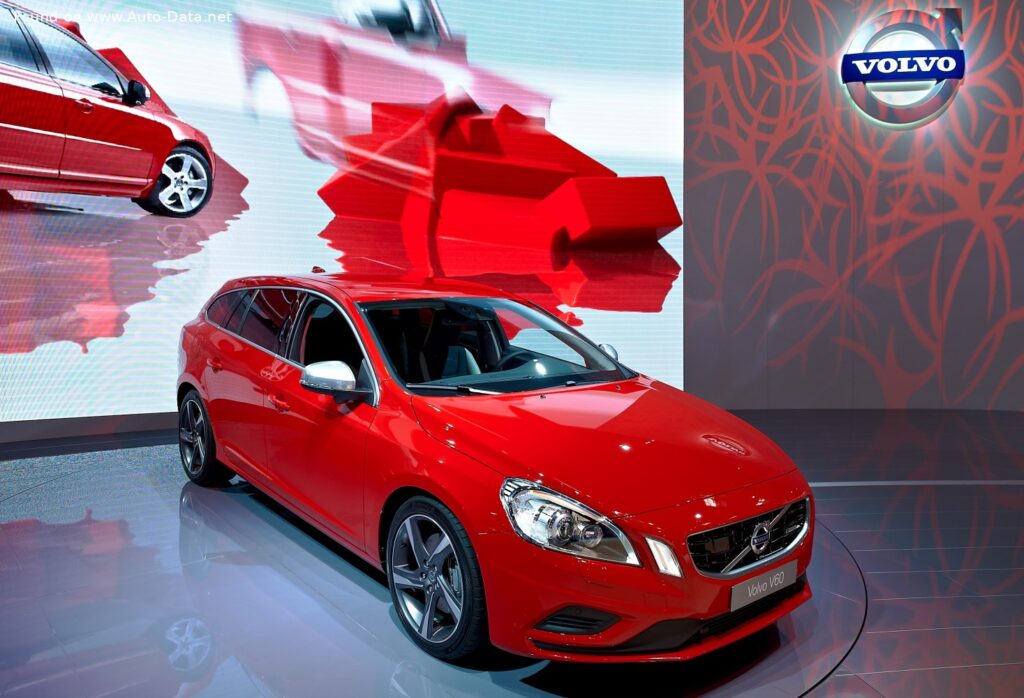
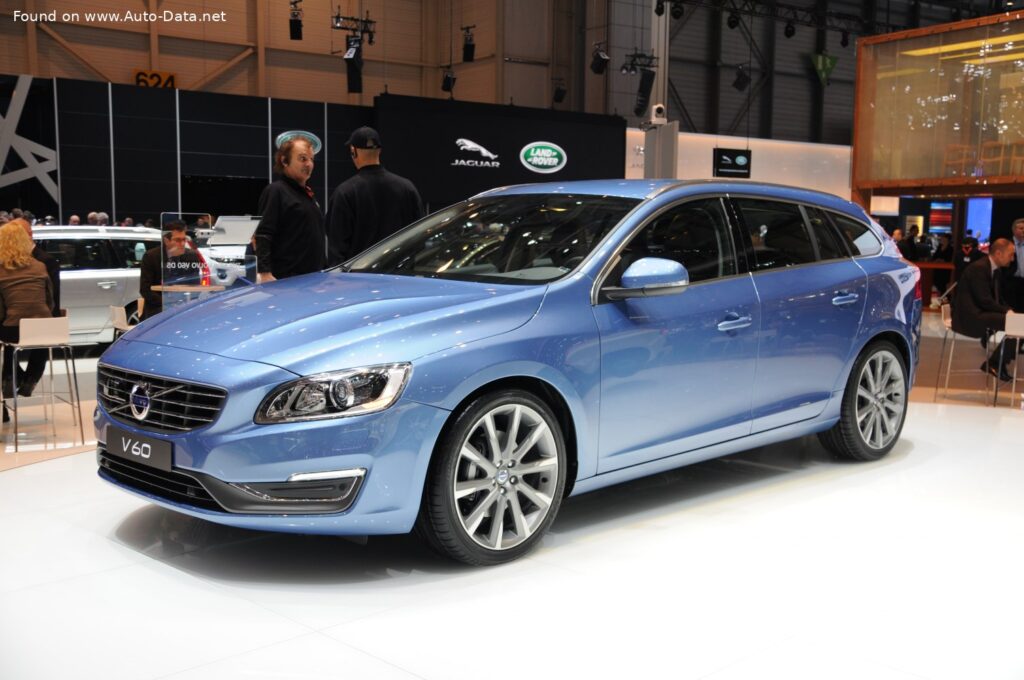
The Volvo V60 I (2013 facelift) maintained its distinctive “station wagon” body type, a hallmark of Volvo’s heritage, while incorporating contemporary design elements. The facelift introduced a more cohesive and assertive front fascia, featuring a wider grille and redesigned headlights that gave the V60 a more sophisticated and dynamic presence. The clean lines and sculpted profile contributed to an excellent drag coefficient of 0.29, enhancing both aerodynamics and fuel economy.
Inside, the V60 offered a typically Scandinavian interior: minimalistic, ergonomic, and constructed from high-quality materials. It comfortably seated five occupants across its five doors, providing a practical and family-friendly cabin. The trunk space, a critical aspect for any wagon, offered a minimum of 15.19 cubic feet (430 liters), expandable for larger cargo needs. Practical features like a 17.83 US gallon (67.5 liter) fuel tank ensured a long cruising range, while a maximum roof load of 165.35 lbs. (75 kg) and a substantial permitted trailer load of up to 3968.32 lbs. (1800 kg with brakes) highlighted its versatility.
The V60’s chassis was engineered for a balanced ride, combining comfort with confident handling. It featured an independent McPherson strut front suspension with coil springs and an anti-roll bar, paired with an independent coil spring rear suspension. Braking performance was assured by ventilated discs at the front and disc brakes at the rear, supported by an Anti-lock Braking System (ABS) as standard. The steering system, a responsive rack and pinion setup, provided precise control. With a wheelbase of 109.29 inches (2776 mm) and a ground clearance of 5.35 inches (136 mm), the V60 offered a stable stance and comfortable ride, well-suited for varied road conditions. Volvo’s unwavering commitment to safety was a core feature, with a robust body structure and a comprehensive suite of passive and active safety systems, even if only ABS is explicitly mentioned in the technical data.
Technical Specifications
| Category | Specification | Value |
|---|---|---|
| General Information | ||
| Brand | Volvo | |
| Model | V60 | |
| Generation | V60 I (2013 facelift) | |
| Type (Engine) | 2.0 D3 (150 Hp) Automatic | |
| Start of Production | 2015 year | |
| End of Production | 2018 year | |
| Powertrain Architecture | Internal Combustion Engine | |
| Body type | Station wagon (estate) | |
| Seats | 5 | |
| Doors | 5 | |
| Performance Specifications | ||
| Fuel Consumption (combined) | 56 US mpg | 4.2 l/100 km |
| CO2 Emissions | 109 g/km | |
| Fuel Type | Diesel | |
| Acceleration 0 – 60 mph | 8.6 sec | |
| Acceleration 0 – 100 km/h | 9.1 sec | |
| Maximum Speed | 130.49 mph | 210 km/h |
| Engine Specifications | ||
| Power | 150 Hp @ 3750 rpm | |
| Power per liter | 76.2 Hp/l | |
| Torque | 236.02 lb.-ft. @ 1750-3000 rpm | 320 Nm @ 1750-3000 rpm |
| Engine Layout | Front, Transverse | |
| Engine Model/Code | D4204T9 | |
| Engine Displacement | 2.0 liters (120.16 cu. in.) | 1969 cm3 |
| Number of Cylinders | 4 | |
| Engine Configuration | Inline | |
| Cylinder Bore | 3.23 in. | 82 mm |
| Piston Stroke | 3.67 in. | 93.2 mm |
| Compression Ratio | 16:1 | |
| Valves per Cylinder | 4 | |
| Fuel Injection System | Diesel Commonrail | |
| Engine Aspiration | Turbocharger, Intercooler | |
| Valvetrain | DOHC | |
| Engine Oil Capacity | 5.49 US qt | 5.2 l |
| Coolant Capacity | 9.4 US qt | 8.9 l |
| Space, Volume, and Weights | ||
| Trunk (boot) Space – minimum | 15.19 cu. ft. | 430 l |
| Fuel Tank Capacity | 17.83 US gal | 67.5 l |
| Max. Roof Load | 165.35 lbs. | 75 kg |
| Permitted Trailer Load with brakes (8%) | 3968.32 lbs. | 1800 kg |
| Permitted Trailer Load with brakes (12%) | 3306.93 lbs. | 1500 kg |
| Dimensions | ||
| Length | 182.48 in. | 4635 mm |
| Width | 71.85 in. | 1825 mm |
| Width with mirrors folded | 74.76 in. | 1899 mm |
| Width including mirrors | 82.56 in. | 2097 mm |
| Height | 58.43 in. | 1484 mm |
| Wheelbase | 109.29 in. | 2776 mm |
| Front Track | 62.52 – 62.13 in. | 1588 – 1578 mm |
| Rear Track | 62.4 – 62.01 in. | 1585 – 1575 mm |
| Ride Height (ground clearance) | 5.35 in. | 136 mm |
| Drag Coefficient (Cd) | 0.29 | |
| Minimum Turning Circle | 37.73 – 40.68 ft. | 11.5 – 12.4 m |
| Drivetrain, Brakes, and Suspension Specifications | ||
| Drivetrain Architecture | Internal combustion engine drives the front wheels. | |
| Drive Wheel | Front wheel drive | |
| Number of Gears and Type of Gearbox | 6 gears, automatic transmission | |
| Front Suspension | Independent, type McPherson with coil spring and anti-roll bar | |
| Rear Suspension | Independent coil spring | |
| Front Brakes | Ventilated discs | |
| Rear Brakes | Disc | |
| Assisting Systems | ABS (Anti-lock braking system) | |
| Steering Type | Steering rack and pinion | |
Legacy and Market Impact of the Volvo V60 I
The Volvo V60 I, particularly in its facelifted form from 2013 to 2018, solidified Volvo’s position in the competitive premium compact executive segment in Europe. The Volvo V60 I (2013 facelift) 2.0 D3 (150 Hp) Automatic variant was a particularly strong performer in this market due to its compelling blend of efficiency, refinement, and Volvo’s renowned safety credentials. It appealed to a demographic that valued practicality and understated luxury, often seeking an alternative to the more overtly sporty German rivals.
In Europe, the V60 competed directly with established players such as the BMW 3 Series Touring, Audi A4 Avant, and Mercedes-Benz C-Class Estate. While these German competitors often emphasized dynamic driving or outright luxury, the V60 carved out its niche by focusing on a distinct Scandinavian interpretation of premium motoring: intelligent design, ergonomic comfort, and an unwavering commitment to occupant safety. The D3 engine, with its impressive fuel economy and lower CO2 emissions, was perfectly aligned with European market demands and taxation structures, making it a cost-effective choice for both private owners and fleet operators.
Historically, the V60 represented a modernized evolution of Volvo’s long-standing wagon tradition. Unlike the boxier wagons of previous decades, the V60 adopted a sleeker, more coupe-like profile, signaling Volvo’s ambition to infuse more emotion into its designs without sacrificing utility. This design direction helped attract new buyers to the brand, demonstrating that a station wagon could be both practical and stylish. The V60’s legacy is further cemented by its contribution to Volvo’s reputation for innovation, particularly in powertrain efficiency and safety technology, which paved the way for the next generation of Volvo vehicles. While this specific diesel variant remained largely a European phenomenon, the V60 nameplate itself continued to evolve globally, adapting to regional preferences while maintaining its core Volvo values. Its role was crucial in bridging Volvo’s traditional image with its contemporary vision, setting the stage for future models that would redefine the brand’s premium appeal.