The Toyota RAV4 II (XA20) 3-door: A Compact SUV Pioneer
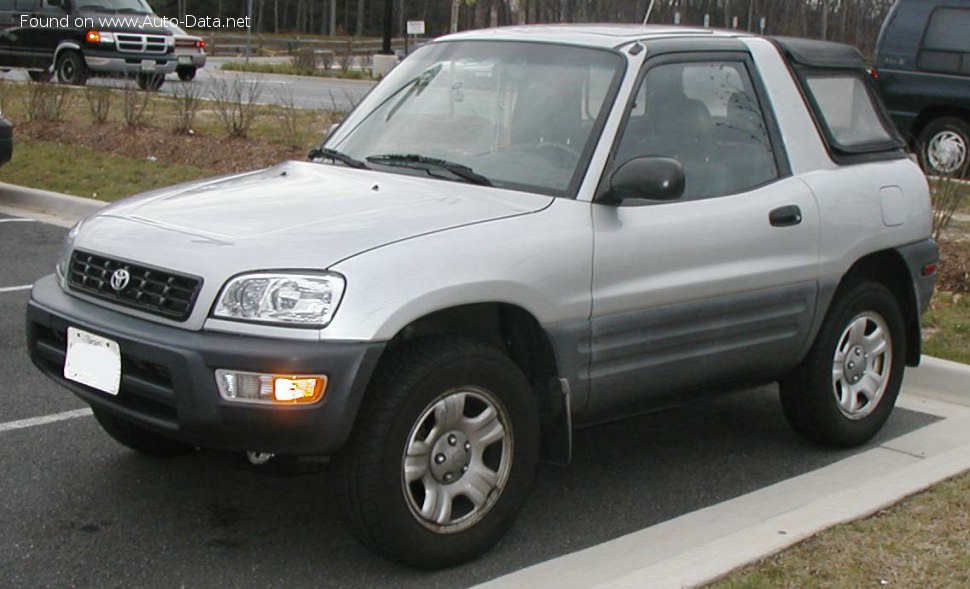
The Toyota RAV4 II (XA20) 3-door, produced from 2000 to 2003, represents a significant chapter in the evolution of the compact SUV segment. As the second generation of Toyota’s immensely popular Recreational Activity Vehicle: 4-wheel drive, the XA20 built upon the groundbreaking success of its predecessor. While the five-door variant became the more ubiquitous offering globally, the three-door model carved out a niche for itself, particularly in markets like Europe and Japan, where its more compact dimensions and distinct sporty appeal resonated with buyers seeking urban maneuverability combined with off-road aesthetic. This specific configuration, equipped with a 2.0-liter 16V engine delivering 150 horsepower and an automatic 4WD transmission, epitomized the blend of practicality, efficiency, and light-duty adventure that defined the early 2000s crossover market.
The RAV4’s initial concept was revolutionary, essentially creating the “crossover” category by combining the practicality of an SUV with the driving dynamics of a passenger car. The XA20 generation further refined this formula, offering improved comfort, enhanced safety features, and a more sophisticated design while retaining its core identity as a fun-to-drive, versatile vehicle. The three-door variant, in particular, offered a unique proposition: a more agile and visually distinctive option for those who didn’t require the full passenger capacity of its five-door sibling but still desired the elevated driving position and all-weather capability.
Engine and Performance of the Toyota RAV4 II (XA20) 3-door
Under the hood of the Toyota RAV4 II (XA20) 3-door 2.0i 16V 4WD Automatic lies Toyota’s robust 1AZ-FE engine. This naturally aspirated, inline four-cylinder powerplant boasts a displacement of 1,998 cubic centimeters (approximately 121.93 cubic inches). Utilizing a Double Overhead Camshaft (DOHC) valvetrain with four valves per cylinder and multi-port manifold injection, the engine was engineered for a balance of power, efficiency, and reliability, hallmarks of Toyota’s engineering philosophy.
The 1AZ-FE engine generates a respectable 150 horsepower at 6,000 revolutions per minute (rpm), providing ample motivation for the compact SUV. Torque output is equally competitive for its class, peaking at 192 Newton-meters (approximately 141.61 pound-feet) at 4,000 rpm. This power delivery, coupled with a compression ratio of 9.8:1, ensured smooth acceleration and responsive highway cruising. Power is routed to all four wheels through a conventional 4-speed automatic transmission, a common setup for compact SUVs of its era, prioritizing ease of use and smooth shifts.
In terms of performance, the Toyota RAV4 II (XA20) 3-door was capable of accelerating from 0 to 60 miles per hour in a brisk 10.3 seconds. Its maximum speed was rated at 108.74 miles per hour (175 km/h), making it perfectly suited for both urban commutes and longer road trips. The permanent all-wheel-drive (4WD) system provided enhanced traction and stability, especially in adverse weather conditions or on unpaved roads, reinforcing its “Recreational Activity Vehicle” moniker. Despite its 4WD system and automatic transmission, the RAV4 maintained reasonable fuel economy for its time, with a combined rating of 25.6 US miles per gallon (9.2 liters per 100 km), thanks to its relatively low curb weight and efficient engine design.
Design and Features
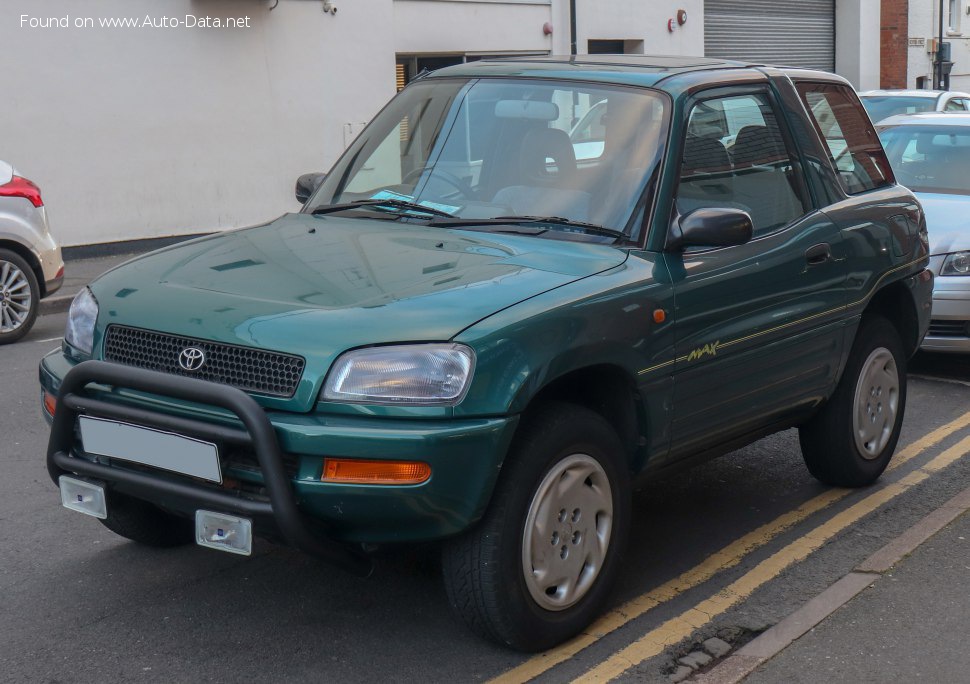
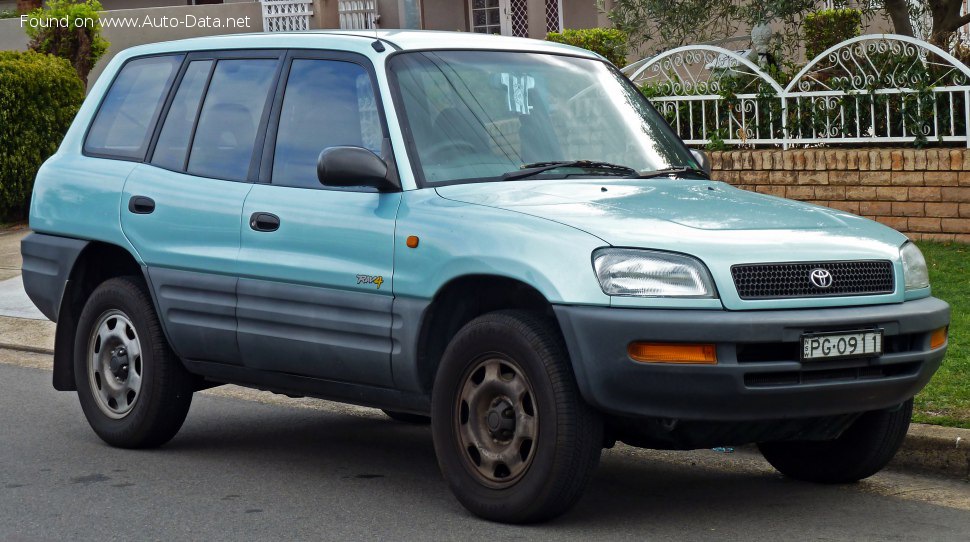
The design of the Toyota RAV4 II (XA20) 3-door was a clear evolution from the first generation, adopting a more angular, modern aesthetic while retaining its distinctive compact SUV proportions. The 3-door body type, with its shorter wheelbase and overall length, gave it a sportier, more youthful appearance compared to its 5-door counterpart. Its dimensions, ranging from 151.57 to 152.17 inches in length and 68.31 to 70.28 inches in width, made it highly maneuverable in tight city environments, a significant advantage in its primary markets. The height of 66.73 to 66.93 inches provided a commanding view of the road, a key selling point for SUV buyers.
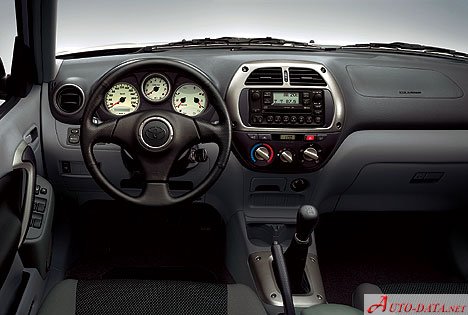
The interior of the Toyota RAV4 II (XA20) 3-door offered seating for five occupants, a testament to clever packaging within its compact footprint. While accessing the rear seats required some flexibility due to the 3-door configuration, the cabin was designed with practicality in mind, featuring durable materials and straightforward ergonomics. Cargo capacity was versatile, starting at 5.3 cubic feet (150 liters) with all seats in place, expanding significantly to 27.05 cubic feet (766 liters) when the rear seats were folded, allowing for ample luggage or recreational gear.
Key features for the era included standard power steering (hydraulic rack and pinion), ensuring easy handling, and an Anti-lock Braking System (ABS) for enhanced safety during emergency stops. The suspension setup comprised an independent McPherson strut system at the front and a double wishbone arrangement at the rear, providing a comfortable ride and stable handling characteristics. Braking was handled by ventilated discs at the front and solid discs at the rear. The vehicle rode on 16-inch wheels, typically shod with 215/70 R16 or 235/60 R16 tires, contributing to its confident stance and road presence. Its drag coefficient (Cd) of 0.35 was competitive for an SUV of its time, aiding in fuel efficiency and reducing wind noise.
Technical Specifications: Toyota RAV4 II (XA20) 3-door 2.0i 16V (150 Hp) 4WD Automatic
| Category | Specification |
|---|---|
| General Information | |
| Brand | Toyota |
| Model | RAV4 |
| Generation | RAV4 II (XA20) 3-door |
| Type (Engine) | 2.0i 16V (150 Hp) 4WD Automatic |
| Production Start | 2000 year |
| Production End | 2003 year |
| Powertrain Architecture | Internal Combustion Engine |
| Body Type | SUV |
| Seats | 5 |
| Doors | 3 |
| Performance Specs | |
| Fuel Consumption (Urban) | 12.2 l/100 km (19.3 US mpg) |
| Fuel Consumption (Extra Urban) | 7.4 l/100 km (31.8 US mpg) |
| Fuel Consumption (Combined) | 9.2 l/100 km (25.6 US mpg) |
| Fuel Type | Petrol (Gasoline) |
| Acceleration 0-60 mph | 10.3 sec |
| Maximum Speed | 175 km/h (108.74 mph) |
| Weight-to-Power Ratio | 8.1 kg/Hp (123 Hp/tonne) |
| Weight-to-Torque Ratio | 6.4 kg/Nm (157.4 Nm/tonne) |
| Engine Specs | |
| Power | 150 Hp @ 6000 rpm |
| Power per Liter | 75.1 Hp/l |
| Torque | 192 Nm @ 4000 rpm (141.61 lb.-ft. @ 4000 rpm) |
| Engine Layout | Front, Transverse |
| Engine Model/Code | 1AZ-FE |
| Engine Displacement | 1998 cm³ (121.93 cu. in.) |
| Number of Cylinders | 4 |
| Engine Configuration | Inline |
| Cylinder Bore | 86 mm (3.39 in.) |
| Piston Stroke | 86 mm (3.39 in.) |
| Compression Ratio | 9.8:1 |
| Valves per Cylinder | 4 |
| Fuel Injection System | Multi-port manifold injection |
| Engine Aspiration | Naturally aspirated |
| Valvetrain | DOHC |
| Engine Oil Capacity | 4.2 l (4.44 US qt) |
| Coolant Capacity | 6.2 l (6.55 US qt) |
| Space, Volume, and Weights | |
| Kerb Weight | 1220-1330 kg (2689.64 – 2932.15 lbs.) |
| Max. Weight (GVWR) | 1690 kg (3725.81 lbs.) |
| Max Load | 360-470 kg (793.66 – 1036.17 lbs.) |
| Trunk (Boot) Space – Minimum | 150 l (5.3 cu. ft.) |
| Trunk (Boot) Space – Maximum | 766 l (27.05 cu. ft.) |
| Fuel Tank Capacity | 57 l (15.06 US gal) |
| Dimensions | |
| Length | 3850-3865 mm (151.57 – 152.17 in.) |
| Width | 1735-1785 mm (68.31 – 70.28 in.) |
| Height | 1695-1700 mm (66.73 – 66.93 in.) |
| Wheelbase | 2280 mm (89.76 in.) |
| Front Track | 1505-1525 mm (59.25 – 60.04 in.) |
| Rear Track | 1495-1520 mm (58.86 – 59.84 in.) |
| Drag Coefficient (Cd) | 0.35 |
| Minimum Turning Circle | 10.0 m (32.81 ft.) |
| Drivetrain, Brakes, and Suspension | |
| Drive Wheel | All-wheel drive (4×4) |
| Gearbox Type | 4 gears, automatic transmission |
| Front Suspension | Independent type McPherson |
| Rear Suspension | Double wishbone |
| Front Brakes | Ventilated discs |
| Rear Brakes | Disc |
| Assisting Systems | ABS (Anti-lock Braking System) |
| Steering Type | Steering rack and pinion |
| Power Steering | Hydraulic Steering |
| Tire Size | 215/70 R16; 235/60 R16 |
| Wheel Rims Size | 6.5J x 16 |
Legacy and Market Impact
The Toyota RAV4 II (XA20) 3-door, along with its 5-door sibling, played a crucial role in cementing the RAV4’s position as a segment leader and a global bestseller. Its timing was impeccable, arriving as consumer preferences were rapidly shifting away from traditional sedans and wagons towards the versatility and perceived safety of SUVs. While the 5-door variant dominated sales in North America, the 3-door RAV4 found a dedicated following in other markets, particularly those with narrower roads and a greater emphasis on compact vehicle footprints. It appealed to a younger demographic or those seeking a more lifestyle-oriented vehicle that could handle light off-road excursions or simply navigate urban jungles with ease.
Competitors in its primary markets included vehicles like the Honda CR-V, Subaru Forester, and Land Rover Freelander (known as the LR2 in later generations in the US). The RAV4, however, distinguished itself with Toyota’s legendary reputation for reliability, strong resale values, and a well-rounded package of performance, efficiency, and features. The 3-door model specifically offered a sportier, almost “hot hatch on stilts” appeal that some rivals lacked, providing a unique blend of SUV practicality and compact car agility. Its tight turning circle of 32.81 feet further enhanced its urban credentials.
The XA20 generation, and particularly the 3-door variant, contributed significantly to the RAV4’s historical significance by demonstrating that SUVs didn’t have to be large, truck-based, or fuel-guzzling. It proved that a compact, car-based platform could offer the desired attributes of an SUV without sacrificing efficiency or driving enjoyment. This generation refined the formula for the modern crossover, paving the way for the segment’s explosive growth in subsequent decades. Even today, the second-generation RAV4 is remembered for its dependable nature, practical design, and its role in popularizing the compact SUV, with the 3-door version standing out as a distinctive and somewhat rarer testament to its early versatility. Its legacy is one of forward-thinking design and engineering that accurately predicted and helped shape future automotive trends.