Introduction to the Volvo V60 I (2013 Facelift)
The Volvo V60 I (2013 facelift) represents a significant refresh of Volvo’s first-generation premium compact executive wagon, originally introduced in 2010. Positioned as a sportier alternative to the more traditional V70, the V60 aimed to blend Scandinavian design with dynamic driving characteristics and Volvo’s unwavering commitment to safety. The 2013 facelift brought a series of aesthetic and technical updates, ensuring the model remained competitive in the demanding European market. This particular iteration, featuring the 2.0 D4 (163 Hp) Automatic Start/Stop powertrain, was a popular choice, offering a compelling balance of performance, fuel efficiency, and everyday practicality, primarily tailored for the European and Asian markets where diesel engines and station wagons hold significant appeal.
While the V60 was sold in the United States, this specific D4 diesel variant was not offered to American consumers, who primarily received gasoline-powered T5 and T6 models. Nevertheless, the underlying platform and design ethos were consistent, reflecting Volvo’s global strategy for its compact executive lineup. The 2013 refresh saw improvements to the exterior styling, interior finishes, and powertrain options, reinforcing the V60’s standing as a sophisticated and family-friendly vehicle.
Engine and Performance: The D4 Powerplant in the Volvo V60 I (2013 Facelift)
At the heart of this particular Volvo V60 I (2013 facelift) model is the robust 2.0-liter D4 turbodiesel engine, identified by the D5204T3 engine code. This inline five-cylinder unit, a hallmark of Volvo engineering during this era, was designed to deliver a potent mix of power and efficiency. It produces a healthy 163 horsepower at 3500 rpm, which, for a diesel engine, provides ample thrust for both city driving and highway cruising. More impressively, the engine generates a substantial 295.02 lb.-ft. of torque, available across a broad rev range from 1500 to 2750 rpm. This wide torque band is crucial for effortless acceleration and strong in-gear flexibility, a characteristic highly valued in daily driving scenarios.
Power is channeled to the front wheels via a smooth-shifting 6-speed automatic transmission. This gearbox is intelligently paired with a standard Start/Stop system, a key feature for enhancing fuel economy and reducing emissions, particularly in urban environments. The combination allows the V60 D4 to accelerate from 0 to 60 mph in a respectable 8.9 seconds, demonstrating its capability to keep pace with traffic.
Fuel efficiency was a major selling point for this D4 variant. The vehicle achieves an impressive combined fuel economy of 48 US mpg (4.9 l/100 km), with extra-urban figures reaching up to 54.7 US mpg (4.3 l/100 km). These figures highlight the engine’s inherent efficiency, further aided by the Start/Stop technology and common rail fuel injection system. Emissions are also managed effectively, with CO2 output rated at 129 g/km, allowing it to meet the stringent Euro 5 emission standard prevalent at the time. The engine’s architecture, featuring a turbocharger and intercooler, ensures optimal air intake and combustion, contributing to both its performance and environmental credentials.
Design and Features
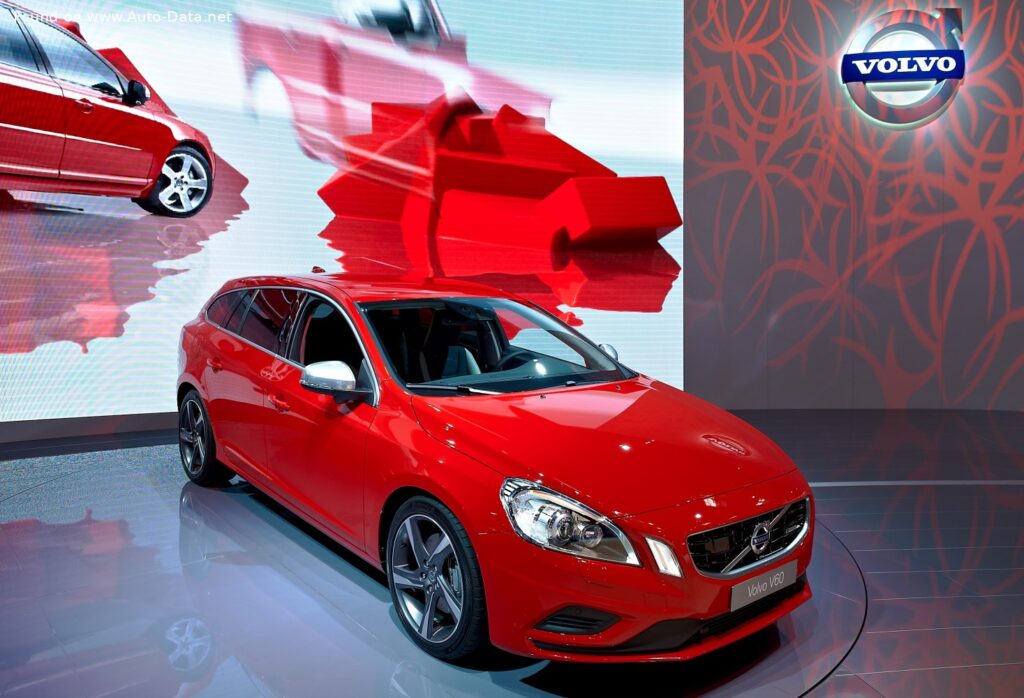
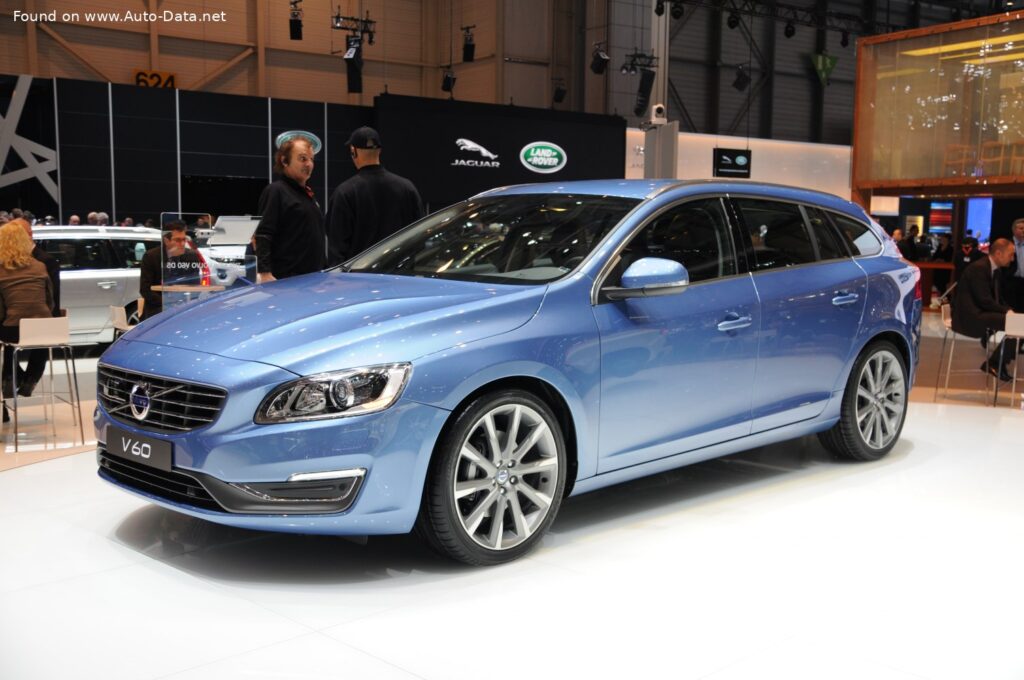
The 2013 facelift for the Volvo V60 I brought a more refined and cohesive design language. As a five-door station wagon (often referred to as an “estate” in European markets), the V60 skillfully blends the practicality of a family vehicle with the sleek, coupe-like profile that Volvo intended for its “sport wagon.” The facelift introduced a wider, lower grille, revised headlights that integrated into the front fenders, and new bumpers, giving the car a more assertive and contemporary stance. The overall length of 182.48 inches (4635 mm) and width of 71.85 inches (1825 mm) contribute to its balanced proportions.
Inside, the V60 offers a cabin renowned for its ergonomic design, high-quality materials, and exceptional comfort. With seating for five passengers, the V60 provides a sophisticated environment that is both functional and aesthetically pleasing. While specific feature lists can vary by trim, Volvo’s focus on advanced safety systems is paramount. Features such as ABS (Anti-lock Braking System) were standard, and higher trims would have offered a suite of active safety technologies like City Safety, pedestrian detection, and adaptive cruise control, underscoring Volvo’s reputation as a leader in automotive safety.
Practicality is a strong suit for any wagon, and the V60 delivers with a minimum trunk space of 15.19 cubic feet (430 liters). While not the largest in its class, the V60’s cargo area is well-shaped and easily accessible, making it suitable for luggage, groceries, or sports equipment. The vehicle’s kerb weight of 3816.2 lbs (1731 kg) speaks to its solid construction, contributing to a planted and secure driving feel.
Technical Specifications
| Category | Specification |
|---|---|
| Brand | Volvo |
| Model | V60 |
| Generation | V60 I (2013 facelift) |
| Type (Engine) | 2.0 D4 (163 Hp) Automatic start/stop |
| Start of Production | 2013 year |
| End of Production | 2018 year |
| Powertrain Architecture | Internal Combustion engine |
| Body type | Station wagon (estate) |
| Seats | 5 |
| Doors | 5 |
| Fuel consumption (economy) – urban | 38.6 US mpg (6.1 l/100 km) |
| Fuel consumption (economy) – extra urban | 54.7 US mpg (4.3 l/100 km) |
| Fuel consumption (economy) – combined | 48 US mpg (4.9 l/100 km) |
| CO2 emissions | 129 g/km |
| Fuel Type | Diesel |
| Acceleration 0 – 60 mph | 8.9 sec |
| Acceleration 0 – 100 km/h | 9.4 sec |
| Emission standard | Euro 5 |
| Weight-to-power ratio | 10.6 kg/Hp (94.2 Hp/tonne) |
| Weight-to-torque ratio | 4.3 kg/Nm (231.1 Nm/tonne) |
| Power | 163 Hp @ 3500 rpm |
| Power per liter | 82.2 Hp/l |
| Torque | 295.02 lb.-ft. (400 Nm) @ 1500-2750 rpm |
| Engine layout | Front, Transverse |
| Engine Model/Code | D5204T3 |
| Engine displacement | 2.0 liters (1984 cm3 / 121.07 cu. in.) |
| Number of cylinders | 5 |
| Engine configuration | Inline |
| Cylinder Bore | 3.19 in. (81 mm) |
| Piston Stroke | 3.03 in. (77 mm) |
| Compression ratio | 16.5:1 |
| Fuel injection system | Diesel Commonrail |
| Engine aspiration | Turbocharger, Intercooler |
| Engine oil capacity | 6.23 US qt (5.9 l) |
| Coolant | 9.4 US qt (8.9 l) |
| Engine systems | Start & Stop System, Particulate filter |
| Kerb Weight | 3816.2 lbs (1731 kg) |
| Max. weight | 4850.17 lbs (2200 kg) |
| Max load | 1033.97 lbs (469 kg) |
| Trunk (boot) space – minimum | 15.19 cu. ft. (430 l) |
| Fuel tank capacity | 17.83 US gal (67.5 l) |
| Length | 182.48 in. (4635 mm) |
| Width | 71.85 in. (1825 mm) |
| Height | 58.43 in. (1484 mm) |
| Wheelbase | 109.29 in. (2776 mm) |
| Front track | 62.52 in. (1588 mm) |
| Rear (Back) track | 62.4 in. (1585 mm) |
| Minimum turning circle (turning diameter) | 37.07 ft. (11.3 m) |
| Drivetrain Architecture | The Internal combustion engine (ICE) drives the front wheels of the vehicle. |
| Drive wheel | Front wheel drive |
| Number of gears and type of gearbox | 6 gears, automatic transmission |
| Assisting systems | ABS (Anti-lock braking system) |
| Steering type | Steering rack and pinion |
Legacy and Market Impact
The Volvo V60 I, particularly after its 2013 facelift, played a crucial role in Volvo’s strategy to broaden its appeal beyond its traditional, more conservative image. In its primary markets of Europe and Asia, the V60 D4 was a highly competitive offering in the premium compact executive segment. It faced formidable rivals such as the BMW 3 Series Touring, Audi A4 Avant, and Mercedes-Benz C-Class Estate. While German competitors often emphasized sportier dynamics or outright luxury, the V60 carved out its niche by focusing on a distinct blend of understated Scandinavian elegance, class-leading safety, and practical versatility.
The 2.0 D4 (163 Hp) automatic variant was particularly impactful due to its excellent fuel economy and strong torque output. For many European buyers, the combination of diesel efficiency and automatic convenience in a stylish wagon body made it an ideal choice for both personal and fleet use. Its Euro 5 emissions compliance also made it an environmentally responsible option for its time. The five-cylinder diesel engine, a signature of Volvo for many years, was celebrated for its smooth power delivery and distinctive engine note, contributing to a refined driving experience.
The V60’s legacy is defined by its ability to modernize Volvo’s image while retaining the core values the brand is known for. It demonstrated that Volvo could produce a car that was not only safe and practical but also stylish and engaging to drive. The first-generation V60 helped pave the way for subsequent successful models and reinforced Volvo’s position as a respected premium automaker globally, even as this specific diesel variant remained a European and Asian market specialty. Its enduring reputation for reliability and robust build quality continues to make it a desirable used car in its target regions.