The Peugeot 3008 II (Phase II, 2020) 1.5 BlueHDi (131 Hp): A European Crossover Powerhouse
The Peugeot 3008 II (Phase II, 2020) 1.5 BlueHDi (131 Hp) represents a significant iteration of Peugeot’s highly successful compact crossover SUV. Introduced in September 2020 as a facelifted version of the second-generation 3008, this model solidified its position as a stylish, practical, and efficient contender in the fiercely competitive European C-segment SUV market. While not officially sold in the United States, the 3008 has garnered critical acclaim and strong sales across Europe and other international markets, lauded for its distinctive design, upscale interior, and advanced technology. This particular variant, powered by a robust yet frugal 1.5-liter BlueHDi diesel engine, offered a compelling blend of performance and exceptional fuel economy, aligning perfectly with European consumer preferences for diesel powertrains in this segment during its production run from 2020 to 2023.
The second-generation Peugeot 3008, initially launched in 2016, marked a radical departure from its MPV-like predecessor, embracing a more conventional yet undeniably avant-garde SUV aesthetic. The Phase II facelift in 2020 brought a refreshed exterior design, updated interior tech, and refined powertrains, ensuring the 3008 remained at the forefront of its class. This article delves into the specifics of the 1.5 BlueHDi (131 Hp) model, examining its engineering, design philosophy, performance metrics, and its impact on the automotive landscape.
Engine and Performance of the Peugeot 3008 II (Phase II, 2020) 1.5 BlueHDi (131 Hp)
At the heart of this particular Peugeot 3008 II (Phase II, 2020) is its 1.5-liter (1499 cm³ or 91.47 cu. in.) BlueHDi internal combustion diesel engine. This four-cylinder inline engine, designated by the code YHZ DV5RC, is a testament to modern diesel engineering, focusing on efficiency, low emissions, and respectable power delivery. It features a sophisticated Diesel Commonrail fuel injection system, augmented by a turbocharger and intercooler, ensuring optimal combustion and performance across the rev range.
The engine produces a peak power output of 131 horsepower at 3750 rpm, translating to a healthy 87.4 horsepower per liter of displacement. More significantly for an SUV of its size, it delivers a substantial 221.27 lb.-ft. (300 Nm) of torque, available at a low 1750 rpm. This ample torque at low engine speeds is crucial for the responsive feel and effortless acceleration often desired in an SUV, making it well-suited for both city driving and highway cruising, even when fully loaded or towing.
Power is sent to the front wheels via a precise 6-speed manual transmission, offering an engaging driving experience and allowing the driver to maximize the engine’s efficiency. The drivetrain architecture is a front-engine, transverse layout, driving the front wheels. In terms of performance, the 3008 1.5 BlueHDi accelerates from 0 to 60 mph in a respectable 10.3 seconds, with a 0-100 km/h time of 10.8 seconds. Its top speed is rated at 119.3 mph (192 km/h), which is more than adequate for European highway speeds.
One of the standout features of this powertrain is its exceptional fuel economy and environmental credentials. Operating under the stringent Euro 6d-ISC-FCM emission standard, the vehicle is equipped with a Start & Stop System and a Particulate filter, significantly reducing its environmental footprint. The combined fuel consumption (WLTP cycle) ranges from an impressive 42 to 51.1 US mpg (4.6-5.6 l/100 km), with CO2 emissions between 122-148 g/km. These figures highlight the BlueHDi engine’s capability to deliver strong performance without compromising on efficiency, a key selling point in markets where fuel costs and emissions regulations are paramount. The vehicle also incorporates an AdBlue tank with a capacity of 4.49 US gallons (17 liters) to further reduce nitrogen oxide emissions.
Design and Features
Exterior Design and Dimensions
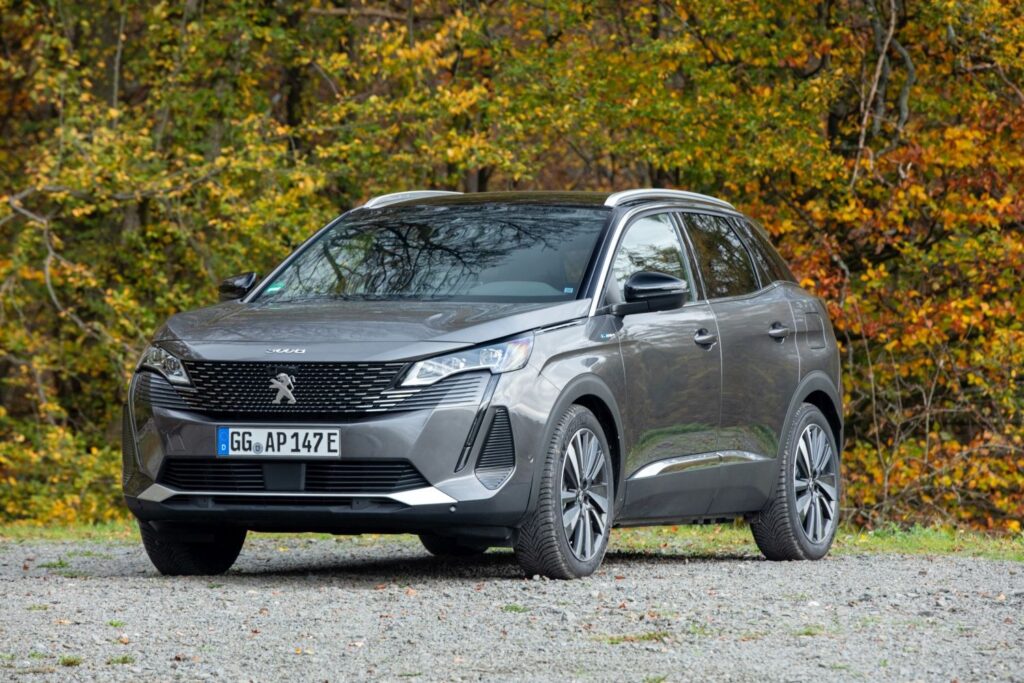
The Peugeot 3008 II (Phase II, 2020) maintains its distinctive and athletic SUV body type, characterized by sharp lines, a sculpted profile, and a sophisticated stance. The 2020 facelift introduced a redesigned frameless grille, new LED headlamps with a striking “fang” daytime running light signature, and updated front and rear bumpers, enhancing its contemporary appeal. With 5 doors and 5 seats, it offers practical versatility for families and individuals alike.
Dimensions include a length of 175.08 inches (4447 mm), a width of 72.48 inches (1841 mm) without mirrors (82.6 inches or 2098 mm including mirrors), and a height of 63.94 inches (1624 mm). Its wheelbase measures 105.31 inches (2675 mm), contributing to a stable ride and generous interior space. With a ground clearance of 8.62 inches (219 mm), an approach angle of 20°, and a departure angle of 29°, the 3008 offers respectable capability for light off-road excursions or navigating challenging urban environments. The minimum turning circle is a practical 35.1 feet (10.7 meters), aiding maneuverability in tight spaces.
Interior and Practicality
Inside, the 3008 continues to impress with Peugeot’s signature “i-Cockpit” layout, which redefines the driver’s experience. This includes a compact steering wheel, a configurable 12.3-inch digital instrument cluster positioned above the steering wheel, and a central touchscreen infotainment system (which was updated in the Phase II to potentially offer larger screens and improved responsiveness). The cabin is designed with high-quality materials and thoughtful ergonomics, providing a premium feel uncommon in its segment.
Practicality is a strong suit for the 3008. The trunk (boot) offers a minimum cargo volume of 18.36 cubic feet (520 liters), expanding significantly to 52.34 cubic feet (1482 liters) with the rear seats folded down, making it highly versatile for carrying luggage, groceries, or larger items. The kerb weight of the vehicle is 3150.41 lbs. (1429 kg), with a maximum permissible weight of 4365.15 lbs. (1980 kg) and a maximum payload of 1214.75 lbs. (551 kg). It also boasts a permitted trailer load with brakes of 3306.93 lbs. (1500 kg), underlining its utility.
Chassis, Suspension, and Safety
The 3008’s ride quality is balanced, thanks to its well-tuned suspension system. It features an independent McPherson type suspension with coil springs and an anti-roll bar at the front, paired with a semi-independent setup with coil springs at the rear. This configuration provides a comfortable ride while maintaining composed handling. Stopping power comes from ventilated disc brakes at the front and disc brakes at the rear, supported by an Anti-lock Braking System (ABS) for enhanced safety. The steering is an electric power-assisted rack and pinion system, offering light and precise control. The vehicle can be fitted with various tire sizes, including 215/65 R17, 225/55 R18, and 205/55 R19, with corresponding wheel rim sizes. While not explicitly detailed in the provided data, as a modern 2020 model, it would undoubtedly feature a comprehensive suite of advanced driver-assistance systems (ADAS) and passive safety features standard for its class in Europe.
Technical Specifications
| Category | Specification | US/Imperial Conversion |
|---|---|---|
General Information |
||
| Brand | Peugeot | |
| Model | 3008 | |
| Generation | 3008 II (Phase II, 2020) | |
| Engine Type | 1.5 BlueHDi (131 Hp) | |
| Production Start | September, 2020 | |
| Production End | September, 2023 | |
| Powertrain Architecture | Internal Combustion engine | |
| Body Type | SUV | |
| Seats | 5 | |
| Doors | 5 | |
Performance Specifications |
||
| Fuel Consumption (Low speed WLTP) | 4.9-5.8 l/100 km | 40.6 – 48 US mpg |
| Fuel Consumption (Medium speed WLTP) | 4.4-5.3 l/100 km | 44.4 – 53.5 US mpg |
| Fuel Consumption (High speed WLTP) | 4.1-5 l/100 km | 47 – 57.4 US mpg |
| Fuel Consumption (Very high speed WLTP) | 5.2-6.3 l/100 km | 37.3 – 45.2 US mpg |
| Combined Fuel Consumption (WLTP) | 4.6-5.6 l/100 km | 42 – 51.1 US mpg |
| CO2 Emissions (WLTP) | 122-148 g/km | |
| Fuel Type | Diesel | |
| Acceleration 0 – 60 mph | 10.3 sec | |
| Acceleration 0 – 100 km/h | 10.8 sec | |
| Maximum Speed | 192 km/h | 119.3 mph |
| Emission Standard | Euro 6d-ISC-FCM | |
| Weight-to-power ratio | 10.9 kg/Hp | 91.7 Hp/tonne |
| Weight-to-torque ratio | 4.8 kg/Nm | 209.9 Nm/tonne |
Engine Specifications |
||
| Power | 131 Hp @ 3750 rpm | |
| Power per liter | 87.4 Hp/l | |
| Torque | 300 Nm @ 1750 rpm | 221.27 lb.-ft. @ 1750 rpm |
| Engine Layout | Front, Transverse | |
| Engine Model/Code | YHZ DV5RC | |
| Engine Displacement | 1499 cm³ | 1.5 Liters / 91.47 cu. in. |
| Number of Cylinders | 4 | Inline |
| Number of Valves per Cylinder | 4 | |
| Fuel Injection System | Diesel Commonrail | |
| Engine Aspiration | Turbocharger, Intercooler | |
| Engine Oil Capacity | 4 l | 4.23 US qt |
| Engine Systems | Start & Stop System, Particulate filter | |
Space, Volume and Weights |
||
| Kerb Weight | 1429 kg | 3150.41 lbs. |
| Max. Weight | 1980 kg | 4365.15 lbs. |
| Max Load | 551 kg | 1214.75 lbs. |
| Trunk (boot) Space – Minimum | 520 l | 18.36 cu. ft. |
| Trunk (boot) Space – Maximum | 1482 l | 52.34 cu. ft. |
| Fuel Tank Capacity | 53 l | 14 US gal |
| AdBlue Tank | 17 l | 4.49 US gal |
| Permitted Trailer Load with Brakes (12%) | 1500 kg | 3306.93 lbs. |
| Permitted Towbar Download | 70 kg | 154.32 lbs. |
Dimensions |
||
| Length | 4447 mm | 175.08 in. |
| Width | 1841 mm | 72.48 in. |
| Width with mirrors folded | 1906 mm | 75.04 in. |
| Width including mirrors | 2098 mm | 82.6 in. |
| Height | 1624 mm | 63.94 in. |
| Wheelbase | 2675 mm | 105.31 in. |
| Front Track | 1579-1601 mm | 62.17 – 63.03 in. |
| Rear (Back) Track | 1587-1610 mm | 62.48 – 63.39 in. |
| Front Overhang | 923 mm | 36.34 in. |
| Rear Overhang | 849 mm | 33.43 in. |
| Ride Height (Ground Clearance) | 219 mm | 8.62 in. |
| Minimum Turning Circle (Turning Diameter) | 10.7 m | 35.1 ft. |
| Approach Angle | 20° | |
| Departure Angle | 29° | |
| Wading Depth | 700 mm | 27.56 in. |
Drivetrain, Brakes and Suspension Specs |
||
| Drivetrain Architecture | The Internal combustion engine (ICE) drives the front wheels of the vehicle. | |
| Drive Wheel | Front wheel drive | |
| Number of Gears and Type of Gearbox | 6 gears, manual transmission | |
| Front Suspension | Independent, type McPherson with coil spring and anti-roll bar | |
| Rear Suspension | Semi-independent, coil spring | |
| Front Brakes | Ventilated discs | |
| Rear Brakes | Disc | |
| Assisting Systems | ABS (Anti-lock braking system) | |
| Steering Type | Steering rack and pinion | |
| Power Steering | Electric Steering | |
| Tires Size | 215/65 R17 103V; 225/55 R18 102V; 205/55 R19 97V | |
| Wheel Rims Size | ||