Introduction to the Volvo V60 I (2013 facelift)
The Volvo V60 I (2013 facelift) represents a significant iteration of Volvo’s mid-size premium station wagon, a vehicle category often referred to as an “estate” in European markets. Introduced in 2013, this refreshed model built upon the first-generation V60, which originally debuted in 2010. Positioned as a stylish and practical alternative in the competitive premium D-segment, the V60 aimed to blend Volvo’s renowned safety credentials with a more dynamic driving experience and contemporary Scandinavian design. While the V60 was available globally, the specific 2.0 D4 (163 Hp) start/stop variant, with its emphasis on diesel efficiency and a five-cylinder engine, was particularly popular and relevant in the European market, where diesel powertrains held a strong market share during its production run from 2013 to 2018. This particular model highlighted Volvo’s commitment to balancing performance with environmental responsibility through features like its start/stop system and adherence to Euro 5 emission standards.
Engine and Performance of the Volvo V60 I (2013 facelift) 2.0 D4
At the heart of this specific Volvo V60 I (2013 facelift) variant was a robust 2.0-liter D4 diesel engine, identified by its internal code D5204T3. This powerplant was notable for its inline five-cylinder configuration, a signature Volvo design for many years, offering a distinctive sound and smooth power delivery. Equipped with a turbocharger and an intercooler, the engine generated a respectable 163 horsepower at 3500 rpm. More impressively, it produced a substantial 295.02 lb.-ft. of torque, available across a broad rev range from 1500 to 2750 rpm. This ample torque ensured strong acceleration and effortless cruising, characteristic of premium diesel engines.
Power was sent to the front wheels via a precise 6-speed manual transmission, providing an engaging driving experience for those who preferred direct control over gear changes. The combination of the powerful diesel engine and manual gearbox allowed the V60 D4 to accelerate from 0 to 60 mph in a brisk 8.9 seconds, making it competitive within its class.
A key feature for efficiency was the integrated start/stop system, which automatically shut off the engine when the vehicle was stationary in traffic and restarted it seamlessly when the driver prepared to move. This technology, combined with the inherent efficiency of a modern diesel engine, contributed to remarkable fuel economy figures. The V60 D4 achieved an impressive combined fuel consumption of 52.3 US mpg (4.5 liters per 100 km). Urban driving saw figures around 45.2 US mpg, while extra-urban cruising could yield up to 57.4 US mpg. Furthermore, its CO2 emissions were kept to a relatively low 119 g/km, meeting the stringent Euro 5 emission standard, which was crucial for its market acceptance in Europe. This blend of performance and efficiency underscored Volvo’s engineering prowess during this era, making the D4 a highly attractive option for European consumers seeking a practical yet powerful and economical family vehicle.
Design and Features
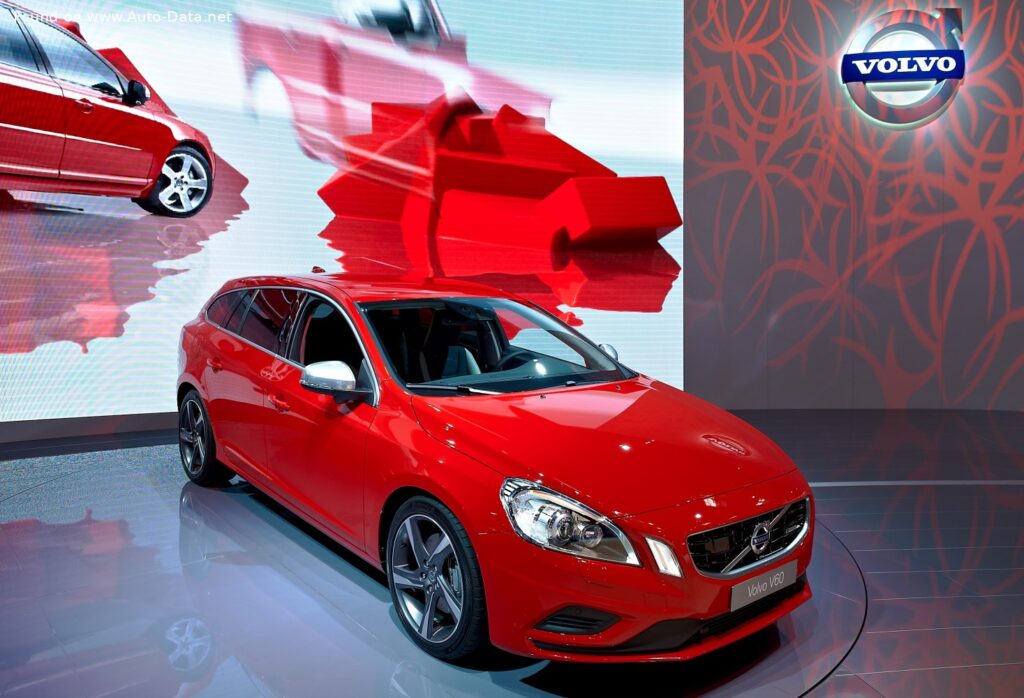
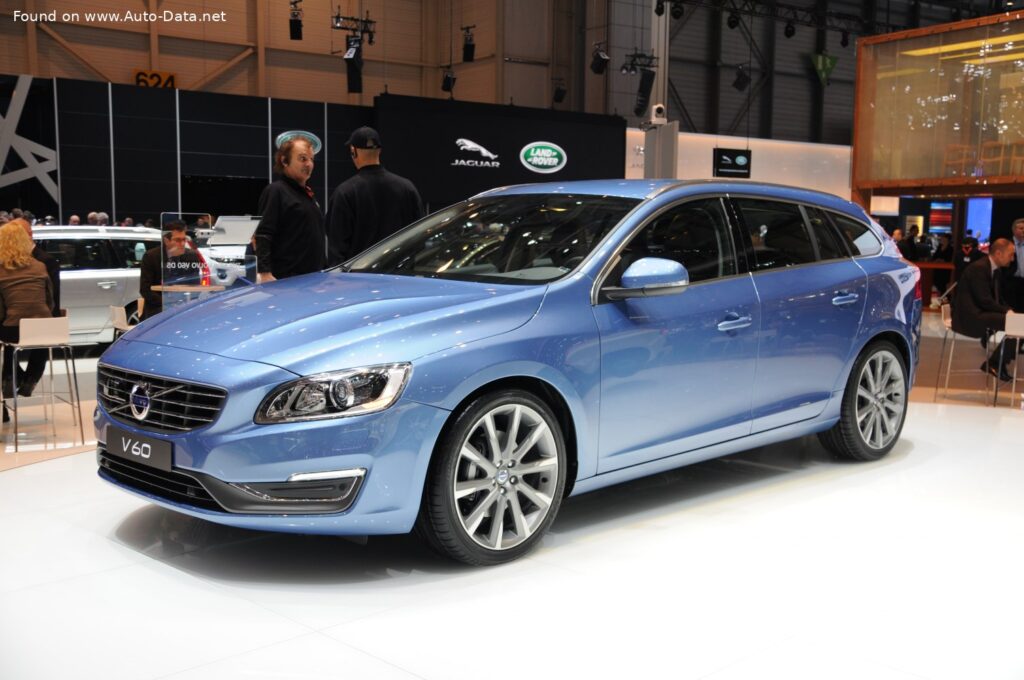
The Volvo V60 I (2013 facelift) retained the elegant and sporty lines of the original V60 while incorporating subtle yet effective updates. As a station wagon, or “estate,” its design prioritized both aesthetics and practicality. The facelift brought revised front and rear bumpers, a wider grille, and updated headlights and taillights, giving the car a more contemporary and sophisticated appearance. Volvo’s commitment to clean, uncluttered Scandinavian design was evident throughout, with smooth surfaces and purposeful lines that emphasized its premium feel.
Inside, the V60 offered a comfortable and ergonomically designed cabin for five occupants. The interior facelift included new upholstery options, updated trim, and a revised instrument cluster, enhancing the overall user experience. Volvo’s focus on safety was paramount, and the V60 came equipped with a range of standard safety features, including ABS (Anti-lock Braking System), a fundamental assisting system for vehicle control during emergency braking. While the provided data focuses on core mechanicals, it’s important to note that Volvo typically offered a suite of advanced safety technologies in its vehicles, even back then, such as City Safety, which could automatically brake the car to avoid or mitigate low-speed collisions.
Practicality was a strong suit for the V60 station wagon. It offered a minimum trunk space of 15.19 cubic feet (430 liters), providing ample room for luggage, groceries, or sports equipment. The five-door configuration ensured easy access for both passengers and cargo. Its dimensions – a length of 182.48 inches, a width of 71.85 inches, and a height of 58.43 inches – struck a balance between maneuverability in urban environments and stability on the open road. The 109.29-inch wheelbase contributed to a composed ride and generous interior space. The car’s kerb weight of 3750.06 lbs. (1701 kg) further highlighted its solid construction, a hallmark of Volvo engineering.
Technical Specifications
| Category | Specification |
|---|---|
General Information |
|
| Brand | Volvo |
| Model | V60 |
| Generation | V60 I (2013 facelift) |
| Type (Engine) | 2.0 D4 (163 Hp) start/stop |
| Start of Production | 2013 year |
| End of Production | 2018 year |
| Powertrain Architecture | Internal Combustion engine |
| Body type | Station wagon (estate) |
| Seats | 5 |
| Doors | 5 |
Performance Specifications |
|
| Fuel Consumption (economy) – urban | 45.2 US mpg (5.2 l/100 km) |
| Fuel Consumption (economy) – extra urban | 57.4 US mpg (4.1 l/100 km) |
| Fuel Consumption (economy) – combined | 52.3 US mpg (4.5 l/100 km) |
| CO2 Emissions | 119 g/km |
| Fuel Type | Diesel |
| Acceleration 0 – 60 mph | 8.9 sec |
| Acceleration 0 – 100 km/h | 9.4 sec |
| Emission Standard | Euro 5 |
| Weight-to-power ratio | 10.4 kg/Hp (95.8 Hp/tonne) |
| Weight-to-torque ratio | 4.3 kg/Nm (235.2 Nm/tonne) |
Engine Specifications |
|
| Power | 163 Hp @ 3500 rpm |
| Power per liter | 82.2 Hp/l |
| Torque | 295.02 lb.-ft. @ 1500-2750 rpm (400 Nm) |
| Engine layout | Front, Transverse |
| Engine Model/Code | D5204T3 |
| Engine displacement | 2.0 liters (1984 cm3, 121.07 cu. in.) |
| Number of cylinders | 5 |
| Engine configuration | Inline |
| Cylinder Bore | 3.19 in. (81 mm) |
| Piston Stroke | 3.03 in. (77 mm) |
| Compression ratio | 16.5:1 |
| Fuel injection system | Diesel Commonrail |
| Engine aspiration | Turbocharger, Intercooler |
| Engine oil capacity | 6.23 US qt (5.9 l) |
| Coolant capacity | 9.4 US qt (8.9 l) |
| Engine systems | Start & Stop System, Particulate filter |
Space, Volume and Weights |
|
| Kerb Weight | 3750.06 lbs. (1701 kg) |
| Max. weight | 4806.08 lbs. (2180 kg) |
| Max load | 1056.01 lbs. (479 kg) |
| Trunk (boot) space – minimum | 15.19 cu. ft. (430 l) |
| Fuel tank capacity | 17.83 US gal (67.5 l) |
Dimensions |
|
| Length | 182.48 in. (4635 mm) |
| Width | 71.85 in. (1825 mm) |
| Height | 58.43 in. (1484 mm) |
| Wheelbase | 109.29 in. (2776 mm) |
| Front track | 62.52 in. (1588 mm) |
| Rear (Back) track | 62.4 in. (1585 mm) |
| Minimum turning circle (turning diameter) | 37.07 ft. (11.3 m) |
Drivetrain, Brakes and Suspension |
|
| Drivetrain Architecture | The Internal combustion engine (ICE) drives the front wheels of the vehicle. |
| Drive wheel | Front wheel drive |
| Number of gears and type of gearbox | 6 gears, manual transmission |
| Assisting systems | ABS (Anti-lock braking system) |
| Steering type | Steering rack and pinion |
Legacy and Market Impact
The Volvo V60 I (2013 facelift) 2.0 D4 (163 Hp) start/stop played a crucial role in Volvo’s strategy to compete in the European premium D-segment, particularly within the highly contested station wagon category. In Europe, where practical yet aspirational family cars were (and still are) in high demand, and diesel engines were a popular choice for their fuel efficiency and torque, the V60 D4 carved out a significant niche. It stood as a formidable competitor to established rivals such as the BMW 3 Series Touring, Audi A4 Avant, and Mercedes-Benz C-Class Estate.
Volvo’s brand reputation for unparalleled safety, robust build quality, and distinctly Scandinavian design language resonated strongly with consumers. The V60, particularly in its D4 diesel guise, reinforced this image by offering a compelling package of power, economy, and practicality. The inclusion of modern features like the start/stop system and adherence to Euro 5 emissions standards demonstrated Volvo’s proactive approach to environmental concerns, which was increasingly important in the European automotive landscape.
While diesel variants like this 2.0 D4 were not widely offered or emphasized in the American market due to different consumer preferences and regulatory environments, its success in Europe was undeniable. It contributed significantly to Volvo’s sales volumes and helped maintain the brand’s premium standing during a period of intense competition. The V60 model line, including this facelifted first generation, helped bridge the gap between Volvo’s traditional, boxier designs and its more modern, dynamic aesthetic that would fully blossom in subsequent generations. It showcased Volvo’s ability to evolve while staying true to its core values of safety, comfort, and intelligent design. The legacy of the V60 D4 is one of a highly capable and efficient premium wagon that perfectly met the demands of its primary market, solidifying Volvo’s position as a leader in practical luxury.