The Mitsubishi Lancer IX (facelift 2015): A Global Compact Sedan
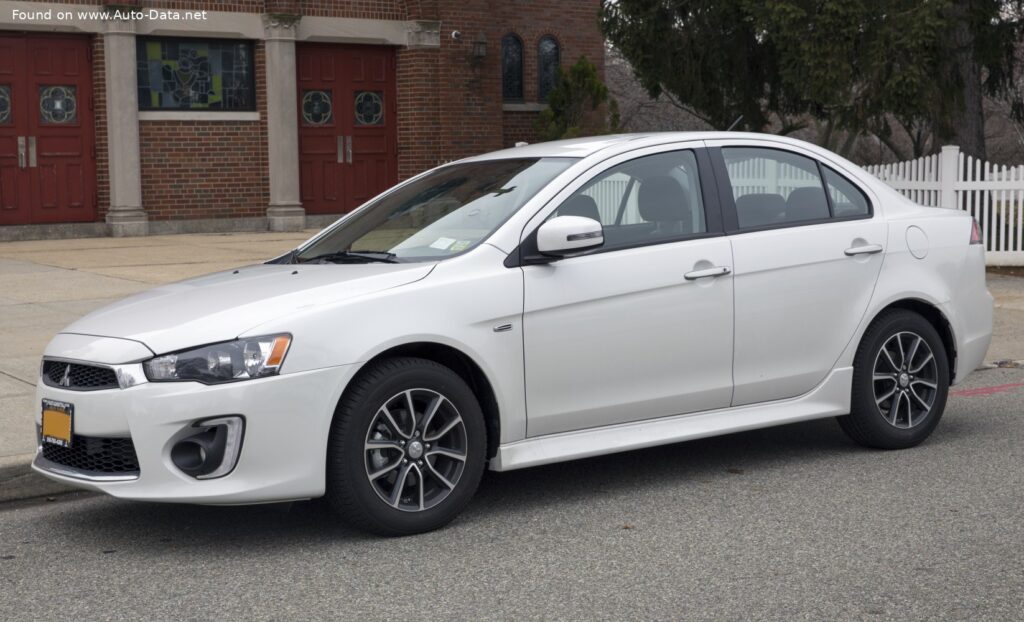
The Mitsubishi Lancer IX (facelift 2015) represents a late-stage iteration of a venerable nameplate that carved out a significant niche in the global compact sedan market. While the Lancer nameplate has a storied history, particularly known for its rally-bred Evolution variants, this specific generation, often referred to as the Lancer EX in some markets, saw its North American production cease before 2015. Consequently, the 2015 facelift model was primarily aimed at markets in Asia, Australia, and parts of Europe and the Middle East, where it continued to offer a blend of reliability, practicality, and affordability. This particular variant, powered by a 2.0-liter engine paired with a Continuously Variable Transmission (CVT), emphasized efficiency and smooth urban commuting over outright performance, catering to a broad demographic seeking a dependable daily driver.
Introduced in 2015, this refreshed model aimed to keep the Lancer competitive in its segment until its eventual discontinuation in 2017, making it one of the final expressions of this generation. It continued Mitsubishi’s tradition of offering robust, no-nonsense vehicles, adapting to evolving market demands for fuel economy and modern conveniences within its existing platform. Its role was to serve as a reliable workhorse, providing comfortable transport for five occupants in a conventional four-door sedan body style.
Engine & Performance of the Mitsubishi Lancer IX (facelift 2015)
At the heart of the Mitsubishi Lancer IX (facelift 2015) 2.0 (148 Hp) CVT variant lies Mitsubishi’s proven 4B11 engine. This 1998 cm3 (121.93 cu. in.) inline four-cylinder powerplant is a naturally aspirated unit, featuring a Double Overhead Camshaft (DOHC) valvetrain with four valves per cylinder. This configuration, often incorporating Mitsubishi’s MIVEC (Mitsubishi Innovative Valve timing Electronic Control system) technology, allowed for a balanced delivery of power and efficiency across the rev range. The engine generates a respectable 148 horsepower at 6000 rpm, providing ample thrust for daily driving and highway cruising.
Torque output stands at 197 Nm (145.3 lb.-ft.) delivered at 4200 rpm. This mid-range torque ensures responsive acceleration in city traffic and sufficient pulling power without constantly needing to rev the engine high. The engine’s bore and stroke are both 86 mm (3.39 in.), indicating a square design that typically favors a good balance between low-end torque and high-end power. With a compression ratio of 10:1 and a multi-port manifold injection system, the engine is designed for reliable operation on standard gasoline.
Power is channeled to the front wheels via a Continuously Variable Transmission (CVT). This automatic transmission is a key component in the vehicle’s focus on fuel efficiency and smooth operation. Unlike traditional geared automatics, the CVT provides an infinite number of gear ratios, allowing the engine to operate at its most efficient rpm for a given speed. This results in seamless acceleration without the jolt of gear changes, contributing to a more refined driving experience. The combined fuel economy for this powertrain is an estimated 7.8 liters per 100 kilometers, translating to approximately 30.2 US miles per gallon, making it an economical choice in its class. With a kerb weight of 2954.19 lbs (1340 kg), the Lancer offers a weight-to-power ratio of 9.1 kg/Hp, underscoring its practical rather than performance-oriented nature.
Design & Features
The Mitsubishi Lancer IX (facelift 2015) maintained the core design language of its generation but incorporated subtle updates to keep its appearance fresh. The body type remained a conventional four-door sedan, a popular choice in many global markets for its practicality and balanced aesthetics. The facelift typically involved revisions to the front fascia, including redesigned grilles, bumpers, and possibly updated headlamp clusters, often incorporating LED daytime running lights to align with contemporary automotive trends. Minor tweaks to the rear bumper and taillight graphics were also common, giving the car a slightly more modern presence without a complete overhaul.
Measuring 182.09 inches (4625 mm) in length, 69.29 inches (1760 mm) in width (80.47 inches or 2044 mm including mirrors), and standing between 58.27 and 59.25 inches (1480-1505 mm) in height, the Lancer offered a compact yet spacious footprint. The 103.74-inch (2635 mm) wheelbase contributed to a stable ride and adequate interior room for five occupants. The trunk space of 400 liters (14.13 cu. ft.) provided sufficient capacity for luggage and daily necessities, reinforcing its utility as a family or commuter vehicle.
Inside, the Lancer’s cabin was designed for functionality and durability. While specific features can vary by market and trim level, the 2015 facelift likely brought updated infotainment systems, revised trim materials, and perhaps new connectivity options. Standard features would have included air conditioning, power windows, and a multi-speaker audio system. Safety was addressed with fundamental systems like ABS (Anti-lock Braking System), which was standard, complementing the ventilated disc brakes at the front and disc brakes at the rear. The independent McPherson strut front suspension with an anti-roll bar and an independent multi-link rear suspension with a stabilizer ensured a comfortable and predictable ride. Electric power steering provided light and easy maneuverability, especially in urban environments, contributing to a minimum turning circle of 32.81 feet (10.0 meters). The vehicle rode on 205/60 R16 tires mounted on 6.5 J x 16 wheel rims, a common size for compact sedans balancing ride comfort and handling.
Technical Specifications
| Category | Specification |
|---|---|
| Brand | Mitsubishi |
| Model | Lancer |
| Generation | Lancer IX (facelift 2015) |
| Type (Engine) | 2.0 (148 Hp) CVT |
| Start of Production | 2015 year |
| End of Production | 2017 year |
| Powertrain Architecture | Internal Combustion engine |
| Body Type | Sedan |
| Seats | 5 |
| Doors | 4 |
| Performance Specs | |
| Fuel Consumption (Urban) | 8.7 l/100 km (27 US mpg) |
| Fuel Consumption (Extra Urban) | 6.7 l/100 km (35.1 US mpg) |
| Fuel Consumption (Combined) | 7.8 l/100 km (30.2 US mpg) |
| Fuel Type | Petrol (Gasoline) |
| Weight-to-Power Ratio | 9.1 kg/Hp (110.4 Hp/tonne) |
| Weight-to-Torque Ratio | 6.8 kg/Nm (147 Nm/tonne) |
| Engine Specs | |
| Power | 148 Hp @ 6000 rpm |
| Power per Liter | 74.1 Hp/l |
| Torque | 197 Nm @ 4200 rpm (145.3 lb.-ft. @ 4200 rpm) |
| Engine Layout | Front, Transverse |
| Engine Model/Code | 4B11 |
| Engine Displacement | 1998 cm3 (121.93 cu. in.) |
| Number of Cylinders | 4 |
| Engine Configuration | Inline |
| Cylinder Bore | 86 mm (3.39 in.) |
| Piston Stroke | 86 mm (3.39 in.) |
| Compression Ratio | 10:1 |
| Number of Valves per Cylinder | 4 |
| Fuel Injection System | Multi-port manifold injection |
| Engine Aspiration | Naturally aspirated engine |
| Valvetrain | DOHC |
| Engine Oil Capacity | 4.3 l (4.54 US qt) |
| Coolant Capacity | 7 l (7.4 US qt) |
| Space, Volume and Weights | |
| Kerb Weight | 1340 kg (2954.19 lbs) |
| Max. Weight (Gross Vehicle Weight) | 1800 kg (3968.32 lbs) |
| Max Load | 460 kg (1014.13 lbs) |
| Trunk (Boot) Space – Minimum | 400 l (14.13 cu. ft.) |
| Fuel Tank Capacity | 59 l (15.59 US gal) |
| Max. Roof Load | 80 kg (176.37 lbs) |
| Permitted Towbar Download | 55 kg (121.25 lbs) |
| Dimensions | |
| Length | 4625 mm (182.09 in.) |
| Width | 1760 mm (69.29 in.) |
| Width Including Mirrors | 2044 mm (80.47 in.) |
| Height | 1480-1505 mm (58.27 – 59.25 in.) |
| Wheelbase | 2635 mm (103.74 in.) |
| Front Track | 1530 mm (60.24 in.) |
| Rear (Back) Track | 1530 mm (60.24 in.) |
| Front Overhang | 1010 mm (39.76 in.) |
| Rear Overhang | 980 mm (38.58 in.) |
| Ride Height (Ground Clearance) | 140 mm (5.51 in.) |
| Minimum Turning Circle (Turning Diameter) | 10.0 m (32.81 ft.) |
| Drivetrain, Brakes and Suspension Specs | |
| Drivetrain Architecture | Front-wheel drive. Internal Combustion engine. |
| Drive Wheel | Front wheel drive |
| Number of Gears and Type of Gearbox | Automatic transmission CVT |
| Front Suspension | Independent, type McPherson with coil spring and anti-roll bar |
| Rear Suspension | Independent multi-link spring suspension with stabilizer |
| Front Brakes | Ventilated discs |
| Rear Brakes | Disc |
| Assisting Systems | ABS (Anti-lock braking system) |
| Steering Type | Steering rack and pinion |
| Power Steering | Electric Steering |
| Tires Size | 205/60 R16 |
| Wheel Rims Size | 6.5 J x 16 |
Legacy & Market Impact
The Mitsubishi Lancer IX (facelift 2015), particularly in its 2.0 (148 Hp) CVT guise, played a crucial role for Mitsubishi in markets where its robust and reliable image resonated strongly. By 2015, the Lancer nameplate had largely departed from the North American market, replaced by newer models or a shift in Mitsubishi’s global strategy. However, in regions like Southeast Asia, Australia, and certain parts of Europe and Latin America, this generation of Lancer continued to be a competitive offering in the compact sedan segment.
Its reputation was built on a foundation of durability, ease of maintenance, and a comfortable, if not exhilarating, driving experience. For many consumers in these markets, the Lancer represented a practical and sensible choice, offering good value for money. Competitors in its segment included perennial rivals such as the Toyota Corolla, Honda Civic, Mazda 3, and various offerings from Hyundai and Kia. While it may not have boasted the cutting-edge technology or the most dynamic driving characteristics of some of its newer competitors, the Lancer distinguished itself with a reputation for longevity and a straightforward approach to automotive engineering.
The 2015 facelift was an effort to extend the model’s life cycle and maintain its appeal in the face of increasingly modern competition. These subtle updates, combined with its established mechanical reliability, allowed it to remain a relevant option for buyers prioritizing dependability and low running costs. The adoption of the CVT, while sometimes criticized by enthusiasts for dulling driving dynamics, was a strategic move to improve fuel efficiency, a key purchasing factor for the mass market.
Historically, the Lancer name is synonymous with rally success and high-performance variants like the Evolution. However, the Lancer IX (facelift 2015) 2.0 CVT underscored the broader utility of the platform as a mainstream compact sedan. Its legacy is not one of groundbreaking innovation or segment leadership but rather one of consistent, dependable service to a global customer base. It served as a testament to Mitsubishi’s commitment to producing practical vehicles, holding its own in a fiercely competitive segment before the company shifted its focus more heavily towards SUVs and crossovers. The end of its production in 2017 marked the quiet conclusion of a long and varied chapter for the Lancer sedan in many parts of the world.