The Volkswagen Transporter (T5) Panel Van: A European Workhorse
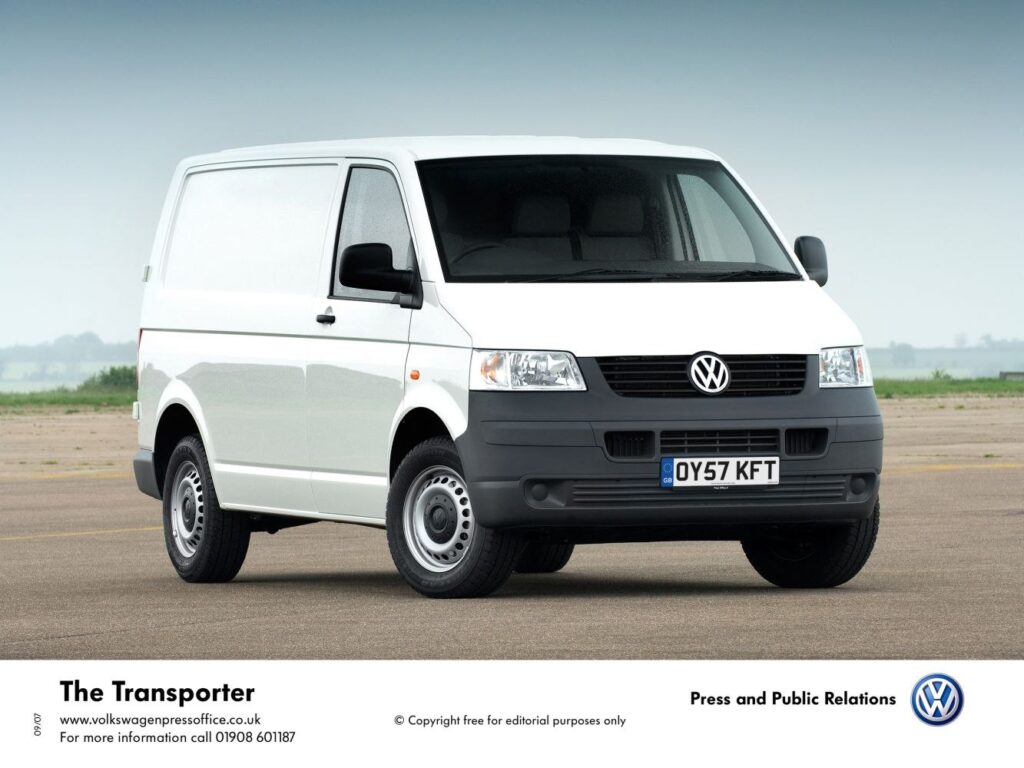
The Volkswagen Transporter, known globally as a versatile and enduring light commercial vehicle, entered its fifth generation, the T5, in 2003. This particular variant, the Volkswagen Transporter (T5) Panel Van 1.9 TDI (86 Hp) L2H1, represents a foundational offering within the T5 lineup, specifically tailored for commercial applications requiring robust utility and efficiency. While not a common sight on American roads, where Volkswagen’s commercial vehicle presence is limited, the Transporter T5 was a ubiquitous and highly respected vehicle across Europe and other international markets. It continued the legacy of the Transporter series, which began with the iconic T1 “Bus” in 1950, evolving into a sophisticated and practical vehicle designed to meet the rigorous demands of businesses, tradespeople, and logistics operations.
Produced from 2003 to 2009, this generation of the Transporter built upon its predecessors’ reputation for durability and adaptability. The T5 was available in a multitude of configurations, including panel vans, Kombis (crew vans), Caravelles (passenger vans), and the popular California camper van. The L2H1 designation for this panel van signifies a “Long” wheelbase and a “Standard” roof height, offering a significant cargo capacity while maintaining a manageable exterior profile for urban environments and tighter spaces. Powered by Volkswagen’s renowned 1.9-liter TDI diesel engine, this model emphasized fuel economy and reliability, crucial factors for commercial operators.
Engine & Performance: The 1.9 TDI Powerplant
At the heart of the Volkswagen Transporter (T5) Panel Van 1.9 TDI (86 Hp) L2H1 lies a robust 1.9-liter (1896 cm3 or 115.7 cubic inches) inline four-cylinder TDI (Turbocharged Direct Injection) diesel engine, bearing the engine code EA188 / AXC. This engine, a staple in Volkswagen Group vehicles of its era, was celebrated for its efficiency and strong low-end torque, characteristics highly valued in a commercial application where carrying heavy loads is a primary function. With a power output of 86 horsepower at 3500 rpm and a substantial 200 Nm (147.51 lb.-ft.) of torque available between 1600 and 2400 rpm, the engine was engineered for practical, everyday utility rather than outright speed.
The powertrain architecture features a front, transverse engine layout driving the front wheels through a 5-speed manual transmission. This setup, common for light commercial vehicles, offers a good balance of traction, packaging efficiency, and fuel economy. The engine benefits from a turbocharger and intercooler, enhancing its power delivery and efficiency, especially under load. Its fuel injection system utilizes Volkswagen’s “Pump-nozzle” (Unit Injector) technology, which at the time was a sophisticated direct injection system known for precise fuel metering and improved combustion efficiency. With a compression ratio of 18:1 and a SOHC (Single Overhead Camshaft) valvetrain with two valves per cylinder, the engine was designed for longevity and ease of maintenance.
Performance figures reflect its commercial orientation: acceleration from 0 to 60 mph is achieved in an estimated 22.4 seconds, with a top speed of 90.72 mph (146 km/h). While these figures may seem modest by passenger car standards, they are entirely adequate for a panel van designed to operate efficiently within speed limits and navigate urban and highway routes with cargo. Fuel economy was a strong suit, with an extra-urban consumption figure of 6.1 liters per 100 km, translating to an impressive 38.6 US mpg. This efficiency, combined with an 80-liter (21.13 US gallon) fuel tank, provided an excellent operating range, reducing downtime for refueling and lowering running costs for businesses. The vehicle met the Euro 3 emission standard, reflecting the environmental regulations of its time.
Design & Features: Form Follows Function
The design of the Volkswagen Transporter (T5) Panel Van 1.9 TDI (86 Hp) L2H1 is a masterclass in functional aesthetics, prioritizing utility, durability, and ergonomic efficiency. As a panel van, its primary purpose is cargo transport, and the T5 delivers with a cavernous maximum trunk space of 6700 liters (236.61 cubic feet). The L2H1 designation indicates a long wheelbase (3400 mm or 133.86 inches) and a standard roof height (1959 mm or 77.13 inches), offering a substantial load volume without compromising maneuverability in urban environments or restricting access to height-restricted areas. The overall length of 5290 mm (208.27 inches) and a width of 1904 mm (74.96 inches) provide a stable platform for heavy loads.
The T5 panel van typically offered 2 to 3 seats in the cabin, designed for a driver and one or two passengers, depending on the configuration. Access to the cabin is via two front doors, while cargo access is facilitated by a combination of sliding side doors (usually on the passenger side, sometimes on both) and rear barn doors or a tailgate. This multi-door configuration enhances loading and unloading flexibility. The interior, while utilitarian, was built to Volkswagen’s high standards of quality and ergonomics, ensuring driver comfort during long working hours. Features like hydraulic power steering and a rack-and-pinion steering type contributed to ease of handling, especially when fully loaded.
Safety features for a commercial vehicle of this era included an Anti-lock Braking System (ABS) as standard, enhancing control during emergency braking maneuvers. The braking system utilized ventilated discs on both the front (308×29.5 mm) and rear (294×22 mm) axles, providing strong and reliable stopping power even with heavy loads. The independent suspension system, featuring McPherson struts with coil springs and an anti-roll bar at the front, and independent coil springs with a transverse stabilizer and trailing arms at the rear, was designed to provide a comfortable ride and stable handling, irrespective of the load. The vehicle’s robust construction allowed for a maximum payload of 967-970 kg (2131.87 – 2138.48 lbs.) and impressive towing capabilities, including a permitted trailer load with brakes of up to 2500 kg (5511.56 lbs.).
Technical Specifications: Volkswagen Transporter (T5) Panel Van 1.9 TDI (86 Hp) L2H1
| Category | Specification | US Equivalent / Notes |
|---|---|---|
| General Information | ||
| Brand | Volkswagen | |
| Model | Transporter | |
| Generation | Transporter (T5) Panel Van | |
| Engine Type | 1.9 TDI (86 Hp) L2H1 | |
| Production Start | 2003 | |
| Production End | 2009 | |
| Powertrain Architecture | Internal Combustion Engine | |
| Body Type | Van | |
| Seats | 2-3 | |
| Doors | 4-5 | |
| Performance Specifications | ||
| Fuel Consumption (Extra Urban) | 6.1 l/100 km | 38.6 US mpg |
| Fuel Type | Diesel | |
| Acceleration 0-62 mph (0-100 km/h) | 23.6 sec | |
| Acceleration 0-60 mph (Calculated) | 22.4 sec | |
| Maximum Speed | 146 km/h | 90.72 mph |
| Emission Standard | Euro 3 | |
| Weight-to-Power Ratio | 21.3 kg/Hp | 47 Hp/tonne |
| Weight-to-Torque Ratio | 9.2 kg/Nm | 109.3 Nm/tonne |
| Engine Specifications | ||
| Power | 86 Hp @ 3500 rpm | |
| Power per liter | 45.4 Hp/l | |
| Torque | 200 Nm @ 1600-2400 rpm | 147.51 lb.-ft. @ 1600-2400 rpm |
| Engine Layout | Front, Transverse | |
| Engine Model/Code | EA188 / AXC | |
| Engine Displacement | 1896 cm3 | 1.9 Liters / 115.7 cu. in. |
| Number of Cylinders | 4 | |
| Engine Configuration | Inline | |
| Cylinder Bore | 79.5 mm | 3.13 in. |
| Piston Stroke | 95.5 mm | 3.76 in. |
| Compression Ratio | 18:1 | |
| Valves per Cylinder | 2 | |
| Fuel Injection System | Pump-nozzle (Unit Injector) | |
| Engine Aspiration | Turbocharger, Intercooler | |
| Valvetrain | SOHC | |
| Engine Oil Capacity | 5.8 l | 6.13 US qt |
| Coolant Capacity | 7.1 l | 7.5 US qt |
| Space, Volume & Weights | ||
| Kerb Weight | 1830-2033 kg | 4034.46 – 4482 lbs. |
| Max. Weight (GVWR) | 2800-3000 kg | 6172.94 – 6613.87 lbs. |
| Max. Load (Payload) | 967-970 kg | 2131.87 – 2138.48 lbs. |
| Trunk (Boot) Space – Maximum | 6700 l | 236.61 cu. ft. |
| Fuel Tank Capacity | 80 l | 21.13 US gal |
| Max. Roof Load | 100 kg | 220.46 lbs. |
| Permitted Trailer Load with Brakes (8%) | 2500 kg | 5511.56 lbs. |
| Permitted Trailer Load with Brakes (12%) | 2200 kg | 4850.17 lbs. |
| Permitted Trailer Load without Brakes | 750 kg | 1653.47 lbs. |
| Permitted Towbar Download | 100 kg | 220.46 lbs. |
| Dimensions | ||
| Length | 5290 mm | 208.27 in. |
| Width | 1904 mm | 74.96 in. |
| Width including Mirrors | 2242 mm | 88.27 in. |
| Height | 1959 mm | 77.13 in. |
| Wheelbase | 3400 mm | 133.86 in. |
| Front Track | 1628 mm | 64.09 in. |
| Rear Track | 1628 mm | 64.09 in. |
| Front Overhang | 894 mm | 35.2 in. |
| Rear Overhang | 996 mm | 39.21 in. |
| Ride Height (Ground Clearance) | 165 mm | 6.5 in. |
| Minimum Turning Circle | 13.2 m | 43.31 ft. |
| Approach Angle | 22° | |
| Departure Angle | 16° | |
| Wading Depth | 300 mm | 11.81 in. |
| Drivetrain, Brakes & Suspension | ||
| Drivetrain Architecture | Front-wheel drive (ICE drives front wheels) | |
| Drive Wheel | Front wheel drive | |
| Number of Gears & Gearbox Type | 5 gears, manual transmission | |
| Front Suspension | Independent, McPherson with coil spring and anti-roll bar | |
| Rear Suspension | Independent coil spring, Transverse stabilizer, Trailing arm | |
| Front Brakes | Ventilated discs, 308×29.5 mm | |
| Rear Brakes | Ventilated discs, 294×22 mm | |
| Assisting Systems | ABS (Anti-lock braking system) | |
| Steering Type | Rack and pinion | |
| Power Steering | Hydraulic Steering | |
| Tire Sizes | 205/65 R16; 215/65 R16 | |
| Wheel Rim Size | 6.5J x 16 |
Legacy & Market Impact of the Volkswagen Transporter (T5) Panel Van
The Volkswagen Transporter (T5) Panel Van, particularly in its 1.9 TDI (86 Hp) L2H1 configuration, carved out a significant niche in the European light commercial vehicle (LCV) market during its production run from 2003 to 2009. Building on a heritage stretching back over half a century, the T5 continued to solidify the Transporter’s reputation as a benchmark for versatility, reliability, and cost-effectiveness. Its impact was profound, becoming a preferred choice for a vast array of businesses, from small independent contractors to large fleet operators, across numerous industries.
In a highly competitive segment, the T5 faced strong rivals such as the Ford Transit, Mercedes-Benz Vito, Renault Trafic, and Opel Vivaro (Vauxhall Vivaro in the UK). What set the Transporter apart was its unique blend of passenger car-like driving dynamics, robust build quality, and a premium feel that belied its commercial purpose. Even in its most basic panel van guise with the 86 horsepower 1.9 TDI engine, the T5 offered a level of refinement and comfort that many competitors struggled to match. The L2H1 variant, with its long wheelbase and standard roof, perfectly balanced cargo capacity with urban usability, making it exceptionally practical for deliveries and trades requiring substantial load space without excessive height.
The 1.9 TDI engine, while not the most powerful in the T5 range, was a critical component of its success. Its reputation for bulletproof reliability, excellent fuel economy, and ample low-end torque made it an ideal choice for a work vehicle. This efficiency translated directly into lower operating costs and a better return on investment for businesses, which was a significant selling point. Furthermore, the T5’s strong residual values and extensive aftermarket support contributed to its long-term appeal.
The T5 generation also saw a significant leap in safety and comfort features compared to its predecessors, including the introduction of more sophisticated suspension systems and standard ABS, enhancing both driver well-being and vehicle control. Its design was more modern and aerodynamic, contributing to better fuel efficiency and a more contemporary appearance. The longevity of the T5 is evident in the large numbers still on European roads today, testament to its enduring quality and design. It cemented the Transporter’s status not just as a utilitarian tool, but as a cultural icon and a reliable partner for businesses worldwide, continuing Volkswagen’s tradition of producing highly capable and adaptable commercial vehicles.