The Peugeot 3008 II (Phase II, 2020) 1.6 (300 Hp) Plug-in Hybrid4 e-EAT8: A European Crossover Powerhouse
The Peugeot 3008 II (Phase II, 2020) 1.6 (300 Hp) Plug-in Hybrid4 e-EAT8 represents a significant evolution in the compact crossover SUV segment, specifically targeting the discerning European market. As part of its second generation, the “Phase II” designation refers to a substantial mid-cycle refresh introduced in September 2020, bringing updated styling, enhanced technology, and crucially, advanced powertrain options. While Peugeot vehicles are not currently sold in the United States, the 3008 is a critically important model for the French automaker, consistently ranking among the best-selling SUVs in Europe. This particular variant, the 1.6 (300 Hp) Plug-in Hybrid4 e-EAT8, stands as the performance and efficiency flagship of the lineup, showcasing Peugeot’s commitment to electrification without compromising on dynamic capability or premium appeal. It combines a turbocharged gasoline engine with two electric motors and an advanced all-wheel-drive system, offering a compelling blend of robust power, impressive all-electric range, and exceptional fuel economy for its class.
Engine and Performance of the Peugeot 3008 II (Phase II, 2020) 1.6 (300 Hp) Plug-in Hybrid4 e-EAT8
At the heart of this sophisticated crossover lies a Plug-in Hybrid Electric Vehicle (PHEV) powertrain architecture, meticulously engineered for both spirited driving and environmental consciousness. The internal combustion engine (ICE) is a 1.6-liter (1598 cm³ or 97.52 cu. in.) inline-four, turbocharged and intercooled unit, delivering a robust 200 horsepower at 6000 rpm and 221.27 lb.-ft. of torque at 3000 rpm. This engine, designated as the 5GB EP6FADTXHPA, features direct injection and a DOHC valvetrain, optimized for efficiency and responsiveness. It drives the front wheels, working in tandem with an electric motor positioned between the engine and the transmission, which contributes an additional 110 horsepower and a substantial 236.02 lb.-ft. of torque.
What truly sets the “Hybrid4” variant apart is its all-wheel-drive capability, achieved through a second electric motor mounted on the rear axle. This rear motor provides 113 horsepower and 122.44 lb.-ft. of torque, enabling electric-only all-wheel drive and enhancing traction. The combined system output is an impressive 300 horsepower and a massive 383.53 lb.-ft. (520 Nm) of torque, channeled through an advanced 8-speed e-EAT automatic transmission. This formidable power allows the 3008 Hybrid4 to accelerate from 0 to 60 mph in a swift 5.6 seconds, with a top speed of 149.13 mph (240 km/h), making it one of the quickest vehicles in its segment.
Beyond raw performance, efficiency is a cornerstone of this PHEV. Equipped with a 13.2 kWh gross (10.4 kWh usable) Lithium-ion battery pack located beneath the floor and rear seats, the 3008 Hybrid4 boasts a commendable all-electric range of 37.9 to 39.15 miles (61-63 km) on the WLTP cycle. Its combined fuel consumption is exceptionally low, ranging from 180.9 to 168 US mpg (1.3-1.4 L/100 km), with CO2 emissions of just 30-32 g/km, adhering to the stringent Euro 6d emission standard. The average electricity consumption is rated at 137-132 MPGe (15.3-15.9 kWh/100 km), underscoring its impressive energy efficiency.
Design and Features
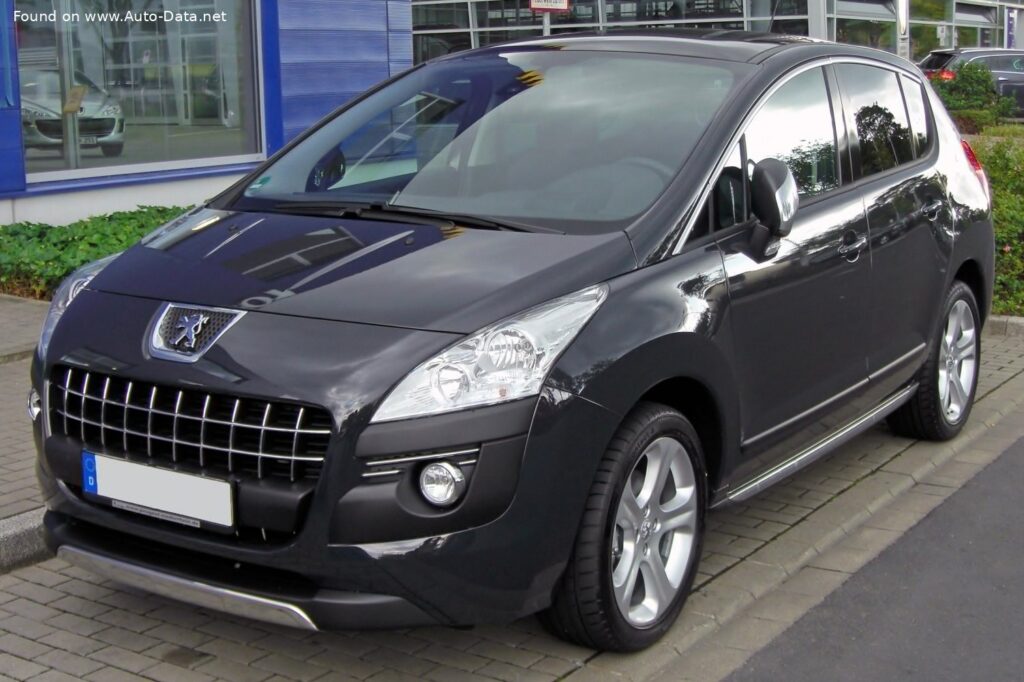
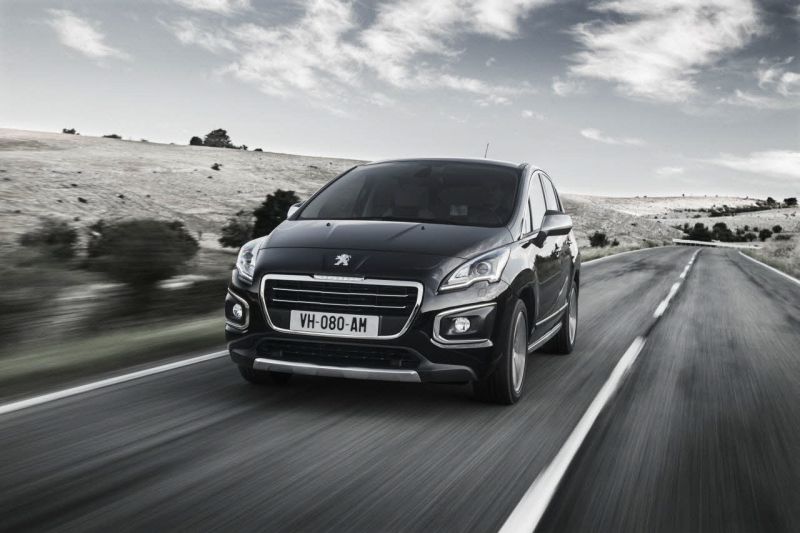
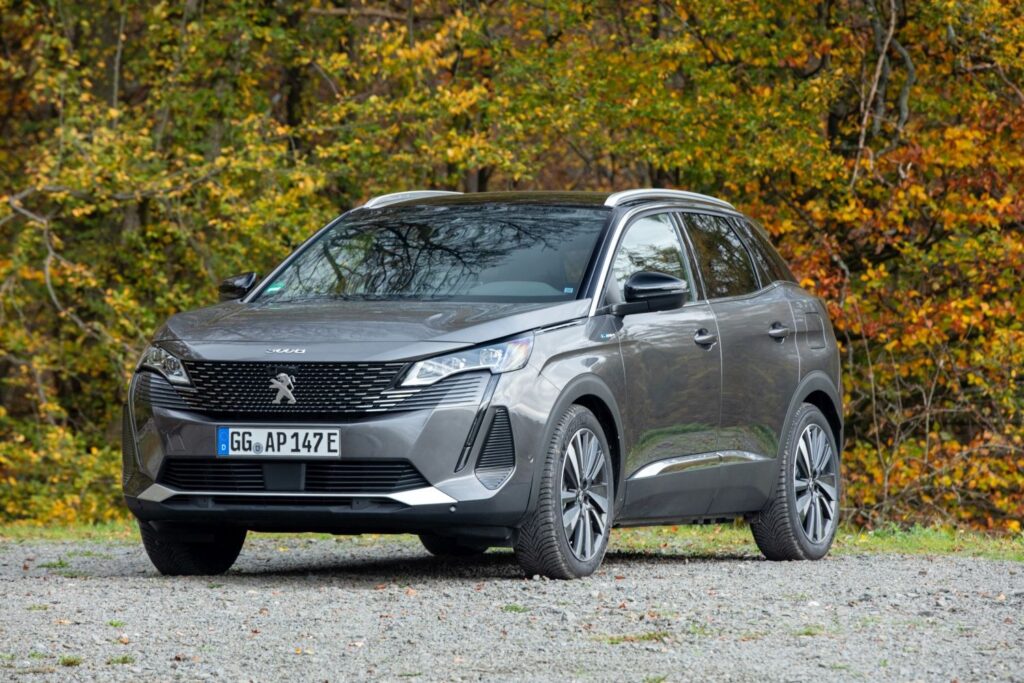
The Phase II refresh of the Peugeot 3008 introduced a more assertive and modern aesthetic, reinforcing its premium aspirations. The SUV body type, with its five doors and seating for five, maintains a distinctive and sculptural presence. Key exterior updates included a new frameless grille extending into the headlights, refreshed LED daytime running lights with a “fang” signature, and updated rear lighting with a 3D claw effect. These design elements contribute to a sophisticated and instantly recognizable look that helps it stand out in a crowded market.
Inside, the 3008 continues to feature Peugeot’s acclaimed i-Cockpit layout, characterized by a small-diameter steering wheel, a configurable 12.3-inch digital instrument cluster positioned above the steering wheel, and a central touchscreen infotainment system (not explicitly detailed in provided data, but a standard feature of the model). The interior design emphasizes ergonomics and a driver-focused experience, with high-quality materials and finishes that elevate the cabin’s perceived luxury. The placement of the battery pack below the floor and rear seats is a clever engineering solution that minimizes intrusion into passenger and cargo space, though it does slightly reduce the trunk volume compared to non-hybrid models.
Practicality remains a strong suit for the 3008. The trunk offers a minimum capacity of 13.95 cubic feet (395 liters), expanding to a generous 47.92 cubic feet (1357 liters) with the rear seats folded, providing ample space for luggage or cargo. Its dimensions are well-suited for both urban maneuvering and longer journeys, with a length of 175.08 inches (4447 mm) and a width of 72.48 inches (1841 mm). The 8.62-inch (219 mm) ground clearance, coupled with impressive approach (20°) and departure (29°) angles, and a wading depth of 27.56 inches (700 mm), hint at its capability to handle light off-road excursions, complementing its all-wheel-drive system. Standard safety features include ABS (Anti-lock Braking System), with modern vehicles in this segment typically offering a suite of advanced driver-assistance systems.
Technical Specifications
| Category | Specification |
|---|---|
| Brand | Peugeot |
| Model | 3008 |
| Generation | 3008 II (Phase II, 2020) |
| Type (Engine) | 1.6 (300 Hp) Plug-in Hybrid4 e-EAT8 |
| Production Start | September, 2020 |
| Production End | September, 2023 |
| Powertrain Architecture | PHEV (Plug-in Hybrid Electric Vehicle) |
| Body Type | SUV |
| Seats | 5 |
| Doors | 5 |
| Performance Specs | |
| Combined Fuel Consumption (WLTP) | 1.3-1.4 L/100 km (180.9 – 168 US mpg) |
| CO2 Emissions (WLTP) | 30-32 g/km |
| Fuel Type | Petrol / Electricity |
| Acceleration 0-60 mph | 5.6 sec |
| Maximum Speed | 149.13 mph (240 km/h) |
| Emission Standard | Euro 6d |
| Weight-to-Power Ratio | 6.1 kg/Hp (163.7 Hp/tonne) |
| Weight-to-Torque Ratio | 3.5 kg/Nm (283.7 Nm/tonne) |
| Electric Cars and Hybrids Specs | |
| Gross Battery Capacity | 13.2 kWh |
| Net (Usable) Battery Capacity | 10.4 kWh |
| Battery Technology | Lithium-ion (Li-Ion) |
| Battery Location | Below the floor, under the rear seats |
| All-Electric Range (WLTP) | 37.9 – 39.15 miles (61-63 km) |
| Average Energy Consumption (WLTP) | 15.3-15.9 kWh/100 km (137 – 132 MPGe) |
| Max Speed (Electric) | 83.89 mph (135 km/h) |
| Electric Motor 1 Power (Front) | 110 Hp @ 2500 rpm |
| Electric Motor 1 Torque (Front) | 236.02 lb.-ft. (320 Nm) @ 500-2500 rpm |
| Electric Motor 1 Location | Between the combustion engine and the transmission |
| Electric Motor 2 Power (Rear) | 113 Hp @ 14000 rpm |
| Electric Motor 2 Torque (Rear) | 122.44 lb.-ft. (166 Nm) @ 0-4760 rpm |
| Electric Motor 2 Location | Rear axle, Transverse |
| System Power | 300 Hp |
| System Torque | 383.53 lb.-ft. (520 Nm) |
| Internal Combustion Engine Specs | |
| Power | 200 Hp @ 6000 rpm |
| Power per Liter | 125.2 Hp/l |
| Torque | 221.27 lb.-ft. (300 Nm) @ 3000 rpm |
| Engine Layout | Front, Transverse |
| Engine Model/Code | 5GB EP6FADTXHPA |
| Engine Displacement | 1.6 L (1598 cm³ / 97.52 cu. in.) |
| Number of Cylinders | 4 |
| Engine Configuration | Inline |
| Cylinder Bore | 3.03 in. (77 mm) |
| Piston Stroke | 3.38 in. (85.8 mm) |
| Compression Ratio | 10.2:1 |
| Number of Valves per Cylinder | 4 |
| Fuel Injection System | Direct injection |
| Engine Aspiration | Turbocharger, Intercooler |
| Valvetrain | DOHC |
| Engine Oil Capacity | 4.49 US qt (4.25 L) |
| Engine Systems | Start & Stop System, Particulate filter |
| Space, Volume and Weights | |
| Kerb Weight | 4041.07 lbs. (1833 kg) |
| Max. Weight | 5180.86 lbs. (2350 kg) |
| Max Load | 1139.79 lbs. (517 kg) |
| Trunk (Boot) Space – Minimum | 13.95 cu. ft. (395 L) |
| Trunk (Boot) Space – Maximum | 47.92 cu. ft. (1357 L) |
| Fuel Tank Capacity | 11.36 US gal (43 L) |
| Max. Roof Load | 176.37 lbs. (80 kg) |
| Permitted Trailer Load with Brakes (12%) | 2755.78 lbs. (1250 kg) |
| Permitted Trailer Load without Brakes | 1653.47 lbs. (750 kg) |
| Permitted Towbar Download | 154.32 lbs. (70 kg) |
| Dimensions | |
| Length | 175.08 in. (4447 mm) |
| Width | 72.48 in. (1841 mm) |
| Width with Mirrors Folded | 75.04 in. (1906 mm) |
| Width Including Mirrors | 82.6 in. (2098 mm) |
| Height | 63.94 in. (1624 mm) |
| Wheelbase | 105.31 in. (2675 mm) |
| Front Track | 62.17 – 63.03 in. (1579-1601 mm) |
| Rear (Back) Track | 62.48 – 63.39 in. (1587-1610 mm) |
| Front Overhang | 36.34 in. (923 mm) |
| Rear Overhang | 33.43 in. (849 mm) |
| Ride Height (Ground Clearance) | 8.62 in. (219 mm) |
| Minimum Turning Circle (Turning Diameter) | 35.1 ft. (10.7 m) |
| Approach Angle | 20° |
| Departure Angle | 29° |
| Wading Depth | 27.56 in. (700 mm) |
| Drivetrain, Brakes and Suspension Specs | |
| Drivetrain Architecture | ICE drives front wheels, one electric motor drives front wheels, one electric motor drives rear wheels. Ability for full electric or mixed mode. |
| Drive Wheel | All-wheel drive (4×4) |
| Number of Gears and Type of Gearbox | 8 gears, automatic transmission e-EAT |
| Front Suspension | Independent type McPherson |
| Rear Suspension | Semi-independent, coil spring |
| Front Brakes | Ventilated discs |
| Rear Brakes | Disc |
| Assisting Systems | ABS (Anti-lock braking system) |
| Steering Type | Steering rack and pinion |
| Power Steering | Electric Steering |
| Tires Size | 225/55 R18; 205/55 R19 |
| Wheel Rims Size | 18; 19 |
Legacy and Market Impact
The Peugeot 3008, particularly in its second generation, has been a monumental success for the brand, reinvigorating Peugeot’s presence in the highly competitive compact SUV segment across Europe. The introduction of the Phase II refresh, and specifically high-performance, high-efficiency variants like the Peugeot 3008 II