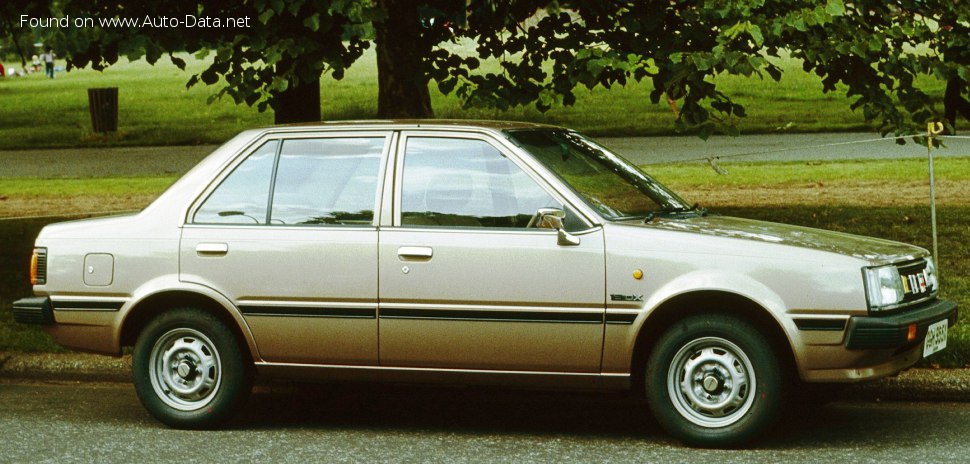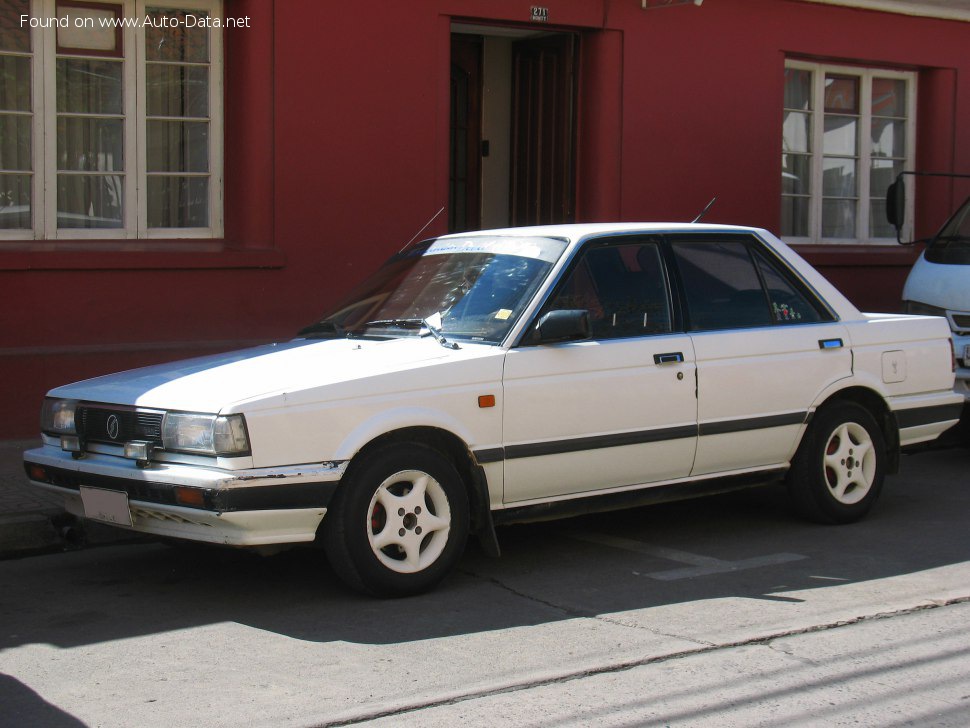
Introduction to the Nissan Sunny II GA15DE (B12)
The automotive landscape of the mid-to-late 1980s was defined by a growing demand for reliable, fuel-efficient, and practical compact vehicles. Nissan, a prominent Japanese automaker, was a key player in this segment with its long-running Sunny line. The Nissan Sunny II GA15DE (B12) represents a significant chapter in this legacy, produced between 1986 and 1989. Known globally as the Sunny, this generation was marketed in North America as the Nissan Sentra, solidifying its position as a ubiquitous and dependable choice for a broad spectrum of consumers. This particular variant, equipped with the 1.6-liter GA15DE engine producing 73 horsepower, epitomized the B12 generation’s commitment to economical performance and robust engineering in a compact sedan package.
The B12 generation of the Sunny/Sentra marked a departure from its more angular predecessors, adopting a slightly softer, more aerodynamic aesthetic while retaining a no-nonsense approach to design and functionality. It was developed to cater to a global audience, offering a compelling blend of affordability, low running costs, and Nissan’s burgeoning reputation for quality. The 1.6 i (73 Hp) model, specifically, was often positioned as a practical family sedan, ideal for daily commuting and light family duties, offering a comfortable ride and predictable handling characteristics that resonated with buyers across various international markets. Its success underscored Nissan’s ability to deliver a no-frills, highly functional vehicle that could withstand the rigors of everyday use while remaining accessible to a wide demographic.
Engine and Performance: The Heart of the Nissan Sunny II GA15DE (B12)
Powertrain Architecture and the GA15DE Engine
At the core of the Nissan Sunny II GA15DE (B12) 1.6 i (73 Hp) lies its robust and well-regarded GA15DE engine. This 1.6-liter (specifically 1,497 cc) inline-four gasoline engine was a member of Nissan’s GA engine family, a series known for its exceptional longevity, reliability, and efficiency. The “DE” designation in GA15DE signifies “Dual Overhead Camshaft, Electronic Fuel Injection,” a significant technological advancement for mass-market compact cars in the mid-1980s. Unlike older carburetor-fed engines that relied on mechanical fuel mixing, electronic fuel injection offered superior fuel atomization and more precise fuel delivery. This resulted in improved fuel economy, lower exhaust emissions, and more consistent performance across varying altitudes and temperatures, making the vehicle more adaptable and environmentally conscious for its time.
With a power output of 73 horsepower (Hp), the GA15DE in this configuration was not designed for blistering acceleration but rather for dependable, everyday performance. This output, coupled with its naturally aspirated design, provided a smooth and linear power delivery, making the Sunny II an easy car to drive in urban environments and on highways. While specific torque figures are not provided, the engine’s design would have optimized for accessible power at lower RPMs, contributing to good drivability and minimizing the need for frequent gear changes in typical driving conditions. The engine’s relative simplicity and widespread use across Nissan’s lineup also meant that maintenance was straightforward and parts were readily available, further enhancing its appeal as an economical and practical choice for consumers.
Drivetrain and Handling Characteristics
The Nissan Sunny II GA15DE (B12) employed a front-wheel-drive (FWD) architecture, a layout that had become the standard for compact cars by the mid-1980s. This configuration offered several advantages crucial for its target market. Firstly, FWD allowed for more efficient packaging, maximizing interior space within a relatively small exterior footprint, which was vital for a five-seater sedan. By integrating the engine, transmission, and final drive into a single unit at the front of the vehicle, the B12 Sunny/Sentra could offer a surprisingly spacious cabin and a flat floor for rear passengers, enhancing comfort and practicality. Secondly, by placing the engine and transaxle directly over the front wheels, FWD vehicles typically offer better traction in adverse weather conditions, a significant benefit in many global markets that experience snow or heavy rain.
The car’s suspension system, while not detailed in the provided data, would have been a conventional setup for the era, likely featuring MacPherson struts at the front and either a torsion beam or a simple multi-link arrangement at the rear. This combination typically delivered a comfortable ride quality, effectively absorbing road imperfections, while still offering predictable and safe handling characteristics. The light steering, often power-assisted in higher trims or as an option, and compact dimensions made the Sunny II easy to maneuver in tight city streets and parking lots, contributing to its reputation as a user-friendly and approachable vehicle for a wide range of drivers.
Design and Features of the Nissan Sunny II GA15DE (B12) Sedan
Exterior and Interior Design Philosophy
The Nissan Sunny II GA15DE (B12) sedan embodied the pragmatic design ethos prevalent in Japanese compact cars of the late 1980s. Its four-door sedan body type was the quintessential family car configuration, offering a balanced blend of passenger comfort and cargo capacity. The exterior styling was clean, understated, and functional, moving away from the boxier designs of the early 80s towards a slightly more rounded, yet still conventional, aesthetic. This design language prioritized aerodynamics for improved fuel efficiency and reduced wind noise, without resorting to overly flamboyant styling cues. Large glass areas and relatively thin pillars ensured excellent outward visibility, a key safety and convenience feature for drivers navigating busy urban environments.
Inside, the B12 Sunny was designed with practicality and durability in mind. The cabin was surprisingly spacious for a compact car, comfortably accommodating five occupants, thanks to the efficient FWD packaging. Materials, while not luxurious, were chosen for their hard-wearing nature, capable of withstanding years of daily use and abuse. The dashboard layout was straightforward and ergonomic, with all controls easily accessible and intuitively placed. Instrumentation was clear and concise, providing drivers with essential information at a glance without unnecessary clutter. For its era, the Sunny II offered a respectable level of comfort and convenience features, including effective heating and ventilation systems, and often a basic AM/FM radio as standard or optional equipment, reflecting the typical expectations for a compact sedan in the late 1980s. Higher trim levels might have offered features like power windows, central locking, and air conditioning, which were considered luxuries in this segment at the time.
Safety and Practicality
Safety in the 1980s was primarily focused on passive measures, and the Nissan Sunny II was no exception. It featured a robust body structure designed to dissipate impact forces, along with standard three-point seatbelts for front and rear outboard passengers. While advanced features like anti-lock brakes and airbags were still a decade away from becoming commonplace in this segment, Nissan engineered the B12 for occupant protection typical of its class, meeting or exceeding prevailing safety standards. The sedan’s four doors facilitated easy entry and exit for all passengers, and the trunk offered ample space for groceries, luggage, or other family necessities, further cementing its role as a practical and dependable vehicle for everyday life. Its compact footprint also made it easy to park and navigate through congested city streets, adding to its overall utility.