The Suzuki Ignis II (facelift 2020): A Compact Crossover for the Modern Era
The Suzuki Ignis II (facelift 2020) represents a significant iteration of Suzuki’s distinctive compact crossover, a vehicle primarily designed for the discerning markets of Europe and Asia. Launched in February 2020, this refreshed second-generation model continued to carve out a unique niche with its blend of diminutive dimensions, elevated ride height, and a surprisingly practical interior. Positioned as a “micro-SUV” or an urban crossover, the Ignis offers an appealing proposition for drivers seeking an affordable, fuel-efficient, and maneuverable vehicle capable of navigating congested cityscapes while offering a touch of rugged aesthetic. This particular variant, the 1.2 Dualjet Mild Hybrid CVT, stands out for its advanced powertrain, integrating Suzuki’s mild-hybrid electric vehicle (MHEV) technology with a smooth continuously variable transmission (CVT) to deliver enhanced efficiency and a refined driving experience.
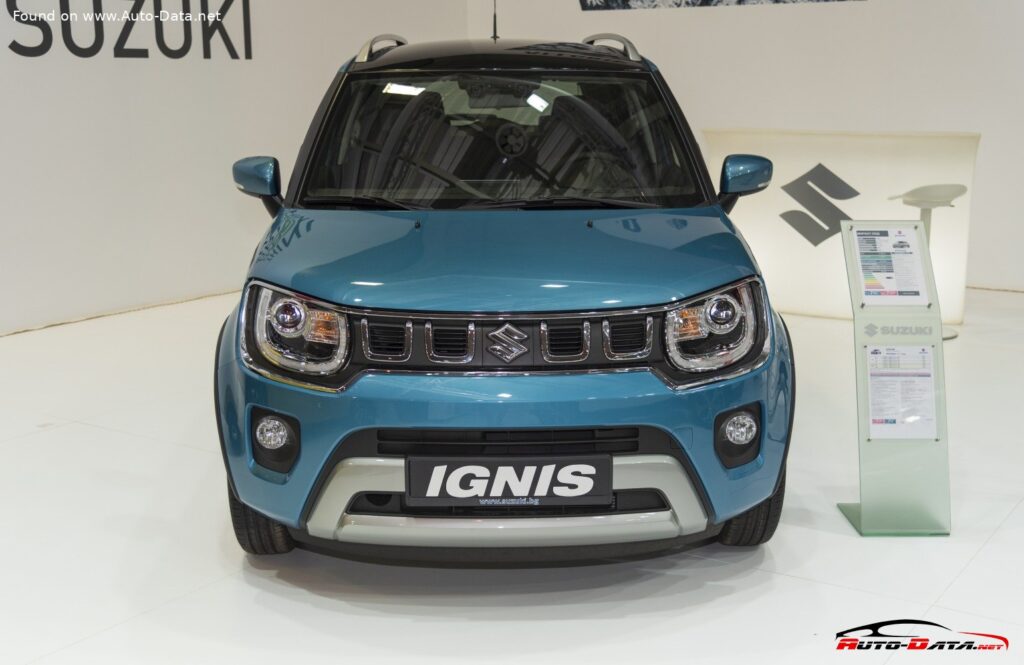
The Suzuki Ignis II (facelift 2020) is a testament to Suzuki’s expertise in crafting small, capable vehicles. It embodies a philosophy of maximizing space and utility within a compact footprint, making it an ideal choice for urban dwellers and those who prioritize economy and ease of ownership. Its distinctive styling, characterized by a tall stance, short overhangs, and a unique rear pillar design, ensures it stands apart in a crowded segment. The 2020 facelift brought subtle yet impactful updates to its exterior and interior, reinforcing its contemporary appeal and technological prowess, especially through the adoption of more sophisticated hybrid systems.
Powertrain and Performance of the Suzuki Ignis II (facelift 2020)
Engine Technology and Efficiency
At the heart of the Suzuki Ignis II (facelift 2020) 1.2 Dualjet Mild Hybrid CVT lies a meticulously engineered powertrain. The primary motive force comes from Suzuki’s K12D 1.2-liter (1242 cm3 or 75.79 cu. in.) Dualjet inline four-cylinder gasoline engine. This naturally aspirated engine is designed for optimal efficiency and responsiveness, featuring a DOHC (Double Overhead Camshaft) valvetrain with four valves per cylinder and a multi-port manifold injection system. With a high compression ratio of 12.5:1, the engine produces a respectable 83 horsepower at 6000 rpm, delivering a power output of 66.8 horsepower per liter. Peak torque is 107 Nm (78.92 lb.-ft.), available at a low 2800 rpm, which contributes significantly to the vehicle’s lively feel in city driving conditions.
What truly sets this Ignis variant apart is its Mild Hybrid Electric Vehicle (MHEV) architecture. This system, a power-assist or battery-assisted hybrid, works in conjunction with the internal combustion engine. It utilizes an Integrated Starter Generator (ISG) that assists the engine during acceleration, provides quicker and smoother engine restarts for the start-stop system, and regenerates energy during deceleration. This recovered energy is stored in a compact lithium-ion battery, which then powers the ISG to provide torque assistance. The MHEV system, while not capable of propelling the vehicle solely on electric power, significantly enhances fuel efficiency and reduces emissions, particularly in stop-and-go traffic.
Power is channeled to the front wheels via a continuously variable transmission (CVT). This automatic gearbox is renowned for its smooth, stepless acceleration and its ability to keep the engine operating at its most efficient rpm range. The combination of the Dualjet engine, MHEV system, and CVT results in impressive fuel economy figures under the WLTP (Worldwide Harmonized Light Vehicles Test Procedure) cycle. The combined fuel consumption is rated at 5.5 liters per 100 km, which translates to an excellent 42.8 US mpg. CO2 emissions are kept low at 124 g/km (WLTP), highlighting its environmentally conscious design.
In terms of performance, the Suzuki Ignis II (facelift 2020) is well-suited for its intended urban role. It can accelerate from 0 to 60 mph in a reasonable 11.8 seconds, with a top speed of 96.31 mph (155 km/h). Its light curb weight of 2039.28 lbs (925 kg) contributes to its agility and favorable weight-to-power ratio of 11.1 kg/Hp (89.7 Hp/tonne), ensuring it feels nimble and responsive in tight city environments.
Design, Features, and Practicality
Exterior and Interior Aesthetics
The Suzuki Ignis II (facelift 2020) retains its distinctive and somewhat quirky design that sets it apart from conventional hatchbacks and crossovers. With a length of 145.67 inches (3700 mm), a width of 65.35 inches (1660 mm), and a height of 63.19 inches (1605 mm), it boasts incredibly compact dimensions, making it supremely easy to park and maneuver in crowded urban settings. Its generous ground clearance of 7.09 inches (180 mm) not only contributes to its SUV-like appearance but also provides practical benefits for navigating uneven roads or light off-road paths, which is uncommon for a vehicle of its size. The 2020 facelift subtly enhanced its visual appeal with updated front and rear fascias, giving it a more modern and robust look.
Inside, the Ignis is designed with practicality and smart packaging in mind. Despite its compact exterior, the cabin offers seating for five occupants, making it a versatile choice for small families or groups. The interior layout is straightforward and user-friendly, prioritizing ergonomics and ease of access to controls. The elevated seating position provides excellent visibility, a desirable trait for urban driving. Storage solutions are cleverly integrated throughout the cabin to maximize utility.
Safety and Convenience Features
For a modern vehicle, even in the compact segment, safety is paramount. While specific advanced driver-assistance systems (ADAS) are not detailed in the provided data, the Suzuki Ignis II (facelift 2020) would typically feature a comprehensive suite of passive and active safety features expected in its class for its primary markets. These generally include multiple airbags, anti-lock braking system (ABS), electronic stability control (ESC), and possibly pedestrian detection or lane-keeping assist on higher trims.
The vehicle’s compact dimensions are complemented by a tight turning circle of 30.84 feet (9.4 meters), further enhancing its maneuverability in tight spaces. The trunk space is surprisingly versatile, offering a minimum of 9.43 cu. ft. (267 liters) with all seats in place, which expands significantly to 38.74 cu. ft. (1097 liters) when the rear seats are folded down. This flexibility makes the Ignis surprisingly capable for hauling groceries, luggage, or even larger items. The fuel tank capacity of 8.45 US gallons (32 liters) might seem small, but combined with its excellent fuel efficiency, it still offers a respectable driving range. Furthermore, its ability to tow up to 2204.62 lbs (1000 kg) with brakes, or 881.85 lbs (400 kg) without, adds another layer of versatility not always found in micro-crossovers.
Comprehensive Technical Specifications
| Category | Specification | US/Imperial Equivalent |
|---|---|---|
| General Information | ||
| Brand | Suzuki | |
| Model | Ignis | |
| Generation | Ignis II (facelift 2020) | |
| Type (Engine) | 1.2 Dualjet (83 Hp) Mild Hybrid CVT | |
| Start of production | February, 2020 | |
| Powertrain Architecture | MHEV (Mild Hybrid Electric Vehicle, power-assist hybrid, battery-assisted hybrid vehicles, BAHV) | |
| Body type | Crossover | |
| Seats | 5 | |
| Doors | 5 | |
| Performance Specs | ||
| Fuel consumption at Low speed (WLTP) | 5.8 l/100 km | 40.6 US mpg |
| Fuel consumption at Medium speed (WLTP) | 4.9 l/100 km | 48 US mpg |
| Fuel consumption at High speed (WLTP) | 4.7 l/100 km | 50 US mpg |
| Fuel consumption at Very High speed (WLTP) | 6.6 l/100 km | 35.6 US mpg |
| Combined fuel consumption (WLTP) | 5.5 l/100 km | 42.8 US mpg |
| CO2 emissions (WLTP) | 124 g/km | |
| CO2 emissions (NEDC, WLTP equivalent) | 97 g/km | |
| Fuel Type | Petrol (Gasoline) | |
| Acceleration 0 – 60 mph (Calculated) | 11.8 sec | |
| Acceleration 0 – 62 mph (0 – 100 km/h) | 12.4 sec | |
| Maximum speed | 155 km/h | 96.31 mph |
| Weight-to-power ratio | 11.1 kg/Hp | 89.7 Hp/tonne |
| Weight-to-torque ratio | 8.6 kg/Nm | 115.7 Nm/tonne |
| Engine Specs | ||
| Power | 83 Hp @ 6000 rpm | |
| Power per liter | 66.8 Hp/l | |
| Torque | 107 Nm @ 2800 rpm | 78.92 lb.-ft. @ 2800 rpm |
| Engine layout | Front, Transverse | |
| Engine Model/Code | K12D | |
| Engine displacement | 1242 cm3 | 75.79 cu. in. |
| Number of cylinders | 4 | |
| Engine configuration | Inline | |
| Cylinder Bore | 73 mm | 2.87 in. |
| Piston Stroke | 74.2 mm | 2.92 in. |
| Compression ratio | 12.5:1 | |
| Number of valves per cylinder | 4 | |
| Fuel injection system | Multi-port manifold injection | |
| Valvetrain | DOHC | |
| Engine oil capacity | 3.3 l | 3.49 US qt |
| Coolant capacity | 4.2 l | 4.44 US qt |
| Space, Volume and Weights | ||
| Kerb Weight | 925 kg | 2039.28 lbs. |
| Max. weight (Gross Vehicle Weight) | 1330 kg | 2932.15 lbs. |
| Max load | 405 kg | 892.87 lbs. |
| Trunk (boot) space – minimum | 267 l | 9.43 cu. ft. |
| Trunk (boot) space – maximum | 1097 l | 38.74 cu. ft. |
| Fuel tank capacity | 32 l | 8.45 US gal |
| Permitted trailer load with brakes (12%) | 1000 kg | 2204.62 lbs. |
| Permitted trailer load without brakes | 400 kg | 881.85 lbs. |
| Dimensions | ||
| Length | 3700 mm | 145.67 in. |
| Width | 1660 mm | 65.35 in. |
| Height | 1605 mm | 63.19 in. |
| Wheelbase | 2435 mm | 95.87 in. |
| Ride height (ground clearance) | 180 mm | 7.09 in. |
| Minimum turning circle (turning diameter) | 9.4 m | 30.84 ft. |
| Drivetrain, Brakes and Suspension Specs | ||
| Drivetrain Architecture | ICE and electric motor drive the front wheels, working only in mixed mode (MHEV). | |
| Drive wheel | Front wheel drive | |
| Number of gears and type of gearbox | Automatic transmission CVT | |
| Front suspension | Independent type McPherson | |
| Rear suspension | Torsion beam | |
| Tires size | 175/65 R15; 175/60 R16 | |
| Wheel rims size | 15; 16 | |
Market Position and Enduring Legacy
The Suzuki Ignis II (facelift 2020) 1.2 Dualjet Mild Hybrid CVT has carved out a significant niche for itself in markets where compact size, fuel efficiency, and affordability are paramount. While not sold in the United States, its success in regions like Europe, Japan, Australia, and India underscores its global appeal as a practical and economical urban vehicle. In these markets, the Ignis is often praised for its unique styling, which blends the ruggedness of an SUV with the agility of a city car. Its elevated driving position and decent ground clearance appeal to consumers looking for a vehicle that can handle varied road conditions without the bulk of a full-sized SUV.
The Ignis competes in a challenging segment against rivals such as the Fiat Panda Cross, Dacia Sandero Stepway, Hyundai i10, Kia Picanto, and even the more recent Toyota Aygo X. What helps the Ignis stand out is its commitment to hybridization, even in a mild form, offering a tangible benefit in terms of lower running costs and reduced environmental impact compared to many non-hybrid competitors. Suzuki’s reputation for building reliable and durable small cars further bolsters the Ignis’s standing. Its robust mechanicals, combined with the simplicity and effectiveness of the mild-hybrid system, contribute to a reputation for hassle-free ownership.
The legacy of the Ignis, particularly this second-generation facelift model, lies in its ability to redefine what a compact urban vehicle can be. It demonstrates that a small car can possess character, practicality, and advanced powertrain technology without breaking the bank. It represents Suzuki’s continued commitment to innovative packaging and efficient engineering, providing a compelling solution for drivers navigating the demands of modern city life. Its success also highlights a broader market trend towards smaller, more efficient, and environmentally conscious vehicles, positioning the Ignis as a forward-thinking choice for its target demographic. The Suzuki Ignis II (facelift 2020) continues to be a testament to Suzuki’s mastery in creating vehicles that are small in stature but big on utility and eco-friendliness.