Introduction: The Volkswagen Polo II (86C) 1.4 D (48 Hp): A European Compact Workhorse
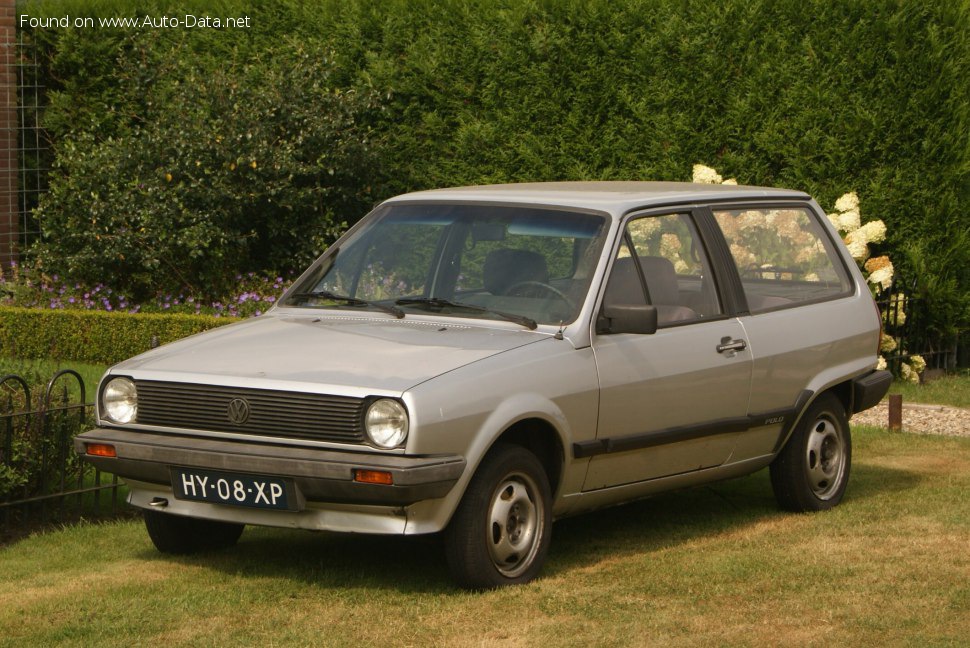
The Volkswagen Polo, a name synonymous with compact efficiency and urban practicality in Europe, embarked on its second generation, internally designated as the 86C, in 1981. This article specifically focuses on a later iteration of this generation, the Volkswagen Polo II (86C) 1.4 D (48 Hp), produced from 1990 to 1994. While never officially sold in the United States, the Polo II played a crucial role in the European and other international markets, serving as Volkswagen’s entry-level offering below the Golf. It was a testament to robust, straightforward engineering, designed to provide economical and reliable transportation in a compact, three-door hatchback form factor. The 1.4 D model, in particular, highlighted Volkswagen’s commitment to diesel power, even in smaller vehicles, at a time when fuel efficiency was becoming an increasingly important consideration for motorists across the continent. This variant embodied the philosophy of “form follows function,” offering a no-frills, dependable driving experience tailored for congested city streets and cost-conscious owners.
Engine and Performance: The Heart of The Volkswagen Polo II (86C) 1.4 D (48 Hp): A European Compact Workhorse
Under the hood of the 1990-1994 Volkswagen Polo II (86C) 1.4 D (48 Hp) resided a naturally aspirated 1.4-liter (1391 cm3 or 84.88 cubic inches) inline-four diesel engine, designated with the code “1W.” This powerplant was engineered for durability and exceptional fuel economy rather than outright speed, producing a modest 48 horsepower at 4500 revolutions per minute (rpm) and 62.69 lb.-ft. (85 Nm) of torque at a low 2700 rpm. Its power-to-liter ratio stood at 34.5 Hp/l, typical for a non-turbocharged diesel of its era.
The engine’s architecture featured a front, transverse layout, driving the front wheels through a 5-speed manual transmission. This setup was standard for compact European cars, balancing packaging efficiency with direct power delivery. A high compression ratio of 22.3:1 was characteristic of diesel engines, facilitating combustion without spark plugs. Fuel delivery was managed by a precombustion chamber injection system, a common technology before the widespread adoption of direct injection, known for smoother operation and reduced noise compared to early direct injection systems, though less efficient. The valvetrain was a simple SOHC (Single Overhead Camshaft) design with two valves per cylinder, prioritizing reliability and ease of maintenance.
Performance figures reflected the engine’s economical bias. The Polo 1.4 D accelerated from 0 to 60 mph in approximately 18.5 seconds (0-100 km/h in 19.5 seconds), with a top speed of 88.23 mph (142 km/h). These numbers clearly position the vehicle as a practical commuter, not a