The Toyota RAV4 II (XA20, facelift 2003) 3-door 2.0 16V D-4D (116 Hp) 4WD: A Compact SUV Pioneer for the European Market
The
Toyota RAV4 II (XA20, facelift 2003) 3-door 2.0 16V D-4D (116 Hp) 4WD
represents a pivotal moment in the evolution of the compact sport utility vehicle (SUV) segment. As part of the second generation of Toyota’s “Recreational Activity Vehicle: 4-wheel drive,” the XA20 series continued the innovative spirit of its predecessor, which essentially created the compact SUV category. This particular variant, produced from December 2003 to January 2006, featured a robust turbodiesel engine and a three-door body style, making it a highly relevant and popular choice in European and other international markets where diesel power and smaller, more agile SUVs were in high demand. While the RAV4 nameplate found immense success in the United States, this specific 3-door diesel configuration was primarily tailored for overseas markets, offering a blend of fuel efficiency, torque, and compact versatility that resonated strongly with a different set of consumer priorities than those typically found in North America at the time.
The second-generation RAV4, codenamed XA20, built upon the original’s success by offering improved refinement, enhanced safety features, and a more contemporary design. The 2003 facelift brought subtle but effective updates, including revised front and rear fascias, updated interior trim, and new engine options, further solidifying its competitive edge. This model, with its 2.0-liter D-4D diesel engine and permanent all-wheel drive, was engineered to provide a practical and engaging driving experience, whether navigating urban environments or tackling light off-road trails. Its compact dimensions made it particularly adept at city driving and parking, while the 4WD system offered confidence in varying weather conditions and on unpaved roads.
Engine and Performance of the Toyota RAV4 II (XA20, facelift 2003) 3-door 2.0 16V D-4D (116 Hp) 4WD
At the heart of this specific
Toyota RAV4 II (XA20, facelift 2003) 3-door 2.0 16V D-4D (116 Hp) 4WD
variant lies a 2.0-liter (1995 cm3 or 121.74 cu. in.) 1CD-FTV D-4D common rail turbodiesel engine. This inline four-cylinder powerplant, featuring a DOHC (Double Overhead Camshaft) valvetrain with four valves per cylinder, was a testament to Toyota’s commitment to advanced diesel technology. With a compression ratio of 18.6:1 and equipped with both a turbocharger and an intercooler, the engine delivered a respectable 116 horsepower at 4000 rpm. More significantly for its intended market, it produced a strong 184.39 lb.-ft. of torque at a low 1800 rpm, providing excellent pulling power and responsiveness in everyday driving.
Power was sent to all four wheels through a standard 5-speed manual transmission, ensuring direct engagement and control for the driver. This full-time all-wheel-drive (4×4) system provided enhanced traction and stability, a key selling point for a vehicle designed to handle diverse driving conditions. In terms of outright performance, the RAV4 2.0 D-4D was capable of accelerating from 0 to 60 mph in a reasonable 11.5 seconds, with a top speed of 105.63 mph (170 km/h). While not a speed demon, its performance figures were competitive for the compact SUV class of its era, especially considering its focus on practicality and fuel efficiency.
Fuel economy was a significant advantage for the diesel RAV4, particularly in Europe where fuel prices often favored diesel powertrains. The combined fuel consumption was rated at an impressive 33.1 US mpg (7.1 l/100 km), with urban consumption at 26.4 US mpg (8.9 l/100 km) and extra-urban at 38.6 US mpg (6.1 l/100 km). With CO2 emissions of 190 g/km, it met the Euro 3 emission standard, reflecting its relatively clean operation for the early 2000s. The 15.06 US gallon (57 liter) fuel tank provided a substantial cruising range, further enhancing its appeal for long-distance travel.
Design and Features
The
Toyota RAV4 II (XA20, facelift 2003) 3-door 2.0 16V D-4D (116 Hp) 4WD
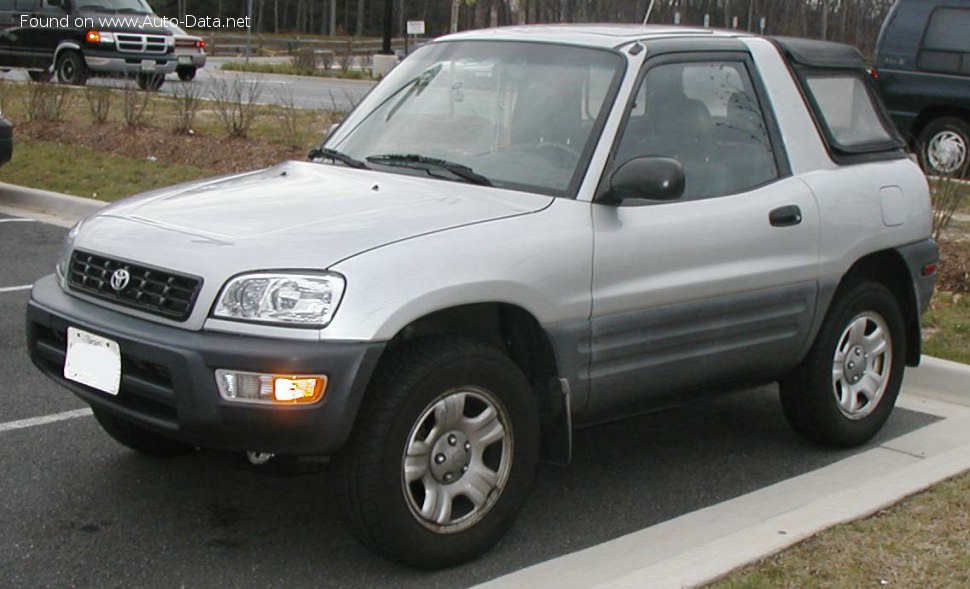
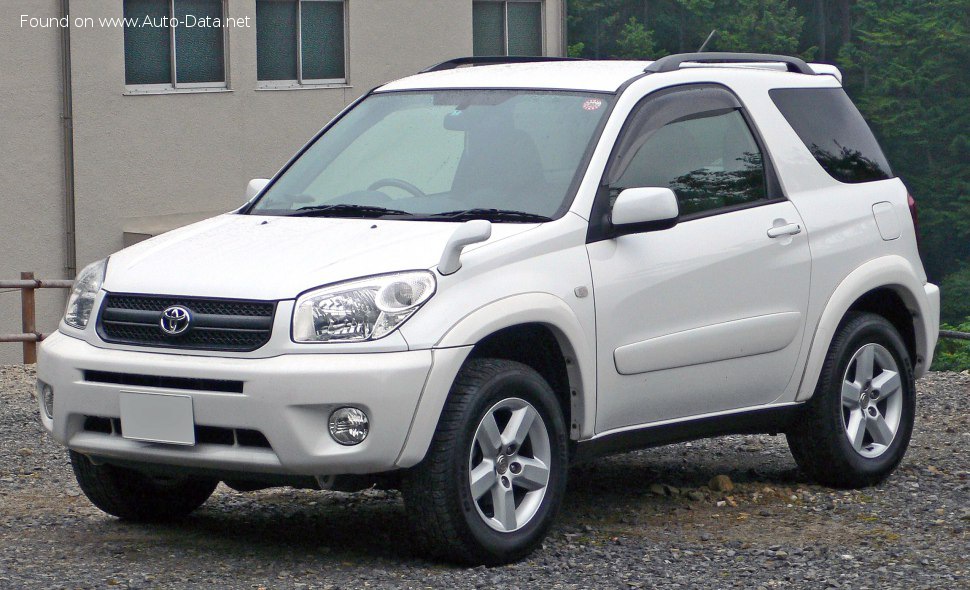
presented a distinctive and sporty appearance with its three-door SUV body style. Measuring 150.59 inches (3825 mm) in length, 68.31 inches (1735 mm) in width, and 66.14 inches (1680 mm) in height, it was a genuinely compact vehicle, particularly compared to larger SUVs available in the US market. Its short wheelbase of 89.76 inches (2280 mm) contributed to its nimble handling and tight turning radius, making it ideal for urban maneuvering. The facelifted XA20 design featured a more refined aesthetic, with updated headlights, grille, and bumper designs that gave it a more modern and integrated look.
Despite its compact exterior, the RAV4 offered seating for four occupants. The interior, while not luxurious, was designed with practicality and durability in mind, characteristic of Toyota’s engineering philosophy. Cargo versatility was decent for a 3-door model, with a minimum trunk space of 5.3 cu. ft. (150 liters) that could expand to a maximum of 27.05 cu. ft. (766 liters) with the rear seats folded, making it capable of accommodating a surprising amount of gear.
Underneath its skin, the RAV4 featured a well-engineered chassis. The front suspension utilized an independent McPherson strut setup with coil springs and an anti-roll bar, providing a good balance of comfort and handling. The rear featured a double wishbone independent suspension, further enhancing ride quality and road holding. Braking performance was handled by ventilated discs at the front and solid discs at the rear, complemented by an Anti-lock Braking System (ABS), which was a crucial safety feature for vehicles of this era. Hydraulic power steering, with a rack and pinion system, offered precise and communicative feedback to the driver. The vehicle rode on 215/70 R16 tires mounted on 6.5J x 16-inch wheel rims, providing a comfortable ride and adequate grip. With a curb weight of 3053.4 lbs. (1385 kg) and a maximum permissible gross weight of 3935.25 lbs. (1785 kg), it was a relatively lightweight SUV, contributing to its agility and efficiency. It also boasted a respectable towing capacity of 3306.93 lbs. (1500 kg) with brakes, adding to its utility.
Technical Specifications
| Toyota RAV4 II (XA20, facelift 2003) 3-door 2.0 16V D-4D (116 Hp) 4WD – Full Specifications | |
|---|---|
General Information |
|
| Brand | Toyota |
| Model | RAV4 |
| Generation | RAV4 II (XA20, facelift 2003) 3-door |
| Type (Engine) | 2.0 16V D-4D (116 Hp) 4WD |
| Start of Production | December, 2003 |
| End of Production | January, 2006 |
| Powertrain Architecture | Internal Combustion Engine |
| Body Type | SUV |
| Seats | 4 |
| Doors | 3 |
Performance Specifications |
|
| Fuel Consumption (Economy) – Urban | 26.4 US mpg (8.9 l/100 km) |
| Fuel Consumption (Economy) – Extra Urban | 38.6 US mpg (6.1 l/100 km) |
| Fuel Consumption (Economy) – Combined | 33.1 US mpg (7.1 l/100 km) |
| CO2 Emissions | 190 g/km |
| Fuel Type | Diesel |
| Acceleration 0 – 60 mph | 11.5 seconds |
| Acceleration 0 – 62 mph (0 – 100 km/h) | 12.1 seconds |
| Maximum Speed | 105.63 mph (170 km/h) |
| Emission Standard | Euro 3 |
| Weight-to-Power Ratio | 11.9 kg/Hp (83.8 Hp/tonne) |
| Weight-to-Torque Ratio | 5.5 kg/Nm (180.5 Nm/tonne) |
Engine Specifications |
|
| Power | 116 Hp @ 4000 rpm |
| Power per Liter | 58.1 Hp/l |
| Torque | 184.39 lb.-ft. @ 1800 rpm (250 Nm) |
| Engine Layout | Front, Transverse |
| Engine Model/Code | 1CD-FTV |
| Engine Displacement | 121.74 cu. in. (1995 cm3) |
| Number of Cylinders | 4 |
| Engine Configuration | Inline |
| Cylinder Bore | 3.24 in. (82.2 mm) |
| Piston Stroke | 3.7 in. (94 mm) |
| Compression Ratio | 18.6:1 |
| Number of Valves per Cylinder | 4 |
| Fuel Injection System | Diesel Commonrail |
| Engine Aspiration | Turbocharger, Intercooler |
| Valvetrain | DOHC |
| Engine Oil Capacity | 6.23 US qt (5.9 l) |
| Engine Oil Specification | Not specified in data |
Space, Volume and Weights |
|
| Kerb Weight | 3053.4 lbs. (1385 kg) |
| Max. Weight | 3935.25 lbs. (1785 kg) |
| Max Load | 881.85 lbs. (400 kg) |
| Trunk (Boot) Space – Minimum | 5.3 cu. ft. (150 l) |
| Trunk (Boot) Space – Maximum | 27.05 cu. ft. (766 l) |
| Fuel Tank Capacity | 15.06 US gal (57 l) |
| Max. Roof Load | 220.46 lbs. (100 kg) |
| Permitted Trailer Load with Brakes (12%) | 3306.93 lbs. (1500 kg) |
| Permitted Trailer Load without Brakes | 1410.96 lbs. (640 kg) |
Dimensions |
|
| Length | 150.59 in. (3825 mm) |
| Width | 68.31 in. (1735 mm) |
| Height | 66.14 in. (1680 mm) |
| Wheelbase | 89.76 in. (2280 mm) |
Drivetrain, Brakes and Suspension Specifications |
|
| Drive Wheel | All-wheel drive (4×4) |
| Number of Gears and Type of Gearbox | 5 gears, manual transmission |
| Front Suspension | Independent, type McPherson with coil spring and anti-roll bar |
| Rear Suspension | Double wishbone |
| Front Brakes | Ventilated discs |
| Rear Brakes | Disc |
| Assisting Systems | ABS (Anti-lock Braking System) |
| Steering Type | Steering rack and pinion |
| Power Steering | Hydraulic Steering |
| Tires Size | 215/70 R16 |
| Wheel Rims Size | 6.5J x 16 |
Legacy and Market Impact
The Toyota RAV4, in its various iterations, holds a significant place in automotive history as one of the pioneers of the compact SUV segment. The original RAV4, introduced in 1994, essentially created a new category of vehicles that combined the rugged appeal and higher driving position of an SUV with the fuel efficiency and car-like handling of a passenger car. The second generation, the XA20, continued this legacy, evolving the formula with greater refinement and a broader range of options, including the
Toyota RAV4 II (XA20, facelift 2003) 3-door 2.0 16V D-4D (116 Hp) 4WD
for international markets.
While the RAV4 was a global success, the 3-door diesel variant had a particularly strong impact in Europe and other regions where fuel efficiency and lower operating costs were paramount. In these markets, diesel engines were highly favored for their torque characteristics and superior fuel economy compared to gasoline counterparts. The compact 3-door body style also appealed to buyers seeking a more urban-friendly SUV that was easy to park and maneuver in crowded city streets, yet still offered the versatility of all-wheel drive for weekend adventures.
Competitors for this specific RAV4 in the European market included vehicles like the Honda CR-V (though often in 5-door gasoline form), the Nissan X-Trail, Land Rover Freelander, and even more budget-oriented options like the Hyundai Tucson or Kia Sportage. The RAV4 distinguished itself through Toyota’s renowned reputation for reliability, strong resale values, and a well-balanced package of performance, economy, and practicality. The D-4D engine, in particular, was praised for its smooth operation and robust torque delivery, making it a favorite for those who regularly carried passengers or cargo, or towed small trailers.
The historical significance of this variant lies in its contribution to solidifying the compact SUV as a mainstream vehicle choice, especially outside of North America. It demonstrated that a compact SUV could be stylish, efficient, and capable without being overly large or expensive to run. The 3-door RAV4 played a crucial role in expanding the reach of the SUV market, attracting buyers who might have otherwise opted for traditional hatchbacks or sedans. Its success paved the way for the proliferation of compact crossovers that dominate today’s automotive landscape, making the
Toyota RAV4 II (XA20, facelift 2003) 3-door 2.0 16V D-4D (116 Hp) 4WD
an important chapter in the ongoing story of the modern SUV.