The Peugeot 3008 III (Phase I, 2023) 1.2 (136 Hp) Mild Hybrid e-DCS: A European Crossover’s Evolution
The Peugeot 3008 III (Phase I, 2023) represents the latest iteration of Peugeot’s popular compact crossover SUV, first revealed in September 2023. This third generation, specifically the 1.2 (136 Hp) Mild Hybrid e-DCS variant, is a significant entry into the highly competitive European C-segment SUV market. While the Peugeot brand has a limited presence in the United States, the 3008 has been a cornerstone of its success in its primary European and Asian markets, celebrated for its distinctive styling, practical design, and increasingly advanced powertrains. This particular model, with production commencing in April 2024, showcases Peugeot’s commitment to hybridization, blending a compact gasoline engine with a mild-hybrid electric vehicle (MHEV) system to enhance efficiency and reduce emissions, all while maintaining the brand’s characteristic driving dynamics and sophisticated cabin experience.
Powertrain and Performance of the Peugeot 3008 III (Phase I, 2023) 1.2 (136 Hp) Mild Hybrid e-DCS
At the heart of this Peugeot 3008 variant is a sophisticated mild-hybrid powertrain, designed for optimal efficiency and responsive performance. The internal combustion engine is Peugeot’s well-regarded 1.2-liter (1199 cm3) PureTech inline three-cylinder engine, designated by the HN09 code. This compact unit is equipped with a turbocharger and intercooler, and features a direct injection fuel system, allowing it to produce a respectable 136 horsepower at 5500 rpm. Its maximum torque output stands at 169.64 lb.-ft. (230 Nm), available at a low 1750 rpm, ensuring brisk acceleration from a standstill and strong mid-range pulling power.
The “Mild Hybrid e-DCS” designation signifies its MHEV (Mild Hybrid Electric Vehicle) architecture. This system employs a 48-volt electrical setup, powered by a compact 0.89 kWh gross (0.43 kWh net usable) lithium-ion battery. The battery, weighing just 26.46 lbs. (12 kg) and cleverly located below the floor under the front seats, contributes to a balanced weight distribution. An electric motor, integrated directly into the 6-speed automatic e-DCS transmission, serves as the core of the hybrid functionality. This synchronous electric motor provides an additional 21 horsepower at 4264 rpm and a substantial 37.62 lb.-ft. (51 Nm) of torque across a broad range from 750 to 2499 rpm.
The MHEV system provides several key benefits. It allows for electric-only driving at low speeds, such as during parking maneuvers or in stop-and-go traffic, for short durations. More significantly, it offers power assistance to the gasoline engine during acceleration, reducing the load on the internal combustion engine and thereby improving fuel efficiency. The system also enables more seamless and refined engine restarts through its Start & Stop System, and it recuperates energy during deceleration and braking, recharging the battery. The combined effect is a noticeably smoother driving experience, reduced fuel consumption, and lower CO2 emissions, meeting the stringent Euro 6e emission standard with figures ranging from 123-127 g/km.
Performance figures for this MHEV variant are competitive within its segment. The 3008 III can accelerate from 0 to 60 mph in an estimated 9.7 seconds, with a top speed of 124.9 mph (201 km/h). Fuel economy, as measured by the WLTP cycle, is impressive, ranging from 42.8 to 42 US mpg (5.5-5.6 l/100 km), underscoring the effectiveness of the mild-hybrid system. The drivetrain architecture is front-wheel drive, with both the internal combustion engine and electric motor driving the front wheels, offering a blend of efficiency and predictable handling.
Design and Features
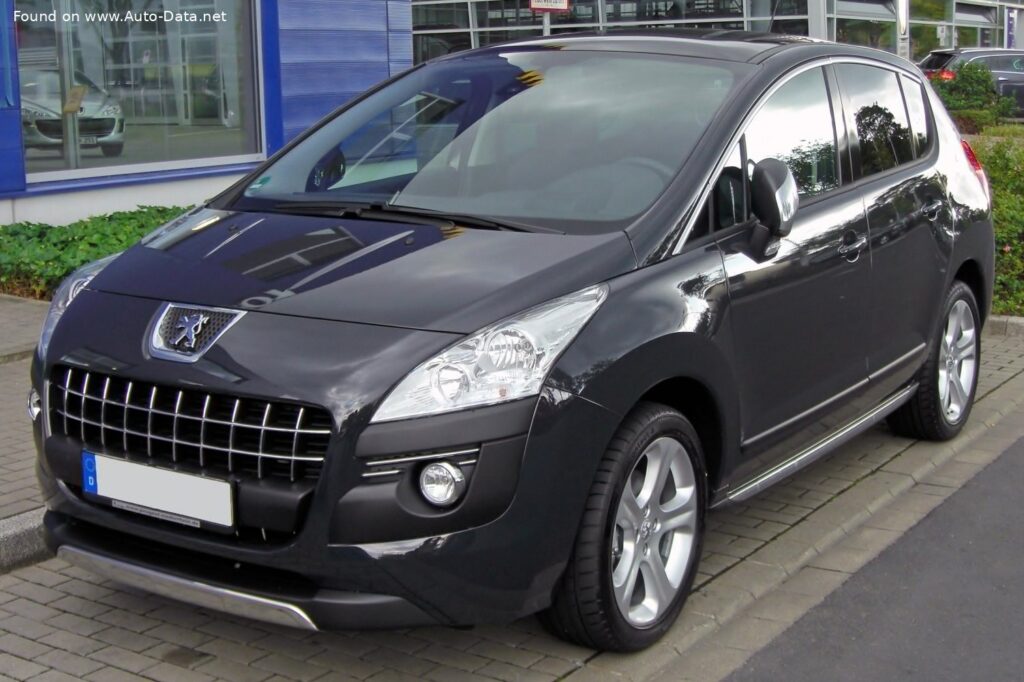
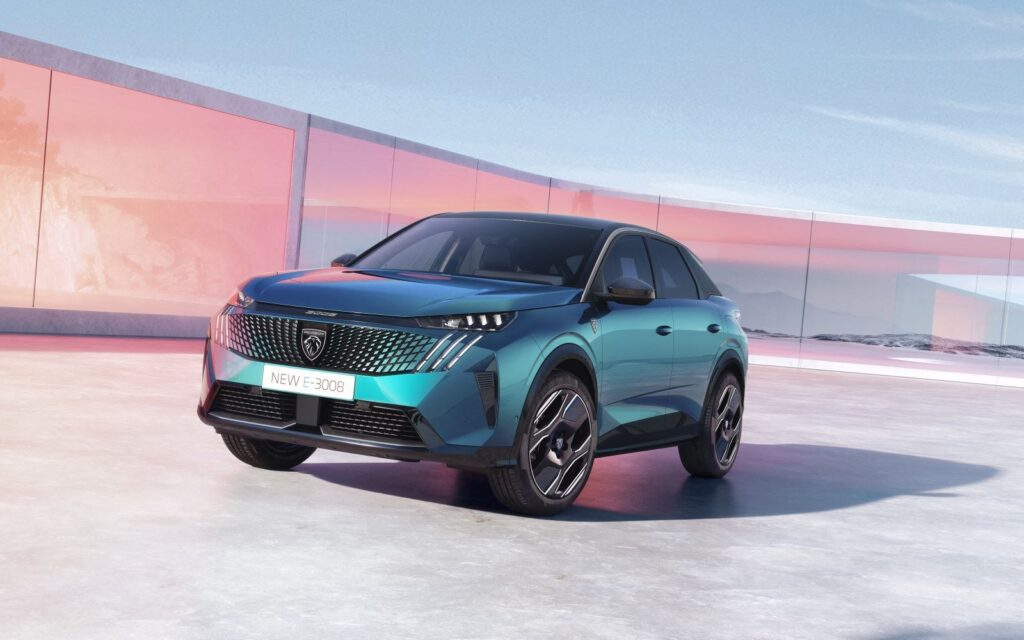
The Peugeot 3008 III (Phase I, 2023) maintains its distinctive SUV body type, characterized by a bold, contemporary design that aligns with Peugeot’s latest aesthetic language. It is configured as a five-door vehicle with seating for five occupants, emphasizing practicality and passenger comfort. The exterior styling is unmistakably Peugeot, featuring sharp lines, sculpted surfaces, and the brand’s signature “lion’s claw” lighting elements, creating a strong visual presence on the road.
Dimensionally, the 3008 III measures 178.82 inches (4542 mm) in length, 74.61 inches (1895 mm) in width (82.99 inches or 2108 mm including mirrors), and stands 64.61 inches (1641 mm) tall. Its wheelbase spans 107.83 inches (2739 mm), contributing to a spacious cabin and stable ride. The vehicle’s ground clearance of 7.8 inches (198 mm), combined with an approach angle of 18.7° and a departure angle of 25.7°, provides adequate capability for light off-road excursions or navigating challenging urban terrain, typical of a modern crossover.
Inside, the 3008 III is expected to feature Peugeot’s acclaimed i-Cockpit, which typically includes a compact steering wheel, a head-up digital instrument cluster, and a large central infotainment touchscreen. This driver-focused layout aims to enhance ergonomics and immersion. While specific interior features are not detailed in the technical data, a modern Peugeot of this caliber would typically offer a wide array of amenities, including advanced connectivity options, premium materials, and configurable ambient lighting, all designed to create a comfortable and technologically forward cabin environment.
For safety and driving dynamics, the 3008 III comes equipped with fundamental systems such as ABS (Anti-lock Braking System). Given its 2024 model year production, it would also incorporate a comprehensive suite of advanced driver-assistance systems (ADAS) and passive safety features, including multiple airbags, electronic stability control, and potentially features like lane-keeping assist, adaptive cruise control, and automatic emergency braking, as mandated or expected in the European market. The vehicle’s suspension setup includes an independent McPherson strut system at the front and an elastic beam at the rear, a common and effective combination for compact SUVs, balancing comfort and handling. Stopping power is provided by disc brakes on both the front (304×28 mm) and rear (290×12 mm) axles. Steering is handled by an electric power-assisted rack and pinion system, offering precise control and ease of maneuvering. The 3008 III rides on 19-inch wheels, shod with 225/55 R19 103V tires, contributing to both its aesthetic appeal and roadholding capabilities.
Practicality is also a strong suit, with a minimum trunk space of 18.36 cu. ft. (520 liters), which expands significantly to 52.27 cu. ft. (1480 liters) with the rear seats folded down, making it highly versatile for cargo. The fuel tank capacity is 14.53 US gallons (55 liters), providing a decent range given its fuel efficiency. Furthermore, it has a permitted trailer load with brakes of 2645.55 lbs. (1200 kg), adding to its utility.
Technical Specifications: Peugeot 3008 III (Phase I, 2023) 1.2 (136 Hp) Mild Hybrid e-DCS
| Category | Specification |
|---|---|
| General Information | |
| Brand | Peugeot |
| Model | 3008 |
| Generation | 3008 III (Phase I, 2023) |
| Type (Engine) | 1.2 (136 Hp) Mild Hybrid e-DCS |
| Start of Production | April, 2024 |
| End of Production | March, 2025 |
| Powertrain Architecture | MHEV (Mild Hybrid Electric Vehicle) |
| Body Type | SUV |
| Seats | 5 |
| Doors | 5 |
| Performance Specs | |
| Combined Fuel Consumption (WLTP) | 42.8 – 42 US mpg (5.5-5.6 l/100 km) |
| CO2 Emissions (WLTP) | 123-127 g/km |
| Fuel Type | Petrol (Gasoline) |
| Acceleration 0 – 60 mph | 9.7 sec |
| Maximum Speed | 124.9 mph (201 km/h) |
| Emission Standard | Euro 6e |
| Weight-to-Power Ratio | 12.1 kg/Hp (82.5 Hp/tonne) |
| Weight-to-Torque Ratio | 7.2 kg/Nm (139.6 Nm/tonne) |
| Electric Cars and Hybrids Specs | |
| Gross Battery Capacity | 0.89 kWh |
| Net (Usable) Battery Capacity | 0.43 kWh |
| Battery Voltage | 48 V |
| Battery Technology | Lithium-ion (Li-Ion) |
| Battery Weight | 26.46 lbs. (12 kg) |
| Battery Location | Below the floor, under the front seats |
| Electric Motor Power | 21 Hp @ 4264 rpm |
| Electric Motor Torque | 37.62 lb.-ft. @ 750-2499 rpm (51 Nm) |
| Electric Motor Location | Integrated into the transmission |
| Electric Motor Type | Synchronous |
| Internal Combustion Engine Specs | |
| Power | 136 Hp @ 5500 rpm |
| Power per Liter | 113.4 Hp/l |
| Torque | 169.64 lb.-ft. @ 1750 rpm (230 Nm) |
| Engine Layout | Front, Transverse |
| Engine Model/Code | PureTech/HN09 |
| Engine Displacement | 1.2 liters (1199 cm3 / 73.17 cu. in.) |
| Number of Cylinders | 3 |
| Engine Configuration | Inline |
| Number of Valves per Cylinder | 4 |
| Fuel Injection System | Direct injection |
| Engine Aspiration | Turbocharger, Intercooler |
| Engine Oil Capacity | 3.7 US qt (3.5 l) |
| Engine Systems | Start & Stop System, Particulate filter |
| Space, Volume and Weights | |
| Curb Weight | 3633.22 lbs. (1648 kg) |
| Max. Weight | 4585.62 lbs. (2080 kg) |
| Max Load | 952.4 lbs. (432 kg) |
| Trunk Space – Minimum | 18.36 cu. ft. (520 l) |
| Trunk Space – Maximum | 52.27 cu. ft. (1480 l) |
| Fuel Tank Capacity | 14.53 US gal (55 l) |
| Permitted Trailer Load with Brakes (12%) | 2645.55 lbs. (1200 kg) |
| Dimensions | |
| Length | 178.82 in. (4542 mm) |
| Width | 74.61 in. (1895 mm) |
| Width with Mirrors Folded | 76.14 in. (1934 mm) |
| Width Including Mirrors | 82.99 in. (2108 mm) |
| Height | 64.61 in. (1641 mm) |
| Wheelbase | 107.83 in. (2739 mm) |
| Front Track | 64.17 in. (1630 mm) |
| Rear (Back) Track | 64.41 in. (1636 mm) |
| Front Overhang | 37.01 in. (940 mm) |
| Rear Overhang | 33.98 in. (863 mm) |
| Ride Height (Ground Clearance) | 7.8 in. (198 mm) |
| Approach Angle | 18.7° |
| Departure Angle | 25.7° |
| Drivetrain, Brakes and Suspension Specs | |
| Drivetrain Architecture | Front-wheel drive MHEV; ICE and electric motor drive front wheels, capable of full electric or mixed mode. |
| Drive Wheel | Front wheel drive |
| Number of Gears and Type of Gearbox | 6 gears, automatic transmission e-DCS |
| Front Suspension | Independent type McPherson |
| Rear Suspension | Elastic beam |
| Front Brakes | Disc, 304×28 mm |
| Rear Brakes | Disc, 290×12 mm |
| Assisting Systems | ABS (Anti-lock braking system) |
| Steering Type | Steering rack and pinion |
| Power Steering | Electric Steering |
| Tires Size | 225/55 R19 103V |
| Wheel Rims Size | 19 inches |
Legacy and Market Impact of the Peugeot 3008 III (Phase I, 2023)
The Peugeot 3008 has carved out a significant legacy in the European automotive landscape, particularly since its second generation won the coveted European Car of the Year award in 2017. This recognition cemented its reputation as a stylish, well-engineered, and practical compact SUV. The introduction of the third generation, especially with the 1.2 (136 Hp) Mild Hybrid e-DCS powertrain, underscores Peugeot’s continued commitment to innovation and adapting to evolving market demands for greater efficiency and reduced environmental impact.
In its primary markets, the 3008 III faces stiff competition from a host of established rivals, including the Volkswagen Tiguan, Nissan Qashqai, Hyundai Tucson, Kia Sportage, and Renault Austral, among others. To maintain its competitive edge, Peugeot relies on its distinctive design language, the premium feel of its interior (including the i-Cockpit), and the progressive nature of its powertrains. The mild-hybrid system in this variant is a crucial strategic move, offering a compelling balance between traditional gasoline power and improved efficiency, serving as an accessible stepping stone for consumers not yet ready for full electric vehicles.
The 3008’s impact extends beyond sales figures; it has been instrumental in repositioning Peugeot as a more upscale and technology-forward brand. The third generation, with its sleek, almost fastback-SUV profile and advanced features, aims to further elevate this perception. The adoption of the e