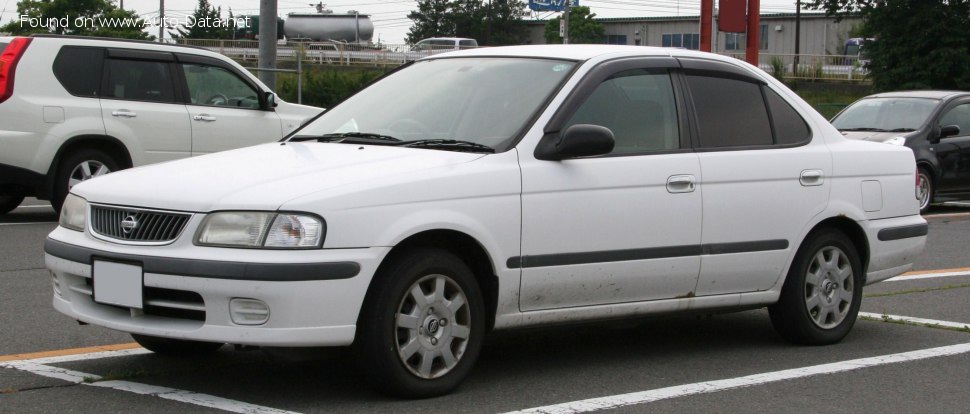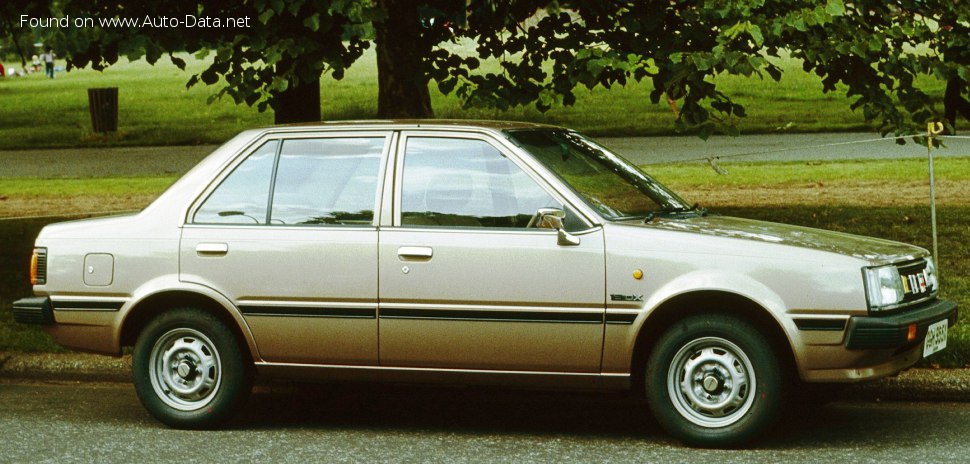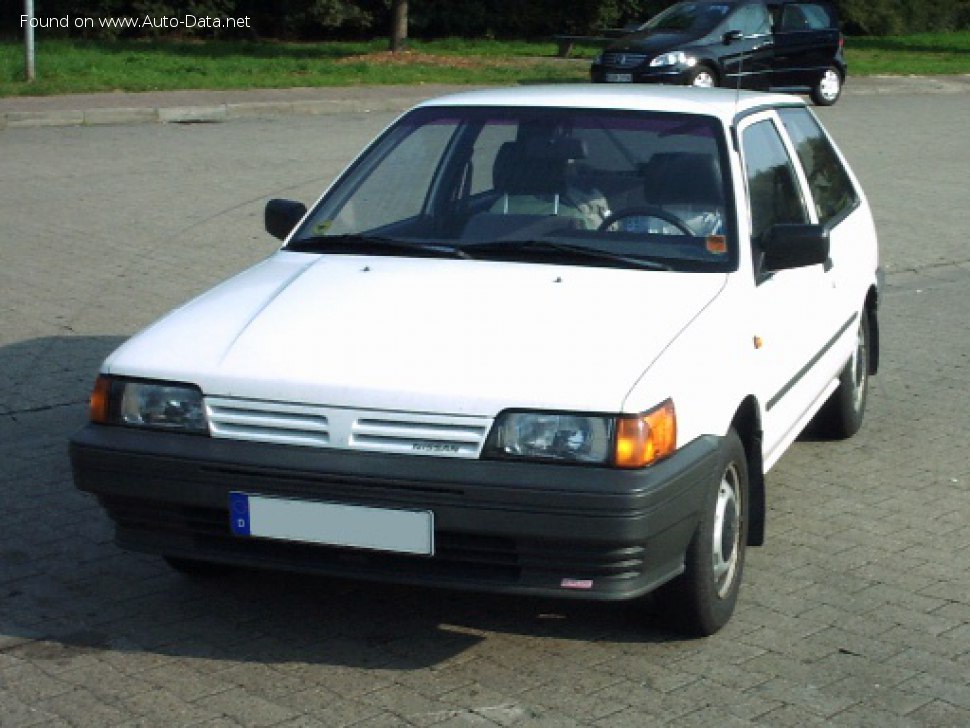
Introduction to the Nissan Sunny II Hatchback (N13)
The Nissan Sunny, a nameplate synonymous with reliable and economical transportation across numerous global markets, saw its second generation, the N13 series, introduced in 1986. While known as the Nissan Sentra in North America, the Nissan Sunny II Hatchback (N13), particularly with its 1.3-liter engine, was a staple in European, Asian, and other international markets where compact, fuel-efficient vehicles were highly prized. This generation represented Nissan’s continued commitment to offering practical and affordable motoring, building on the success of its predecessors. The N13 series, produced from 1986 to 1988 in its initial form, was a direct competitor in the fiercely contested C-segment (compact car) market, facing off against European stalwarts like the Volkswagen Golf, Opel Kadett, and Ford Escort, as well as Japanese rivals such as the Honda Civic and Toyota Corolla. The 1.3-liter hatchback variant, with its modest 60 horsepower, was specifically engineered for cost-conscious consumers seeking dependable daily transport with low running costs rather than outright performance.
The Nissan Sunny II Hatchback (N13) in Detail
Engine and Performance
At the heart of the Nissan Sunny II Hatchback (N13) 1.3 (60 Hp) was a naturally aspirated, 1.3-liter gasoline engine, part of Nissan’s venerable E-series family. This inline-four powerplant, while not a powerhouse, was renowned for its robust construction, simplicity, and impressive fuel efficiency for its era. Delivering 60 horsepower, the engine was mated to a manual transmission (typical for this segment and power output), providing adequate motivation for urban commuting and reasonable highway cruising, though overt acceleration was not its strong suit. The focus was firmly on economy and reliability. For buyers in markets where fuel prices were a significant concern, or where vehicle taxation favored smaller displacement engines, this 1.3-liter unit was an ideal choice. Its naturally aspirated design meant fewer complex components compared to turbocharged engines, contributing to lower maintenance costs and greater long-term durability, a hallmark of Nissan vehicles from this period. The engine’s modest output meant that the driving experience was more about practicality and ease of use rather than thrilling dynamics, perfectly suiting its role as a workhorse compact car.
Design and Features
The Nissan Sunny II Hatchback (N13) adopted a modern, albeit conservative, design aesthetic for the mid-to-late 1980s. Its hatchback body type was incredibly practical, offering a versatile cargo area that could be expanded by folding down the rear seats, a crucial feature for families and individuals needing flexible load-carrying capabilities. The exterior styling was characterized by clean lines, flush-mounted headlights, and a relatively aerodynamic profile for its time, moving away from the boxier designs of the early 80s. While not overtly flashy, the design was functional and aimed at minimizing wind noise and improving fuel economy.
Inside, the N13 Sunny was a testament to sensible ergonomics and durable materials. The cabin was straightforward, with controls that were easy to understand and operate. Comfort was prioritized for everyday use, with supportive seating for four adults, or five for shorter journeys. Standard features on the 1.3-liter model would have been relatively basic, reflecting its economy car status. Expect manual window winders, a simple AM/FM radio, and perhaps a basic heating and ventilation system. Power steering might have been an optional extra in some markets, but manual steering was common, offering direct feedback to the driver. Safety features, by modern standards, were rudimentary, typically including seatbelts and a sturdy body structure, common for vehicles of its vintage. The overall design philosophy was one of no-nonsense utility, aiming to provide reliable and comfortable transportation without unnecessary frills.
Technical Specifications
Below is a detailed breakdown of the technical specifications for the Nissan Sunny II Hatchback (N13) 1.3 (60 Hp):
| General Information | |
| Brand | Nissan |
| Model | Sunny |
| Generation | Sunny II Hatchback (N13) |
| Type (Engine) | 1.3 (60 Hp) |
| Start of Production | 1986 year |
| End of Production | 1988 year |
| Powertrain Architecture | Internal Combustion Engine |
| Body type | Hatchback |
| Performance Specs | |
| Fuel Type | Petrol (Gasoline) |
| Engine Specs | |
| Power | 60 Hp |
| Engine Aspiration | Naturally aspirated engine |
Legacy and Market Impact
The Nissan Sunny II Hatchback (N13) 1.3 (60 Hp) carved out a significant niche for itself in the global automotive landscape. Its primary market impact was felt most strongly in regions where affordability, reliability, and fuel efficiency were paramount. In Europe, it was a practical alternative to the ubiquitous Volkswagen Golf and Ford Escort, often appealing to buyers looking for Japanese reliability and a competitive price point. In Asian markets, the Sunny was often a family’s primary vehicle, valued for its low running costs and ability to withstand demanding conditions.
The N13 generation, including the 1.3-liter hatchback, reinforced Nissan’s reputation for building durable and dependable vehicles. While not celebrated for groundbreaking design or blistering performance, the Sunny was a car that simply worked, day in and day out. Its mechanical simplicity made it relatively inexpensive to maintain and repair, contributing to its enduring popularity as a used car for many years after its production ceased. This generation helped solidify Nissan’s position as a major player in the global compact car segment, demonstrating its ability to produce vehicles that met the diverse needs of international consumers.
Its competitors were numerous and fierce. In addition to the European models mentioned, it also contended with other Japanese compacts like the Mazda 323 and Subaru Leone, all vying for the same segment of the market. The Sunny differentiated itself through its blend of no-nonsense practicality, strong build quality, and a reputation for long-term ownership value. Although its production run for this specific configuration was relatively short (1986-1988), the N13 platform continued to evolve and be sold in various forms and markets for several more years, underscoring its foundational importance to Nissan’s global strategy. Today, while not a collector’s item in the traditional sense, the Nissan Sunny II Hatchback (N13) is remembered as a reliable and unassuming workhorse that played a vital role in providing accessible personal transportation to millions worldwide.