The Peugeot 3008 III (Phase I, 2023) 1.2 (145 Hp) Mild Hybrid e-DCS: A New Era of French Crossover
The Peugeot 3008 III (Phase I, 2023) 1.2 (145 Hp) Mild Hybrid e-DCS represents a significant evolution in the highly competitive compact SUV segment, particularly within the European market. Launched as part of its third generation, with production commencing in March 2025, this model embodies Peugeot’s commitment to electrification, distinctive design, and practical functionality. Positioned as a stylish and efficient option for families and urban dwellers, the 3008 III (Phase I, 2023) integrates a sophisticated mild-hybrid powertrain with a refreshed aesthetic, aiming to solidify its standing against formidable rivals. While not directly sold in the United States, the 3008 is a cornerstone of Peugeot’s global strategy, showcasing the brand’s innovative approach to modern mobility and its unique interpretation of the crossover formula. This particular variant, featuring a 1.2-liter mild-hybrid engine, highlights a balance between performance, fuel economy, and reduced emissions, making it a compelling choice for consumers prioritizing sustainability without compromising on driving experience.
Engine and Performance of the Peugeot 3008 III (Phase I, 2023) 1.2 (145 Hp) Mild Hybrid e-DCS
At the heart of the Peugeot 3008 III (Phase I, 2023) 1.2 (145 Hp) Mild Hybrid e-DCS lies an advanced MHEV (Mild Hybrid Electric Vehicle) powertrain architecture, designed to enhance both efficiency and responsiveness. This system pairs Peugeot’s renowned 1.2-liter PureTech three-cylinder gasoline engine (model code HN09) with a compact electric motor. The internal combustion engine itself is a turbocharged, intercooled unit, producing a robust 136 horsepower at 5500 rpm and 169.64 lb.-ft. of torque at a low 1750 rpm. Its direct injection fuel system and particulate filter ensure compliance with the stringent Euro 6e emission standard.
The mild-hybrid component significantly contributes to the vehicle’s overall performance and efficiency. An integrated electric motor, a synchronous type, delivers an additional 21 horsepower at 4264 rpm and a substantial 37.62 lb.-ft. of torque across a broad range from 750 to 2499 rpm. This electric boost is particularly effective during acceleration and low-speed driving, improving initial torque delivery and allowing for smoother stop-start operation. The electric motor is powered by a compact, 48-volt lithium nickel manganese cobalt oxides (Li-NMC) battery with a gross capacity of 0.4 kWh, strategically located below the floor under the front seats to optimize weight distribution and cabin space.
The combined system power peaks at 145 horsepower, channeled to the front wheels via a sophisticated 6-speed automatic e-DCS transmission. This drivetrain architecture allows the vehicle to operate in full electric mode under certain low-load conditions, or in a mixed mode, seamlessly blending power from both sources. This intelligent power management results in an impressive combined fuel consumption of 42.8 to 42 US mpg (WLTP cycle) and CO2 emissions ranging from 123-127 g/km. Performance figures are competitive for the segment, with the 3008 III accelerating from 0 to 60 mph in an estimated 9.7 seconds and reaching a maximum speed of 124.9 mph. The weight-to-power ratio stands at 10.9 kg/Hp (approximately 24.03 lbs/Hp), indicating a well-balanced power delivery for its curb weight of 3470.08 lbs.
Design and Features of the {original_focus_keyword}
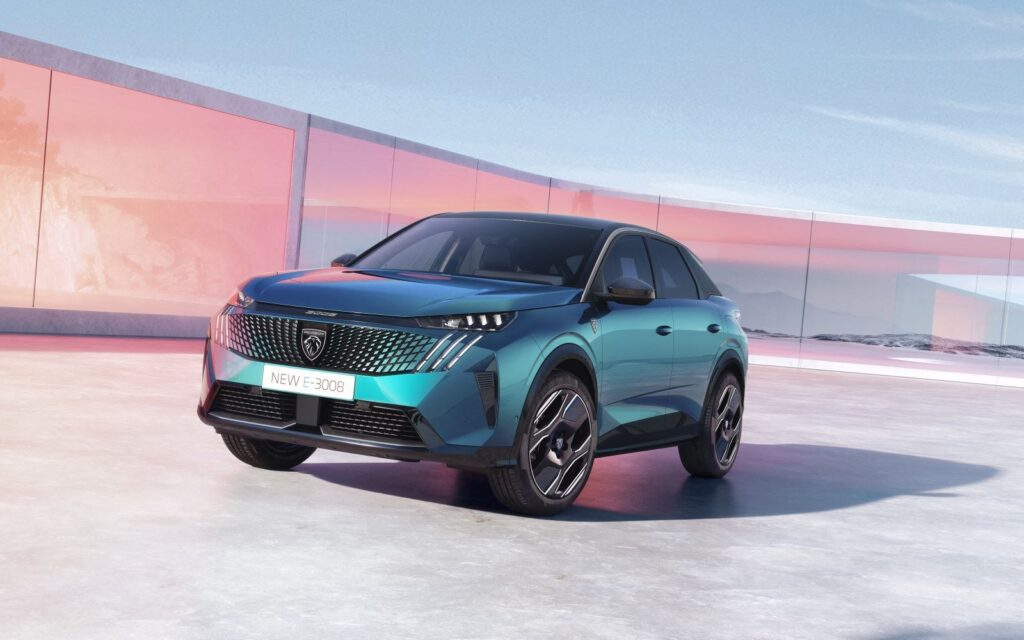
The Peugeot 3008 III (Phase I, 2023) redefines its aesthetic with a bold, contemporary design that aligns with Peugeot’s latest stylistic language. As a five-door, five-seat SUV, it maintains a commanding presence on the road while offering practical utility. The exterior features sharp lines, a distinctive front grille, and signature LED lighting elements that give it an unmistakable Peugeot identity. Its dimensions—178.82 inches in length, 74.61 inches in width (82.99 inches including mirrors), and 64.61 inches in height—contribute to a substantial road presence, yet it remains agile enough for urban environments, evidenced by its minimum turning circle of 34.78 feet. The generous 107.83-inch wheelbase further enhances ride comfort and interior space.
Inside, the 3008 III is expected to feature Peugeot’s acclaimed i-Cockpit, which typically includes a small, sporty steering wheel, a high-mounted digital instrument cluster, and a central touchscreen infotainment system. While specific interior features were not detailed in the provided data, Peugeot interiors are known for their modern design, quality materials, and ergonomic layout. The SUV body type provides excellent versatility, with a minimum trunk space of 18.36 cubic feet, expandable to a capacious 52.27 cubic feet with the rear seats folded down, making it suitable for a wide range of cargo needs.
In terms of ride and handling, the 3008 III employs an independent McPherson front suspension and an elastic beam rear suspension, a common setup for front-wheel-drive compact SUVs, balancing comfort with predictable handling. Braking is handled by disc brakes all around, with 304×28 mm discs at the front and 290×12 mm discs at the rear, supported by an Anti-lock Braking System (ABS) for optimal stopping performance. The electric power steering system, coupled with 225/55 R19 tires mounted on 19-inch wheels, ensures precise control and a comfortable driving experience. The vehicle also boasts practical off-road capabilities for light trails, with a ground clearance of 7.8 inches, an approach angle of 18.7°, and a departure angle of 25.7°.
Technical Specifications
| Category | Specification |
|---|---|
| General Information | |
| Brand | Peugeot |
| Model | 3008 |
| Generation | 3008 III (Phase I, 2023) |
| Type (Engine) | 1.2 (145 Hp) Mild Hybrid e-DCS |
| Start of Production | March, 2025 |
| Powertrain Architecture | MHEV (Mild Hybrid Electric Vehicle, power-assist hybrid, battery-assisted hybrid vehicles, BAHV) |
| Body Type | SUV |
| Seats | 5 |
| Doors | 5 |
| Performance Specs | |
| Combined Fuel Consumption (WLTP) | 42.8 – 42 US mpg (5.5-5.6 l/100 km) |
| CO2 Emissions (WLTP) | 123-127 g/km |
| Fuel Type | Petrol (Gasoline) |
| Acceleration 0-60 mph | 9.7 sec |
| Acceleration 0-62 mph (0-100 km/h) | 10.2 sec |
| Maximum Speed | 124.9 mph (201 km/h) |
| Emission Standard | Euro 6e |
| Weight-to-Power Ratio | 10.9 kg/Hp (24.03 lbs/Hp) |
| Weight-to-Torque Ratio | 6.8 kg/Nm (14.99 lbs/Nm) |
| Electric Cars and Hybrids Specs | |
| Gross Battery Capacity | 0.4 kWh |
| Battery Voltage | 48 V |
| Battery Technology | Lithium nickel manganese cobalt oxides (Li-NMC) |
| Battery Weight | 26.46 lbs (12 kg) |
| Battery Location | Below the floor, under the front seats |
| Electric Motor Power | 21 Hp @ 4264 rpm |
| Electric Motor Torque | 37.62 lb.-ft. @ 750-2499 rpm (51 Nm) |
| Electric Motor Location | Integrated into the transmission |
| Electric Motor Type | Synchronous |
| System Power (Combined) | 145 Hp |
| Internal Combustion Engine Specs | |
| Power (ICE) | 136 Hp @ 5500 rpm |
| Power per Liter | 113.4 Hp/l |
| Torque (ICE) | 169.64 lb.-ft. @ 1750 rpm (230 Nm) |
| Engine Layout | Front, Transverse |
| Engine Model/Code | PureTech/HN09 |
| Engine Displacement | 73.17 cu. in. (1199 cm³) |
| Number of Cylinders | 3 |
| Engine Configuration | Inline |
| Number of Valves per Cylinder | 4 |
| Fuel Injection System | Direct injection |
| Engine Aspiration | Turbocharger, Intercooler |
| Engine Oil Capacity | 3.7 US qt (3.5 l) |
| Engine Oil Specification | Information not publicly available |
| Engine Systems | Start & Stop System, Particulate filter |
| Space, Volume and Weights | |
| Kerb Weight | 3470.08 lbs (1574 kg) |
| Max. Weight (Gross Vehicle Weight) | 4431.29 lbs (2010 kg) |
| Max Load | 961.22 lbs (436 kg) |
| Trunk (boot) Space – Minimum | 18.36 cu. ft. (520 l) |
| Trunk (boot) Space – Maximum | 52.27 cu. ft. (1480 l) |
| Fuel Tank Capacity | 14.53 US gal (55 l) |
| Permitted Trailer Load with Brakes (12%) | 2645.55 lbs (1200 kg) |
| Dimensions | |
| Length | 178.82 in. (4542 mm) |
| Width | 74.61 in. (1895 mm) |
| Width with Mirrors Folded | 76.14 in. (1934 mm) |
| Width Including Mirrors | 82.99 in. (2108 mm) |
| Height | 64.61 in. (1641 mm) |
| Wheelbase | 107.83 in. (2739 mm) |
| Front Track | 64.17 in. (1630 mm) |
| Rear (Back) Track | 64.41 in. (1636 mm) |
| Front Overhang | 37.01 in. (940 mm) |
| Rear Overhang | 33.98 in. (863 mm) |
| Ride Height (Ground Clearance) | 7.8 in. (198 mm) |
| Minimum Turning Circle (Turning Diameter) | 34.78 ft. (10.6 m) |
| Approach Angle | 18.7° |
| Departure Angle | 25.7° |
| Drivetrain, Brakes and Suspension Specs | |
| Drivetrain Architecture | The Internal Combustion Engine (ICE) and electric motor drive the front wheels of the car with the ability to work in full electric or mixed mode. |
| Drive Wheel | Front wheel drive |
| Number of Gears and Type of Gearbox | 6 gears, automatic transmission e-DCS |
| Front Suspension | Independent type McPherson |
| Rear Suspension | Elastic beam |
| Front Brakes | Disc, 11.97×1.10 in. (304×28 mm) |
| Rear Brakes | Disc, 11.42×0.47 in. (290×12 mm) |
| Assisting Systems | ABS (Anti-lock braking system) |
| Steering Type | Steering rack and pinion |
| Power Steering | Electric Steering |
| Tire Size | 225/55 R19 103V |
| Wheel Rims Size | 19 inches |
Legacy and Market Impact
The Peugeot 3008 has consistently been a strong performer for the French automaker, particularly in its primary European market, where it has garnered accolades for its distinctive design, comfortable ride, and practical packaging. The introduction of the 3008 III (Phase I, 2023) 1.2 (145 Hp) Mild Hybrid e-DCS is a crucial step in maintaining this momentum, especially as the automotive industry rapidly shifts towards electrification. This mild-hybrid variant is designed to appeal to a broad customer base seeking a balance between traditional gasoline power and improved environmental credentials, without the higher cost or range anxiety associated with full plug-in hybrids or battery electric vehicles.
In Europe, the compact SUV segment is fiercely competitive, with the Peugeot 3008 directly challenging established players like the Nissan Qashqai, Hyundai Tucson, Kia Sportage, Volkswagen Tiguan, and Renault Austral. The 3008 differentiates itself with its bold, almost concept-car-like styling and its premium-feeling interior, particularly the i-Cockpit, which offers a unique driver experience. The 1.2-liter mild-hybrid powertrain adds another layer of appeal, offering compelling fuel economy figures (42.8-42 US mpg) that are highly relevant in markets with high fuel prices and stringent emissions regulations. This efficiency, combined with its Euro 6e compliance, positions the 3008 as a responsible choice for eco-conscious buyers.
The reputation of the Peugeot 3008 generally revolves around its blend of style, comfort, and increasingly, its advanced technology. The third generation aims to build upon this legacy by refining its design language and integrating more sophisticated powertrains. While its direct market impact in North America is non-existent due to Peugeot’s absence, its success in Europe influences global automotive trends and showcases Peugeot’s engineering capabilities. The mild-hybrid system, with its seamless integration into the e-DCS automatic transmission, enhances drivability by providing an instantaneous torque boost and smoother start/stop functionality, contributing to a more refined urban driving experience.
The 3008 III’s emphasis on a compact yet spacious SUV form factor, combined with its efficient mild-hybrid technology, reflects a broader industry trend towards versatile, fuel-efficient vehicles that can serve multiple purposes, from daily commuting to family road trips. Its strong design, coupled with practical features and a focus on reducing its environmental footprint, ensures the Peugeot 3008 III (Phase I, 2023) 1.2 (145 Hp) Mild Hybrid e-DCS remains a significant contender and a benchmark for style and efficiency in its segment across its primary markets.