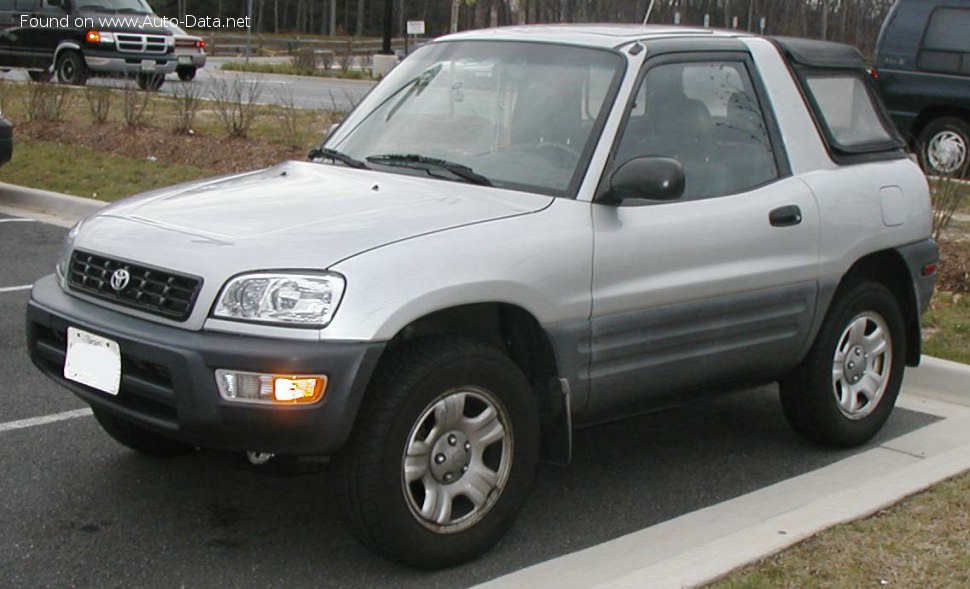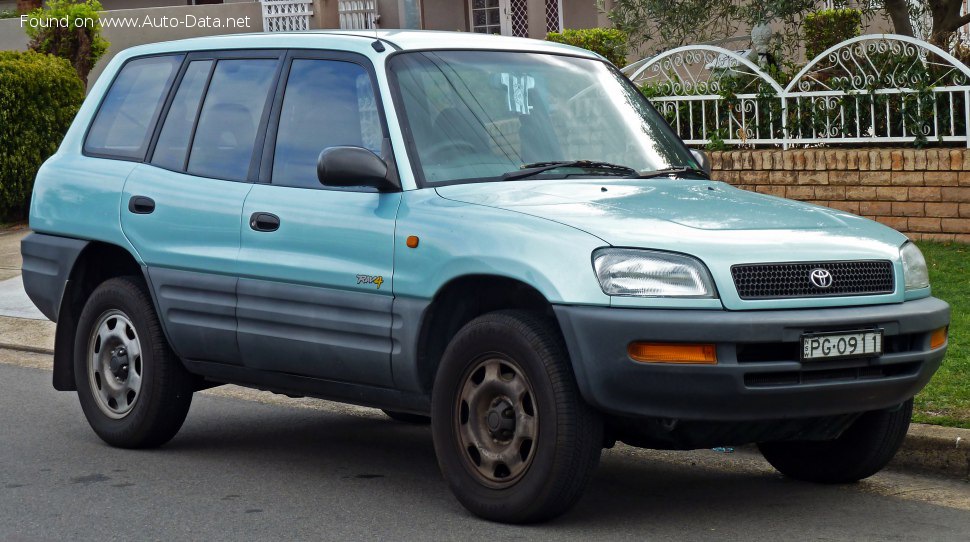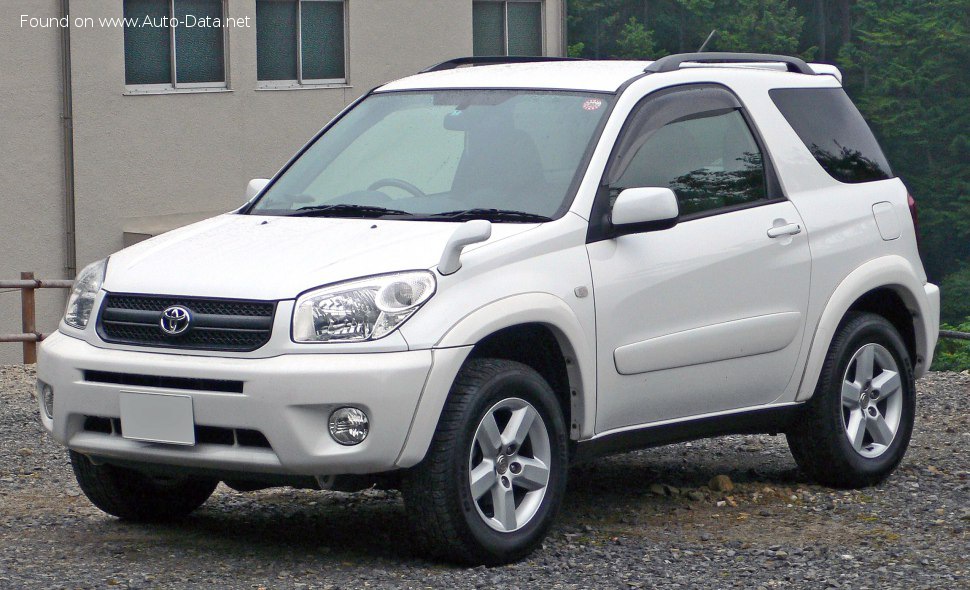
Introduction: The Toyota RAV4 II (XA20, facelift 2003) 3-door 2.0i 16V (150 Hp) 4WD Automatic
The Toyota RAV4, an acronym for “Recreational Activity Vehicle: 4-wheel drive,” revolutionized the automotive landscape by pioneering the compact SUV segment. Launched in 1994, it offered the practicality and higher driving position of an SUV combined with the maneuverability and fuel efficiency of a passenger car. The second generation, designated XA20, built upon this success, refining the formula for a new millennium. This article focuses on a specific variant from the XA20 generation’s facelift period: the Toyota RAV4 II (XA20, facelift 2003) 3-door 2.0i 16V (150 Hp) 4WD Automatic.
Introduced in December 2003 as part of the mid-cycle refresh for the XA20 series, this particular model served a distinct niche. While the five-door RAV4 was a global bestseller, particularly strong in the North American market, the three-door variant primarily catered to European and Asian markets where urban compactness and a sportier aesthetic were highly valued. It represented a more agile and stylistically distinct option within the RAV4 lineup, offering a blend of utility, Toyota’s renowned reliability, and a relatively spirited driving experience for its class. Its production run was relatively short, concluding in January 2006, as market preferences began to strongly favor the more practical five-door configurations globally.
Engine & Performance of the Toyota RAV4 II (XA20, facelift 2003) 3-door 2.0i 16V (150 Hp) 4WD Automatic
Powering this compact SUV was Toyota’s robust 1AZ-FE engine, a 2.0-liter (1998 cm3 or 121.93 cubic inches) inline-four cylinder unit. This naturally aspirated engine featured a DOHC (Double Overhead Camshaft) valvetrain with 16 valves (four per cylinder) and multi-port manifold fuel injection. Known for its smooth operation and durability, the 1AZ-FE delivered a respectable 150 horsepower at 6000 rpm, providing ample motivation for the RAV4’s relatively light 2910.1-pound (1320 kg) curb weight. Torque output stood at 192 Nm, or 141.61 lb.-ft., peaking at 4000 rpm, ensuring responsive acceleration in everyday driving scenarios.
The powertrain was mated to a conventional but reliable 4-speed automatic transmission, a common choice for compact SUVs of its era. This transmission, while not as advanced as modern multi-speed units, provided smooth shifts and contributed to the RAV4’s ease of driving. The vehicle featured an All-Wheel Drive (4WD) system, offering enhanced traction and stability, particularly beneficial in adverse weather conditions or light off-road excursions. This combination allowed the Toyota RAV4 II (XA20, facelift 2003) 3-door 2.0i 16V (150 Hp) 4WD Automatic to achieve a 0-60 mph acceleration time of 10.3 seconds (0-100 km/h in 10.8 seconds) and a top speed of 108.74 mph (175 km/h).
Fuel economy, while not the primary focus of an AWD SUV, was competitive for its time. The combined fuel consumption was rated at 9.2 liters per 100 kilometers, translating to approximately 25.6 US mpg. Urban driving saw consumption figures of 12.2 l/100 km (19.3 US mpg), while extra-urban cruising improved to 7.4 l/100 km (31.8 US mpg). With CO2 emissions of 218 g/km, the vehicle met the Euro 4 emission standard, reflecting its compliance with European environmental regulations of the mid-2000s.
Design & Features
The Toyota RAV4 II (XA20, facelift 2003) 3-door distinguished itself with its compact and assertive stance. Measuring 150.59 inches (3825 mm) in length, 68.31 inches (1735 mm) in width, and 66.14 inches (1680 mm) in height, the three-door RAV4 was significantly shorter than its five-door sibling, enhancing its agility and ease of parking in congested urban environments. The facelift introduced subtle but effective styling updates, including revised front and rear fascias, updated lighting elements, and new wheel designs, giving it a fresher, more contemporary look.
Despite its compact exterior, the interior of the three-door RAV4 was thoughtfully designed to accommodate four occupants comfortably. The 2280 mm (89.76 inches) wheelbase provided a stable ride, and the elevated seating position offered excellent visibility, a hallmark of the SUV segment. Cargo capacity was naturally more limited than the five-door, with a minimum trunk space of 5.3 cubic feet (150 liters), expanding to a usable 27.05 cubic feet (766 liters) with the rear seats folded. This still provided enough versatility for daily errands or weekend getaways.
Suspension-wise, the RAV4 featured an independent McPherson strut setup with coil springs and an anti-roll bar at the front, paired with a double wishbone rear suspension. This configuration provided a good balance between on-road comfort and handling, with enough robustness for light off-road use. Braking was handled by ventilated discs at the front and solid discs at the rear, complemented by an Anti-lock Braking System (ABS) for enhanced safety. The hydraulic power steering system, a rack-and-pinion setup, offered a direct and communicative feel, contributing to the RAV4’s car-like driving dynamics. Standard tire size was 215/70 R16 on 6.5J x 16 wheel rims, providing a good balance of grip and ride comfort.
Technical Specifications
| Category | Specification | Metric Units | US/Imperial Units |
|---|---|---|---|
| General Information | |||
| Brand | Toyota | ||
| Model | RAV4 II (XA20, facelift 2003) 3-door | ||
| Type (Engine) | 2.0i 16V (150 Hp) 4WD Automatic | ||
| Production Start | December, 2003 | ||
| Production End | January, 2006 | ||
| Powertrain Architecture | Internal Combustion engine | ||
| Body Type | SUV | ||
| Seats | 4 | ||
| Doors | 3 | ||
| Performance Specifications | |||
| Fuel Consumption (Urban) | 12.2 l/100 km | 12.2 l/100 km | 19.3 US mpg |
| Fuel Consumption (Extra Urban) | 7.4 l/100 km | 7.4 l/100 km | 31.8 US mpg |
| Fuel Consumption (Combined) | 9.2 l/100 km | 9.2 l/100 km | 25.6 US mpg |
| CO2 Emissions | 218 g/km | 218 g/km | |
| Fuel Type | Petrol (Gasoline) | ||
| Acceleration 0 – 60 mph | 10.3 sec | 10.8 sec (0-100 km/h) | 10.3 sec |
| Maximum Speed | 175 km/h | 175 km/h | 108.74 mph |
| Emission Standard | Euro 4 | ||
| Weight-to-Power Ratio | 8.8 kg/Hp | 8.8 kg/Hp | 113.6 Hp/tonne |
| Weight-to-Torque Ratio | 6.9 kg/Nm | 6.9 kg/Nm | 145.5 Nm/tonne |
| Engine Specifications | |||
| Power | 150 Hp @ 6000 rpm | 150 Hp | 150 Hp |
| Power per liter | 75.1 Hp/l | 75.1 Hp/l | |
| Torque | 192 Nm @ 4000 rpm | 192 Nm | 141.61 lb.-ft. |
| Engine Layout | Front, Transverse | ||
| Engine Model/Code | 1AZ-FE | ||
| Engine Displacement | 1998 cm3 | 1998 cm3 | 121.93 cu. in. |
| Number of Cylinders | 4 | ||
| Engine Configuration | Inline | ||
| Cylinder Bore | 86 mm | 86 mm | 3.39 in. |
| Piston Stroke | 86 mm | 86 mm | 3.39 in. |
| Compression Ratio | 9.8:1 | ||
| Valves per Cylinder | 4 | ||
| Fuel Injection System | Multi-port manifold injection | ||
| Engine Aspiration | Naturally aspirated | ||
| Valvetrain | DOHC | ||
| Engine Oil Capacity | 4.2 l | 4.2 l | 4.44 US qt |
| Coolant Capacity | 6.3 l | 6.3 l | 6.66 US qt |
| Space, Volume and Weights | |||
| Kerb Weight | 1320 kg | 1320 kg | 2910.1 lbs. |
| Max. Weight (GVWR) | 1685 kg | 1685 kg | 3714.79 lbs. |
| Max Load | 365 kg | 365 kg | 804.69 lbs. |
| Trunk Space (Minimum) | 150 l | 150 l | 5.3 cu. ft. |
| Trunk Space (Maximum) | 766 l | 766 l | 27.05 cu. ft. |
| Fuel Tank Capacity | 57 l | 57 l | 15.06 US gal |
| Max. Roof Load | 100 kg | 100 kg | 220.46 lbs. |
| Permitted Trailer Load with Brakes (12%) | 1500 kg | 1500 kg | 3306.93 lbs. |
| Permitted Trailer Load without Brakes | 640 kg | 640 kg | 1410.96 lbs. |
| Dimensions | |||
| Length | 3825 mm | 3825 mm | 150.59 in. |
| Width | 1735 mm | 1735 mm | 68.31 in. |
| Height | 1680 mm | 1680 mm | 66.14 in. |
| Wheelbase | 2280 mm | 2280 mm | 89.76 in. |
| Drivetrain, Brakes and Suspension Specs | |||
| Drive Wheel | All wheel drive (4×4) | ||
| Number of Gears & Gearbox Type | 4 gears, automatic transmission | ||
| Front Suspension | Independent, McPherson with coil spring and anti-roll bar | ||
| Rear Suspension | Double wishbone | ||
| Front Brakes | Ventilated discs | ||
| Rear Brakes | Disc | ||
| Assisting Systems | ABS (Anti-lock braking system) | ||
| Steering Type | Steering rack and pinion | ||
| Power Steering | Hydraulic Steering | ||
| Tires Size | 215/70 R16 | ||
| Wheel Rims Size | 6.5J x 16 | ||
Legacy & Market Impact
The Toyota RAV4, in its various configurations, holds a significant place in automotive history as one of the pioneers and enduring success stories of the compact SUV segment. The second-generation XA20, including its 2003 facelift, solidified the RAV4’s reputation for reliability, practicality, and a car-like driving experience. While the five-door XA20 RAV4 was a massive success globally, particularly in North America where it competed fiercely with the Honda CR-V, the Toyota RAV4 II (XA20, facelift 2003) 3-door 2.0i 16V (150 Hp) 4WD Automatic carved out a more specialized niche.
This three-door variant was notably less common in the United States, where the compact SUV market had largely shifted towards larger, more family-oriented five-door models by the early 2000s. Its primary appeal was in markets such as Europe, Japan, and parts of Asia, where urban density often favored smaller footprints and a more distinctive, sportier appearance could be a selling point. In these regions, it competed with other compact SUVs like the Suzuki Grand Vitara 3-door, the Land Rover Freelander 3-door, and even some smaller European crossovers. Its short wheelbase and overall compact dimensions made it exceptionally maneuverable in tight city streets and parking spaces, offering a compelling alternative to traditional hatchbacks for those seeking a higher driving position and a touch of rugged capability.
The RAV4’s overall legacy is defined by its consistent quality, low running costs, and strong resale value, attributes that were well-represented in the XA20 generation. Even this specific three-door model, despite its niche market, benefited from Toyota’s engineering prowess. It contributed to the RAV4’s image as a versatile and dependable vehicle capable of handling both urban commutes and light outdoor adventures. Its impact, while not as broad as the five-door, demonstrated Toyota’s commitment to offering diverse options within its popular models, catering to varying global consumer preferences for compact, capable, and reliable transportation. The phasing out of the three-door configuration after this generation marked a broader industry trend towards more practical, family-oriented SUV designs, but the RAV4 II 3-door remains a distinctive chapter in the model’s pioneering history.