Introduction: The Mitsubishi Lancer IX Ralliart 2.0 (240 Hp)
The Mitsubishi Lancer has long been a name synonymous with rally heritage and accessible performance, especially in its Evolution (Evo) guise. Bridging the gap between the standard Lancer and the formidable Lancer Evolution was the Ralliart trim, a distinct offering designed to provide a taste of the Evo’s performance pedigree without its ultimate raw edge or higher price point. The Mitsubishi Lancer IX Ralliart 2.0 (240 Hp), produced from June 2009 to October 2011, represents a compelling chapter in this lineage. As part of the ninth generation Lancer, this Ralliart variant positioned itself in the compact sports sedan segment, catering to enthusiasts who desired a potent all-wheel-drive platform, a turbocharged engine, and a more aggressive aesthetic than the base models, yet sought a vehicle that was still practical for daily driving. While the Lancer line had a global presence, this specific Ralliart model, with its Euro 4 emission standard, found a strong footing in European and other international markets, offering a blend of performance and everyday usability that resonated with a broad audience.
Engine & Performance: Powering the Mitsubishi Lancer IX Ralliart 2.0 (240 Hp)
At the heart of the Mitsubishi Lancer IX Ralliart 2.0 (240 Hp) lay a robust and highly capable powertrain. This model was equipped with Mitsubishi’s well-regarded 4B11T engine, a 2.0-liter (1998 cm³ or 121.93 cu. in.) turbocharged inline-four. This all-aluminum unit featured a DOHC (Double Overhead Camshaft) valvetrain with 4 valves per cylinder, ensuring efficient breathing and optimal performance. Power output for this Ralliart variant was a respectable 240 horsepower, delivered at a peaky 6000 rpm. Equally impressive was its torque figure, boasting 227.91 lb.-ft. (309 Nm) available from a relatively low 3500 rpm, providing a strong surge of acceleration across the mid-range.
The engine’s performance was further enhanced by a turbocharger and an intercooler, crucial components for boosting power by compressing the intake air and cooling it for increased density. Fuel was delivered via a multi-port manifold injection system, ensuring precise fuel metering. With a compression ratio of 10:1, the engine balanced performance with a degree of efficiency. This potent engine, combined with a sophisticated all-wheel-drive (AWD) system, allowed the Lancer Ralliart to achieve a 0 to 60 mph sprint in a brisk 6.7 seconds (calculated by Auto-Data.net, 0-100 km/h in 7 seconds) and reach a top speed of 142.92 mph (230 km/h).
Power was channeled through a 6-speed automatic transmission, which, while not explicitly detailed as Mitsubishi’s advanced Twin Clutch SST (Sportronic Shift Transmission) in the provided data, offered smooth and quick shifts, contributing to both performance and driver convenience. The all-wheel-drive system provided exceptional traction and handling dynamics, a hallmark of Mitsubishi’s performance models, making it agile and confident in various driving conditions. Despite its performance orientation, the Lancer Ralliart managed a combined fuel economy of 28 US mpg (8.4 l/100 km), with highway figures reaching an impressive 36.8 US mpg (6.4 l/100 km), making it a relatively efficient performer for its class during its era, especially considering its AWD and turbocharged setup.
Design & Features: Form and Function
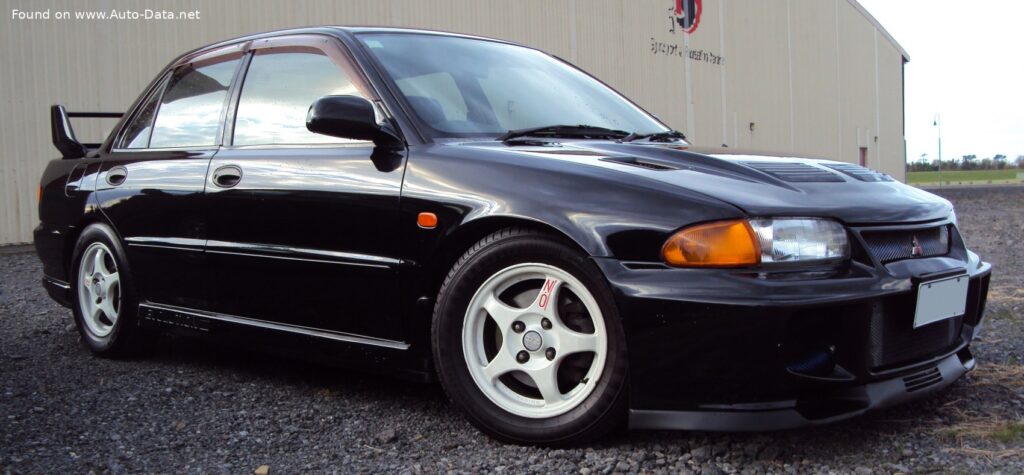
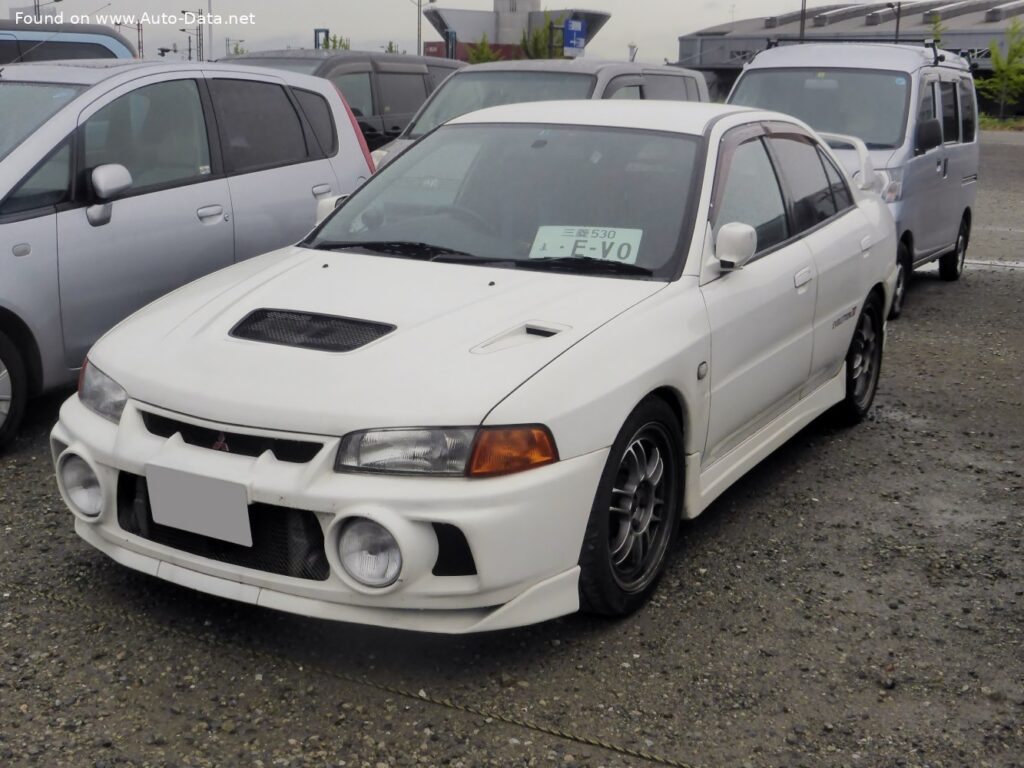
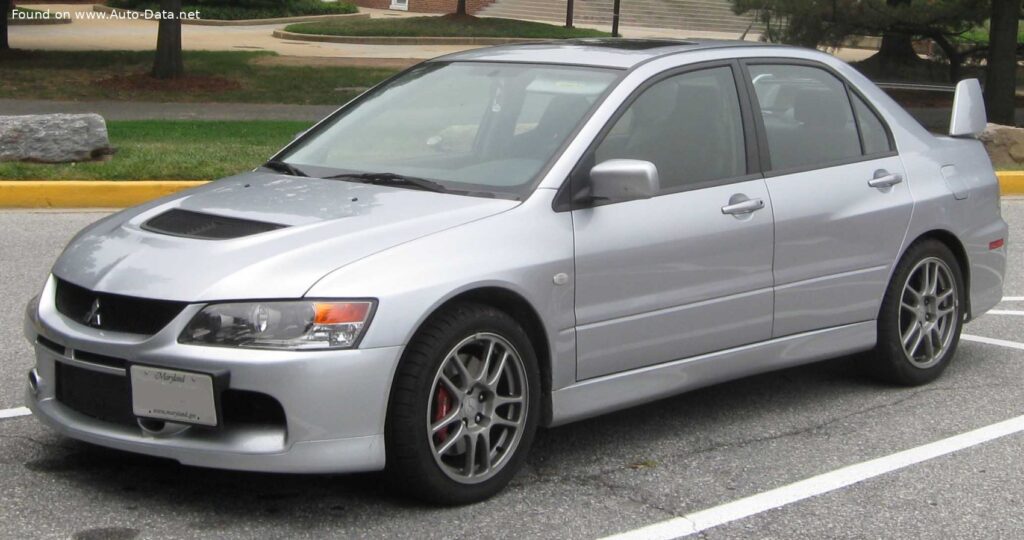
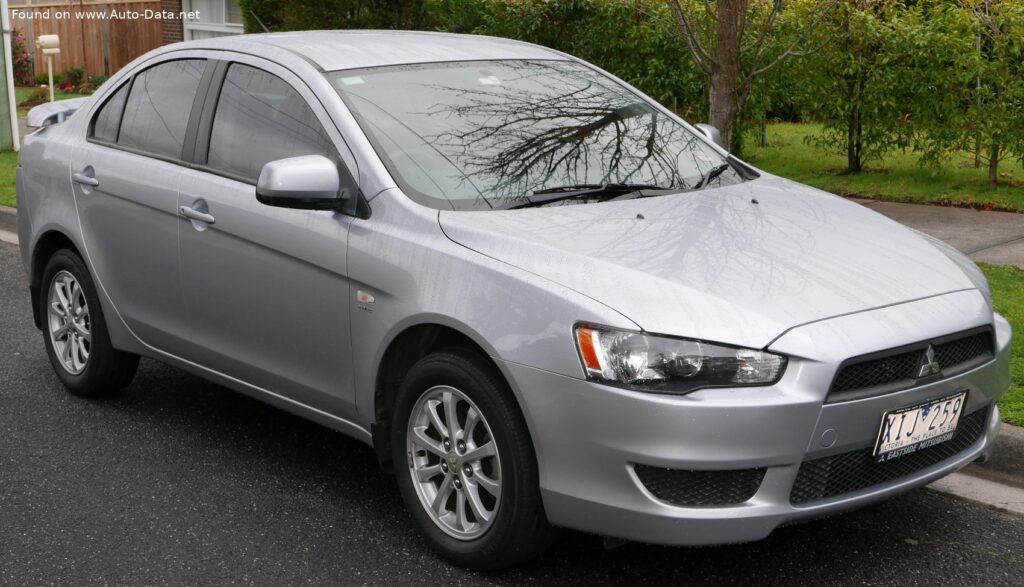
The Mitsubishi Lancer IX Ralliart 2.0 (240 Hp) maintained the core design principles of the ninth-generation Lancer, characterized by its sharp, angular lines and aggressive front fascia. As a 4-door sedan, it offered practical seating for five occupants, blending its sporty aspirations with everyday usability. While sharing the general silhouette with the standard Lancer, the Ralliart variant typically featured subtle visual enhancements that hinted at its increased performance, such as unique alloy wheels, a more aggressive front bumper, and possibly a rear spoiler, though these specifics are not detailed in the provided data.
Underneath its skin, the Ralliart was engineered for dynamic driving. The suspension system comprised a spring strut setup at the front and a multi-link wishbone arrangement at the rear. This configuration, combined with the all-wheel-drive system, provided a balanced ride, offering both responsive handling and adequate comfort. Stopping power was handled by ventilated disc brakes at the front and solid disc brakes at the rear, complemented by an Anti-lock Braking System (ABS) for enhanced safety and control during hard braking. The steering was a rack and pinion type, offering direct feedback to the driver. The vehicle rode on 205/60 R16 tires mounted on 6J x 16-inch wheel rims, a practical size that balanced grip with ride quality.
With a length of 179.92 inches (4570 mm), a width of 69.29 inches (1760 mm), and a height of 59.25 inches (1505 mm), the Lancer Ralliart possessed a compact footprint, contributing to its agility. The wheelbase measured 103.74 inches (2635 mm), providing a stable platform, while the front and rear tracks were identical at 60.24 inches (1530 mm). Its curb weight of 3009.31 lbs (1365 kg) contributed to a favorable weight-to-power ratio of 5.7 kg/Hp, indicating its spirited performance capabilities. The vehicle also offered a decent 15.59 US gallons (59 liters) of fuel tank capacity, providing a reasonable range for both spirited driving and longer journeys.
Technical Specifications: Mitsubishi Lancer IX Ralliart 2.0 (240 Hp)
| Category | Specification | Value |
|---|---|---|
| General Information | ||
| Brand | Mitsubishi | |
| Model | Lancer | |
| Generation | Lancer IX | |
| Type (Engine) | Ralliart 2.0 (240 Hp) | |
| Start of Production | June, 2009 | |
| End of Production | October, 2011 | |
| Powertrain Architecture | Internal Combustion Engine | |
| Body Type | Sedan | |
| Seats | 5 | |
| Doors | 4 | |
| Performance Specifications | ||
| Fuel Consumption (Urban) | 22.4 US mpg (10.5 l/100 km) | |
| Fuel Consumption (Extra Urban) | 36.8 US mpg (6.4 l/100 km) | |
| Fuel Consumption (Combined) | 28 US mpg (8.4 l/100 km) | |
| Fuel Type | Petrol (Gasoline) | |
| Acceleration 0 – 60 mph | 6.7 seconds | |
| Acceleration 0 – 100 km/h | 7 seconds | |
| Maximum Speed | 142.92 mph (230 km/h) | |
| Emission Standard | Euro 4 | |
| Weight-to-Power Ratio | 5.7 kg/Hp (175.8 Hp/tonne) | |
| Weight-to-Torque Ratio | 4.4 kg/Nm (226.4 Nm/tonne) | |
| Engine Specifications | ||
| Power | 240 Hp @ 6000 rpm | |
| Power per Liter | 120.1 Hp/l | |
| Torque | 227.91 lb.-ft. (309 Nm) @ 3500 rpm | |
| Engine Layout | Front, Transverse | |
| Engine Model/Code | 4B11T | |
| Engine Displacement | 121.93 cu. in. (1998 cm³) | |
| Number of Cylinders | 4 | |
| Engine Configuration | Inline | |
| Cylinder Bore | 3.39 in. (86 mm) | |
| Piston Stroke | 3.39 in. (86 mm) | |
| Compression Ratio | 10:1 | |
| Number of Valves per Cylinder | 4 | |
| Fuel Injection System | Multi-port manifold injection | |
| Engine Aspiration | Turbocharger, Intercooler | |
| Valvetrain | DOHC | |
| Engine Oil Capacity | 5.6 US qt (5.3 l) | |
| Coolant Capacity | 7.4 US qt (7 l) | |
| Space, Volume and Weights | ||
| Kerb Weight | 3009.31 lbs (1365 kg) | |
| Max. Weight | 4078.55 lbs (1850 kg) | |
| Max Load | 1069.24 lbs (485 kg) | |
| Fuel Tank Capacity | 15.59 US gal (59 l) | |
| Dimensions | ||
| Length | 179.92 in. (4570 mm) | |
| Width | 69.29 in. (1760 mm) | |
| Height | 59.25 in. (1505 mm) | |
| Wheelbase | 103.74 in. (2635 mm) | |
| Front Track | 60.24 in. (1530 mm) | |
| Rear (Back) Track | 60.24 in. (1530 mm) | |
| Minimum Turning Circle | 35.43 ft. (10.8 m) | |
| Drivetrain, Brakes and Suspension Specifications | ||
| Drive Wheel | All-Wheel Drive (4×4) | |
| Number of Gears and Type of Gearbox | 6 gears, automatic transmission | |
| Front Suspension | Spring Strut | |
| Rear Suspension | Wishbone | |
| Front Brakes | Ventilated discs | |
| Rear Brakes | Disc | |
| Assisting Systems | ABS (Anti-lock braking system) | |
| Steering Type | Steering rack and pinion | |
| Tires Size | 205/60 R16 | |
| Wheel Rims Size | 6J x 16 | |
Legacy & Market Impact: The Ralliart’s Place
The Mitsubishi Lancer IX Ralliart 2.0 (240 Hp) carved out a significant niche within the broader Lancer family and the compact sports sedan market. It was strategically positioned as a more attainable and less extreme alternative to the legendary Lancer Evolution, offering a substantial performance upgrade over the standard Lancer models without the Evo’s uncompromising focus on track performance, higher maintenance costs, or often, its higher price tag. This “junior Evo” philosophy allowed Mitsubishi to appeal to a wider demographic of enthusiasts who desired spirited driving dynamics, the confidence of all-wheel drive, and a turbocharged engine, but also valued comfort, practicality, and a slightly more understated appearance for daily use.
In its primary markets, particularly in Europe and other regions where this specific configuration was prevalent, the Lancer Ralliart competed against a diverse range of vehicles. Key rivals included performance-oriented compacts such as the Subaru WRX, which offered a similar turbocharged AWD formula, as well as European hot hatches and sedans like the Volkswagen Jetta GLI or certain Audi A3 variants. The Ralliart distinguished itself with its strong rally pedigree, aggressive styling cues inherited from the Evo, and Mitsubishi’s reputation for robust engineering.
The Ralliart brand, historically associated with Mitsubishi’s motorsport division, lent credibility to this performance variant. While it might not have achieved the cult status of the Evolution, the Lancer Ralliart played a crucial role in expanding Mitsubishi’s performance image beyond the Evo’s niche. It demonstrated that the company could offer a compelling blend of power, handling, and everyday usability in a more accessible package. Its relatively short production run from 2009 to 2011 highlights the dynamic nature of the automotive market during that period, with evolving emissions standards and consumer preferences.
Today, the Mitsubishi Lancer Ralliart models are remembered as capable and engaging sports sedans. They represent a period when Mitsubishi was still deeply committed to performance vehicles, offering enthusiasts a taste of its rally heritage in a practical four-door format. For those seeking a turbocharged, all-wheel-drive sedan with a distinctive Japanese performance flavor from the late 2000s, the Lancer IX Ralliart remains a noteworthy and respected option in the used car market, celebrated for its blend of technology, efficiency, and driving excitement.