The Renault Espace III (JE, Phase II, 2000) 2.2 dCi (130 Hp): A European Minivan Icon
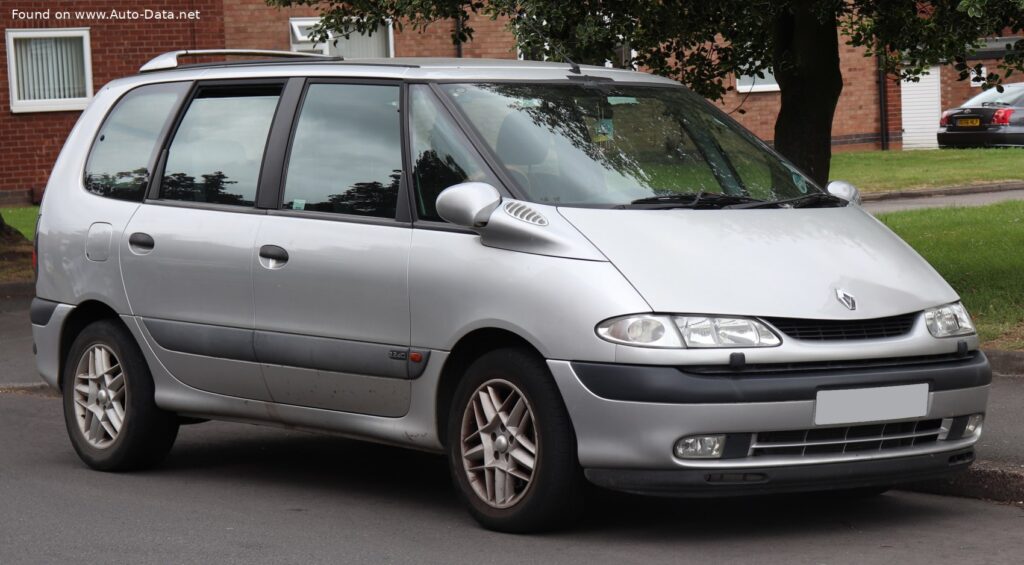
The Renault Espace III (JE, Phase II, 2000) 2.2 dCi (130 Hp) represents a significant iteration of a vehicle that fundamentally reshaped the European automotive landscape: the Multi-Purpose Vehicle (MPV), or minivan as it’s known in the United States. While Renault exited the U.S. market long before this generation, the Espace remained a cornerstone of family transportation in Europe, lauded for its innovative design, spacious interior, and versatile configurations. This specific variant, produced between 2001 and 2003, showcases the third-generation Espace in its refreshed “Phase II” guise, combining a robust diesel powertrain with enhanced features for its segment.
The Espace III, initially launched in 1996, continued Renault’s tradition of offering a practical, comfortable, and family-friendly vehicle. The Phase II refresh, introduced for the 2000 model year and extending to this 2001-2003 production window, brought subtle styling updates and technological refinements, ensuring the Espace remained competitive. This 2.2 dCi model, with its advanced common-rail diesel engine, was particularly vital in a European market increasingly embracing diesel technology for its efficiency and torque characteristics, especially in larger family vehicles.
Engine & Performance: The Power of the 2.2 dCi in the Renault Espace III
At the heart of this particular Renault Espace III lies the G9T 2.2 dCi engine, a modern common-rail turbodiesel unit designed to deliver a blend of performance and fuel economy. With an engine displacement of 2188 cubic centimeters (approximately 2.2 liters or 133.52 cubic inches), this inline four-cylinder engine features a Double Overhead Camshaft (DOHC) valvetrain with four valves per cylinder, optimizing combustion efficiency. The inclusion of a turbocharger and intercooler was crucial for extracting significant power and torque from a relatively modest displacement, a common strategy for European diesel engines of the era.
The engine produces a respectable 130 horsepower at 4000 rpm, which, when coupled with its substantial 290 Nm (213.89 lb.-ft.) of torque delivered at a low 1750 rpm, provided ample pulling power. This low-end torque was particularly beneficial for a family minivan, ensuring smooth acceleration even when fully loaded with seven passengers and their luggage. Power is transmitted to the front wheels via a 5-speed manual transmission, a typical setup for maximizing driver engagement and fuel efficiency in Europe at the time.
Performance figures for the Espace III 2.2 dCi reflect its role as a comfortable cruiser rather than a sports car. It accelerates from 0 to 60 mph in a reasonable 11.8 seconds, with a top speed of 114.95 mph (185 km/h). More importantly for its target audience, the fuel economy was impressive for a vehicle of its size and capacity. The combined fuel consumption is rated at 7.1 liters per 100 kilometers, translating to an estimated 33.1 US miles per gallon. This efficiency made it an economical choice for long-distance family travel across Europe, where fuel prices were a constant consideration.
Design & Features: Embracing Versatility in the Renault Espace III
The Renault Espace III continued the lineage of bold, cab-forward design that defined the Espace from its inception. As a minivan or MPV, its primary objective was to maximize interior space and versatility, and the Espace III delivered on this promise. With a length of 177.83 inches, a width of 71.26 inches, and a height of 66.54 inches, it offered substantial interior volume while remaining maneuverable in urban environments. The five-door body type provided easy access for all passengers, a crucial aspect for a family vehicle.
Inside, the Espace III was renowned for its modular seating system, capable of accommodating up to seven passengers. The rear seats could be individually removed, slid, or folded, allowing for numerous configurations to prioritize passenger comfort or cargo capacity. Minimum trunk space started at 9.71 cubic feet (275 liters), but with the rear seats removed, this could expand dramatically to an cavernous 100.65 cubic feet (2850 liters), making it exceptionally practical for hauling large items or for extended family vacations.
In terms of features, the Espace III was equipped with amenities typical for a premium family vehicle of its era. Safety was a key consideration, and this model included an Anti-lock Braking System (ABS) as standard, enhancing control during emergency braking. The braking system itself comprised ventilated discs at the front and solid discs at the rear, providing confident stopping power. A hydraulic power steering system ensured comfortable and effortless maneuvering, a welcome feature for a vehicle of its size. The suspension setup, with spring struts at the front and a trailing arm design at the rear, aimed to provide a comfortable and composed ride, absorbing road imperfections effectively. The 16-inch wheels, shod with 225/55 R16 tires, contributed to both ride comfort and stability.
Technical Specifications
| Category | Specification |
|---|---|
| Brand | Renault |
| Model | Espace |
| Generation | Espace III (JE, Phase II, 2000) |
| Engine Type | 2.2 dCi (130 Hp) |
| Production Start | 2001 |
| Production End | 2003 |
| Body Type | Minivan, MPV |
| Seats | 7 |
| Doors | 5 |
| Fuel Type | Diesel |
| Fuel Consumption (Urban) | 8.8 l/100 km (26.7 US mpg) |
| Fuel Consumption (Extra Urban) | 6.1 l/100 km (38.6 US mpg) |
| Fuel Consumption (Combined) | 7.1 l/100 km (33.1 US mpg) |
| Acceleration 0-60 mph | 11.8 sec |
| Maximum Speed | 114.95 mph (185 km/h) |
| Power | 130 Hp @ 4000 rpm |
| Torque | 290 Nm (213.89 lb.-ft.) @ 1750 rpm |
| Engine Layout | Front, Transverse |
| Engine Code | G9T |
| Engine Displacement | 2188 cm3 (133.52 cu. in.) |
| Number of Cylinders | 4, Inline |
| Valves per Cylinder | 4 |
| Bore | 87 mm (3.43 in.) |
| Stroke | 92 mm (3.62 in.) |
| Compression Ratio | 17.9:1 |
| Fuel Injection System | Diesel Commonrail |
| Engine Aspiration | Turbocharger, Intercooler |
| Valvetrain | DOHC |
| Engine Oil Capacity | 7.6 l (8.03 US qt) |
| Coolant Capacity | 7.5 l (7.93 US qt) |
| Kerb Weight | 1737 kg (3829.43 lbs.) |
| Max. Weight | 2510 kg (5533.6 lbs.) |
| Max Load | 773 kg (1704.17 lbs.) |
| Trunk Space (Min) | 275 l (9.71 cu. ft.) |
| Trunk Space (Max) | 2850 l (100.65 cu. ft.) |
| Fuel Tank Capacity | 80 l (21.13 US gal) |
| Length | 4517 mm (177.83 in.) |
| Width | 1810 mm (71.26 in.) |
| Height | 1690 mm (66.54 in.) |
| Wheelbase | 2702 mm (106.38 in.) |
| Front Track | 1534 mm (60.39 in.) |
| Rear Track | 1540 mm (60.63 in.) |
| Drivetrain Architecture | Front-wheel drive, Internal Combustion Engine |
| Gearbox | 5 gears, manual transmission |
| Front Suspension | Spring Strut |
| Rear Suspension | Trailing arm |
| Front Brakes | Ventilated discs |
| Rear Brakes | Disc |
| Assisting Systems | ABS (Anti-lock braking system) |
| Steering Type | Steering rack and pinion |
| Power Steering | Hydraulic Steering |
| Tires Size | 225/55 R16 |
| Wheel Rims Size | 16 inches |
Legacy & Market Impact of the Renault Espace III
The Renault Espace, and particularly the third-generation model, holds a significant place in European automotive history. It was not merely an evolution but a refinement of the groundbreaking concept that Renault pioneered with the original Espace in the mid-1980s. The Espace III solidified Renault’s reputation as a leader in the MPV segment, a market that blossomed throughout the 1990s and early 2000s as families sought more flexible and spacious alternatives to traditional sedans and station wagons.
In its primary European market, the Espace III faced stiff competition from a growing number of rivals. Key competitors included the “Eurovans” (the jointly developed Volkswagen Sharan, Ford Galaxy, and SEAT Alhambra), as well as other domestic French offerings like the Citroën Evasion/C8 and Peugeot 806/807. American entrants like the Chrysler Voyager, adapted for European tastes, also vied for market share. However, the Espace maintained its distinct identity, often perceived as the more stylish and innovative option, leveraging its comfortable ride, bright interior, and highly configurable seating.
The introduction of advanced diesel engines like the 2.2 dCi was crucial to the Espace’s success in Europe. Diesel powertrains offered significantly better fuel economy and robust torque compared to their gasoline counterparts, making them ideal for the heavy loads and long distances often associated with family travel. This particular 130 HP 2.2 dCi variant provided a sweet spot, offering ample power for highway cruising without sacrificing efficiency, contributing to its strong market appeal during its production run from 2001 to 2003.
The Espace III’s legacy is that of a highly practical, comfortable, and innovative family vehicle that continued to push the boundaries of what an MPV could be. While the MPV segment would eventually wane in popularity in favor of SUVs in the later 2000s and 2010s, the Espace III remains a testament to an era when space, versatility, and intelligent design were paramount for family transportation. It embodied the very essence of the European minivan: a smart, efficient, and adaptable solution for modern family life.