Volkswagen Polo II Classic (86C) 1.1 (50 Hp)
The Volkswagen Polo II Classic (86C) 1.1 (50 Hp) represents a significant chapter in the history of Volkswagen’s enduring subcompact line. Produced from 1981 to 1983, this specific variant was part of the second generation of the Polo, known internally as the Type 86C. While the Polo series was never officially marketed in the United States, it became a cornerstone of Volkswagen’s strategy in Europe and other international markets, offering an affordable, compact, and practical vehicle for a wide range of consumers. The “Classic” designation for this model specifically refers to its sedan body style, a departure from the more common hatchback configurations that typically defined the Polo’s image. This two-door, four-seat sedan was designed to appeal to buyers looking for the utility and traditional styling of a small sedan, often serving as an entry-level family car or a reliable daily driver in dense urban environments where its compact dimensions were a distinct advantage.
The Polo II generation itself marked an evolution from its predecessor, introducing a more angular design language and improved interior packaging. The 1.1-liter engine, while modest in output, was characteristic of the era’s focus on fuel efficiency and low running costs in the European market. This particular model, with its 50 horsepower engine, was positioned as an economical choice, emphasizing reliability and ease of maintenance over outright performance. Its role in Volkswagen’s portfolio was crucial: to provide a gateway into the brand for budget-conscious buyers, offering the legendary German engineering and build quality in a more accessible package than larger models like the Golf. The Polo II Classic (86C) 1.1 (50 Hp) therefore stands as a testament to Volkswagen’s ability to cater to diverse market needs, solidifying its presence in the highly competitive European subcompact segment.
Engine and Performance of the Volkswagen Polo II Classic (86C)
Under the hood, the Volkswagen Polo II Classic (86C) 1.1 (50 Hp) featured a simple yet robust powertrain designed for efficiency and reliability. The heart of this model was a 1.1-liter (1093 cm³) inline-four gasoline engine, internally designated as the HB code. This naturally aspirated unit employed a carburetor for fuel delivery, a common and proven technology for the early 1980s. With two valves per cylinder, the engine produced a modest 50 horsepower at 5600 rpm, delivering power smoothly and predictably. Torque figures stood at 55.32 lb.-ft. (75 Nm) at a relatively low 3500 rpm, ensuring reasonable responsiveness for city driving.
The engine was mounted transversally at the front of the vehicle, driving the front wheels through a 4-speed manual transmission. This front-wheel-drive architecture was standard for most compact European cars of the period, offering good traction and packaging efficiency. While not built for speed, the Polo II Classic 1.1 (50 Hp) was capable of reaching a top speed of approximately 91.96 mph (148 km/h). Its acceleration from 0 to 60 mph was measured at 15.2 seconds, which was considered acceptable for its class and intended purpose. The vehicle’s light curb weight of 1686.54 lbs (765 kg) contributed to its nimble feel and helped maximize the limited power output. The weight-to-power ratio of 15.3 kg/Hp (or 65.4 Hp/tonne) underscored its economical nature, prioritizing fuel economy and ease of maneuverability in congested European urban landscapes. The engine’s design, with a bore of 2.74 inches (69.5 mm) and a stroke of 2.83 inches (72 mm), pointed to a slightly oversquare configuration, balancing revability with low-end torque. Regular maintenance was straightforward, with an engine oil capacity of 3.7 US quarts and a coolant capacity of 4.76 US quarts. This powertrain package exemplified the pragmatic engineering philosophy of Volkswagen, delivering dependable performance for the everyday driver.
Design and Features
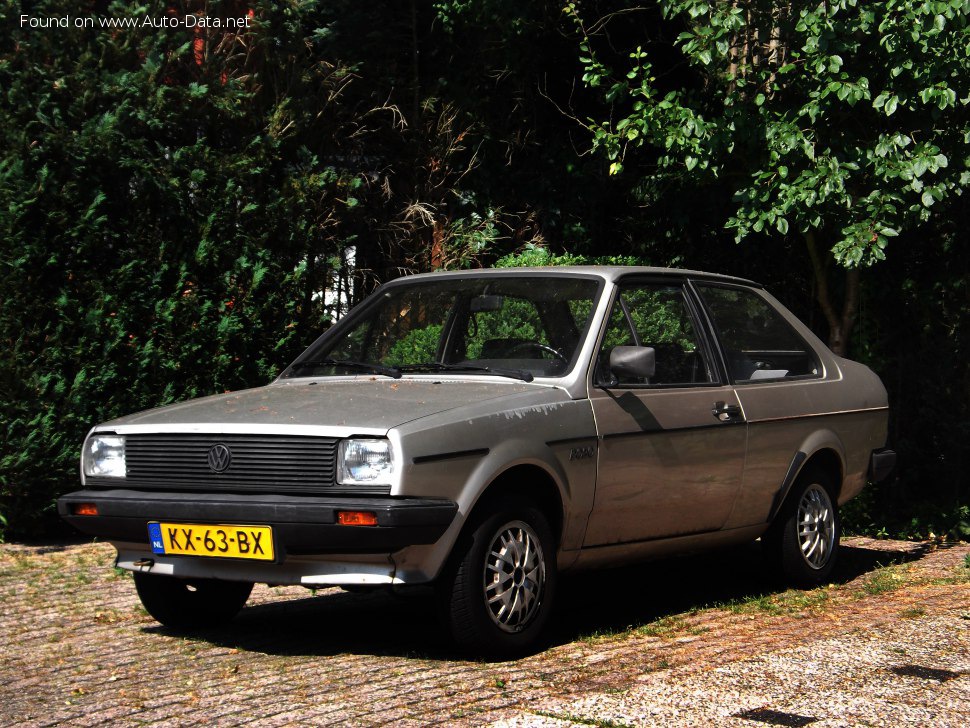
The design of the Volkswagen Polo II Classic (86C) 1.1 (50 Hp) was a product of its time, characterized by clean, functional lines and a compact footprint. As a “Classic” model, it featured a two-door sedan body type, distinguishing it from the more common three-door hatchback and later coupe variants of the Polo II. This sedan styling offered a more traditional aesthetic and a separate trunk compartment, which appealed to a segment of the European market that preferred this configuration. Despite its small exterior dimensions – measuring 146.65 inches in length, 61.81 inches in width, and 53.15 inches in height – the Polo II Classic was designed to comfortably accommodate four occupants. Its wheelbase of 91.93 inches provided a stable ride for its size, while a relatively tight turning radius (implied by its compact nature) made it ideal for navigating narrow city streets and parking in tight spots.
Inside, the cabin was designed with practicality in mind. While amenities were basic by modern standards, the layout was ergonomic and straightforward, typical of German automotive design from the early 1980s. The trunk space offered a respectable 8.48 cubic feet with the rear seats in place, expanding significantly to 32.31 cubic feet when the rear seats were folded, showcasing its surprising versatility for cargo despite its sedan form factor.
From a mechanical standpoint, the Polo II Classic (86C) featured a standard setup for its class. The braking system comprised disc brakes at the front for effective stopping power and drum brakes at the rear, a cost-effective and reliable solution for a vehicle of this weight and performance. The car rode on 13-inch wheels, fitted with 155/70 R13 tires, a common size that contributed to both ride comfort and economical tire replacement. The suspension system, while not explicitly detailed in the data, would have been engineered for a balance of comfort and handling, suitable for varied European road conditions. The relatively low ground clearance of 4.13 inches was typical for a road-going passenger car, emphasizing stability on paved surfaces. The overall design philosophy prioritized durability, ease of repair, and maximizing interior space within a compact and fuel-efficient package, making it a highly practical choice for its target demographic.
Technical Specifications
| Category | Specification |
|---|---|
| General Information | |
| Brand | Volkswagen |
| Model | Polo |
| Generation | Polo II Classic (86C) |
| Type (Engine) | 1.1 (50 Hp) |
| Production Start | 1981 year |
| Production End | 1983 year |
| Powertrain Architecture | Internal Combustion engine |
| Body type | Sedan |
| Seats | 4 |
| Doors | 2 |
| Performance Specs | |
| Fuel Type | Petrol (Gasoline) |
| Acceleration 0 – 60 mph | 15.2 sec |
| Maximum Speed | 91.96 mph (148 km/h) |
| Weight-to-power ratio | 15.3 kg/Hp, 65.4 Hp/tonne |
| Weight-to-torque ratio | 10.2 kg/Nm, 98 Nm/tonne |
| Engine Specs | |
| Power | 50 Hp @ 5600 rpm |
| Power per liter | 45.7 Hp/l |
| Torque | 55.32 lb.-ft. @ 3500 rpm (75 Nm) |
| Engine layout | Front, Transverse |
| Engine Model/Code | HB |
| Engine displacement | 66.7 cu. in. (1093 cm³) |
| Number of cylinders | 4 |
| Engine configuration | Inline |
| Cylinder Bore | 2.74 in. (69.5 mm) |
| Piston Stroke | 2.83 in. (72 mm) |
| Number of valves per cylinder | 2 |
| Fuel injection system | Carburetor |
| Engine aspiration | Naturally aspirated engine |
| Engine oil capacity | 3.7 US qt (3.5 l) |
| Coolant | 4.76 US qt (4.5 l) |
| Space, Volume and Weights | |
| Kerb Weight | 1686.54 lbs (765 kg) |
| Max. weight | 2711.69 lbs (1230 kg) |
| Max load | 1025.15 lbs (465 kg) |
| Trunk (boot) space – minimum | 8.48 cu. ft. (240 l) |
| Trunk (boot) space – maximum | 32.31 cu. ft. (915 l) |
| Fuel tank capacity | 11.1 US gal (42 l) |
| Dimensions | |
| Length | 146.65 in. (3725 mm) |
| Width | 61.81 in. (1570 mm) |
| Height | 53.15 in. (1350 mm) |
| Wheelbase | 91.93 in. (2335 mm) |
| Front track | 51.97 in. (1320 mm) |
| Rear (Back) track | 52.95 in. (1345 mm) |
| Ride height (ground clearance) | 4.13 in. (105 mm) |
| Drivetrain, Brakes and Suspension Specs | |
| Drivetrain Architecture | The Internal combustion engine (ICE) drives the front wheels of the vehicle. |
| Drive wheel | Front wheel drive |
| Number of gears and type of gearbox | 4 gears, manual transmission |
| Front brakes | Disc |
| Rear brakes | Drum |
| Tires size | 155/70 R13 |
| Wheel rims size | 13 |
Legacy and Market Impact
The Volkswagen Polo II Classic (86C) 1.1 (50 Hp), despite its relatively short production run for this specific variant (1981-1983), left a lasting mark on the European automotive landscape. Its legacy is rooted in its embodiment of Volkswagen’s core values: reliability, practicality, and accessible German engineering. While the Polo line was generally known for its hatchback variants, the “Classic” sedan played a crucial role in broadening the model’s appeal. It provided a more conventional, three-box alternative that resonated with a segment of buyers who preferred the security and styling of a separate trunk, often seen as a step up from a basic hatchback. This made it a strong contender for first-time car buyers, small families, or those seeking a dependable second car.
In its primary European markets, the Polo II Classic faced stiff competition from a burgeoning class of superminis and subcompacts. Key rivals included the Ford Fiesta, which offered similar practicality and a strong brand presence; the Renault 5, known for its distinctive French styling and urban agility; the Opel Corsa (Vauxhall Nova in the UK), another German-engineered contender; and later, the Fiat Uno and Peugeot 205, which brought their own blend of style and efficiency. Against these competitors, the Polo II Classic carved out its niche through its reputation for solid build quality, straightforward mechanics, and conservative yet timeless design. Its 1.1-liter engine, while not a powerhouse, was celebrated for its fuel efficiency and proven durability, making it an economical choice during periods of fluctuating fuel prices.
The historical significance of the Polo II Classic lies in its contribution to the evolution of the Polo nameplate. By offering a sedan variant, Volkswagen demonstrated its commitment to expanding the Polo’s versatility and market reach beyond its initial hatchback success. It solidified the Polo’s position as a truly comprehensive subcompact offering, capable of meeting diverse consumer needs across Europe. While not as iconic as the Golf, the Polo II Classic helped cement the Polo as a perennial bestseller for Volkswagen, laying the groundwork for future generations that would continue to define the segment. Its basic yet robust engineering, coupled with its practical design, ensured that many examples served their owners faithfully for decades, underscoring its reputation as a no-nonsense, dependable vehicle that delivered on its promise of affordable mobility. The Polo II Classic (86C) 1.1 (50 Hp) may not have been a performance icon, but its impact on the everyday lives of countless European drivers and its role in strengthening Volkswagen’s subcompact dominance are undeniable.