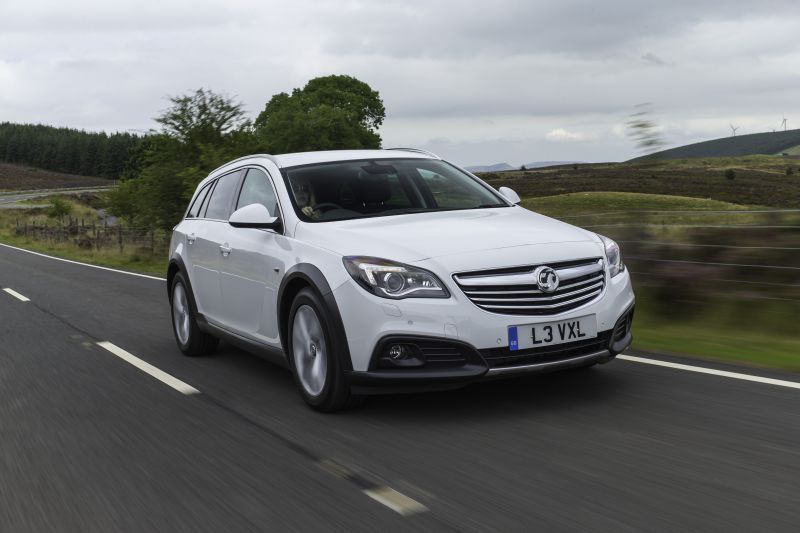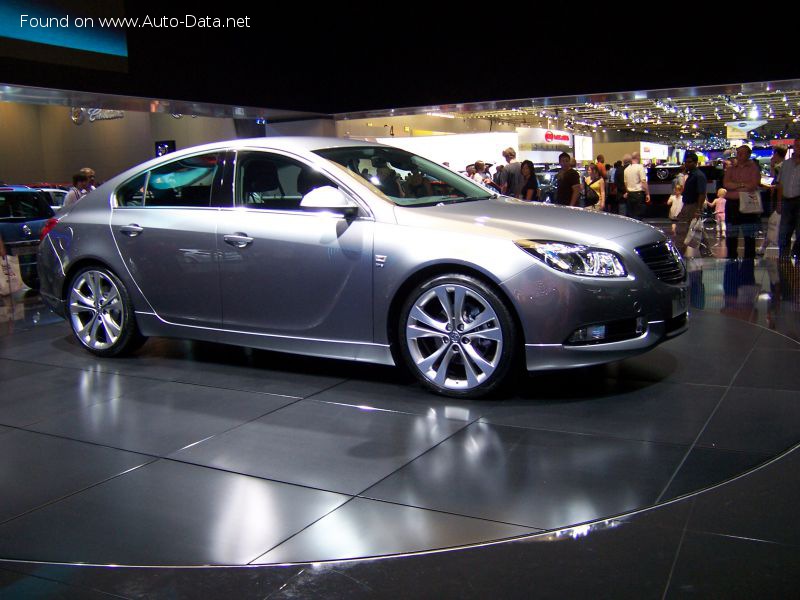
Vauxhall Insignia I Hatchback: An Overview of the 2.0i Turbo ecoTEC AWD
The Vauxhall Insignia I Hatchback, a prominent fixture in the European D-segment (mid-size/large family car category), represented a significant shift for the British marque. Launched in 2008 as the successor to the long-running Vectra, the Insignia was a product of General Motors’ global platform strategy, sharing its underpinnings with the Opel Insignia in mainland Europe and later inspiring the Buick Regal in North America. This first-generation model, produced from 2008 to 2013, aimed to elevate Vauxhall’s perceived quality and design appeal, moving away from the more utilitarian image of its predecessor. The variant under scrutiny, the 2.0i Turbo ecoTEC (220 Hp) AWD hatchback, stood out as a performance-oriented option, blending strong power delivery with the enhanced traction of an all-wheel-drive system, all while maintaining the practicality expected of a family car.
The Insignia’s debut was met with critical acclaim, including being crowned European Car of the Year in 2009. Its sleek, coupe-like profile, generous interior space, and a focus on advanced technology for its era helped it carve out a strong presence in a highly competitive market segment dominated by rivals like the Ford Mondeo and Volkswagen Passat. The 2.0i Turbo ecoTEC AWD model specifically targeted buyers seeking a more engaging driving experience without sacrificing the core attributes of a practical family vehicle.
The Vauxhall Insignia I Hatchback: A Market Contender
Engine and Performance
At the heart of the Vauxhall Insignia I Hatchback 2.0i Turbo ecoTEC AWD lies a robust 2.0-liter (1998 cm3 or 121.93 cu. in.) inline-four engine, designated by the code A20NHT. This powerplant features a sophisticated twin-scroll turbocharger and an intercooler, combined with direct fuel injection and a DOHC valvetrain, to produce a formidable 220 horsepower at 5300 RPM. This represents an impressive power output of 110.1 horsepower per liter, showcasing the efficiency of its forced induction system.
Equally compelling is the engine’s torque delivery, peaking at 258.15 lb.-ft. (350 Nm) across a broad rev range from 2000 to 4000 RPM. This wide torque band ensures responsive acceleration and strong in-gear flexibility, making the Insignia feel potent whether navigating city streets or cruising on the highway. Power is channeled through a precise 6-speed manual transmission to an advanced all-wheel-drive (AWD) system. This setup provides superior traction and stability, particularly in adverse weather conditions or during spirited driving, distinguishing it from front-wheel-drive variants.
Performance figures for this variant are impressive for a car of its size and segment. The Vauxhall Insignia I Hatchback can accelerate from 0 to 60 mph in a swift 6.9 seconds, with 0-100 km/h achieved in 7.3 seconds. Its top speed is electronically limited to 149.13 mph (240 km/h). Despite its performance capabilities, the ecoTEC designation signifies Vauxhall’s commitment to efficiency. The combined fuel economy is rated at 25.6 US mpg (9.2 l/100 km), with urban consumption at 18.1 US mpg (13 l/100 km) and extra-urban at a more frugal 33.6 US mpg (7 l/100 km). CO2 emissions stand at 215 g/km, adhering to the Euro 5 emission standard prevalent during its production years.
Design and Features
The Vauxhall Insignia I Hatchback marked a significant departure from the Vectra’s more conservative styling. It adopted Vauxhall’s new design language, characterized by a more dynamic and sculpted form. The hatchback body style, featuring five doors and seating for five occupants, offered a blend of sleek aesthetics and practical utility. Its coupe-like roofline gracefully tapered towards the rear, giving it a sporty appearance without compromising rear headroom or cargo capacity.
Dimensionally, the Insignia I Hatchback is a substantial vehicle, measuring 190.16 inches (4830 mm) in length, 73.07 inches (1856 mm) in width (82.05 inches or 2084 mm including mirrors), and 58.98 inches (1498 mm) in height. A long wheelbase of 107.76 inches (2737 mm) contributed to a stable ride and generous interior space. The design also featured a low drag coefficient (Cd) of 0.27, aiding both fuel efficiency and high-speed stability.
Inside, the Insignia offered a contemporary cabin with a focus on driver ergonomics and passenger comfort. Standard features for the era included a comprehensive suite of safety technologies. The chassis featured an independent McPherson strut front suspension with coil springs and an anti-roll bar, complemented by an independent multi-link rear suspension. This sophisticated setup provided a comfortable ride while maintaining precise handling. Braking power was supplied by ventilated discs at the front and solid discs at the rear, augmented by an Anti-lock Braking System (ABS). Hydraulic power steering offered a natural and communicative feel to the driver. The vehicle rode on 225/55 R17 tires mounted on 17-inch wheel rims, providing a good balance of grip and ride comfort.
Practicality was a strong suit for the hatchback, offering a minimum trunk space of 18.36 cu. ft. (520 liters), which could expand significantly to 51.67 cu. ft. (1463 liters) with the rear seats folded down, making it highly versatile for various cargo needs. The fuel tank capacity of 18.49 US gallons (70 liters) ensured a decent range between fill-ups.
Technical Specifications
| Category | Specification |
|---|---|
| Brand | Vauxhall |
| Model | Insignia |
| Generation | Insignia I Hatchback |
| Type (Engine) | 2.0i Turbo ecoTEC (220 Hp) AWD |
| Production Years | 2008 – 2013 |
| Powertrain Architecture | Internal Combustion Engine |
| Body Type | Hatchback |
| Seats | 5 |
| Doors | 5 |
| Performance Specs | |
| Fuel Consumption (Urban) | 18.1 US mpg (13 l/100 km) |
| Fuel Consumption (Extra Urban) | 33.6 US mpg (7 l/100 km) |
| Fuel Consumption (Combined) | 25.6 US mpg (9.2 l/100 km) |
| CO2 Emissions | 215 g/km |
| Fuel Type | Petrol (Gasoline) |
| Acceleration 0 – 60 mph | 6.9 sec |
| Acceleration 0 – 100 km/h | 7.3 sec |
| Maximum Speed | 149.13 mph (240 km/h) |
| Emission Standard | Euro 5 |
| Weight-to-Power Ratio | 7.5 kg/Hp (132.7 Hp/tonne) |
| Weight-to-Torque Ratio | 4.7 kg/Nm (211.1 Nm/tonne) |
| Engine Specs | |
| Power | 220 Hp @ 5300 rpm |
| Power per Liter | 110.1 Hp/l |
| Torque | 258.15 lb.-ft. (350 Nm) @ 2000-4000 rpm |
| Engine Layout | Front, Transverse |
| Engine Model/Code | A20NHT |
| Engine Displacement | 2.0 liters (1998 cm3, 121.93 cu. in.) |
| Number of Cylinders | 4 |
| Engine Configuration | Inline |
| Cylinder Bore | 3.39 in. (86 mm) |
| Piston Stroke | 3.39 in. (86 mm) |
| Compression Ratio | 9.3:1 |
| Valves per Cylinder | 4 |
| Fuel Injection System | Direct injection |
| Engine Aspiration | Twin-scroll turbo, Intercooler |
| Valvetrain | DOHC |
| Engine Oil Capacity | 6.34 US qt (6 l) |
| Coolant Capacity | 7.71 US qt (7.3 l) |
| Space, Volume and Weights | |
| Kerb Weight | 3655.26 lbs. (1658 kg) |
| Max. Weight | 4993.47 lbs. (2265 kg) |
| Max Load | 1338.21 lbs. (607 kg) |
| Trunk (Boot) Space – Minimum | 18.36 cu. ft. (520 l) |
| Trunk (Boot) Space – Maximum | 51.67 cu. ft. (1463 l) |
| Fuel Tank Capacity | 18.49 US gal (70 l) |
| Permitted Trailer Load with Brakes (12%) | 4188.78 lbs. (1900 kg) |
| Permitted Trailer Load without Brakes | 1653.47 lbs. (750 kg) |
| Dimensions | |
| Length | 190.16 in. (4830 mm) |
| Width | 73.07 in. (1856 mm) |
| Width Including Mirrors | 82.05 in. (2084 mm) |
| Height | 58.98 in. (1498 mm) |
| Wheelbase | 107.76 in. (2737 mm) |
| Front Track | 62.4 in. (1585 mm) |
| Rear (Back) Track | 62.4 in. (1585 mm) |
| Front Overhang | 39.96 in. (1015 mm) |
| Rear Overhang | 42.44 in. (1078 mm) |
| Ride Height (Ground Clearance) | 6.3 in. (160 mm) |
| Drag Coefficient (Cd) | 0.27 |
| Minimum Turning Circle (Turning Diameter) | 35.99 ft. (10.97 m) |
| Drivetrain, Brakes and Suspension Specs | |
| Drive Wheel | All-wheel drive (4×4) |
| Number of Gears and Type of Gearbox | 6 gears, manual transmission |
| Front Suspension | Independent, type McPherson with coil spring and anti-roll bar |
| Rear Suspension | Independent multi-link suspension |
| Front Brakes | Ventilated discs |
| Rear Brakes | Disc |
| Assisting Systems | ABS (Anti-lock braking system) |
| Power Steering | Hydraulic Steering |
| Tires Size | 225/55 R17 |
| Wheel Rims Size | 17 inches |
Legacy and Market Impact
The Vauxhall Insignia I Hatchback, particularly in its higher-performance 2.0i Turbo ecoTEC AWD guise, played a crucial role in enhancing Vauxhall’s image in the UK and European markets. It successfully transitioned from the more staid Vectra, offering a car that was not only practical and well-equipped but also genuinely appealing in terms of design and driving dynamics. Its European Car of the Year award underscored its significant impact and positive reception.
In its primary market, the Insignia competed fiercely with established rivals such as the Ford Mondeo, Volkswagen Passat, Skoda Superb, and Mazda 6. The 2.0i Turbo ecoTEC AWD variant offered a compelling alternative to these competitors, providing a blend of power, all-weather capability, and a premium feel that was competitive for its class. Its all-wheel-drive system, combined with a manual transmission, appealed to enthusiasts seeking a more engaging and confident driving experience than typically found in front-wheel-drive family sedans.
Beyond Europe, the Insignia’s global impact was substantial. It formed the basis for the first-generation Buick Regal in North America and the Holden Commodore in Australia, demonstrating the versatility and global relevance of GM’s Epsilon II platform. This cross-continental adaptation allowed Vauxhall/Opel to leverage economies of scale and offer a highly refined product. The Insignia’s success laid the groundwork for future generations, solidifying its place as a cornerstone of Vauxhall’s lineup and a significant chapter in its modern history. It is remembered as a stylish, capable, and practical family car that helped redefine the brand’s presence in the competitive mid-size segment.