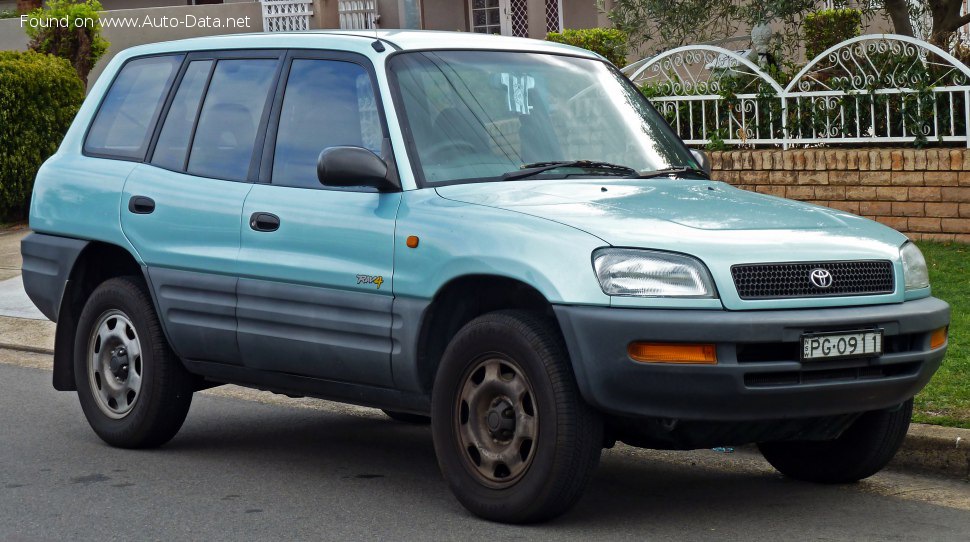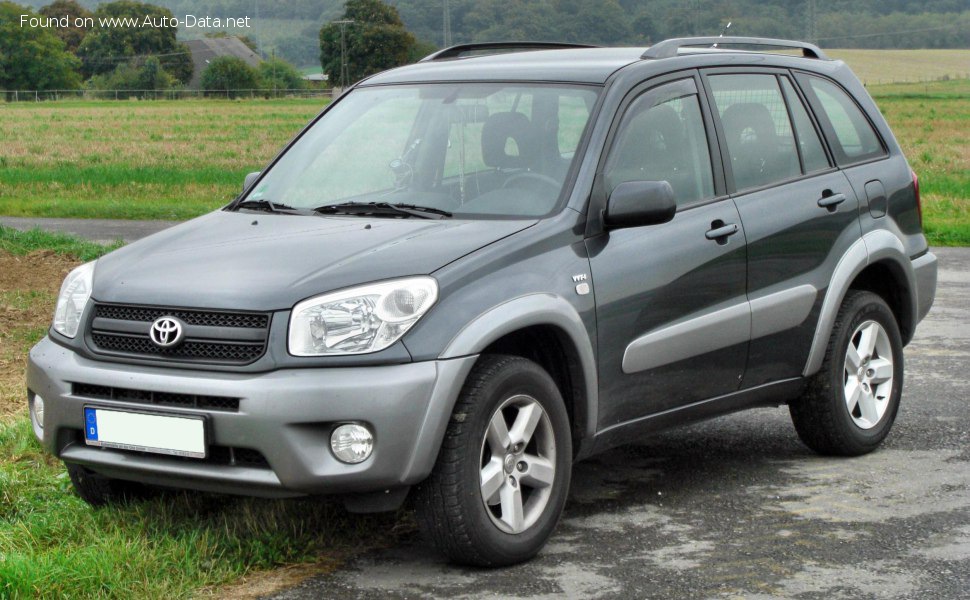
Toyota RAV4 II (XA20, facelift 2003) 5-door 1.8 VVTi (125 Hp)
The Toyota RAV4 II, specifically the XA20 generation, represented a crucial evolution in the burgeoning compact SUV segment. Introduced globally in 2000, the second-generation RAV4 built upon the pioneering success of its predecessor, further cementing Toyota’s position in the crossover market. The model under scrutiny, the Toyota RAV4 II (XA20, facelift 2003) 5-door 1.8 VVTi (125 Hp), was a refined iteration that debuted in December 2003 and remained in production until January 2006. This particular variant, with its 1.8-liter VVTi engine and front-wheel-drive architecture, positioned the RAV4 as an exceptionally practical, fuel-efficient, and versatile vehicle, particularly appealing to urban dwellers and those seeking SUV utility without the bulk or fuel consumption of larger, traditional SUVs.
Unlike some of its more rugged, truck-based contemporaries, the RAV4 was designed from the outset with a car-like unibody construction, offering a smoother ride and more agile handling. The 2003 facelift brought subtle but significant enhancements to its exterior styling and interior features, keeping it competitive in a rapidly expanding market segment. This 5-door SUV, with seating for five, continued to cater to families and individuals looking for a compact vehicle capable of handling various lifestyles, from daily commutes to weekend adventures, albeit with the 1.8L FWD variant focusing more on efficiency and urban usability.
Engine & Performance: The Efficient Heart of the Toyota RAV4 II (XA20, facelift 2003)
At the core of this particular RAV4 variant was Toyota’s venerable 1ZZ-FE engine, a 1.8-liter (1794 cm³ or 109.48 cu. in.) naturally aspirated inline-four gasoline unit. This powerplant was equipped with Toyota’s Variable Valve Timing intelligent (VVTi) system, a technology designed to optimize valve overlap for improved power delivery across the rev range, enhanced fuel efficiency, and reduced emissions. The engine produced a respectable 125 horsepower at 6000 rpm and 161 Nm (118.75 lb.-ft.) of torque at 4200 rpm, providing adequate motivation for the compact SUV.
Paired with a 5-speed manual transmission, the 1.8 VVTi engine delivered a balanced driving experience. While not designed for outright speed, the RAV4 II 1.8 VVTi could accelerate from 0 to 60 mph in a calculated 11.6 seconds, with a top speed of 108.74 mph (175 km/h). These figures were competitive for a compact SUV of its era, emphasizing practicality and economy over raw performance. The powertrain architecture was front-wheel drive, a configuration that contributed to its lighter curb weight of 2766.8 lbs (1255 kg) and superior fuel economy compared to its all-wheel-drive siblings.
Fuel efficiency was a strong suit for this model, reflecting its focus on economical operation. The combined fuel consumption was rated at 31.8 US mpg (7.4 l/100 km), with urban consumption at 25 US mpg (9.4 l/100 km) and extra-urban consumption at an impressive 37.9 US mpg (6.2 l/100 km). With CO2 emissions of 175 g/km and adherence to the Euro 3 emission standard, the RAV4 II 1.8 VVTi was a relatively clean and efficient vehicle for its time, aligning with growing environmental consciousness among consumers.
Design & Features: Practicality Meets Refinement
The Toyota RAV4 II (XA20, facelift 2003) retained the appealing, athletic stance of the second generation but introduced subtle visual updates to keep its appearance fresh. The facelifted model featured revised headlights, a subtly restyled grille, and updated bumpers, contributing to a more modern and cohesive look. Its 5-door SUV body type, characterized by its compact dimensions (166.14 inches long, 68.31 inches wide, 66.14 inches high, and a 98.03-inch wheelbase), made it easy to maneuver in urban environments while still offering a commanding driving position.
Inside, the RAV4 II prioritized functionality and comfort. The cabin provided seating for five occupants, with a versatile interior layout. The rear seats could be folded, tumbled, or even removed to expand cargo capacity, transforming the vehicle from a passenger hauler to a capable cargo carrier. Minimum trunk space stood at 14.13 cu. ft. (400 liters), expanding significantly to 40.61 cu. ft. (1150 liters) with the rear seats stowed, making it highly adaptable for various needs. The 15.06 US gallon (57-liter) fuel tank provided a good cruising range given its fuel efficiency.
In terms of chassis and safety, the RAV4 II featured an independent suspension setup, with MacPherson struts and an anti-roll bar at the front, and a double wishbone arrangement at the rear. This configuration provided a comfortable ride and stable handling characteristics. Braking performance was handled by ventilated discs at the front and solid discs at the rear, complemented by an Anti-lock Braking System (ABS) for enhanced stopping power and control. Hydraulic power steering with a rack and pinion system ensured a responsive and communicative steering feel. The vehicle rode on 215/70 R16 tires mounted on 6.5J x 16 wheel rims, providing a good balance of grip and ride comfort.
Technical Specifications
| Category | Specification |
|---|---|
| Brand | Toyota |
| Model | RAV4 |
| Generation | RAV4 II (XA20, facelift 2003) 5-door |
| Type (Engine) | 1.8 VVTi (125 Hp) |
| Start of Production | December, 2003 |
| End of Production | January, 2006 |
| Powertrain Architecture | Internal Combustion engine |
| Body type | SUV |
| Seats | 5 |
| Doors | 5 |
| Fuel Consumption (Urban) | 9.4 l/100 km (25 US mpg) |
| Fuel Consumption (Extra Urban) | 6.2 l/100 km (37.9 US mpg) |
| Fuel Consumption (Combined) | 7.4 l/100 km (31.8 US mpg) |
| CO2 Emissions | 175 g/km |
| Fuel Type | Petrol (Gasoline) |
| Acceleration 0 – 60 mph | 11.6 sec |
| Maximum Speed | 175 km/h (108.74 mph) |
| Emission Standard | Euro 3 |
| Power | 125 Hp @ 6000 rpm |
| Power per liter | 69.7 Hp/l |
| Torque | 161 Nm @ 4200 rpm (118.75 lb.-ft.) |
| Engine Layout | Front, Transverse |
| Engine Model/Code | 1ZZ-FE |
| Engine Displacement | 1794 cm³ (109.48 cu. in.) |
| Number of Cylinders | 4 |
| Engine Configuration | Inline |
| Cylinder Bore | 79 mm (3.11 in.) |
| Piston Stroke | 91.5 mm (3.6 in.) |
| Compression Ratio | 10:1 |
| Number of Valves per Cylinder | 4 |
| Fuel Injection System | Multi-port manifold injection |
| Engine Aspiration | Naturally aspirated engine |
| Valvetrain | DOHC |
| Engine Oil Capacity | 3.7 l (3.91 US qt) |
| Coolant Capacity | 6.2 l (6.55 US qt) |
| Kerb Weight | 1255 kg (2766.8 lbs) |
| Max. Weight | 1730 kg (3814 lbs) |
| Max Load | 475 kg (1047.2 lbs) |
| Trunk (boot) space – minimum | 400 l (14.13 cu. ft.) |
| Trunk (boot) space – maximum | 1150 l (40.61 cu. ft.) |
| Fuel Tank Capacity | 57 l (15.06 US gal) |
| Max. Roof Load | 100 kg (220.46 lbs) |
| Permitted Trailer Load with Brakes (12%) | 1000 kg (2204.62 lbs) |
| Permitted Trailer Load without Brakes | 500 kg (1102.31 lbs) |
| Length | 4220 mm (166.14 in.) |
| Width | 1735 mm (68.31 in.) |
| Height | 1680 mm (66.14 in.) |
| Wheelbase | 2490 mm (98.03 in.) |
| Drivetrain Architecture | Internal combustion engine drives the front wheels. |
| Drive Wheel | Front wheel drive |
| Number of Gears and Type of Gearbox | 5 gears, manual transmission |
| Front Suspension | Independent, type McPherson with coil spring and anti-roll bar |
| Rear Suspension | Double wishbone |
| Front Brakes | Ventilated discs |
| Rear Brakes | Disc |
| Assisting Systems | ABS (Anti-lock braking system) |
| Steering Type | Steering rack and pinion |
| Power Steering | Hydraulic Steering |
| Tires Size | 215/70 R16 |
| Wheel Rims Size | 6.5J x 16 |
Legacy & Market Impact
The Toyota RAV4, and particularly the second-generation XA20, played a pivotal role in popularizing the compact SUV or “crossover” segment globally, including in the North American market. It offered a compelling alternative to traditional sedans and wagons, providing higher ground clearance, a more commanding view of the road, and enhanced versatility, all within a footprint that was manageable for city driving and parking. The 1.8 VVTi FWD variant, while perhaps less common in the North American market where more powerful 2.0L or 2.4L engines with all-wheel drive were often preferred, was a significant offering in other global markets, particularly in Europe and Asia, where fuel efficiency and lower purchase costs were paramount. It served as an entry-level option, providing the RAV4’s core benefits without the added complexity and expense of AWD.
The RAV4’s reputation for unwavering reliability and low running costs, hallmarks of the Toyota brand, contributed immensely to its enduring appeal. It consistently outperformed many competitors in terms of owner satisfaction and resale value. Key competitors during its production run included the Honda CR-V, Ford Escape, Subaru Forester, and Nissan X-Trail. Against these rivals, the RAV4 II distinguished itself with its balanced driving dynamics, practical interior, and bulletproof mechanicals.
The 2003 facelift ensured that the RAV4 II remained a strong contender in a rapidly evolving market, bridging the gap between its initial launch and the arrival of the more significant third-generation model. Its blend of car-like handling, SUV utility, and excellent fuel economy for its class cemented its status as a benchmark for the compact crossover segment. The Toyota RAV4 II (XA20, facelift 2003) 5-door 1.8 VVTi (125 Hp) ultimately contributed to the RAV4’s legacy as one of the most successful and influential vehicles in modern automotive history, shaping consumer expectations for what a versatile, everyday SUV could be.