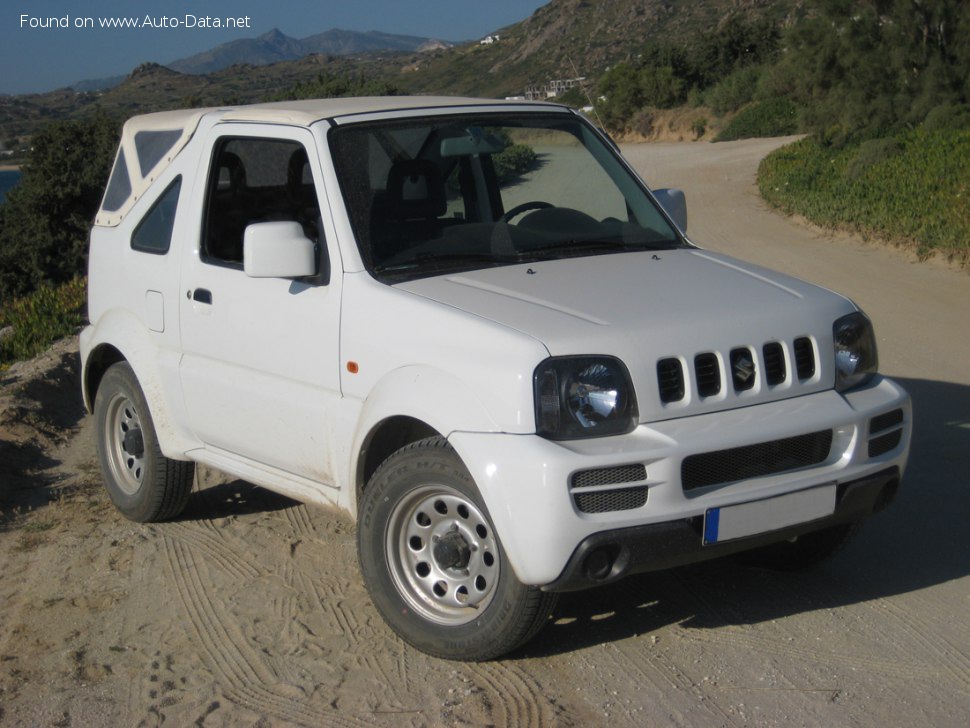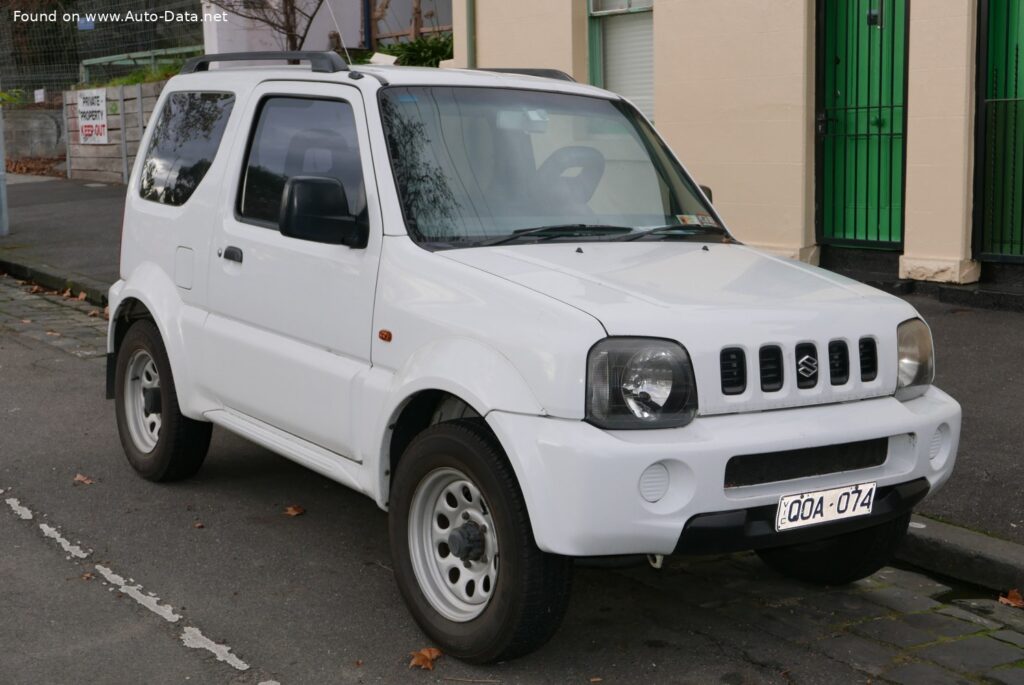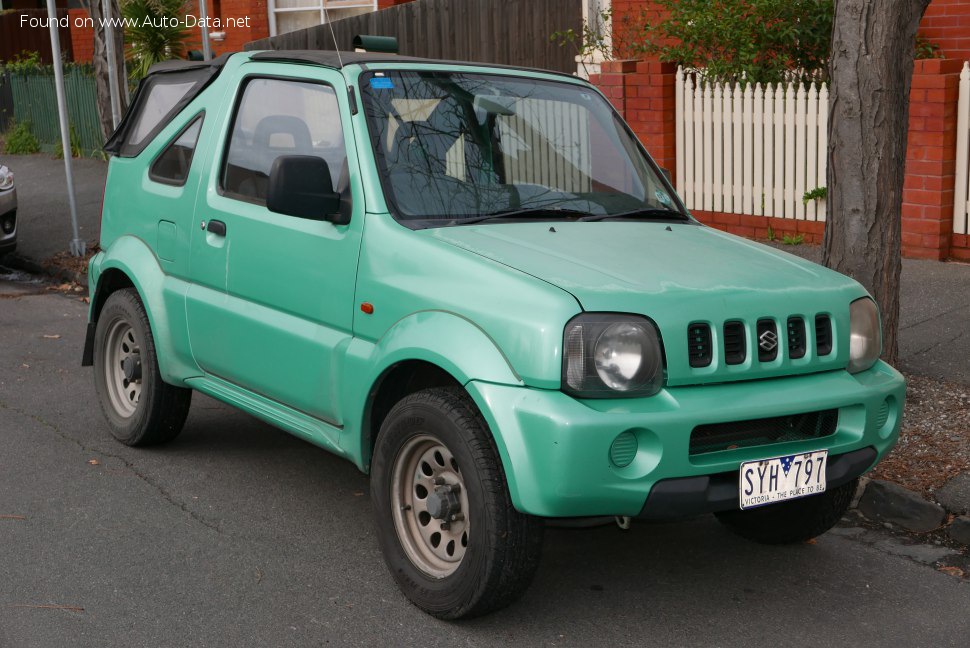
Introduction to the Suzuki Jimny Cabrio III
The Suzuki Jimny Cabrio III, produced between 1998 and 2000, represents a significant evolution in Suzuki’s long-standing tradition of compact, capable off-road vehicles. As the third generation of the Jimny line (following the LJ and SJ series, which included models known as Samurai and Sierra in various markets), this particular iteration, the Cabrio III, offered a unique blend of rugged utility and open-air driving enjoyment. While not widely sold in the United States in this specific configuration, the Jimny series globally cemented Suzuki’s reputation for building durable, lightweight 4x4s that punched well above their weight class when it came to tackling challenging terrain. This model, with its 1.3-liter inline-four engine and automatic transmission, was particularly popular in European and Asian markets, where its diminutive size, fuel efficiency, and genuine off-road prowess made it an ideal choice for both urban exploration and weekend adventures.
The Jimny Cabrio III carried forward the core ethos of its predecessors: a robust body-on-frame chassis, true four-wheel-drive capability with a low-range transfer case (though not explicitly detailed in the provided data, it’s a hallmark of the Jimny), and a practical, no-frills design. The Cabriolet body style added an extra dimension of fun and versatility, allowing occupants to fully immerse themselves in their surroundings, whether cruising along a coastal road or navigating a dusty trail. This generation marked a modernization of the Jimny, bringing improved comfort, safety features like ABS, and a more refined powertrain, all while retaining the fundamental characteristics that made the Jimny a beloved icon among off-road enthusiasts.
The Heart of the Suzuki Jimny Cabrio III: Engine and Performance
Powering the Suzuki Jimny Cabrio III was a G13BB 1.3-liter (1298 cm3 or 79.21 cu. in.) inline-four gasoline engine. This naturally aspirated unit, featuring a multi-port manifold injection system and an OHC (Overhead Camshaft) valvetrain with four valves per cylinder, was engineered for reliability and adequate performance within the vehicle’s compact footprint. It delivered a respectable 80 horsepower at 6000 revolutions per minute, translating to a power-per-liter output of 61.6 horsepower per liter, which was competitive for a small, naturally aspirated engine of its era.
Torque output stood at 104 Newton-meters (76.71 lb.-ft.) at a modest 4500 rpm. This relatively low-end torque, combined with the engine’s compact size and the vehicle’s lightweight construction, contributed to the Jimny’s renowned agility and off-road capability. The engine was mounted longitudinally at the front, optimizing weight distribution and allowing for the robust all-wheel-drive (4×4) system.
The transmission of choice for this specific variant was a 4-speed automatic gearbox. While a manual transmission might have offered more direct control for serious off-roading, the automatic option provided ease of use, particularly in urban environments and for drivers seeking a more relaxed driving experience. This powertrain allowed the Jimny Cabrio III to reach a maximum speed of 135 km/h (83.89 mph), underscoring its design as a capable utility vehicle rather than a high-speed cruiser.
Fuel economy figures for the Jimny Cabrio III 1.3 i 16V Automatic were quite reasonable for a permanent 4×4 vehicle of its time. In urban driving conditions, it achieved 9.4 liters per 100 kilometers (25 US mpg). On the extra-urban cycle, this improved significantly to 6.4 liters per 100 kilometers (36.8 US mpg). The combined fuel consumption was rated at 7.5 liters per 100 kilometers (31.4 US mpg), making it an economical choice for its segment and capabilities. The fuel tank capacity of 40 liters (10.57 US gallons) provided a decent range for its intended use.
Design and Features of the Suzuki Jimny Cabrio III
The Suzuki Jimny Cabrio III embodied a design philosophy centered on functionality, ruggedness, and a sense of adventure. Classified as an off-road vehicle and a cabriolet, its body type was distinctive. With three doors and seating for five (though the rear seating in a vehicle of this size, especially a convertible, would likely be more suited for shorter journeys or smaller occupants), it offered practical versatility.
Measuring 3625 mm (142.72 inches) in length, 1600 mm (62.99 inches) in width, and 1665 mm (65.55 inches) in height, the Jimny Cabrio III was remarkably compact. Its short wheelbase of 2250 mm (88.58 inches) and short overhangs were key to its exceptional maneuverability and off-road prowess, allowing it to navigate tight trails and steep inclines with ease. The minimum turning circle of 9.8 meters (32.15 feet) further enhanced its agility in confined spaces.
A defining characteristic was its convertible roof, offering an open-air experience that set it apart from most conventional SUVs. While the specific mechanism isn’t detailed, it typically involved a soft-top design, allowing for easy removal or folding to embrace the elements. The exterior styling was robust and purposeful, with a boxy profile that maximized interior space and contributed to its utilitarian appeal. The 205/70 R15 S tires provided a good balance of on-road comfort and off-road traction.
Underneath its practical skin, the Jimny featured a robust chassis designed for durability. It employed a wishbone front suspension and a coil spring rear suspension, a setup that provided a balance between ride comfort and articulation for off-road conditions. Braking duties were handled by disc brakes at the front and drum brakes at the rear, supplemented by an Anti-lock Braking System (ABS), a significant safety enhancement for the late 1990s. Steering was managed by a rack and pinion system with hydraulic power steering, offering direct feedback and ease of control. The maximum weight capacity for the vehicle was 1420 kg (3130.56 lbs), indicating its sturdy construction. Despite its compact exterior, the Jimny offered a useful trunk space, ranging from 85 liters (3 cu. ft.) with the rear seats up to 620 liters (21.9 cu. ft.) when folded, providing ample room for gear.
Technical Specifications for the Suzuki Jimny Cabrio III
| Category | Specification |
|---|---|
| General Information | |
| Brand | Suzuki |
| Model | Jimny |
| Generation | Jimny Cabrio III |
| Type (Engine) | 1.3 i 16V (80 Hp) Automatic |
| Start of Production | 1998 year |
| End of Production | 2000 year |
| Powertrain Architecture | Internal Combustion engine |
| Body type | Off-road vehicle, Cabriolet |
| Seats | 5 |
| Doors | 3 |
| Performance Specs | |
| Fuel Consumption (Urban) | 9.4 l/100 km (25 US mpg) |
| Fuel Consumption (Extra Urban) | 6.4 l/100 km (36.8 US mpg) |
| Fuel Consumption (Combined) | 7.5 l/100 km (31.4 US mpg) |
| Fuel Type | Petrol (Gasoline) |
| Maximum Speed | 135 km/h (83.89 mph) |
| Engine Specs | |
| Power | 80 Hp @ 6000 rpm |
| Power per liter | 61.6 Hp/l |
| Torque | 104 Nm @ 4500 rpm (76.71 lb.-ft. @ 4500 rpm) |
| Engine Layout | Front, Longitudinal |
| Engine Model/Code | G13BB |
| Engine Displacement | 1298 cm3 (79.21 cu. in.) |
| Number of Cylinders | 4 |
| Engine Configuration | Inline |
| Cylinder Bore | 74 mm (2.91 in.) |
| Piston Stroke | 75.5 mm (2.97 in.) |
| Compression Ratio | 9.5:1 |
| Number of Valves per Cylinder | 4 |
| Fuel Injection System | Multi-port manifold injection |
| Engine Aspiration | Naturally aspirated engine |
| Valvetrain | OHC |
| Engine Oil Capacity | 3.7 l (3.91 US qt) |
| Coolant Capacity | 4.5 l (4.76 US qt) |
| Space, Volume and Weights | |
| Max. Weight | 1420 kg (3130.56 lbs) |
| Trunk (Boot) Space – Minimum | 85 l (3 cu. ft.) |
| Trunk (Boot) Space – Maximum | 620 l (21.9 cu. ft.) |
| Fuel Tank Capacity | 40 l (10.57 US gal) |
| Dimensions | |
| Length | 3625 mm (142.72 in.) |
| Width | 1600 mm (62.99 in.) |
| Height | 1665 mm (65.55 in.) |
| Wheelbase | 2250 mm (88.58 in.) |
| Front Track | 1355 mm (53.35 in.) |
| Rear (Back) Track | 1365 mm (53.74 in.) |
| Minimum Turning Circle (Diameter) | 9.8 m (32.15 ft) |
| Drivetrain, Brakes and Suspension Specs | |
| Drive Wheel | All wheel drive (4×4) |
| Number of Gears and Type of Gearbox | 4 gears, automatic transmission |
| Front Suspension | Wishbone |
| Rear Suspension | Coil spring |
| Front Brakes | Disc |
| Rear Brakes | Drum |
| Assisting Systems | ABS (Anti-lock braking system) |
| Steering Type | Steering rack and pinion |
| Power Steering | Hydraulic Steering |
| Tires Size | 205/70 R15 S |
Legacy and Market Impact of the Suzuki Jimny Cabrio III
The Suzuki Jimny, and specifically the Cabrio III variant, carved out a unique and enduring niche in the global automotive landscape. Its reputation was built on a foundation of uncompromising off-road capability, remarkable durability, and an approachable, fun-loving character. The Jimny Cabrio III inherited the legendary toughness of its predecessors, like the Samurai (SJ410/413), and continued to offer a true body-on-frame, solid-axle (implied by typical Jimny construction and coil spring rear setup) mini-SUV in an increasingly car-like SUV market.
In its primary markets, which largely excluded the mainstream United States market for this specific generation, the Jimny Cabrio III faced a diverse set of competitors. These included other small 4x4s such as the Daihatsu Terios, and to some extent, even the Lada Niva, all vying for the attention of buyers seeking compact, affordable, and capable off-roaders. However, the Jimny distinguished itself with its unique convertible option and its proven Suzuki reliability, often outperforming larger, more expensive SUVs in challenging terrain due to its light weight and excellent approach and departure angles (derived from its short overhangs).
The historical significance of the Jimny Cabrio III lies in its role as a bridge between the raw, utilitarian Samurai and the more refined, yet still incredibly capable, subsequent generations of the Jimny. It modernized the formula without sacrificing the core tenets that made the Jimny a global icon. Its compact dimensions made it incredibly practical for crowded European and Asian cities, while its robust 4×4 system ensured it was equally at home on mountain trails or sandy beaches.
The Jimny Cabrio III, during its short production run from 1998 to 2000, helped solidify the Jimny’s cult following. It was cherished by enthusiasts for its simplicity, ease of modification, and sheer fun factor. Its impact can be seen in the enduring demand for capable small SUVs and the continued success of the Jimny line, which has maintained its core identity through subsequent generations. Even today, the Jimny Cabrio III is remembered as a testament to Suzuki’s engineering prowess in creating small vehicles with immense character and capability, a true international expert in the compact off-road segment.