<!DOCTYPE html>
<html lang=”en”>
<head>
<meta charset=”UTF-8″>
<meta name=”viewport” content=”width=device-width, initial-scale=1.0″>
<title>Volkswagen Polo II Classic (86C) 1.3 (55 Hp)</title>
<style>
body { font-family: Arial, sans-serif; line-height: 1.6; color: #333; margin: 0 auto; max-width: 900px; padding: 20px; }
h2 { color: #2c3e50; border-bottom: 2px solid #3498db; padding-bottom: 10px; margin-top: 30px; }
h3 { color: #34495e; margin-top: 20px; }
p { margin-bottom: 15px; text-align: justify; }
table { width: 100%; border-collapse: collapse; margin-top: 20px; margin-bottom: 20px; }
th, td { border: 1px solid #ddd; padding: 10px; text-align: left; }
th { background-color: #f2f2f2; }
</style>
</head>
<body>
<h2>The Volkswagen Polo II Classic (86C) 1.3 (55 Hp): An Enduring European Subcompact</h2>
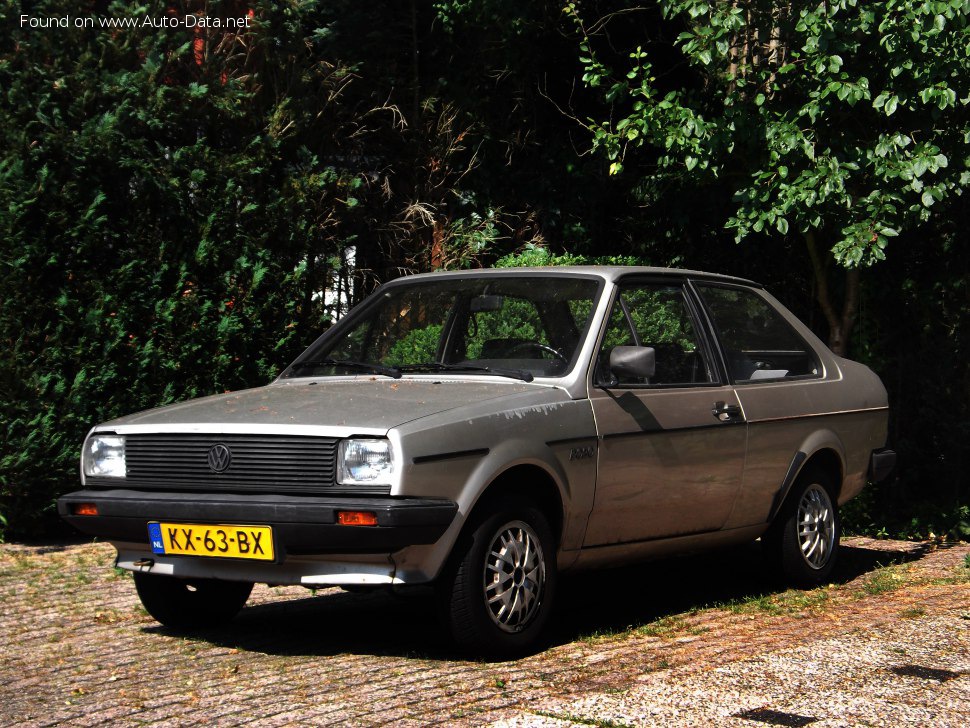
<p>The <strong>Volkswagen Polo II Classic (86C) 1.3 (55 Hp)</strong> represents a significant chapter in Volkswagen’s history, particularly within the European market. Launched in 1983 as part of the second generation of the highly successful Polo line, the 86C series expanded the Polo’s versatility beyond its traditional hatchback roots. While the Polo was never officially sold in the United States, it became a cornerstone of accessible, reliable, and economical motoring across Europe and other international markets. This “Classic” variant, characterized by its distinct two-door sedan body style, offered a more conventional and often more practical alternative to its hatchback sibling, catering to buyers who sought additional trunk space and a more traditional silhouette in the burgeoning subcompact segment.</p>
<p>The Polo II Classic (86C) was produced from 1983 to 1987, embodying the pragmatic design and engineering philosophies for which Volkswagen was renowned. It was designed to be a workhorse for daily commuting, a first car for many, and a dependable family vehicle in an era where fuel efficiency and compact dimensions were paramount. The 1.3-liter engine, producing 55 horsepower, was a common and well-regarded powertrain option, balancing performance with impressive fuel economy for its time. This article delves into the technical aspects, design philosophy, and lasting impact of this quintessential European compact sedan.</p>
<h3>The Evolution of the Polo: The 86C Generation</h3>
<p>The second generation of the Volkswagen Polo, internally designated the Type 86C, was a comprehensive redesign that built upon the success of the original Polo. While the first generation established the Polo as a viable contender in the supermini segment, the 86C aimed for greater refinement, improved interior space, and a broader range of body styles. Alongside the traditional hatchback, which was offered in both “breadvan” and “coupe” forms, the “Classic” sedan variant provided a more formal and spacious option. This strategic diversification allowed Volkswagen to capture a wider audience, from young urban drivers to small families.</p>
<p>The 86C generation was praised for its robust build quality, a hallmark of Volkswagen engineering, and its straightforward, unfussy design. It represented a period of automotive design that prioritized functionality and durability over excessive ornamentation. The Polo II Classic, specifically, offered a slightly more upscale feel than its hatchback counterpart, appealing to buyers who appreciated a defined three-box design and the security of a separate trunk compartment.</p>
<h3>Powertrain and Driving Dynamics</h3>
<p>At the heart of the <strong>Volkswagen Polo II Classic (86C) 1.3 (55 Hp)</strong> was a reliable 1.3-liter (1272 cubic inches) naturally aspirated inline-four gasoline engine. This powerplant, identified by the engine code MH, was configured in a front, transverse layout, driving the front wheels – a common and efficient architecture for compact cars of the era. It delivered a respectable 55 horsepower at 5400 rpm, paired with 69.33 lb.-ft. of torque peaking at 3400 rpm. These figures, while modest by today’s standards, were entirely adequate for the vehicle’s intended purpose: urban commuting and economical highway travel.</p>
<p>Fuel delivery was handled by a carburetion system, a prevalent technology before the widespread adoption of electronic fuel injection. This mechanical simplicity contributed to the engine’s reputation for reliability and ease of maintenance. The engine’s power per liter stood at 43.2 Hp/l, indicating a balanced approach to output and efficiency. Coupled with a 4-speed manual transmission, the Polo II Classic could accelerate from 0 to 60 mph in a calculated 13.8 seconds, reaching a maximum speed of 95.07 mph. These performance metrics underscored its role as a practical, rather than performance-oriented, vehicle. The relatively light curb weight of 1686.54 pounds contributed to its agile feel and respectable fuel economy, with a weight-to-power ratio of 13.9 kg/Hp (71.9 Hp/tonne) and a weight-to-torque ratio of 8.1 kg/Nm (122.9 Nm/tonne).</p>
<p>The drivetrain architecture, with its front-wheel-drive setup, provided predictable handling and good traction, especially in adverse weather conditions. The suspension system, typical for its class, offered a comfortable ride for daily driving, absorbing road imperfections effectively. Braking duties were handled by disc brakes at the front and drum brakes at the rear, a standard configuration that provided sufficient stopping power for the vehicle’s weight and performance capabilities. The car rode on 155/70 R13 tires, mounted on 13-inch wheel rims, emphasizing economy and practicality.</p>
<h3>Design Philosophy and Interior Comfort</h3>
<p>The Volkswagen Polo II Classic (86C) adopted a straightforward, functional design ethos. As a 2-door sedan, it offered a distinct profile compared to its hatchback brethren. Its dimensions – 146.65 inches in length, 61.81 inches in width, and 53.15 inches in height, with a wheelbase of 91.93 inches – made it a compact and maneuverable vehicle ideal for European city streets and narrow country roads. The design language was clean, with crisp lines and minimal embellishment, reflecting the utilitarian aesthetic popular in the 1980s.</p>
<p>Inside, the Polo II Classic was designed to accommodate four occupants comfortably, though like many 2-door sedans, rear access could be a bit constrained. The interior prioritized durability and ease of use, featuring hard-wearing fabrics and plastics that could withstand years of daily wear and tear. Instrumentation was clear and concise, providing all necessary information without distraction. Despite its compact exterior, the sedan body offered a surprisingly practical trunk volume, ranging from 8.48 cubic feet with all seats in place, expanding to a generous 32.31 cubic feet when the rear seats were folded down. This flexibility made it a versatile choice for small families or individuals needing to carry varying amounts of cargo.</p>
<p>Safety features, while basic by modern standards, were typical for a subcompact of its era. The robust body structure and predictable handling contributed to a sense of security. The modest 4.13 inches of ground clearance were suitable for paved roads, reinforcing its role as a city and highway cruiser rather than an off-road vehicle. The 11.1 US gallon fuel tank capacity, combined with the efficient 1.3-liter engine, provided a decent cruising range, making it an economical choice for long journeys.</p>
<h3>Comprehensive Technical Specifications</h3>
<table>
<thead>
<tr>
<th>Feature</th>
<th>Value</th>
</tr>
</thead>
<tbody>
<tr><td>Brand</td><td>Volkswagen</td></tr>
<tr><td>Model</td><td>Polo</td></tr>
<tr><td>Generation</td><td>Polo II Classic (86C)</td></tr>
<tr><td>Engine Type</td><td>1.3 (55 Hp)</td></tr>
<tr><td>Production Start</td><td>1983 year</td></tr>
<tr><td>Production End</td><td>1987 year</td></tr>
<tr><td>Powertrain Architecture</td><td>Internal Combustion engine</td></tr>
<tr><td>Body Type</td><td>Sedan</td></tr>
<tr><td>Seats</td><td>4</td></tr>
<tr><td>Doors</td><td>2</td></tr>
<tr><td>Fuel Type</td><td>Petrol (Gasoline)</td></tr>
<tr><td>Acceleration 0 – 60 mph</td><td>13.8 sec</td></tr>
<tr><td>Maximum Speed</td><td>95.07 mph</td></tr>
<tr><td>Weight-to-power ratio</td><td>13.9 kg/Hp, 71.9 Hp/tonne</td></tr>
<tr><td>Weight-to-torque ratio</td><td>8.1 kg/Nm, 122.9 Nm/tonne</td></tr>
<tr><td>Power</td><td>55 Hp @ 5400 rpm</td></tr>
<tr><td>Power per liter</td><td>43.2 Hp/l</td></tr>
<tr><td>Torque</td><td>69.33 lb.-ft. @ 3400 rpm</td></tr>
<tr><td>Engine Layout</td><td>Front, Transverse</td></tr>
<tr><td>Engine Model/Code</td><td>MH</td></tr>
<tr><td>Engine Displacement</td><td>1272 cm<sup>3</sup> (77.62 cu. in.)</td></tr>
<tr><td>Number of Cylinders</td><td>4</td></tr>
<tr><td>Engine Configuration</td><td>Inline</td></tr>
<tr><td>Cylinder Bore</td><td>2.95 in. (75 mm)</td></tr>
<tr><td>Piston Stroke</td><td>2.83 in. (72 mm)</td></tr>
<tr><td>Compression Ratio</td><td>9.5:1</td></tr>
<tr><td>Valves per Cylinder</td><td>2</td></tr>
<tr><td>Fuel Injection System</td><td>Carburetor</td></tr>
<tr><td>Engine Aspiration</td><td>Naturally aspirated engine</td></tr>
<tr><td>Engine Oil Capacity</td><td>3.7 US qt (3.5 l)</td></tr>
<tr><td>Coolant Capacity</td><td>5.92 US qt (5.6 l)</td></tr>
<tr><td>Kerb Weight</td><td>1686.54 lbs. (765 kg)</td></tr>
<tr><td>Max. Weight (GVWR)</td><td>2711.69 lbs. (1230 kg)</td></tr>
<tr><td>Max Load</td><td>1025.15 lbs. (465 kg)</td></tr>
<tr><td>Trunk (Boot) Space – minimum</td><td>8.48 cu. ft. (240 l)</td></tr>
<tr><td>Trunk (Boot) Space – maximum</td><td>32.31 cu. ft. (915 l)</td></tr>
<tr><td>Fuel Tank Capacity</td><td>11.1 US gal (42 l)</td></tr>
<tr><td>Length</td><td>146.65 in. (3725 mm)</td></tr>
<tr><td>Width</td><td>61.81 in. (1570 mm)</td></tr>
<tr><td>Height</td><td>53.15 in. (1350 mm)</td></tr>
<tr><td>Wheelbase</td><td>91.93 in. (2335 mm)</td></tr>
<tr><td>Front Track</td><td>51.97 in. (1320 mm)</td></tr>
<tr><td>Rear (Back) Track</td><td