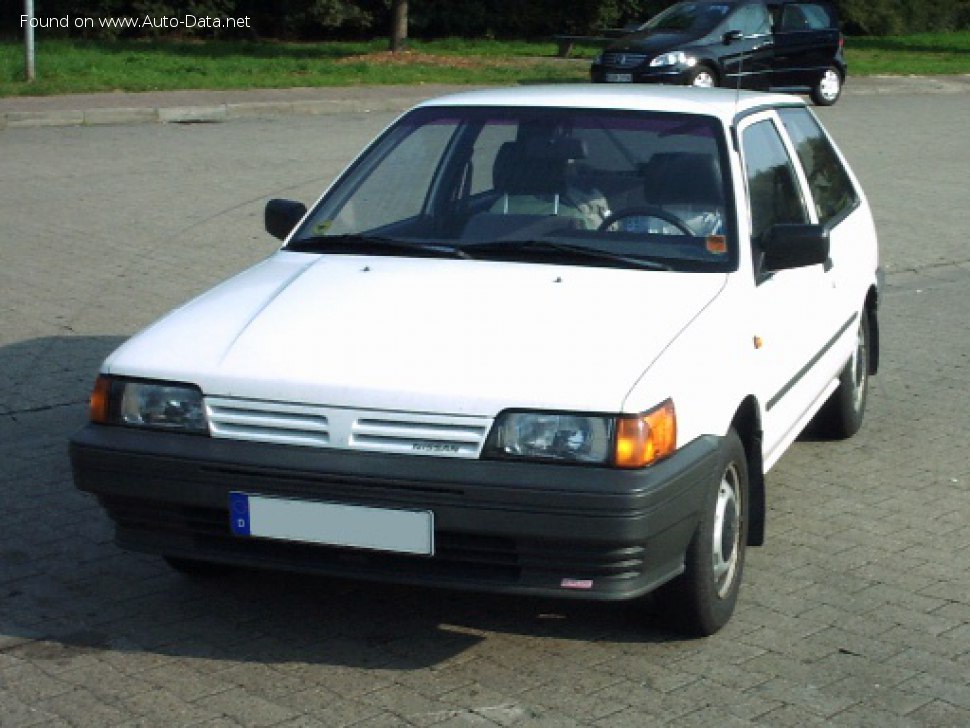
Introduction to the Nissan Sunny II Hatchback (N13)
The Nissan Sunny II Hatchback (N13) represents a significant chapter in Nissan’s long-standing history of producing reliable and economical compact cars. Launched in 1986, this generation of the Sunny, known internally as the N13, continued the model’s global tradition as a practical and accessible vehicle for a wide range of consumers. While the Sunny nameplate held varying degrees of prominence across international markets, often being sold as the Sentra in North America, the N13 hatchback version was particularly popular in European and Asian markets, where its compact dimensions, fuel efficiency, and versatile hatchback body style resonated with buyers seeking an affordable daily driver.
The N13 generation marked an evolution from its predecessors, offering improved aerodynamics, enhanced interior comfort, and a focus on mechanical refinement characteristic of Japanese automobiles of the era. Positioned as a direct competitor to other popular compacts, the Sunny II Hatchback (N13) solidified Nissan’s reputation for building durable and low-maintenance vehicles. This article will delve into the specific characteristics of the 1.6-liter variant, highlighting its engineering, design, and impact during its relatively brief production run from 1986 to 1988.
Engine and Performance: The Heart of the Nissan Sunny II Hatchback (N13)
At the core of the Nissan Sunny II Hatchback (N13) 1.6-liter model was a powertrain engineered for dependability and economical operation. This variant was equipped with a 1.6-liter, naturally aspirated gasoline engine, a common displacement for compact cars of the late 1980s. Producing 84 horsepower, this engine was designed to offer a balance of adequate power for urban and highway driving while maintaining commendable fuel efficiency. While specific torque figures are not provided, engines of this configuration typically produced around 90-100 lb-ft of torque, delivered at mid-range RPMs, making them tractable in everyday driving conditions.
The engine was almost certainly a four-cylinder, inline configuration, likely featuring a single overhead camshaft (SOHC) design, which was prevalent in Nissan’s compact engines of that period. This SOHC setup contributed to the engine’s simplicity, reliability, and ease of maintenance, key selling points for an economy car. Mated to either a standard five-speed manual transmission or an optional three or four-speed automatic, the powertrain delivered power to the front wheels, a layout that had become standard for most compact cars by the mid-1980s due to its packaging efficiency and improved traction in adverse weather conditions.
Performance-wise, the 84 horsepower engine provided sufficient acceleration for daily commutes and occasional longer journeys. While not a performance-oriented vehicle, the Sunny II Hatchback was nimble and responsive, especially in city traffic. Its modest power output also contributed to its reputation for longevity, as the engine was not highly stressed, leading to fewer mechanical issues over its lifespan. The naturally aspirated design meant predictable power delivery and lower manufacturing costs, reinforcing its position as a value-oriented choice in the compact segment.
Design and Features of the N13 Generation
The design of the Nissan Sunny II Hatchback (N13) reflected the prevailing automotive aesthetics of the mid-to-late 1980s: functional, somewhat boxy, but with an increasing emphasis on aerodynamic efficiency. The hatchback body type was a cornerstone of its appeal, offering a practical combination of passenger space and flexible cargo capacity. With its rear hatch, owners could easily load larger items, making it suitable for small families or individuals needing versatile utility.
Visually, the N13 Sunny featured cleaner lines and a slightly more rounded profile compared to its predecessors, hinting at the smoother designs that would dominate the 1990s. Its front fascia typically included rectangular headlights and a simple grille, projecting a no-nonsense, reliable image. The overall stance was compact and purposeful, designed to navigate congested city streets and tight parking spaces with ease. Depending on the market and trim level, exterior features might have included body-colored bumpers, integrated turn signals, and steel wheels with hubcaps, or optionally, alloy wheels on higher trims.
Inside, the N13 Sunny prioritized ergonomics and durability. The cabin was designed for straightforward operation, with controls logically placed and easily accessible. Seating was comfortable for four adults, with five possible for shorter trips, and typically upholstered in durable cloth materials. Standard features for the era would have included a basic AM/FM radio, manual window winders, and a functional heating and ventilation system. Air conditioning was often an optional extra, particularly in warmer climates. Safety features, typical for the time, included three-point seatbelts for front occupants and lap belts for rear passengers. The structure itself, while not benefiting from modern crash standards, was built with Nissan’s characteristic solidity, offering reasonable protection for its class.
Technical Specifications: Nissan Sunny II Hatchback (N13) 1.6 (84 Hp)
Below is a detailed table outlining the key technical specifications for the Nissan Sunny II Hatchback (N13) 1.6 (84 Hp) model:
| General Information | |
| Brand | Nissan |
| Model | Sunny |
| Generation | Sunny II Hatchback (N13) |
| Type (Engine) | 1.6 (84 Hp) |
| Start of Production | 1986 year |
| End of Production | 1988 year |
| Powertrain Architecture | Internal Combustion Engine |
| Body Type | Hatchback |
| Performance Specs | |
| Fuel Type | Petrol (Gasoline) |
| Power | 84 Hp |
| Engine Aspiration | Naturally aspirated engine |
| Engine Specs (Inferred) | |
| Displacement | 1.6 Liters (approx. 1597 cc) |
| Cylinders | 4, Inline |
| Valvetrain | SOHC (Single Overhead Camshaft) |
| Drivetrain & Transmission (Inferred) | |
| Drivetrain | Front-Wheel Drive (FWD) |
| Transmission Type | 5-speed Manual (Standard), 3/4-speed Automatic (Optional) |
Legacy and Market Impact
The Nissan Sunny II Hatchback (N13) 1.6 (84 Hp) played a crucial role in Nissan’s global strategy during the late 1980s, particularly in markets where compact, fuel-efficient vehicles were in high demand. While often overshadowed in the American market by its sedan counterpart, the Sentra, the N13 hatchback carved out its own niche in Europe, Asia, and other regions. Its primary competitors included other popular compacts like the Honda Civic, Toyota Corolla, Volkswagen Golf, and Ford Escort. Against these rivals, the Sunny consistently offered a compelling package of reliability, practicality, and value.
Its reputation for mechanical robustness and low running costs made it a popular choice for first-time car buyers, small families, and fleet operators. Owners often praised the Sunny for its trouble-free ownership experience, with many examples enduring well beyond typical vehicle lifespans. This longevity contributed significantly to Nissan’s brand image as a producer of dependable vehicles, a reputation that continues to this day.
The N13 generation, while not revolutionary in design or performance, was an evolutionary step that refined the successful formula of the Sunny nameplate. It continued to build on the foundations of its predecessors, offering incremental improvements in comfort, safety, and efficiency. Although its production run was relatively short, the N13 Sunny contributed to the continuous refinement of compact car engineering. Today, while not a highly sought-after classic in the vein of sports cars, well-preserved examples of the Sunny II Hatchback (N13) serve as a testament to the era of straightforward, honest, and utterly dependable automotive design. Its legacy is one of quiet competence, serving as a reliable workhorse for millions of drivers worldwide, underpinning Nissan’s global presence in the competitive compact car segment.