The Renault Espace III: A European Minivan Icon (JE, Phase II, 2000)
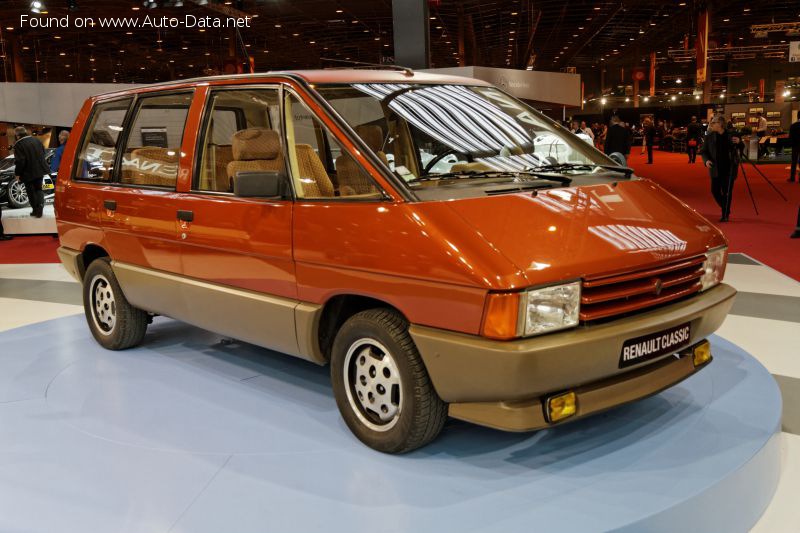
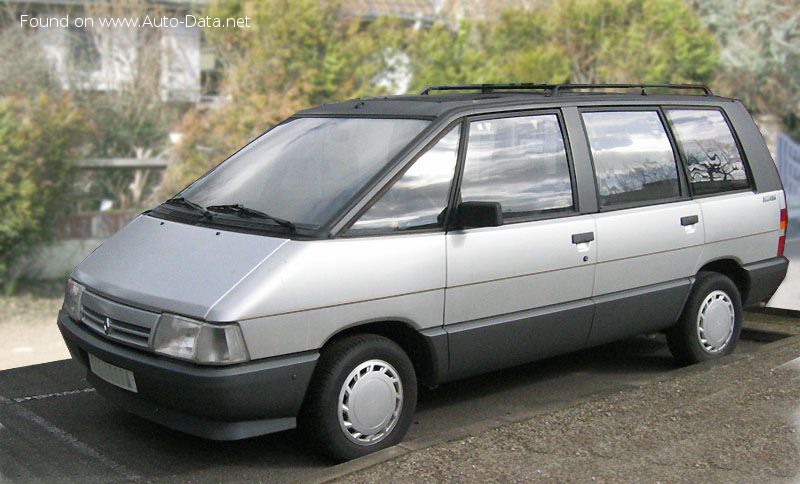
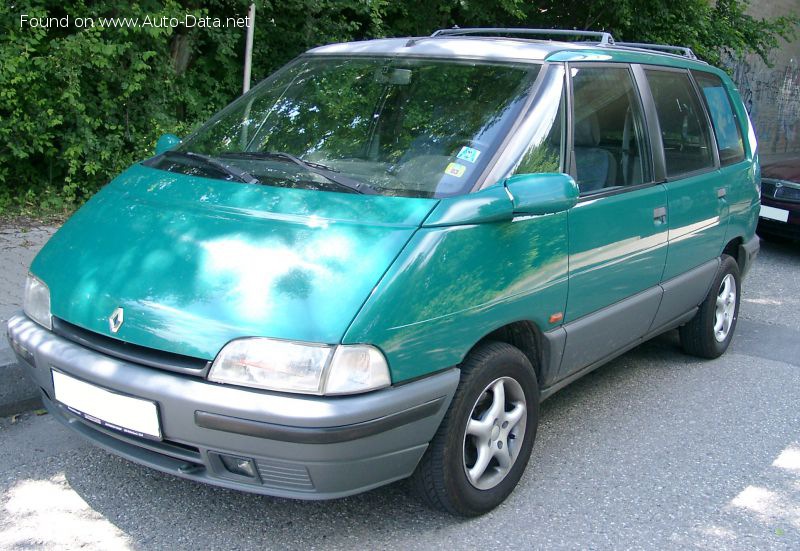
The Renault Espace, a name synonymous with the European minivan (or Multi-Purpose Vehicle – MPV) segment, revolutionized family transport when it first launched in 1984. By the turn of the millennium, the third-generation Espace, designated JE, was well into its lifecycle, having received a significant refresh in its Phase II iteration for the 2000 model year. This particular variant, the Renault Espace III (JE, Phase II, 2000) 3.0 V6 24V (190 Hp) Automatic, represented the pinnacle of luxury and performance within the Espace lineup, catering to discerning European families seeking space, comfort, and a refined driving experience. While never officially sold in the United States, the Espace played a crucial role in defining the MPV segment across Europe and other international markets, showcasing Renault’s innovative approach to vehicle packaging and design.
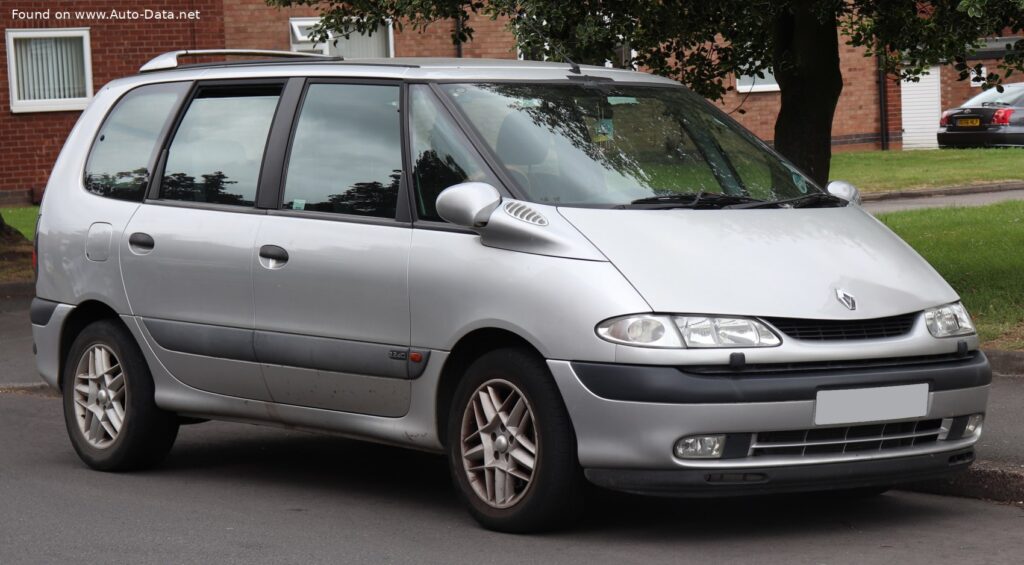
The Espace III, produced from 1996 to 2002, continued the model’s tradition of offering unparalleled interior flexibility and a distinctive, aerodynamic design. The Phase II update introduced subtle styling revisions, improved materials, and updated technology, keeping it competitive in a rapidly evolving market. This 3.0 V6 model, with its powerful engine and smooth automatic transmission, was positioned as a premium offering, designed for effortless long-distance cruising and comfortable transport for up to seven occupants.
Engine and Performance: The Refined Power of the Renault Espace III
At the heart of this particular Renault Espace III was a sophisticated 3.0-liter V6 24V gasoline engine, internally designated L7X. This naturally aspirated, multi-port manifold injected engine delivered a robust 190 horsepower at 5750 rpm, providing ample power for a vehicle of its size and purpose. With a power-to-liter ratio of 64.5 HP/L, it was a respectable performer for its era. Torque output stood at 267 Newton-meters (196.93 lb.-ft.) at 4000 rpm, ensuring strong mid-range acceleration and confident overtaking capabilities, especially crucial for a vehicle often loaded with passengers and cargo.
The engine was configured in a front, transverse layout, driving the front wheels through a 4-speed automatic transmission. While a 4-speed automatic might seem modest by today’s standards, it was a common and reliable choice for family vehicles at the time, prioritizing smooth shifts and ease of use. This powertrain enabled the Espace III to accelerate from 0 to 60 mph in a respectable 10.1 seconds (0-100 km/h in 10.6 seconds) and reach a maximum speed of 126.14 mph (203 km/h). These figures underscored its capability as a competent tourer, capable of handling extended highway journeys with ease.
Fuel economy, a significant consideration for any family vehicle, was rated at a combined 20.3 US mpg (11.6 liters/100 km). While not outstanding by modern standards, it was competitive for a large V6-powered minivan of its time. Urban consumption was 14.4 US mpg, while extra-urban driving could yield up to 26.4 US mpg. The vehicle met the Euro 2 emission standard, reflecting the environmental regulations of the late 1990s and early 2000s in Europe.
Design and Features: European Practicality and Innovation
The Renault Espace III inherited its distinctive minivan silhouette, a hallmark of its design philosophy centered on maximizing interior volume and passenger comfort. With five doors and a versatile 7-seat configuration, it offered immense practicality for large families or those needing flexible cargo space. The body type, often referred to as an MPV in Europe, was characterized by its tall, cab-forward design and large glass areas, providing excellent outward visibility.
Dimensionally, the Espace III measured 177.83 inches (4517 mm) in length, 71.26 inches (1810 mm) in width (81.5 inches or 2070 mm including mirrors), and 69.8 inches (1773 mm) in height. Its 106.38-inch (2702 mm) wheelbase contributed to a stable ride and generous interior room. A key feature of the Espace’s design, inherited from its Matra origins, was its composite body panels over a steel frame, which offered benefits in terms of weight, corrosion resistance, and minor impact repair.
The interior was designed for ultimate modularity. The rear seats could be individually removed, slid, or folded, allowing for numerous configurations to prioritize passenger space or cargo volume. Minimum trunk space was a modest 9.71 cubic feet (275 liters) with all seven seats in place, but this expanded dramatically to an impressive 100.65 cubic feet (2850 liters) when the rear seats were removed, transforming the Espace into a voluminous cargo hauler. This versatility was a primary selling point in its market.
Safety features for the Espace III included an Anti-lock Braking System (ABS) as standard, alongside ventilated discs at the front and disc brakes at the rear. The suspension system comprised independent McPherson struts with coil springs and an anti-roll bar at the front, and a semi-independent setup with coil springs at the rear, providing a comfortable and composed ride. Hydraulic power steering aided maneuverability, especially important for a larger vehicle navigating urban environments. The vehicle rode on 225/55 R16 tires, mounted on 16-inch wheels.
Technical Specifications: Renault Espace III (JE, Phase II, 2000) 3.0 V6 24V Automatic
| Category | Specification |
|---|---|
| General Information | |
| Brand | Renault |
| Model | Espace |
| Generation | Espace III (JE, Phase II, 2000) |
| Type (Engine) | 3.0 V6 24V (190 Hp) Automatic |
| Start of Production | 2000 year |
| End of Production | 2002 year |
| Powertrain Architecture | Internal Combustion engine |
| Body Type | Minivan, MPV |
| Seats | 7 |
| Doors | 5 |
| Performance Specifications | |
| Fuel Consumption (Urban) | 16.3 l/100 km (14.4 US mpg) |
| Fuel Consumption (Extra Urban) | 8.9 l/100 km (26.4 US mpg) |
| Fuel Consumption (Combined) | 11.6 l/100 km (20.3 US mpg) |
| CO2 Emissions | 273 g/km |
| Fuel Type | Petrol (Gasoline) |
| Acceleration 0-60 mph | 10.1 sec |
| Acceleration 0-100 km/h | 10.6 sec |
| Maximum Speed | 126.14 mph (203 km/h) |
| Emission Standard | Euro 2 |
| Weight-to-Power Ratio | 9.2 kg/Hp (108.3 Hp/tonne) |
| Weight-to-Torque Ratio | 6.6 kg/Nm (152.1 Nm/tonne) |
| Engine Specifications | |
| Power | 190 Hp @ 5750 rpm |
| Power per Liter | 64.5 Hp/l |
| Torque | 267 Nm (196.93 lb.-ft.) @ 4000 rpm |
| Engine Layout | Front, Transverse |
| Engine Model/Code | L7X |
| Engine Displacement | 2946 cm3 (179.78 cu. in.) |
| Number of Cylinders | 6 |
| Engine Configuration | V-engine |
| Cylinder Bore | 87 mm (3.43 in.) |
| Piston Stroke | 82.6 mm (3.25 in.) |
| Compression Ratio | 10.5:1 |
| Valves per Cylinder | 4 |
| Fuel Injection System | Multi-port manifold injection |
| Engine Aspiration | Naturally aspirated engine |
| Valvetrain | DOHC |
| Engine Oil Capacity | 4.9 l (5.18 US qt) |
| Coolant Capacity | 8 l (8.45 US qt) |
| Space, Volume, and Weights | |
| Kerb Weight | 1755 kg (3869.11 lbs.) |
| Max. Weight | 2510 kg (5533.6 lbs.) |
| Max Load | 755 kg (1664.49 lbs.) |
| Trunk (Boot) Space – Minimum | 275 l (9.71 cu. ft.) |
| Trunk (Boot) Space – Maximum | 2850 l (100.65 cu. ft.) |
| Fuel Tank Capacity | 78 l (20.61 US gal) |
| Max. Roof Load | 80 kg (176.37 lbs.) |
| Permitted Trailer Load with Brakes (12%) | 2000 kg (4409.25 lbs.) |
| Permitted Trailer Load without Brakes | 750 kg (1653.47 lbs.) |
| Dimensions | |
| Length | 4517 mm (177.83 in.) |
| Width | 1810 mm (71.26 in.) |
| Width Including Mirrors | 2070 mm (81.5 in.) |
| Height | 1773 mm (69.8 in.) |
| Wheelbase | 2702 mm (106.38 in.) |
| Front Track | 1534 mm (60.39 in.) |
| Rear (Back) Track | 1540 mm (60.63 in.) |
| Front Overhang | 929 mm (36.57 in.) |
| Rear Overhang | 886 mm (34.88 in.) |
| Ride Height (Ground Clearance) | 110 mm (4.33 in.) |
| Minimum Turning Circle (Turning Diameter) | 11.4 m (37.4 ft.) |
| Drivetrain, Brakes, and Suspension | |
| Drivetrain Architecture | Front-wheel drive, Internal Combustion engine |
| Drive Wheel | Front wheel drive |
| Number of Gears and Type of Gearbox | 4 gears, automatic transmission |
| Front Suspension | Independent, McPherson with coil spring and anti-roll bar |
| Rear Suspension | Semi-independent, coil spring |
| Front Brakes | Ventilated discs |
| Rear Brakes | Disc |
| Assisting Systems | ABS (Anti-lock braking system) |
| Steering Type | Steering rack and pinion |
| Power Steering | Hydraulic Steering |
| Tires Size | 225/55 R16 |
| Wheel Rims Size | 16 inches |
Legacy and Market Impact of the Renault Espace III
The Renault Espace holds a significant place in automotive history, particularly in Europe, as one of the pioneers of the modern MPV. The third generation, and especially the refined Phase II models like the 3.0 V6 automatic, continued to build upon this legacy. It wasn’t just a car; it was a concept that redefined family travel, offering a practical, comfortable, and versatile alternative to traditional sedans and station wagons.
In its primary European market, the Renault Espace III faced stiff competition from other emerging MPVs. Key rivals included the Ford Galaxy/Volkswagen Sharan/SEAT Alhambra trio (developed jointly), the Chrysler Voyager (which had a strong presence in Europe), and later, models like the Citroën C8/Peugeot 807/Fiat Ulysse/Lancia Phedra. What set the Espace apart was its French flair, innovative interior solutions, and often a more car-like driving experience compared to some of its van-derived competitors. The 3.0 V6 model, in particular, offered a level of refinement and effortless performance that appealed to buyers who valued comfort on long journeys and a more premium feel.
The Espace’s reputation was built on its clever packaging, spacious interior, and a design that remained distinctive even as the MPV segment matured. Its modular seating allowed it to adapt to almost any family need, from hauling kids and their gear to serving as a spacious cargo transporter. The Espace III’s build quality and sophisticated V6 engine, coupled with its advanced (for the time) safety features like ABS, cemented its status as a benchmark in the segment.
While the Espace never crossed the Atlantic to compete with American minivans like the Dodge Caravan or Honda Odyssey, its influence on global automotive design and family vehicle trends cannot be overstated. It demonstrated that a family car could be both eminently practical and stylish, eschewing the boxy aesthetics of traditional vans. The Renault Espace III, particularly in its well-equipped 3.0 V6 automatic guise, remains a testament to Renault’s ingenuity and its enduring impact on how families travel in Europe and beyond.