<!DOCTYPE html>
<html lang=”en”>
<head>
<meta charset=”UTF-8″>
<meta name=”viewport” content=”width=device-width, initial-scale=1.0″>
<title>Volkswagen Polo II Classic (86C) 1.3 (60 Hp)</title>
</head>
<body>
<h2>Volkswagen Polo II Classic (86C) 1.3 (60 Hp)</h2>
<p>
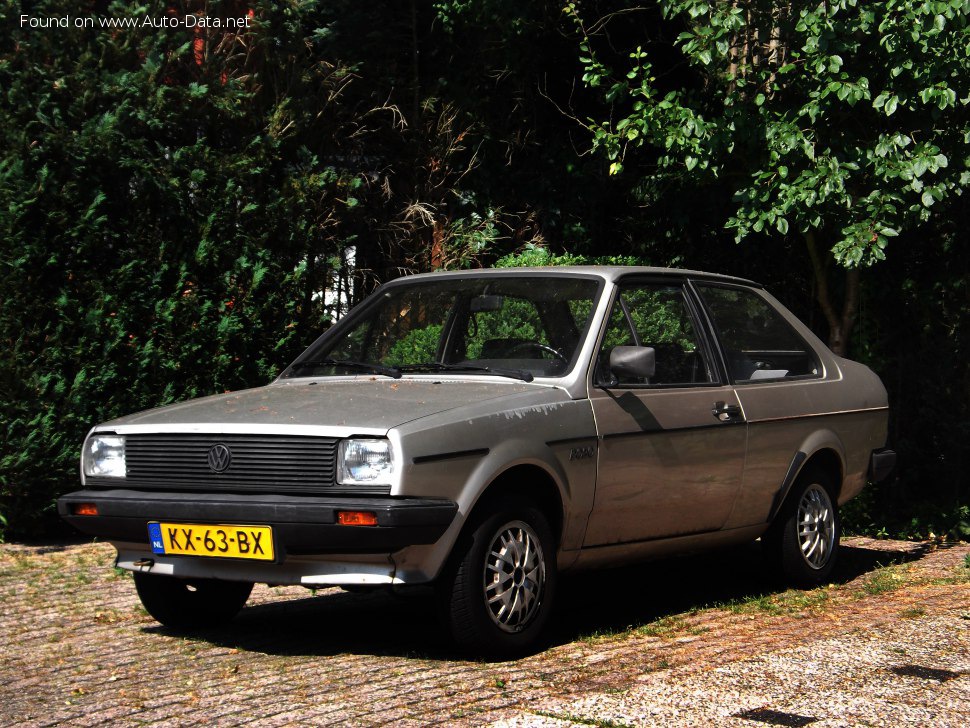
The <strong>Volkswagen Polo II Classic (86C) 1.3 (60 Hp)</strong> represents a significant variant within the second generation of Volkswagen’s highly successful Polo subcompact car range. Introduced in 1981, this particular model, characterized by its “Classic” sedan body style, offered a more traditional and capacious alternative to the popular hatchback variants. While the Polo was never officially sold in the United States, it became a cornerstone of Volkswagen’s European lineup, serving as an entry-level vehicle positioned beneath the Golf. The 86C generation, which spanned from 1981 to 1994, built upon the first-generation Polo’s reputation for affordability, practicality, and robust engineering. The 1.3-liter engine with 60 horsepower was a common and well-regarded powertrain option, embodying the car’s ethos of reliable and economical daily transport for a wide demographic across Europe and other international markets. This specific variant, produced for a brief period in 1981, marked the initial rollout of the “Classic” sedan body, highlighting Volkswagen’s strategy to diversify the Polo’s appeal to customers seeking more conventional styling and enhanced trunk capacity.
</p>
<h2>Engine and Performance of the Volkswagen Polo II Classic (86C) 1.3 (60 Hp)</h2>
<p>
At the heart of the <strong>Volkswagen Polo II Classic (86C) 1.3 (60 Hp)</strong> was a naturally aspirated, inline-four gasoline engine, designated with the internal code HH. This 1.3-liter (1272 cm<sup>3</sup> or 77.62 cubic inches) powerplant was designed for efficiency and durability, characteristics highly valued in the European subcompact segment of the early 1980s. With a bore of 2.95 inches (75 mm) and a stroke of 2.83 inches (72 mm), the engine featured a conventional two valves per cylinder setup and utilized a carburettor fuel injection system, a standard technology for the era.
</p>
<p>
The engine delivered a modest but entirely adequate 60 horsepower at 5600 rpm, providing sufficient power for urban commuting and comfortable highway cruising for its size. Torque output stood at 68.59 lb.-ft. (93 Nm) at a relatively low 3500 rpm, ensuring respectable pulling power at everyday engine speeds. This power was channeled to the front wheels via a robust 4-speed manual transmission, a common and cost-effective choice for vehicles in this class. The front-wheel-drive architecture contributed to predictable handling and efficient packaging.
</p>
<p>
In terms of performance, the Polo II Classic 1.3 (60 Hp) was a solid, if not exhilarating, performer. It could accelerate from 0 to 60 mph in a calculated 14.3 seconds, with a 0 to 62 mph (100 km/h) sprint taking 15 seconds. Its top speed was rated at 96.31 mph (155 km/h). These figures placed it competitively within its segment, emphasizing economy and reliability over outright speed. The car’s kerb weight of 1686.54 lbs (765 kg) resulted in a weight-to-power ratio of 12.8 kg/Hp, which, combined with its compact dimensions, made it nimble and easy to maneuver in congested European city environments. The engine’s simplicity also meant easier maintenance and lower running costs, a key selling point for budget-conscious buyers.
</p>
<h3>Design and Features</h3>
<p>
The <strong>Volkswagen Polo II Classic (86C)</strong> distinguished itself from its hatchback siblings primarily through its “Classic” sedan body type. This 2-door, 4-seat configuration offered a more conventional profile and, crucially, a significantly larger and more segregated trunk space compared to the hatchback’s integrated cargo area. With a minimum trunk volume of 8.48 cubic feet (240 liters) and an impressive maximum of 32.31 cubic feet (915 liters) with the rear seats folded, the Classic provided enhanced practicality for families or individuals requiring greater luggage capacity.
</p>
<p>
Dimensionally, the Polo II Classic measured 146.65 inches (3725 mm) in length, 61.81 inches (1570 mm) in width, and 53.15 inches (1350 mm) in height. Its wheelbase of 91.93 inches (2335 mm) provided a stable platform, while the compact overall footprint ensured ease of parking and navigation through narrow European streets. The design language was typical of Volkswagen in the early 1980s: clean, functional, and devoid of unnecessary ornamentation. The exterior featured simple lines, a distinctive front grille, and large glass areas that contributed to good visibility.
</p>
<p>
Inside, the Polo II Classic prioritized ergonomics and straightforward functionality. While luxury features were sparse, the cabin was designed to be hard-wearing and user-friendly. Seating for four was standard, with a focus on maximizing interior space within the compact exterior. The dashboard layout was logical, with easily accessible controls and clear instrumentation. For its time, the car offered a comfortable and unpretentious driving environment.
</p>
<p>
The chassis and braking system comprised front disc brakes and rear drum brakes, a common and reliable setup for vehicles of this class and era. The car rode on 13-inch wheels fitted with 155/70 R13 tires, providing a balance of grip, comfort, and affordability. Suspension was designed for a compliant ride over varied road surfaces, typical for European roads. While modern safety features like airbags or ABS were decades away, the Polo II Classic adhered to the safety standards of its time, offering a robust body structure for occupant protection.
</p>
<h3>Technical Specifications</h3>
<table border=”1″ style=”width:100%; border-collapse: collapse;”>
<tr><td style=”padding: 8px; border: 1px solid #ddd;” colspan=”2″><strong>General Information</strong></td></tr>
<tr><td style=”padding: 8px; border: 1px solid #ddd;”>Brand</td><td style=”padding: 8px; border: 1px solid #ddd;”>Volkswagen</td></tr>
<tr><td style=”padding: 8px; border: 1px solid #ddd;”>Model</td><td style=”padding: 8px; border: 1px solid #ddd;”>Polo</td></tr>
<tr><td style=”padding: 8px; border: 1px solid #ddd;”>Generation</td><td style=”padding: 8px; border: 1px solid #ddd;”>Polo II Classic (86C)</td></tr>
<tr><td style=”padding: 8px; border: 1px solid #ddd;”>Type (Engine)</td><td style=”padding: 8px; border: 1px solid #ddd;”>1.3 (60 Hp)</td></tr>
<tr><td style=”padding: 8px; border: 1px solid #ddd;”>Start of Production</td><td style=”padding: 8px; border: 1px solid #ddd;”>1981 year</td></tr>
<tr><td style=”padding: 8px; border: 1px solid #ddd;”>End of Production</td><td style=”padding: 8px; border: 1px solid #ddd;”>1981 year</td></tr>
<tr><td style=”padding: 8px; border: 1px solid #ddd;”>Powertrain Architecture</td><td style=”padding: 8px; border: 1px solid #ddd;”>Internal Combustion Engine</td></tr>
<tr><td style=”padding: 8px; border: 1px solid #ddd;”>Body Type</td><td style=”padding: 8px; border: 1px solid #ddd;”>Sedan</td></tr>
<tr><td style=”padding: 8px; border: 1px solid #ddd;”>Seats</td><td style=”padding: 8px; border: 1px solid #ddd;”>4</td></tr>
<tr><td style=”padding: 8px; border: 1px solid #ddd;”>Doors</td><td style=”padding: 8px; border: 1px solid #ddd;”>2</td></tr>
<tr><td style=”padding: 8px; border: 1px solid #ddd;” colspan=”2″><strong>Performance Specifications</strong></td></tr>
<tr><td style=”padding: 8px; border: 1px solid #ddd;”>Fuel Type</td><td style=”padding: 8px; border: 1px solid #ddd;”>Petrol (Gasoline)</td></tr>
<tr><td style=”padding: 8px; border: 1px solid #ddd;”>Acceleration 0 – 60 mph</td><td style=”padding: 8px; border: 1px solid #ddd;”>14.3 sec</td></tr>
<tr><td style=”padding: 8px; border: 1px solid #ddd;”>Acceleration 0 – 62 mph (100 km/h)</td><td style=”padding: 8px; border: 1px solid #ddd;”>15 sec</td></tr>
<tr><td style=”padding: 8px; border: 1px solid #ddd;”>Maximum Speed</td><td style=”padding: 8px; border: 1px solid #ddd;”>96.31 mph (155 km/h)</td></tr>
<tr><td style=”padding: 8px; border: 1px solid #ddd;”>Weight-to-Power Ratio</td><td style=”padding: 8px; border: 1px solid #ddd;”>12.8 kg/Hp (78.4 Hp/tonne)</td></tr>
<tr><td style=”padding: 8px; border: 1px solid #ddd;”>Weight-to-Torque Ratio</td><td style=”padding: 8px; border: 1px solid #ddd;”>8.2 kg/Nm (121.6 Nm/tonne)</td></tr>
<tr><td style=”padding: 8px; border: 1px solid #ddd;” colspan=”2″><strong>Engine Specifications</strong></td></tr>
<tr><td style=”padding: 8px; border: 1px solid #ddd;”>Power</td><td style=”padding: 8px; border: 1px solid #ddd;”>60 Hp @ 5600 rpm</td></tr>
<tr><td style=”padding: 8px; border: 1px solid #ddd;”>Power per Liter</td><td style=”padding: 8px; border: 1px solid #ddd;”>47.2 Hp/l</td></tr>
<tr><td style=”padding: 8px; border: 1px solid #ddd;”>Torque</td><td style=”padding: 8px; border: 1px solid #ddd;”>68.59 lb.-ft. (93 Nm) @ 3500 rpm</td></tr>
<tr><td style=”padding: 8px; border: 1px solid #ddd;”>Engine Layout</td><td style=”padding: 8px; border: 1px solid #ddd;”>Front, Transverse</td></tr>
<tr><td style=”padding: 8px; border: 1px solid #ddd;”>Engine Model/Code</td><td style=”padding: 8px; border: 1px solid #ddd;”>HH</td></tr>
<tr><td style=”padding: 8px; border: 1px solid #ddd;”>Engine Displacement</td><td style=”padding: 8px; border: 1px solid #ddd;”>1.3 l (1272 cm<sup>3</sup> / 77.62 cu. in.)</td></tr>
<tr><td style=”padding: 8px; border: 1px solid #ddd;”>Number of Cylinders</td><td style=”padding: 8px; border: 1px solid #ddd;”>4</td></tr>
<tr><td style=”padding: 8px; border: 1px solid #ddd;”>Engine Configuration</td><td style=”padding: 8px; border: 1px solid #ddd;”>Inline</td></tr>
<tr><td style=”padding: 8px; border: 1px solid #ddd;”>Cylinder Bore</td><td style=”padding: 8px; border: 1px solid #ddd;”>2.95 in. (75 mm)</td></tr>
<tr><td style=”padding: 8px; border: 1px solid #ddd;”>Piston Stroke</td><td style=”padding: 8px; border: 1px solid #ddd;”>2.83 in. (72 mm)</td></tr>
<tr><td style=”padding: 8px; border: 1px solid #ddd;”>Number of Valves per Cylinder</td><td style=”padding: 8px; border: 1px solid #ddd;”>2</td></tr>
<tr><td style=”padding: 8px; border: 1px solid #ddd;”>Fuel Injection System</td><td style=”padding: 8px; border: 1px solid #ddd;”>Carburettor</td></tr>
<tr><td style=”padding: 8px; border: 1px solid #ddd;”>Engine Aspiration</td><td style=”padding: 8px; border: 1px solid #ddd;”>Naturally Aspirated Engine</td></tr>
<tr><td style=”padding: 8px; border: 1px solid #ddd;”>Engine Oil Capacity</td><td style=”padding: 8px; border: 1px solid #ddd;”>3.17 US qt (3 l)</td></tr>
<tr><td style=”padding: 8px; border: 1px solid #ddd;”>Coolant Capacity</td><td style=”padding: 8px; border: 1px solid #ddd;”>4.23 US qt (4 l)</td></tr>
<tr><td style=”padding: 8px; border: 1px solid #ddd;” colspan=”2″><strong>Space, Volume and Weights</strong></td></tr>
<tr><td style=”padding: 8px; border: 1px solid #ddd;”>Kerb Weight</td><td style=”padding: