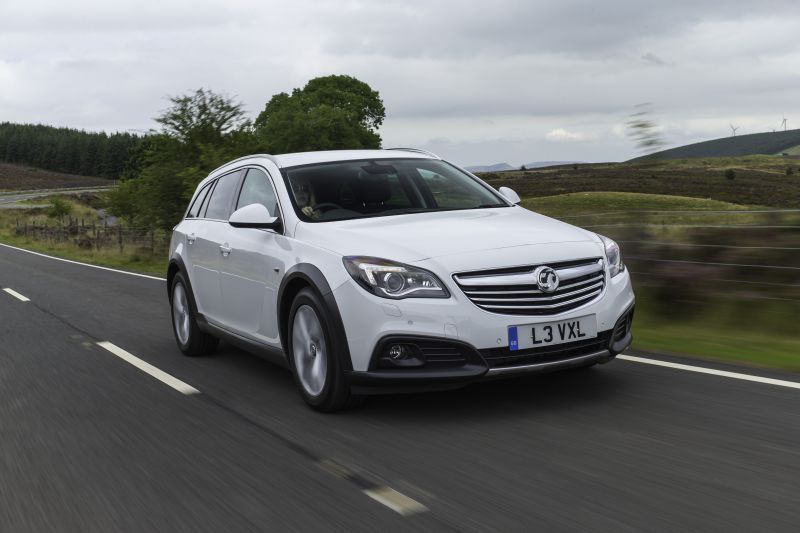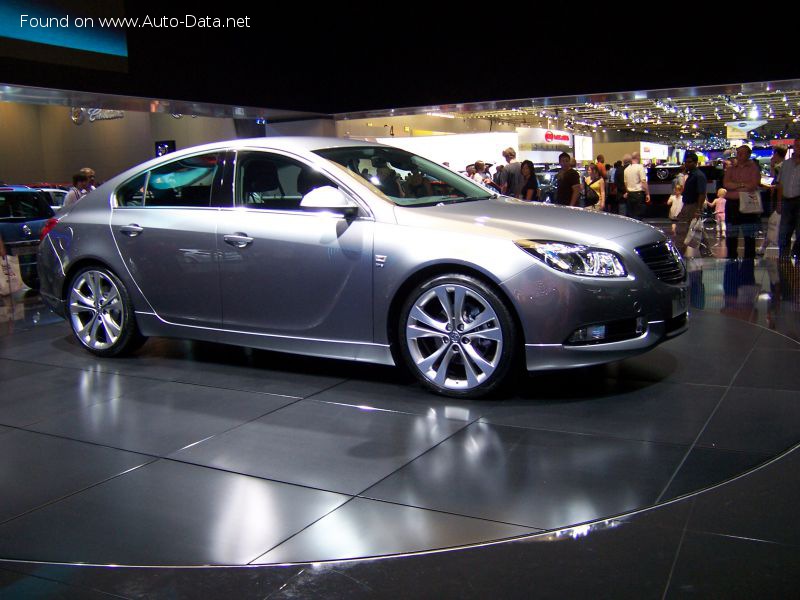
Vauxhall Insignia I Hatchback 2.8i Turbo ecoTEC (260 Hp) AWD Automatic: A European Performance Sedan
The Vauxhall Insignia I Hatchback 2.8i Turbo ecoTEC (260 Hp) AWD Automatic represents a significant chapter in the history of General Motors’ European operations.
Launched in 2008, the Insignia was designed to replace the long-standing Vectra nameplate, signaling a more upscale and design-focused direction for Vauxhall in the United Kingdom and its Opel counterpart across continental Europe.
This particular variant, available from 2008 to 2013, stood out as a performance flagship within the Insignia lineup, blending robust power with the practicality of a mid-size hatchback and the added security of all-wheel drive.
While the Insignia was never sold under the Vauxhall badge in the United States, its Opel twin formed the basis for the first-generation Buick Regal, albeit with different powertrain configurations.
The Insignia I Hatchback 2.8i Turbo ecoTEC was targeted at discerning European buyers seeking a blend of executive comfort, family practicality, and spirited driving dynamics, challenging established competitors in the highly competitive D-segment.
The Genesis of the Vauxhall Insignia I Hatchback
The first-generation Insignia was a pivotal model for Vauxhall/Opel, marking a departure from the conservative styling of its predecessor.
It introduced a new design language characterized by flowing lines, a coupe-like roofline, and a more assertive stance.
This design ethos earned the Insignia the prestigious European Car of the Year award in 2009, highlighting its impact on the automotive landscape.
The Hatchback variant offered a compelling combination of style and versatility, providing generous cargo space without compromising its sleek profile.
The 2.8i Turbo ecoTEC AWD Automatic model, with its potent V6 engine and sophisticated drivetrain, was positioned at the top of the range, offering a premium driving experience that rivaled offerings from more established premium brands.
Engine and Performance: Powering the Vauxhall Insignia I Hatchback 2.8i Turbo ecoTEC
At the heart of the Vauxhall Insignia I Hatchback 2.8i Turbo ecoTEC (260 Hp) AWD Automatic lies a formidable 2.8-liter V6 engine, identified by the A28NET engine code.
This transversely mounted V-engine, equipped with a turbocharger and intercooler, was engineered to deliver a compelling balance of power and refinement.
It produces a robust 260 horsepower at 5500 rpm, providing ample thrust for spirited acceleration and effortless highway cruising.
More impressively, the engine generates 258.15 lb.-ft. of torque across a broad rev range, from 1900 to 4500 rpm, ensuring strong pulling power from low speeds and excellent responsiveness throughout the powerband.
Power is channeled through a smooth-shifting 6-speed automatic transmission to an advanced all-wheel-drive (AWD) system.
This intelligent AWD setup significantly enhances traction and stability, particularly in adverse weather conditions or during dynamic driving, allowing the Insignia to effectively put its power down without wheelspin.
The performance figures are impressive for a vehicle of its class and era: the Insignia 2.8i Turbo ecoTEC can accelerate from 0 to 60 mph in a swift 6.4 seconds, and its top speed is electronically limited to 155.34 mph.
Despite its performance credentials, the “ecoTEC” designation signifies Vauxhall’s commitment to optimizing fuel efficiency and emissions within its engine family.
The multi-port manifold injection system and DOHC valvetrain contribute to efficient combustion, helping the vehicle meet Euro 5 emission standards.
However, with combined fuel consumption rated at 20.3 US mpg, it was clear that performance was prioritized, albeit with an eye towards contemporary environmental considerations.
Design and Features: Form Meets Function
The design of the Vauxhall Insignia I Hatchback was a key selling point, characterized by its “sculptural artistry” design language.
The five-door hatchback body offered a sleek, almost coupe-like profile that belied its practical nature.
With an overall length of 190.16 inches and a width of 73.07 inches, the Insignia commanded a significant road presence.
Its aerodynamic shape, evidenced by a drag coefficient (Cd) of 0.27, not only contributed to its visual appeal but also aided in reducing wind noise and improving fuel efficiency at higher speeds.
Inside, the Insignia provided comfortable seating for five occupants.
The cabin was designed with a focus on ergonomics and quality materials, offering a refined environment for both driver and passengers.
A notable feature of the hatchback body style was its impressive versatility: the trunk offered a minimum of 18.36 cubic feet of cargo space, which could expand significantly to 51.67 cubic feet with the rear seats folded down, making it highly practical for families or those needing to transport larger items.
Standard features for a vehicle of this caliber in its time would have included a comprehensive safety suite, with ABS (Anti-lock Braking System) explicitly mentioned, along with likely multiple airbags, electronic stability control, and traction control systems to complement the AWD drivetrain.
The suspension setup featured an independent McPherson strut system at the front and an independent multi-link suspension at the rear, providing a composed ride quality and agile handling.
Hydraulic power steering offered precise feedback, enhancing the driving experience.
Braking duties were handled by ventilated discs at the front and solid discs at the rear, ensuring confident stopping power.
Technical Specifications
| Category | Specification | US Equivalent (where applicable) |
|---|---|---|
| Brand | Vauxhall | |
| Model | Insignia | |
| Generation | Insignia I Hatchback | |
| Type (Engine) | 2.8i Turbo ecoTEC (260 Hp) AWD Automatic | |
| Start of production | 2008 year | |
| End of production | 2013 year | |
| Powertrain Architecture | Internal Combustion engine | |
| Body type | Hatchback | |
| Seats | 5 | |
| Doors | 5 | |
| Performance Specs | ||
| Fuel consumption (economy) – urban | 17.9 l/100 km | 13.1 US mpg |
| Fuel consumption (economy) – extra urban | 7.9 l/100 km | 29.8 US mpg |
| Fuel consumption (economy) – combined | 11.6 l/100 km | 20.3 US mpg |
| CO2 emissions | 272 g/km | |
| Fuel Type | Petrol (Gasoline) | |
| Acceleration 0 – 100 km/h | 6.7 sec | |
| Acceleration 0 – 62 mph | 6.7 sec | |
| Acceleration 0 – 60 mph (Calculated) | 6.4 sec | |
| Maximum speed | 250 km/h | 155.34 mph |
| Emission standard | Euro 5 | |
| Weight-to-power ratio | 6.8 kg/Hp | 14.99 lbs/Hp |
| Weight-to-torque ratio | 5.1 kg/Nm | 11.24 lbs/Nm |
| Engine Specs | ||
| Power | 260 Hp @ 5500 rpm | |
| Power per liter | 93.1 Hp/l | |
| Torque | 350 Nm @ 1900-4500 rpm | 258.15 lb.-ft. @ 1900-4500 rpm |
| Engine layout | Front, Transverse | |
| Engine Model/Code | A28NET | |
| Engine displacement | 2792 cm3 | 170.38 cu. in. |
| Number of cylinders | 6 | |
| Engine configuration | V-engine | |
| Number of valves per cylinder | 4 | |
| Fuel injection system | Multi-port manifold injection | |
| Engine aspiration | Turbocharger, Intercooler | |
| Valvetrain | DOHC | |
| Engine oil capacity | 6.3 l | 6.66 US qt |
| Coolant | 6.7 l | 7.08 US qt |
| Space, Volume and Weights | ||
| Kerb Weight | 1768 kg | 3897.77 lbs. |
| Max. weight | 2355 kg | 5191.89 lbs. |
| Max load | 587 kg | 1294.11 lbs. |
| Trunk (boot) space – minimum | 520 l | 18.36 cu. ft. |
| Trunk (boot) space – maximum | 1463 l | 51.67 cu. ft. |
| Fuel tank capacity | 70 l | 18.49 US gal |
| Permitted trailer load with brakes (12%) | 1800 kg | 3968.32 lbs. |
| Permitted trailer load without brakes | 750 kg | 1653.47 lbs. |
| Dimensions | ||
| Length | 4830 mm | 190.16 in. |
| Width | 1856 mm | 73.07 in. |
| Width including mirrors | 2084 mm | 82.05 in. |
| Height | 1498 mm | 58.98 in. |
| Wheelbase | 2737 mm | 107.76 in. |
| Front track | 1585 mm | 62.4 in. |
| Rear (Back) track | 1585 mm | 62.4 in. |
| Front overhang | 1015 mm | 39.96 in. |
| Rear overhang | 1078 mm | 42.44 in. |
| Ride height (ground clearance) | 160 mm | 6.3 in. |
| Drag coefficient (Cd) | 0.27 | |
| Minimum turning circle (turning diameter) | 10.89 m | 35.73 ft. |
| Drivetrain, brakes and suspension specs | ||
| Drive wheel | All wheel drive (4×4) | |
| Number of gears and type of gearbox | 6 gears, automatic transmission | |
| Front suspension | Independent, type McPherson with coil spring and anti-roll bar | |
| Rear suspension | Independent multi-link suspension | |
| Front brakes | Ventilated discs | |
| Rear brakes | Disc | |
| Assisting systems | ABS (Anti-lock braking system) | |
| Power steering | Hydraulic Steering | |
| Tires size | 215/60 R16 | |
| Wheel rims size | 16 | |
Legacy and Market Impact in Europe
The Vauxhall Insignia I Hatchback, particularly in its potent 2.8i Turbo ecoTEC (260 Hp) AWD Automatic guise, played a crucial role in Vauxhall’s strategy to redefine its image in the European market.
Having replaced the long-serving Vectra, the Insignia was tasked with elevating the brand’s perception, moving it beyond a purely utilitarian offering into a more desirable and aspirational space.
It succeeded in large part due to its striking design, improved interior quality, and sophisticated driving dynamics, especially in higher-trim models like the 2.8T AWD.
In its primary market, the Insignia competed fiercely with established rivals such as the Ford Mondeo, Volkswagen Passat, and Skoda Superb.
The 2.8T AWD variant, with its V6 power and all-wheel drive, also found itself cross-shopping with entry-level premium sedans and wagons, offering a compelling blend of performance and practicality at a more accessible price point.
Its success was underscored by the European Car of the Year award, which provided significant credibility and boosted sales.
While the Vauxhall Insignia was a European market exclusive, its Opel twin, the Opel Insignia, formed the foundation for the first-generation Buick Regal in the United States, launched in 2011.
However, the US-market Regal typically featured 2.0-liter turbocharged four-cylinder engines and front-wheel drive, with the powerful 2.8-liter V6 turbo and AWD combination remaining unique to the European Insignia and its OPC/VXR performance variants.
This distinction highlights the varied market preferences and regulatory environments between the continents.
The Insignia’s legacy is one of successful transformation for Vauxhall/Opel, establishing a new benchmark for design and engineering within the mainstream D-segment and demonstrating that a non-premium brand could offer genuinely engaging and well-appointed vehicles.
It paved the way for subsequent generations of the Insignia and influenced the design direction of other models within the GM Europe portfolio, leaving a lasting mark on the automotive landscape.