
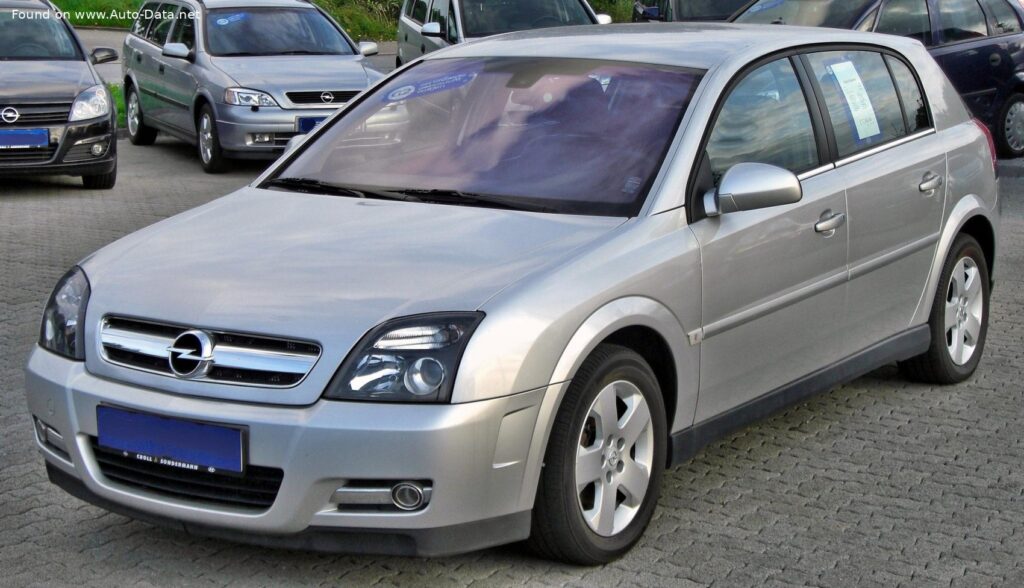
The Opel Signum 2.0i 16V Turbo ECOTEC (175 Hp): A Niche European Executive Wagon
The Opel Signum 2.0i 16V Turbo ECOTEC (175 Hp) represents a distinctive variant within the Opel Signum lineup, a large family car produced by the German automaker Opel from 2003 to 2008. Positioned as an unconventional offering in the European executive segment, the Signum aimed to blend the practicality of an estate car with the spaciousness of a luxury sedan and the versatility of a hatchback. This particular model, featuring a robust 175 horsepower turbocharged engine, was available from the Signum’s launch in May 2003 until a model refresh in 2005, serving as a compelling option for buyers seeking a balance of performance, refinement, and innovative interior flexibility.
Opel, a subsidiary of General Motors at the time, developed the Signum specifically for the European market, where it competed against traditional D-segment and E-segment vehicles. Unlike many of its contemporaries, the Signum was not directly sold in the United States, making it a unique example of European automotive engineering and market strategy. Its design and concept were a bold departure from conventional segment norms, reflecting Opel’s ambition to create a vehicle that prioritized passenger comfort and adaptable cargo solutions.
Development and Concept of the Opel Signum
The Opel Signum emerged from a philosophy of maximizing interior space and passenger comfort, particularly for rear occupants. It was built upon a stretched version of the General Motors Epsilon platform, a versatile architecture that also underpinned the Opel Vectra C. Crucially, the Signum adopted the longer 111.4-inch (2830 mm) wheelbase of the Vectra C Caravan (estate wagon), rather than the shorter wheelbase of the Vectra sedan and hatchback. This extended platform was fundamental to the Signum’s core identity, enabling its unique “Flex-Space” interior concept.
Marketed as a flexible and versatile vehicle, the Signum targeted discerning customers who desired greater interior room and adaptability than a conventional sedan could offer, yet did not require the full cargo capacity or traditional styling of a dedicated estate wagon. The 2.0 Turbo model was integral to this vision, providing the smooth, effortless performance expected of a premium long-distance cruiser, ensuring that its innovative interior was matched by capable road manners.
Engine and Performance
Powering the Opel Signum 2.0i 16V Turbo ECOTEC is the Z20NET engine, a distinguished member of Opel’s ECOTEC (Emissions Control Optimisation TEChnology) family. This engine is a 2.0-liter (1998 cubic centimeters) inline-four cylinder unit, featuring a dual overhead camshaft (DOHC) valvetrain with 16 valves. Constructed primarily from aluminum, this powerplant was a collaborative effort with Saab (where it was known as the B207), earning a reputation for its smooth power delivery and robust construction.
The engine’s impressive performance stems from its integrated turbocharger and intercooler. This forced induction system enables the Z20NET to produce a maximum power output of 175 horsepower (129 kilowatts) at 5500 rpm. Equally significant is its torque characteristic: a substantial 195 lb.-ft. (265 Nm) is available from a remarkably low 2500 rpm. This broad torque band ensures strong mid-range acceleration and flexible in-gear performance, making the Signum feel responsive and powerful without needing to rev the engine to high speeds. This characteristic greatly contributed to its refined, executive-class driving demeanor, ideal for sustained highway cruising.
This potent powertrain was coupled with a six-speed manual transmission as standard, directing power to the front wheels. The synergy between the turbocharged engine and the well-spaced six-speed gearbox allowed the Signum 2.0 Turbo to accelerate from 0 to 62 mph (0-100 km/h) in 9.4 seconds and achieve a top speed of 137 mph (220 km/h). These figures were competitive for a large, non-performance-oriented family car of its era, enabling confident overtaking maneuvers and relaxed high-speed motorway travel. In terms of fuel efficiency, the vehicle was rated with a combined consumption of 9.2 liters per 100 kilometers, a reasonable trade-off given the vehicle’s performance capabilities and its substantial curb weight of 3439 pounds (1560 kg).
Chassis, Handling, and Drivetrain
The Signum’s chassis was meticulously engineered to prioritize stability and ride comfort. The extended wheelbase significantly enhanced its straight-line stability, making it an excellent platform for long-distance journeys. The suspension system featured MacPherson struts at the front, a common and effective setup, complemented by an advanced multi-link independent rear suspension. This configuration was specifically tuned to provide a compliant ride that effectively absorbed road imperfections, while simultaneously offering secure and predictable handling characteristics. While not designed as a sports car, the Signum 2.0 Turbo could be driven with confidence through corners, aided by its hydraulic power steering system which delivered commendable feedback to the driver.
The drivetrain employed a conventional front-wheel-drive layout, a standard for Opel vehicles of this segment. Braking performance was handled by ventilated disc brakes at the front axle and solid disc brakes at the rear, with an Anti-lock Braking System (ABS) fitted as standard equipment for enhanced safety. The car was typically equipped with 215/55 R16 tires, a choice that offered a good balance between road grip and overall ride comfort, further contributing to its executive touring credentials.
Design & Features: The Innovative Interior of the Opel Signum
The interior design and its innovative features were arguably the Opel Signum’s most defining characteristics. The “Flex-Space” seating system in the rear was its primary unique selling proposition, setting it apart from virtually all competitors. Instead of a conventional three-person bench seat, the Signum featured two full-sized, individually adjustable outer rear seats. These seats could slide forward and backward by up to 5.1 inches (130 mm) and recline their backrests by up to 30 degrees. This modularity created exceptional legroom, offering a level of rear passenger comfort often found only in much larger, luxury limousines.
The narrow central section between the two main rear seats was not a full third seat but could be folded down to form a large armrest equipped with cupholders, effectively transforming the Signum into a supremely spacious and comfortable four-seater. Furthermore, this central section served as an attachment point for the optional “Travel Assistant,” a multi-function console that offered additional storage compartments, auxiliary power outlets, and even a small refrigerator, catering to the needs of executive travelers and families alike.
The vehicle’s practicality extended to its luggage capacity. The trunk offered a respectable minimum of 12.9 cubic feet (365 liters) of space. By sliding the rear seats forward, this volume could be expanded without compromising the ability to carry rear passengers. With the rear seats folded completely flat, the Signum provided a cavernous 49.8 cubic feet (1410 liters) of cargo volume, underscoring its impressive versatility. The overall interior build quality and choice of materials were notably a step above the contemporary Opel Vectra, aligning with the Signum’s more premium market positioning and executive aspirations.
Technical Specifications
| Feature | Specification |
|---|---|
| Model Name | Opel Signum 2.0i 16V Turbo ECOTEC (175 Hp) |
| Production Years | May 2003 – 2005 |
| Engine Type | Z20NET, Gasoline, Inline-4, DOHC 16V, Turbocharged, Intercooled |
| Displacement | 2.0 Liters (1998 cm³) |
| Max Power | 175 hp (129 kW) at 5500 rpm |
| Max Torque | 195 lb.-ft. (265 Nm) at 2500 rpm |
| Transmission | 6-speed Manual |
| Drivetrain | Front-Wheel Drive (FWD) |
| 0-62 mph (0-100 km/h) | 9.4 seconds |
| Top Speed | 137 mph (220 km/h) |
| Fuel Consumption (Combined) | 9.2 l/100 km |
| Curb Weight | 3439 lbs (1560 kg) |
| Wheelbase | 111.4 inches (2830 mm) |
| Front Suspension | MacPherson Struts |
| Rear Suspension | Multi-link Independent |
| Brakes (Front) | Ventilated Disc |
| Brakes (Rear) | Solid Disc |
| Tires | 215/55 R16 |
| Minimum Trunk Volume | 12.9 cu ft (365 Liters) |
| Maximum Trunk Volume | 49.8 cu ft (1410 Liters) |
Legacy and Market Impact
The Opel Signum, including its 2.0 Turbo variant, occupied a rather unique and ultimately challenging niche within the European automotive market. It was an unconventional offering that, despite its innovative features and thoughtful engineering, struggled to cultivate a broad and dedicated customer base. While critics and owners often lauded its exceptionally innovative interior, outstanding comfort, and strong performance, its distinctive design language was polarizing. Furthermore, its conceptual blend of hatchback, estate, and executive sedan did not fully resonate with European buyers who largely preferred more traditional sedan or estate body styles, or were beginning to flock to the burgeoning SUV segment.
Consequently, sales figures for the Signum were consistently lower than Opel had initially projected, leading to its discontinuation in 2008 without a direct successor. Despite its commercial challenges and relatively short production run, the Opel Signum 2.0i 16V Turbo ECOTEC remains a noteworthy vehicle in Opel’s history. It represented a bold and ambitious attempt by the German automaker to innovate within the competitive large family car and executive segments.
The combination of the powerful, refined, and reliable Z20NET engine with its exceptionally spacious and flexible interior made it a superb and, arguably, underrated long-distance touring car. Its focus on rear passenger comfort and versatile cargo solutions, particularly with the Flex-Space seating and Travel Assistant, was genuinely ahead of its time. Many of the passenger-focused practicalities and adaptable interior concepts pioneered by the Signum are now more commonly found and widely accepted in modern crossovers, MPVs, and even premium wagons. The Opel Signum stands as an intriguing example of a vehicle that, despite its commercial struggles, showcased forward-thinking design and engineering, influencing subsequent automotive trends in passenger comfort and interior flexibility.
