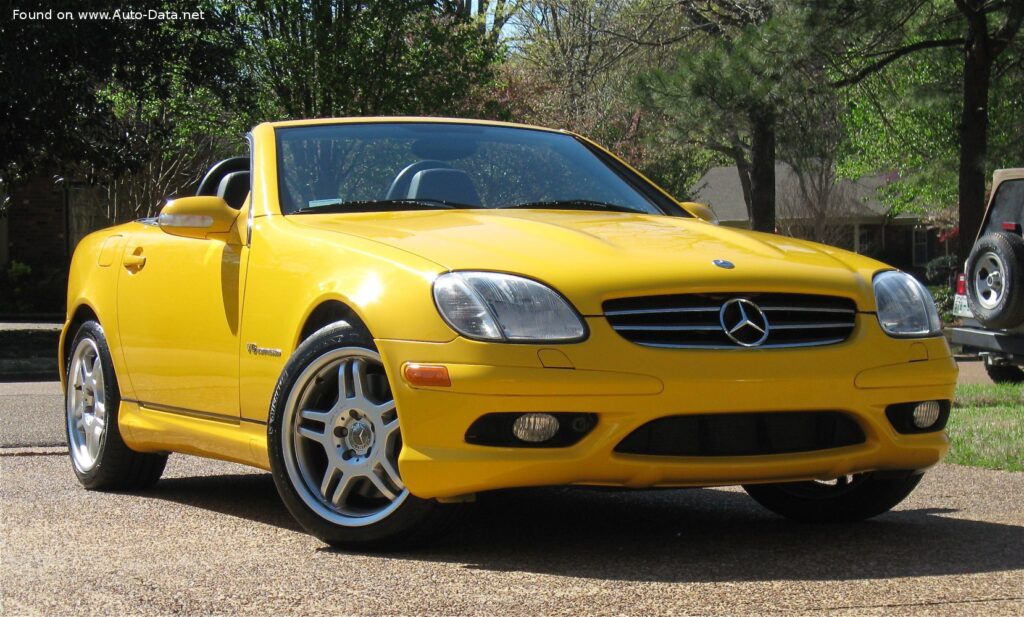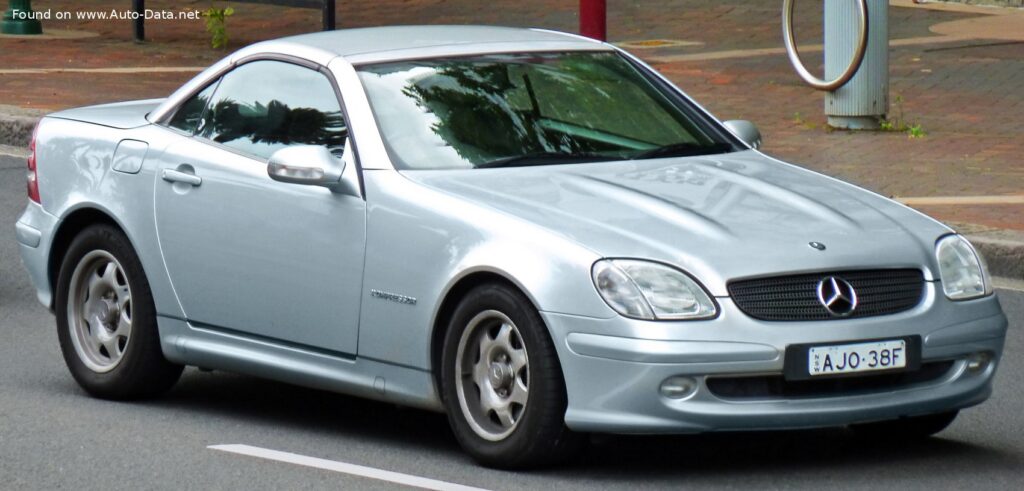
Introduction to the Mercedes-Benz SLK (R170) SLK 200 Kompressor
The Mercedes-Benz SLK, particularly the first-generation R170 series, marked a significant departure for the Stuttgart-based luxury automaker, introducing a compact, sporty roadster with an innovative retractable hardtop roof. Launched in August 1996, the R170 generation was a bold move into a burgeoning market segment, blending the open-air exhilaration of a convertible with the security and refinement of a coupe. Among its various powertrains, the Mercedes-Benz SLK (R170) SLK 200 Kompressor stood out as a popular and critically acclaimed variant, especially in its primary European and Asian markets. While not officially offered in the United States, this specific model showcased Mercedes-Benz’s engineering prowess, delivering a compelling blend of performance, efficiency, and sophisticated design in a package that redefined the premium compact roadster category. It was produced until February 2000, setting a new benchmark for its class and influencing subsequent generations of convertibles.
The Engineering Behind the Mercedes-Benz SLK (R170)
Engine and Performance
At the heart of the Mercedes-Benz SLK (R170) SLK 200 Kompressor was a meticulously engineered 2.0-liter (1998 cm3 or 121.93 cu. in.) inline-four engine, designated M 111.943. This powertrain was a testament to Mercedes-Benz’s commitment to forced induction, featuring a supercharger coupled with an intercooler to significantly boost performance without resorting to a larger displacement. This setup allowed the engine to produce an impressive 192 horsepower at 5300 rpm, translating to a robust 96.1 horsepower per liter. More critically for real-world driving, the supercharger delivered a substantial 199.14 lb.-ft. of torque across a broad and usable range, from 2500 to 4800 rpm. This flat torque curve ensured lively acceleration and strong mid-range pull, characteristic of Mercedes-Benz’s refined driving experience.
Power was channeled to the rear wheels via a precise 5-speed manual transmission, offering an engaging driving experience for enthusiasts. The rear-wheel-drive architecture, a hallmark of Mercedes-Benz sports cars, contributed to the SLK’s balanced handling characteristics. Performance figures for the SLK 200 Kompressor were competitive for its era and segment: it could sprint from 0 to 60 mph in a brisk 7.3 seconds and achieve a top speed of 143.54 mph (231 km/h). Despite its spirited performance, the engine also demonstrated reasonable fuel efficiency for a supercharged unit, with a combined fuel economy of 25.6 US mpg (9.2 l/100 km) on the NEDC cycle, making it an attractive option for daily usability in markets where fuel costs and displacement taxes were significant considerations. The engine’s DOHC valvetrain, multi-port manifold injection, and robust 8.5:1 compression ratio further underscored its advanced design for the late 1990s.
Design and Features of the Mercedes-Benz SLK (R170)
The design of the Mercedes-Benz SLK (R170) was both contemporary and timeless, drawing inspiration from Mercedes-Benz’s larger SL-Class models while maintaining its own distinct identity. Its compact dimensions – a length of 157.28 inches, width of 67.52 inches, and height of 50.55 inches – gave it a nimble and agile appearance. The R170’s most revolutionary feature was undoubtedly its electro-hydraulic “Vario-roof,” a retractable hardtop that could transform the car from a secure, quiet coupe into an open-air roadster in just 25 seconds. This innovation offered the best of both worlds, providing enhanced security and weather protection compared to traditional soft-top convertibles, while retaining the stylish lines of a fixed-roof vehicle.
The two-door, two-seat roadster body type emphasized a driver-focused experience. Inside, the cabin was ergonomically designed, featuring high-quality materials and a logical layout typical of Mercedes-Benz. Standard features for the era included power windows, air conditioning, and a premium audio system, all contributing to a comfortable and refined driving environment. Safety was also a priority, with the SLK (R170) incorporating features like an Anti-lock Braking System (ABS), front airbags, and a rigid chassis structure designed to protect occupants in the event of a collision. The car’s drag coefficient (Cd) of 0.33 was commendable, contributing to both its aerodynamic efficiency and reduced wind noise. The suspension system, featuring a double wishbone setup with coil springs and a transverse stabilizer at the front, and an independent multi-link suspension with coil springs at the rear, provided a comfortable ride while maintaining sporty handling characteristics. Stopping power was supplied by ventilated discs at the front and disc brakes at the rear, complemented by ABS for controlled deceleration.
Technical Specifications
| Category | Specification |
|---|---|
| Brand | Mercedes-Benz |
| Model | SLK |
| Generation | SLK (R170) |
| Type (Engine) | SLK 200 Kompressor (192 Hp) |
| Production Start | August, 1996 |
| Production End | February, 2000 |
| Powertrain Architecture | Internal Combustion Engine |
| Body Type | Roadster |
| Seats | 2 |
| Doors | 2 |
| Performance Specs | |
| Fuel Consumption (Urban, NEDC) | 13.2 l/100 km (17.8 US mpg) |
| Fuel Consumption (Extra Urban, NEDC) | 6.9 l/100 km (34.1 US mpg) |
| Fuel Consumption (Combined, NEDC) | 9.2 l/100 km (25.6 US mpg) |
| Fuel Type | Petrol (Gasoline) |
| Acceleration 0-60 mph | 7.3 seconds |
| Acceleration 0-100 km/h | 7.7 seconds |
| Maximum Speed | 143.54 mph (231 km/h) |
| Weight-to-Power Ratio | 6.5 kg/Hp (153.6 Hp/tonne) |
| Weight-to-Torque Ratio | 4.6 kg/Nm (216 Nm/tonne) |
| Engine Specs | |
| Power | 192 Hp @ 5300 rpm |
| Power per Liter | 96.1 Hp/l |
| Torque | 199.14 lb.-ft. @ 2500-4800 rpm (270 Nm) |
| Engine Layout | Front, Longitudinal |
| Engine Model/Code | M 111.943 |
| Engine Displacement | 1998 cm3 (121.93 cu. in.) |
| Number of Cylinders | 4 |
| Engine Configuration | Inline |
| Cylinder Bore | 3.54 in. (89.9 mm) |
| Piston Stroke | 3.1 in. (78.7 mm) |
| Compression Ratio | 8.5:1 |
| Number of Valves per Cylinder | 4 |
| Fuel Injection System | Multi-port manifold injection |
| Engine Aspiration | Supercharger, Intercooler |
| Valvetrain | DOHC |
| Engine Oil Capacity | 5.81 US qt (5.5 l) |
| Engine Oil Specification | Not specified |
| Coolant Capacity | 8.45 US qt (8 l) |
| Space, Volume and Weights | |
| Kerb Weight | 2755.78 lbs. (1250 kg) |
| Max. Weight | 3494.33 lbs. (1585 kg) |
| Max Load | 738.55 lbs. (335 kg) |
| Trunk (boot) Space – Minimum | 5.12 cu. ft. (145 l) |
| Trunk (boot) Space – Maximum | 12.29 cu. ft. (348 l) |
| Fuel Tank Capacity | 14 US gal (53 l) |
| Dimensions | |
| Length | 157.28 in. (3995 mm) |
| Width | 67.52 in. (1715 mm) |
| Height | 50.55 in. (1284 mm) |
| Wheelbase | 94.49 in. (2400 mm) |
| Front Track | 58.58 in. (1488 mm) |
| Rear (Back) Track | 58.46 in. (1485 mm) |
| Drag Coefficient (Cd) | 0.33 |
| Drivetrain, Brakes and Suspension Specs | |
| Drivetrain Architecture | Internal combustion engine drives the rear wheels. |
| Drive Wheel | Rear wheel drive |
| Number of Gears and Type of Gearbox | 5 gears, manual transmission |
| Front Suspension | Coil spring, Double wishbone, Transverse stabilizer |
| Rear Suspension | Independent multi-link suspension, Coil spring |
| Front Brakes | Ventilated discs |
| Rear Brakes | Disc |
| Assisting Systems | ABS (Anti-lock braking system) |
| Steering Type | Cone worm with recirculation balls |
| Power Steering | Hydraulic Steering |
| Tires Size (Front) | 205/55 R 16 91 V |
| Tires Size (Rear) | 225/50 R 16 91 V |
| Wheel Rims Size (Front) | 7 J x 16 H 2 |
| Wheel Rims Size (Rear) | 8 J x 16 H 2 |
Legacy and Market Impact
The Mercedes-Benz SLK (R170) made a profound impact on the automotive landscape, particularly in Europe, where its combination of luxury, sportiness, and innovative technology resonated strongly with consumers. The SLK 200 Kompressor, in particular, carved out a significant niche as an accessible yet premium roadster, offering a compelling blend of performance and everyday usability. Its relatively modest 2.0-liter displacement, boosted by supercharging, provided excellent power delivery while keeping running costs and tax implications lower in many European markets compared to larger-engined variants.
The R170’s primary competitors in its market segment included the BMW Z3, the Audi TT Roadster, and the Porsche Boxster. While the Z3 offered a more traditional roadster experience, and the Boxster focused on pure sports car dynamics, the SLK distinguished itself with its unique Vario-roof. This feature alone was a game-changer, effectively democratizing the retractable hardtop and making it a desirable option for a broader audience who appreciated the added security, refinement, and year-round practicality over a fabric roof. This innovation forced other manufacturers to rethink their convertible offerings and ultimately led to a widespread adoption of retractable hardtops across various segments.
The Mercedes-Benz SLK (R170) SLK 200 Kompressor, though not sold in the US, played a crucial role in establishing the SLK as a global success. It proved that Mercedes-Benz could deliver a fun-to-drive, compact sports car without compromising on its core values of luxury, safety, and engineering excellence. Its legacy is evident in the subsequent generations of SLK (and later SLC) models, which continued to refine the retractable hardtop concept. Today, the R170 is regarded as a modern classic, appreciated for its distinctive styling, robust build quality, and the pioneering spirit of its Vario-roof. It remains a testament to Mercedes-Benz’s ability to innovate and capture new market segments, providing a spirited and stylish driving experience that continues to charm enthusiasts worldwide.