The Rover 75 Tourer 2.5 V6 (177 Hp) Automatic: A British Executive Wagon
The Rover 75 Tourer 2.5 V6 (177 Hp) Automatic represents a significant chapter in the history of the British automotive industry, specifically for the Rover Group. Launched in 2001, the Tourer, or station wagon, variant of the critically acclaimed Rover 75 sedan extended the model’s appeal to a more practical, family-oriented, yet still discerning market segment. Positioned as a premium executive car, the Rover 75 Tourer aimed to blend traditional British luxury and refinement with contemporary engineering and functionality. While never officially sold in the United States, the Rover 75 Tourer carved out its niche in its primary European markets, competing against established German and Swedish rivals by offering a distinctive character, a comfortable ride, and a touch of nostalgic elegance.
The 75 generation was the culmination of Rover’s efforts to produce a high-quality, aspirational vehicle that could stand shoulder-to-shoulder with European luxury brands. Its development under BMW ownership brought a level of engineering rigor and quality control previously unseen at Rover, resulting in a car lauded for its build quality, quiet cabin, and sophisticated chassis. The Tourer variant, produced from 2001 to 2004, maintained these core attributes while adding the versatility inherent in a station wagon body style, making it a compelling, albeit ultimately ill-fated, offering in the competitive European executive segment.
Engine and Performance of the Rover 75 Tourer 2.5 V6 (177 Hp) Automatic
At the heart of this particular variant of the Rover 75 Tourer was Rover’s own KV6 engine, a 2.5-liter (2497 cm3 or 152.38 cu. in.) V6 unit. This naturally aspirated engine was designed to deliver smooth, refined power, aligning perfectly with the car’s executive aspirations. With its multi-port manifold injection system and double overhead camshafts (DOHC) architecture, the engine produced a respectable 177 horsepower at 6500 rpm. Torque output stood at 240 Nm (177.01 lb.-ft.) at 4000 rpm, providing ample pulling power for a vehicle of its size and class.
Power was delivered to the front wheels via a 5-speed automatic transmission, emphasizing comfort and ease of driving over outright sportiness. This powertrain combination allowed the Rover 75 Tourer 2.5 V6 (177 Hp) Automatic to accelerate from 0 to 60 mph in a calculated 9.4 seconds (or 0-100 km/h in 9.9 seconds), with a top speed of 127.38 mph (205 km/h). While not blisteringly fast, these figures were competitive for a premium station wagon of its era, especially one prioritizing refinement. The engine’s transverse layout and front-wheel-drive architecture were typical for the segment, optimizing interior space and packaging efficiency.
Fuel economy, while not a primary selling point for a V6 executive car from the early 2000s, was rated at a combined 10.6 liters per 100 km, translating to approximately 22.2 US mpg. Urban consumption stood at 15.8 l/100 km (14.9 US mpg), while extra-urban driving could achieve 7.6 l/100 km (30.9 US mpg). CO2 emissions were rated at 254 g/km, reflecting the technology and environmental standards of its production period. The engine’s kerb weight-to-power ratio was 8.6 kg/Hp (116.1 Hp/tonne), indicating a balanced performance profile for its class.
Design and Features
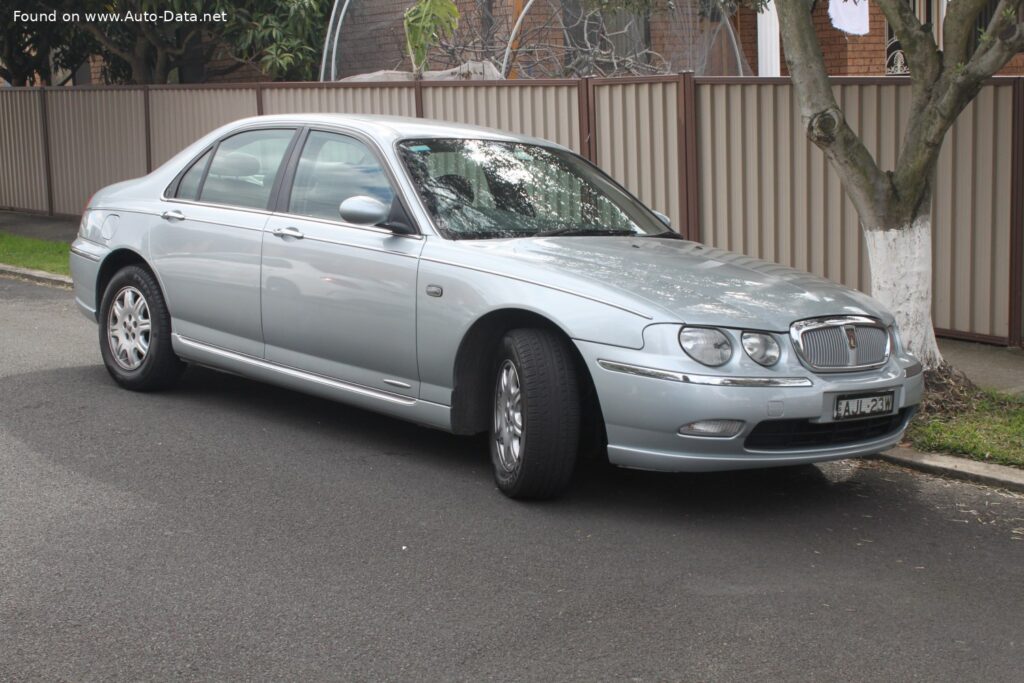
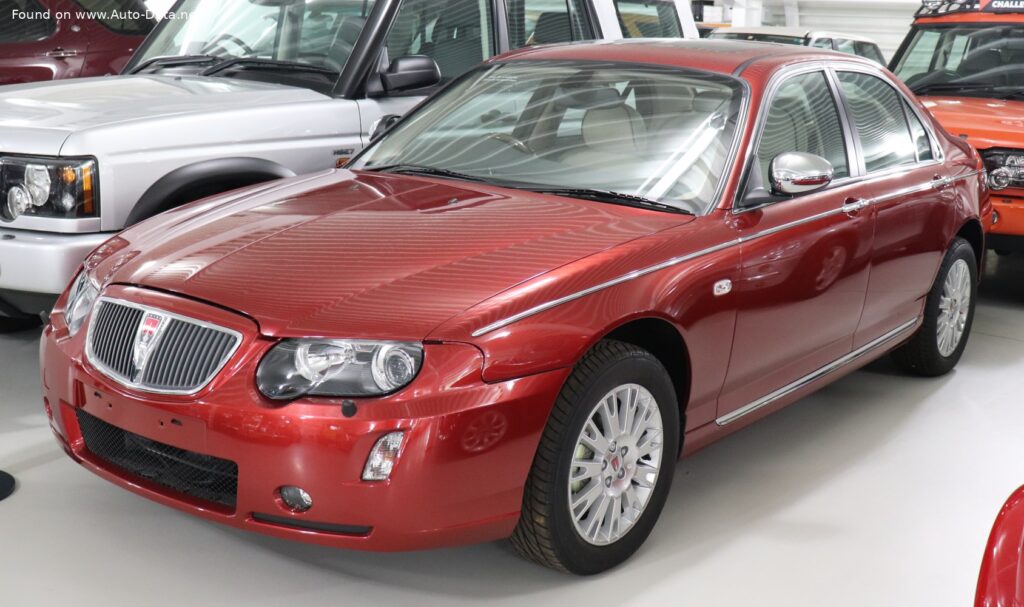
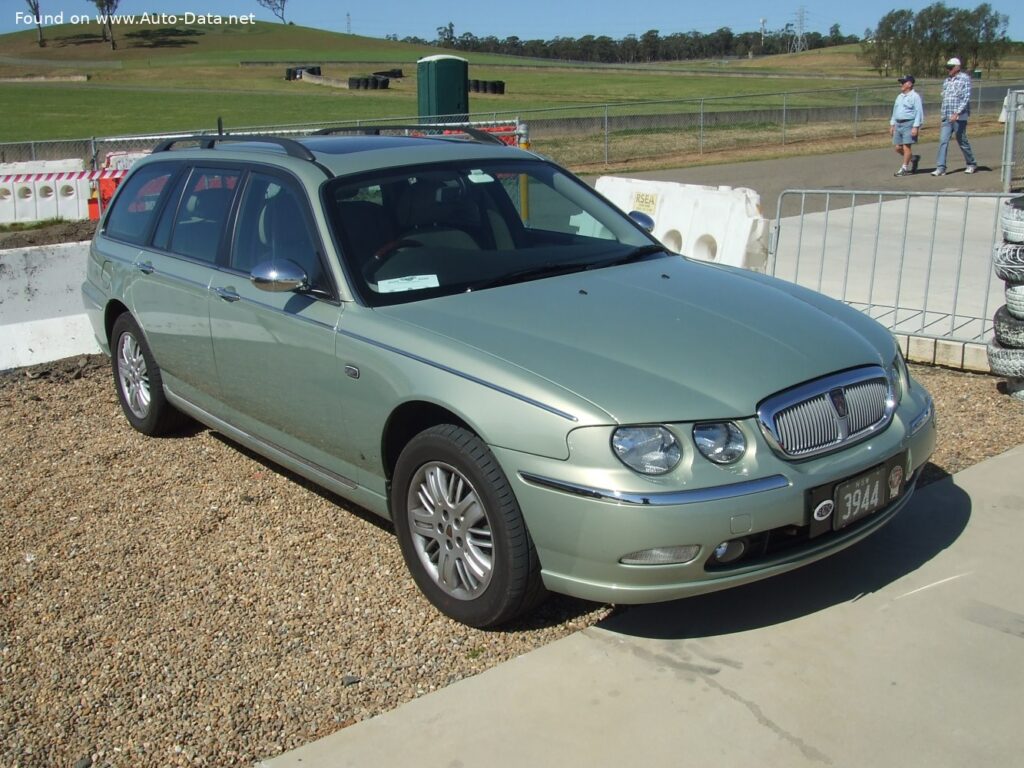
The Rover 75 Tourer’s design was a deliberate step away from the more angular, modern aesthetics prevalent at the time, opting instead for a distinctly retro-classic look. Its styling evoked the elegance of Rovers from the 1950s and 60s, featuring prominent chrome accents, a sculpted hood, and distinctive twin headlamps. The station wagon (estate) body type seamlessly integrated with this design language, maintaining the sedan’s graceful lines while extending the roofline to accommodate a more capacious cargo area. At 188.66 inches (4792 mm) long, 70 inches (1778 mm) wide, and 56.06 inches (1424 mm) high, with a wheelbase of 108.11 inches (2746 mm), the Tourer commanded a respectable road presence.
Inside, the Rover 75 Tourer offered a cabin designed for comfort and luxury. High-quality materials, often including wood veneers and chrome accents, contributed to an opulent atmosphere. The five-seat configuration provided ample space for occupants, with particular attention paid to ride comfort, isolating passengers from road imperfections. The trunk (boot) space was practical, offering a minimum of 14.13 cu. ft. (400 liters) with the rear seats up, expanding significantly to 43.15 cu. ft. (1222 liters) when the rear seats were folded down, making it highly versatile for luggage or larger items. This blend of executive comfort and practical utility was a key selling point in its market.
Safety features for the era included standard ABS (Anti-lock Braking System), ventilated disc brakes at the front, and disc brakes at the rear, ensuring competent stopping power. The suspension system, featuring wishbones at the front and coil springs at the rear, was tuned for a smooth and compliant ride, further enhancing the car’s luxurious character. Power steering, specifically a hydraulic rack and pinion system, provided a traditional, communicative feel to the driver, a characteristic often appreciated by enthusiasts. The car rode on 205/65 R15 tires, mounted on 15-inch wheels, a setup designed for comfort and quiet operation.
Technical Specifications
| Category | Specification | US Equivalents / Notes |
|---|---|---|
| General Information | ||
| Brand | Rover | |
| Model | 75 Tourer | |
| Generation | 75 Tourer | |
| Type (Engine) | 2.5 V6 (177 Hp) Automatic | |
| Start of production | 2001 year | |
| End of production | 2004 year | |
| Powertrain Architecture | Internal Combustion engine | |
| Body type | Station wagon (estate) | |
| Seats | 5 | |
| Doors | 5 | |
| Performance Specs | ||
| Fuel consumption (economy) – urban | 15.8 l/100 km | 14.9 US mpg |
| Fuel consumption (economy) – extra urban | 7.6 l/100 km | 30.9 US mpg |
| Fuel consumption (economy) – combined | 10.6 l/100 km | 22.2 US mpg |
| CO2 emissions | 254 g/km | |
| Fuel Type | Petrol (Gasoline) | Gasoline |
| Acceleration 0 – 100 km/h | 9.9 sec | |
| Acceleration 0 – 62 mph | 9.9 sec | |
| Acceleration 0 – 60 mph (Calculated) | 9.4 sec | |
| Maximum speed | 205 km/h | 127.38 mph |
| Weight-to-power ratio | 8.6 kg/Hp | 116.1 Hp/tonne |
| Weight-to-torque ratio | 6.4 kg/Nm | 157.4 Nm/tonne |
| Engine Specs | ||
| Power | 177 Hp @ 6500 rpm | |
| Power per liter | 70.9 Hp/l | |
| Torque | 240 Nm @ 4000 rpm | 177.01 lb.-ft. @ 4000 rpm |
| Engine layout | Front, Transverse | |
| Engine Model/Code | KV6 / 25K4F | |
| Engine displacement | 2497 cm3 | 2.5 Liters / 152.38 cu. in. |
| Number of cylinders | 6 | V-engine configuration |
| Cylinder Bore | 80 mm | 3.15 in. |
| Piston Stroke | 82.8 mm | 3.26 in. |
| Compression ratio | 10.5:1 | |
| Number of valves per cylinder | 4 | |
| Fuel injection system | Multi-port manifold injection | |
| Engine aspiration | Naturally aspirated engine | |
| Valvetrain | DOHC | Double Overhead Camshaft |
| Engine oil capacity | 5.2 l | 5.49 US qt |
| Coolant capacity | 7.5 l | 7.93 US qt |
| Space, Volume and Weights | ||
| Kerb Weight | 1525 kg | 3362.05 lbs. |
| Max. weight (Gross Vehicle Weight) | 2050 kg | 4519.48 lbs. |
| Max load | 525 kg | 1157.43 lbs. |
| Trunk (boot) space – minimum | 400 l | 14.13 cu. ft. |
| Trunk (boot) space – maximum | 1222 l | 43.15 cu. ft. |
| Fuel tank capacity | 65 l | 17.17 US gal |
| Dimensions | ||
| Length | 4792 mm | 188.66 in. |
| Width | 1778 mm | 70 in. |
| Height | 1424 mm | 56.06 in. |
| Wheelbase | 2746 mm | 108.11 in. |
| Front track | 1505 mm | 59.25 in. |
| Rear (Back) track | 1505 mm | 59.25 in. |
| Drivetrain, Brakes and Suspension Specs | ||
| Drivetrain Architecture | Internal combustion engine (ICE) drives the front wheels. | Front-wheel drive (FWD) |
| Drive wheel | Front wheel drive | |
| Number of gears and type of gearbox | 5 gears, automatic transmission | |
| Front suspension | Wishbone | |
| Rear suspension | Coil spring | |
| Front brakes | Ventilated discs | |
| Rear brakes | Disc | |
| Assisting systems | ABS (Anti-lock braking system) | |
| Steering type | Steering rack and pinion | |
| Power steering | Hydraulic Steering | |
| Tires size | 205/65 R15 | |
| Wheel rims size | 15 inches | |
Legacy and Market Impact
The Rover 75 Tourer arrived at a tumultuous period for the Rover brand, following its acquisition by BMW in 1994 and subsequent sale to the Phoenix Consortium in 2000. Despite the corporate instability, the 75 series, including the Tourer, was widely praised by the automotive press for its refined driving dynamics, comfortable interior, and distinctive styling. It was seen as a genuine attempt to recapture Rover’s heritage as a producer of sophisticated, quality automobiles.
In the European market, the Rover 75 Tourer 2.5 V6 (177 Hp) Automatic faced stiff competition from well-established premium station wagons such as the BMW 3 Series Touring, Audi A4 Avant, Mercedes-Benz C-Class Estate, Volvo V70, and Saab 9-5 SportCombi. While it may not have matched the outright dynamic prowess of a BMW or the perceived bulletproof reliability of an Audi, the Rover 75 offered a unique proposition: a characterful, comfortable, and distinctly British alternative. Its ride quality was often highlighted as superior to many competitors, prioritizing occupant comfort over aggressive handling, a trait appreciated by its target demographic.
The car developed a reputation for its quiet cabin, robust build quality (especially compared to earlier Rover models), and surprisingly good value for money in the used car market, particularly in its native UK. However, the shadow of Rover’s financial difficulties and eventual collapse in 2005 ultimately limited its long-term market impact. Despite its inherent qualities, the Rover 75 Tourer, and the entire 75 range, could not reverse the fortunes of the ailing company. Its legacy is thus a bittersweet one: a testament to what Rover could achieve with proper engineering and investment, yet simultaneously a symbol of the challenges faced by independent British manufacturers in an increasingly globalized and competitive industry.
Today, the Rover 75 Tourer, especially with the smooth V6 engine and automatic transmission, is remembered fondly by enthusiasts for its unique blend of retro charm, comfortable ride, and understated luxury. It remains a distinctive choice for those seeking a practical classic from the early 2000s that offers a different flavor from its German counterparts.