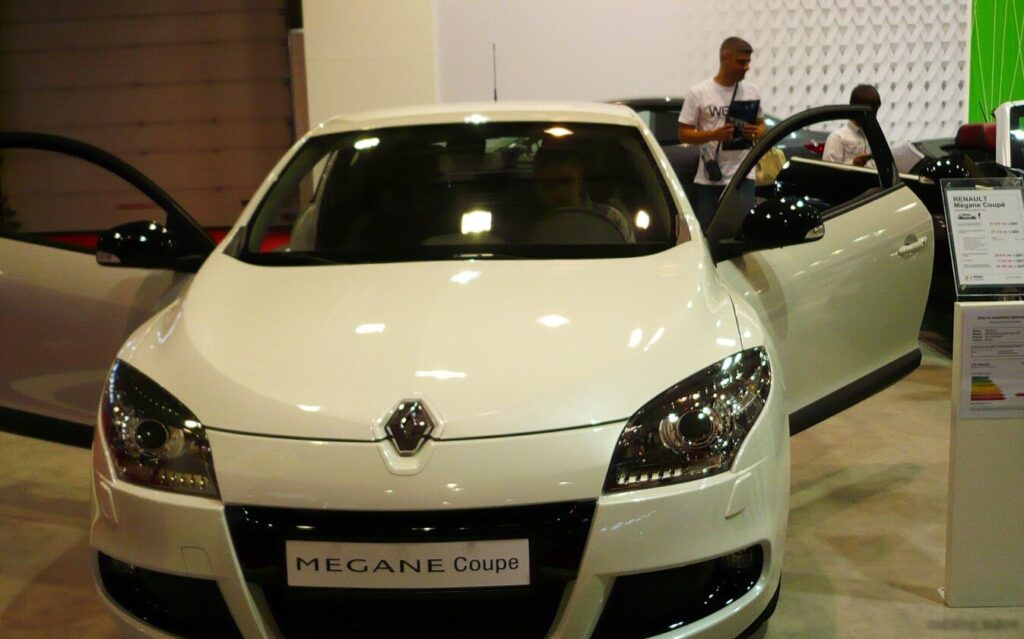
Introduction to the Renault Megane III CC (Phase III, 2014)
The Renault Megane III CC (Phase III, 2014) 1.2 TCe (132 Hp) start&stop represents a distinctive offering from the French automaker, Renault, within the highly competitive European C-segment. Launched in 2014 as part of the Megane’s third generation and specifically its third phase of updates, this particular model combines the versatility of a coupe with the exhilaration of a cabriolet, thanks to its sophisticated retractable hardtop. While not officially sold in the United States, the Megane III CC carved out a niche in its primary European and select international markets, appealing to drivers seeking a blend of style, open-air motoring, and everyday usability.
This iteration, produced from 2014 to 2016, showcases Renault’s commitment to design innovation and powertrain efficiency. It embodies the trend of “downsizing” with its advanced 1.2-liter TCe (Turbo Control efficiency) gasoline engine, delivering a surprising 132 horsepower. The inclusion of a Start&Stop system further underscored its focus on modern fuel economy and reduced emissions, aligning with the stringent Euro 5b emission standards prevalent at the time. The Megane III CC stood as a testament to Renault’s broad product portfolio, offering a unique body style in an era where traditional coupes and convertibles were facing increasing pressure from SUVs and crossovers.
Powertrain and Performance of the Renault Megane III CC
At the heart of the Renault Megane III CC Phase III model is its modern and efficient 1.2-liter TCe (H5FT code) inline-four engine. This powerplant, despite its relatively small displacement of 1197 cubic centimeters (73.05 cu. in.), leverages turbocharging and an intercooler to deliver a robust performance profile. It generates a peak output of 132 horsepower at 5500 rpm, paired with a substantial 151.2 lb.-ft. of torque available from a low 2000 rpm. This low-end torque characteristic makes the engine feel responsive and capable in various driving conditions, from city commutes to highway cruising.
The 1.2 TCe Engine: Efficiency Meets Power
Power is transmitted to the front wheels via a precise 6-speed manual transmission, offering engaging control for the driver. The vehicle’s acceleration from 0 to 60 mph is estimated at a respectable 10.6 seconds, with a top speed reaching 118 mph. These figures, while not setting any performance records, are perfectly adequate for the Megane III CC’s intended role as a stylish and comfortable cruiser. The engine’s design, featuring a 10:1 compression ratio and multi-port manifold injection, is optimized for a balance of power and efficiency.
Fuel economy was a key selling point for this TCe engine. The combined fuel consumption is rated between 35.1 and 36.8 US mpg (6.4-6.7 liters per 100 km). Urban driving sees figures between 28.7 and 29.8 US mpg (7.9-8.2 l/100 km), while extra-urban (highway) driving can achieve impressive numbers between 40.6 and 42.8 US mpg (5.5-5.8 l/100 km). These figures are commendable for a vehicle of its weight (kerb weight of 3410.55 lbs.) and body style. The integration of a Start&Stop system further enhances efficiency by automatically shutting off the engine when the vehicle is stationary, reducing fuel consumption and CO2 emissions, which range from 145 to 152 grams per kilometer. This powertrain architecture exemplifies Renault’s strategy of offering smaller, turbocharged engines to deliver both performance and environmental responsibility.
Design, Features, and Engineering
The Renault Megane III CC (Phase III, 2014) stands out with its elegant coupe-cabriolet body type, a design choice that offers the best of both worlds. With its two doors and seating for four, it transforms from a sleek hardtop coupe into an open-top convertible at the touch of a button. The retractable hardtop mechanism, a hallmark of this segment, was engineered for smooth operation, adding a layer of sophistication and all-weather practicality that soft-top convertibles often lack.
Exterior and Interior Design Philosophy
Visually, the Phase III update brought subtle but effective refinements to the Megane III CC’s aesthetic. Its dimensions are substantial for a compact car, measuring 176.57 inches in length, 71.3 inches in width (81.57 inches including mirrors), and 56.46 inches in height, with a wheelbase of 102.72 inches. These proportions contribute to a planted stance and a comfortable ride. The design language, characterized by smooth lines and a balanced profile, was contemporary for its time, featuring Renault’s updated corporate grille and lighting signatures. The drag coefficient (Cd) of 0.310 indicates a respectable aerodynamic efficiency for a car of this type.
Inside, the Megane III CC offers a comfortable cabin, especially for front occupants. The rear seats, while present, are typically more suited for shorter journeys or children, a common characteristic of 2+2 convertibles. The trunk space is a practical consideration for any coupe-cabriolet; with the top up, it provides a generous 14.73 cubic feet (417 liters) of cargo volume. When the hardtop is stowed, space is reduced to 7.45 cubic feet (211 liters), still enough for a couple of soft bags. Standard features for modern cars of this era would include air conditioning, power windows, and an infotainment system, likely with Bluetooth connectivity and navigation options depending on the trim level.
Safety and Driver Assistance
Safety was a priority for Renault, and the Megane III CC incorporated a range of features designed to protect its occupants. Standard safety equipment included an Anti-lock Braking System (ABS) and multiple airbags. The chassis features an independent McPherson strut setup at the front and a semi-independent coil spring suspension at the rear, providing a compliant ride quality suitable for varied European road conditions. Braking is handled by ventilated discs at the front for effective stopping power, complemented by drum brakes at the rear. The electric power steering system provides light and responsive handling, making urban maneuvers and parking effortless with a minimum turning circle of 35.93 feet (10.95 meters). The car was also available with various tire and wheel options, from 205/55 R16 to 225/40 R18, allowing for customization of ride and handling characteristics.
Technical Specifications
| Category | Specification |
|---|---|
| General Information | |
| Brand | Renault |
| Model | Megane |
| Generation | Megane III CC (Phase III, 2014) |
| Type (Engine) | 1.2 TCe (132 Hp) start&stop |
| Production Start | 2014 year |
| Production End | 2016 year |
| Powertrain Architecture | Internal Combustion engine |
| Body type | Coupe – Cabriolet |
| Seats | 4 |
| Doors | 2 |
| Performance Specs | |
| Fuel consumption (economy) – urban | 7.9-8.2 l/100 km (29.8 – 28.7 US mpg) |
| Fuel consumption (economy) – extra urban | 5.5-5.8 l/100 km (42.8 – 40.6 US mpg) |
| Fuel consumption (economy) – combined | 6.4-6.7 l/100 km (36.8 – 35.1 US mpg) |
| CO2 emissions | 145-152 g/km |
| Fuel Type | Petrol (Gasoline) |
| Acceleration 0 – 60 mph | 10.6 sec (Calculated) |
| Acceleration 0 – 100 km/h | 11.2 sec |
| Maximum speed | 190 km/h (118.06 mph) |
| Emission standard | Euro 5 b |
| Weight-to-power ratio | 11.7 kg/Hp (85.3 Hp/tonne) |
| Weight-to-torque ratio | 7.5 kg/Nm (132.5 Nm/tonne) |
| Engine Specs | |
| Power | 132 Hp @ 5500 rpm |
| Power per liter | 110.3 Hp/l |
| Torque | 205 Nm @ 2000 rpm (151.2 lb.-ft. @ 2000 rpm) |
| Engine layout | Front, Transverse |
| Engine Model/Code | H5FT |
| Engine displacement | 1197 cm3 (1.2 Liters / 73.05 cu. in.) |
| Number of cylinders | 4 |
| Engine configuration | Inline |
| Cylinder Bore | 72 mm (2.83 in.) |
| Piston Stroke | 73.2 mm (2.88 in.) |
| Compression ratio | 10:1 |
| Number of valves per cylinder | 4 |
| Fuel injection system | Multi-port manifold injection |
| Engine aspiration | Turbocharger, Intercooler |
| Engine oil capacity | 4.6 l (4.86 US qt) |
| Engine oil specification | Not available |
| Engine systems | Start & Stop System |
| Space, Volume and Weights | |
| Kerb Weight | 1547 kg (3410.55 lbs.) |
| Max. weight | 1960 kg (4321.06 lbs.) |
| Max load | 413 kg (910.51 lbs.) |
| Trunk (boot) space – minimum | 211 l (7.45 cu. ft.) |
| Trunk (boot) space – maximum | 417 l (14.73 cu. ft.) |
| Fuel tank capacity | 60 l (15.85 US gal) |
| Permitted trailer load with brakes (12%) | 750 kg (1653.47 lbs.) |
| Permitted trailer load without brakes | 750 kg (1653.47 lbs.) |
| Dimensions | |
| Length | 4485 mm (176.57 in.) |
| Width | 1811 mm (71.3 in.) |
| Width including mirrors | 2072 mm (81.57 in.) |
| Height | 1434 mm (56.46 in.) |
| Wheelbase | 2609 mm (102.72 in.) |
| Front track | 1546 mm (60.87 in.) |
| Rear (Back) track | 1547 mm (60.91 in.) |
| Front overhang | 862 mm (33.94 in.) |
| Rear overhang | 1014 mm (39.92 in.) |
| Ride height (ground clearance) | 120 mm (4.72 in.) |
| Drag coefficient (Cd) | 0.310 |
| Minimum turning circle (turning diameter) | 10.95 m (35.93 ft.) |
| Drivetrain, Brakes and Suspension Specs | |
| Drivetrain Architecture | Front-wheel drive, Internal Combustion engine |
| Drive wheel | Front wheel drive |
| Number of gears and type of gearbox | 6 gears, manual transmission |
| Front suspension | Independent type McPherson |
| Rear suspension | Semi-independent, coil spring |
| Front brakes | Ventilated discs |
| Rear brakes | Drum |
| Assisting systems | ABS (Anti-lock braking system) |
| Steering type | Steering rack and pinion |
| Power steering | Electric Steering |
| Tires size | 205/55 R16; 205/50 R17; 225/40 R18 |
| Wheel rims size | 6.5J x 16; 7J x 17; 7.5J x 18 |
Legacy and Market Impact in Europe
The Renault Megane III CC (Phase III, 2014) played a specific, albeit shrinking, role in the European automotive landscape. During its production run from 2014 to 2016, it catered to a segment of buyers who desired the emotional appeal of a convertible combined with the security and year-round usability of a hardtop coupe. In its primary markets, particularly in Western Europe, the Megane CC was appreciated for its distinctive styling, comfortable ride, and the practicality afforded by its retractable roof mechanism.
Competitive Landscape and Renault’s Positioning
In the compact coupe-cabriolet segment, the Megane III CC faced competition from rivals such as the Peugeot 308 CC and, to a lesser extent, the Volkswagen Eos. While each offered their own interpretation of the folding hardtop concept, the Megane distinguished itself with its particular blend of French design flair, a focus on comfort, and increasingly efficient powertrains like the 1.2 TCe. Renault positioned the Megane CC as an accessible lifestyle vehicle, offering a premium feel without the premium price tag of luxury convertibles. Its efficiency, aided by the Start&Stop system and the downsized turbocharged engine, was a significant draw in fuel-conscious European markets.
Despite its merits, the era of the compact coupe-cabriolet was drawing to a close during the Megane III CC’s production. Consumer preferences were rapidly shifting towards SUVs and crossovers, which offered greater practicality, higher driving positions, and often similar levels of perceived style. This trend ultimately led to the discontinuation of most models in this niche segment, including the Megane CC, without a direct successor in Renault’s lineup.
Today, the Renault Megane III CC (Phase III, 2014) is remembered as one of the last examples of a once-popular body style. It represents a period where automakers were experimenting with diverse vehicle types to meet varied consumer demands. Its legacy lies in showcasing Renault’s engineering prowess in developing complex retractable hardtop systems and its foresight in adopting efficient, downsized turbocharged engines long before they became ubiquitous across the industry. For enthusiasts of open-top motoring and distinctive European