The Volvo V60 I (2013 facelift): A Refined Swedish Wagon
The Volvo V60 I (2013 facelift) represents a significant evolution of Volvo’s first-generation premium compact station wagon, originally introduced in 2010. This particular iteration, featuring the 2.0 T5 (245 Hp) Automatic powertrain, was produced from 2014 to 2018. Positioned as a sportier alternative to traditional SUVs and a practical yet stylish option within the luxury segment, the V60 aimed to blend Volvo’s renowned safety credentials with dynamic performance and sophisticated design. While the V60 found a strong foothold in its primary European market, it also carved out a niche in North America, appealing to buyers seeking a distinctive European luxury wagon experience. This facelifted model brought updated styling, enhanced technology, and, crucially, Volvo’s new generation of efficient Drive-E powertrains, making it a compelling choice for discerning drivers.
Engine and Performance of the Volvo V60 I (2013 facelift) 2.0 T5
At the heart of the Volvo V60 I (2013 facelift) 2.0 T5 lies Volvo’s advanced Drive-E powertrain, specifically the B4204T11 engine. This 2.0-liter (120.16 cu. in.) inline four-cylinder engine is a testament to modern engineering, combining direct fuel injection, a turbocharger, and an intercooler to deliver a potent yet efficient driving experience. It produces a robust 245 horsepower at 5500 rpm, translating to an impressive power-per-liter output of 124.4 Hp/l. Torque is equally impressive, peaking at 258.15 lb.-ft. across a broad range from 1500 to 4800 rpm, ensuring strong acceleration and flexible passing power in nearly any driving scenario.
The engine is transversely mounted at the front and drives the front wheels, a configuration that optimizes interior space and contributes to predictable handling. Mated to an advanced 8-speed automatic transmission, the V60 T5 offers smooth and precise gear changes, maximizing both performance and fuel economy. This powertrain enables the V60 to accelerate from 0 to 60 mph in a brisk 6.1 seconds, with a top speed electronically limited to 142.92 mph.
Despite its performance capabilities, the 2.0 T5 engine also boasts commendable fuel efficiency for its class. The combined fuel economy is rated at 36.8 US mpg, with urban driving yielding approximately 27 US mpg and highway cruising achieving an impressive 46.1 US mpg. These figures, coupled with CO2 emissions of 148 g/km, highlight Volvo’s commitment to balancing power with environmental responsibility, a key tenet of its Drive-E philosophy. The DOHC valvetrain and a compression ratio of 10.8:1 further contribute to the engine’s efficiency and responsiveness.
Design and Features: The Practical Elegance of the Volvo V60 I (2013 facelift)
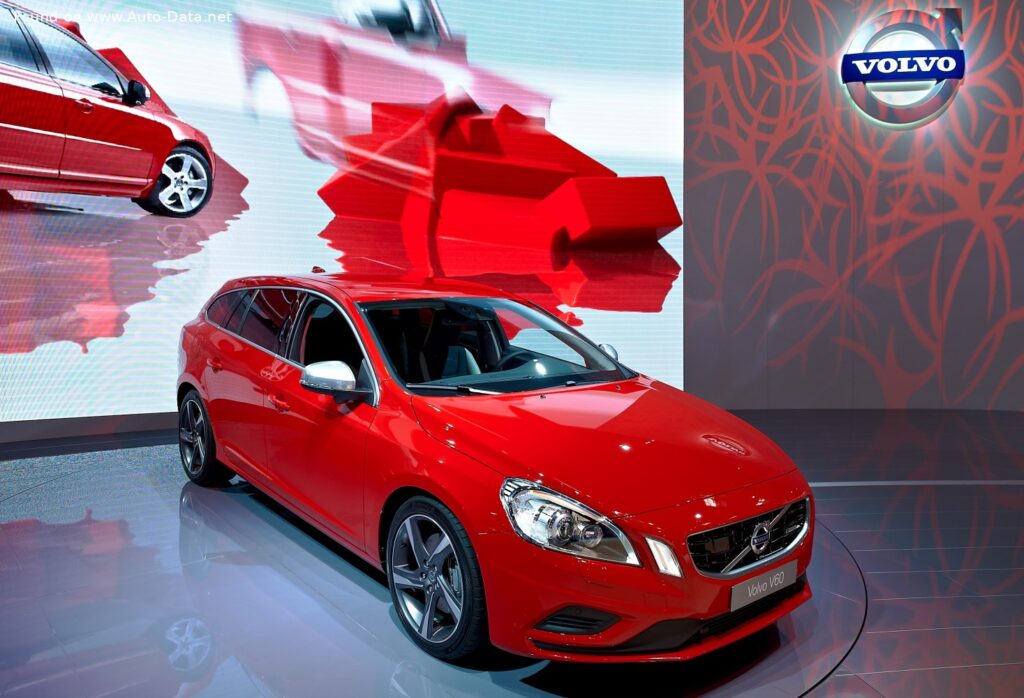
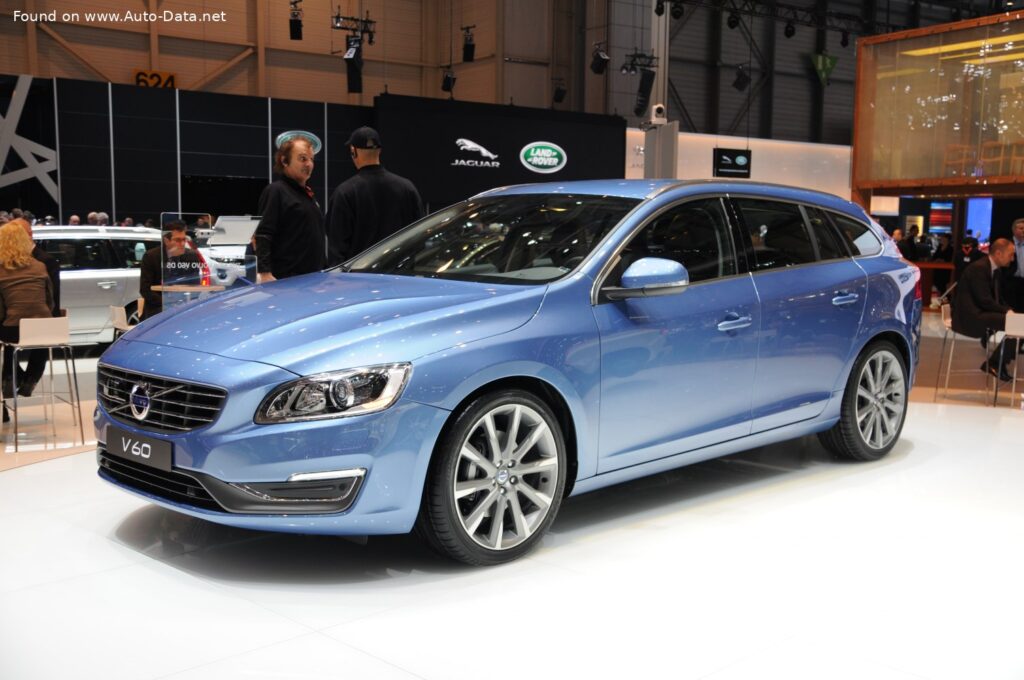
The Volvo V60 I (2013 facelift) retains the sleek and dynamic profile of its pre-facelift predecessor but introduces several refinements that enhance its aesthetic appeal and functionality. As a five-door station wagon (often referred to as an “estate” in Europe), the V60 masterfully combines the practicality of a wagon with the sporty lines of a coupe, a design philosophy Volvo termed “Sportswagon.” The facelift notably brought a refreshed front fascia with a wider grille, revised headlights, and updated bumpers, giving the V60 a more contemporary and sophisticated look.
Measuring 182.48 inches in length, 74.76 inches in width, and 58.43 inches in height, with a wheelbase of 109.29 inches, the V60 offers a substantial road presence while remaining agile. The interior provides seating for five adults, with a strong emphasis on ergonomic design and high-quality materials, typical of Volvo’s premium cabins. Cargo capacity is a respectable 15.19 cu. ft. with the rear seats up, making it highly practical for daily use and longer journeys. The fuel tank capacity of 17.83 US gallons ensures a generous cruising range.
Underneath, the V60 features an independent McPherson strut front suspension with coil springs and an anti-roll bar, paired with an independent coil spring rear suspension. This setup provides a comfortable ride while maintaining a degree of sportiness in handling. Braking is handled by ventilated discs at the front and solid discs at the rear, complemented by an Anti-lock Braking System (ABS) for enhanced safety. The steering system is a precise rack-and-pinion setup, contributing to the car’s engaging driving dynamics. Volvo’s reputation for safety is further underscored by the V60’s robust body structure and a comprehensive suite of passive and active safety features, even if only ABS is explicitly listed in the core data, reflecting the brand’s pioneering role in automotive safety.
Technical Specifications
| Category | Specification | Value |
|---|---|---|
| General Information | ||
| Brand | Volvo | |
| Model | V60 | |
| Generation | V60 I (2013 facelift) | |
| Type (Engine) | 2.0 T5 (245 Hp) Automatic | |
| Production Years | Start: 2014, End: 2018 | |
| Powertrain Architecture | Internal Combustion engine | |
| Body Type | Station wagon (estate) | |
| Seats | 5 | |
| Doors | 5 | |
| Performance Specifications | ||
| Fuel Consumption (Urban) | 27 US mpg (8.7 l/100 km) | |
| Fuel Consumption (Extra Urban) | 46.1 US mpg (5.1 l/100 km) | |
| Fuel Consumption (Combined) | 36.8 US mpg (6.4 l/100 km) | |
| CO2 Emissions | 148 g/km | |
| Fuel Type | Petrol (Gasoline) | |
| Acceleration 0 – 60 mph | 6.1 sec | |
| Acceleration 0 – 100 km/h | 6.4 sec | |
| Maximum Speed | 142.92 mph (230 km/h) | |
| Engine Specifications | ||
| Power | 245 Hp @ 5500 rpm | |
| Power per liter | 124.4 Hp/l | |
| Torque | 258.15 lb.-ft. @ 1500-4800 rpm (350 Nm) | |
| Engine Layout | Front, Transverse | |
| Engine Model/Code | B4204T11 | |
| Engine Displacement | 120.16 cu. in. (1969 cm3) | |
| Number of Cylinders | 4 | |
| Engine Configuration | Inline | |
| Cylinder Bore | 3.23 in. (82 mm) | |
| Piston Stroke | 3.67 in. (93.2 mm) | |
| Compression Ratio | 10.8:1 | |
| Valves per Cylinder | 4 | |
| Fuel Injection System | Direct injection | |
| Engine Aspiration | Turbocharger, Intercooler | |
| Valvetrain | DOHC | |
| Engine Oil Capacity | 5.71 US qt (5.4 l) | |
| Coolant Capacity | 8.77 US qt (8.3 l) | |
| Space, Volume and Weights | ||
| Trunk (Boot) Space – minimum | 15.19 cu. ft. (430 l) | |
| Fuel Tank Capacity | 17.83 US gal (67.5 l) | |
| Dimensions | ||
| Length | 182.48 in. (4635 mm) | |
| Width | 74.76 in. (1899 mm) | |
| Height | 58.43 in. (1484 mm) | |
| Wheelbase | 109.29 in. (2776 mm) | |
| Front Track | 62.52 – 62.13 in. (1588-1578 mm) | |
| Rear (Back) Track | 62.4 – 62.01 in. (1585-1575 mm) | |
| Ride Height (Ground Clearance) | 5.35 in. (136 mm) | |
| Minimum Turning Circle | 37.73 – 40.68 ft. (11.5 – 12.4 m) | |
| Drivetrain, Brakes and Suspension | ||
| Drivetrain Architecture | Internal combustion engine drives front wheels. | |
| Drive Wheel | Front wheel drive | |
| Number of Gears and Type | 8 gears, automatic transmission | |
| Front Suspension | Independent, McPherson with coil spring and anti-roll bar | |
| Rear Suspension | Independent coil spring | |
| Front Brakes | Ventilated discs | |
| Rear Brakes | Disc | |
| Assisting Systems | ABS (Anti-lock braking system) | |
| Steering Type | Steering rack and pinion | |
Legacy and Market Impact of the Volvo V60 I (2013 facelift)
The Volvo V60 I (2013 facelift), particularly with the 2.0 T5 powertrain, solidified Volvo’s position in the premium compact wagon segment during its production run. In a market increasingly dominated by SUVs, the V60 stood out as a sophisticated alternative, catering to buyers who valued driving dynamics, efficiency, and classic wagon practicality without compromising on luxury or safety. Its appeal lay in its distinctive Scandinavian design, which offered a refreshing departure from the more aggressive styling of its German rivals.
In Europe, the V60 faced stiff competition from established players like the BMW 3 Series Touring, Audi A4 Avant, and Mercedes-Benz C-Class Estate. While these German competitors often emphasized outright sportiness or ultimate luxury, the V60 carved its niche by offering a unique blend of understated elegance, class-leading safety features, and a relaxed, comfortable driving experience. The introduction of the Drive-E engines with the facelift was crucial, allowing the V60 to compete effectively on fuel economy and emissions, areas where European buyers are particularly discerning.
In the North American market, where wagons are less prevalent than SUVs, the V60 appealed to a more niche audience, often enthusiasts or those seeking a more engaging and practical alternative to a sedan. It offered a compelling proposition against models like the Acura TSX Sport Wagon (though that model was discontinued earlier) or even entry-level luxury SUVs, providing car-like handling with superior cargo flexibility compared to most sedans. Its 245 Hp T5 engine provided ample power for US highway driving, and its efficient 8-speed automatic transmission further enhanced its long-distance cruising appeal.
The V60’s legacy is rooted in its contribution to maintaining Volvo’s reputation as a purveyor of safe, sensible, yet stylish and engaging vehicles. It demonstrated that a station wagon could be both practical and desirable, challenging the notion that family vehicles had to sacrifice driving pleasure. The facelifted model, with its refined aesthetics and modern powertrains, played a vital role in bridging the gap between Volvo’s past and its future, paving the way for the brand’s subsequent generations of highly acclaimed vehicles. It remains a sought-after used vehicle for those who appreciate its unique blend of attributes, embodying the best of Scandinavian automotive design and engineering.