Ford Orion I (AFD) 1.3 (69 Hp): A European Workhorse of the 1980s
The 1980s represented a transformative era for the automotive industry, a time when manufacturers focused on creating efficient, practical, and affordable vehicles for the modern family. Ford, a major player in the European market, identified a significant demand for a conventional three-box sedan to complement its immensely popular Escort hatchback. The answer to this market need arrived in 1983 with the launch of the Ford Orion. This article provides an in-depth exploration of a key model from that initial lineup: the Ford Orion I (AFD) 1.3 (69 Hp), a car that perfectly encapsulated the virtues of reliability and practicality that defined its generation.
While the Ford Orion was never officially sold in the United States, its design philosophy and market impact in Europe offer valuable insights into global automotive trends of the period. It represents a quintessential example of how European manufacturers adapted successful platforms to cater to diverse regional preferences, particularly the enduring appeal of the traditional sedan silhouette.
The Genesis of the Orion: More Than Just an Escort with a Trunk
The development of the Ford Orion was a direct response to meticulous market analysis. While the Ford Escort Mark III was a runaway success across the continent, a substantial portion of the customer base, particularly in the United Kingdom and other parts of Europe, still preferred the traditional silhouette of a sedan. These buyers were often more conservative, perhaps moving up from older, smaller sedans and valuing the added security and perceived prestige, as well as the generous luggage space that a separate trunk offered.
Codenamed Project Apollo during its development, the Orion was engineered as a straightforward extension of the Escort platform. It shared the same front-end styling, wheelbase, front doors, and mechanical underpinnings as its hatchback sibling. This parts-sharing strategy was a masterstroke of engineering and financial efficiency, significantly reducing development costs and streamlining the production process. However, to strategically position the Orion as a more premium offering, Ford initially launched it with higher trim levels (GL and Ghia) than the base-model Escorts. These versions featured plusher interiors, more standard equipment, and a distinct, more formal grille design that differentiated it from its more utilitarian hatchback counterpart. The result was a car that felt both familiar and distinct, filling a crucial gap in Ford’s product portfolio and capturing a segment of buyers who might otherwise have looked to competitors.
Design and Exterior: The Classic Three-Box Formula
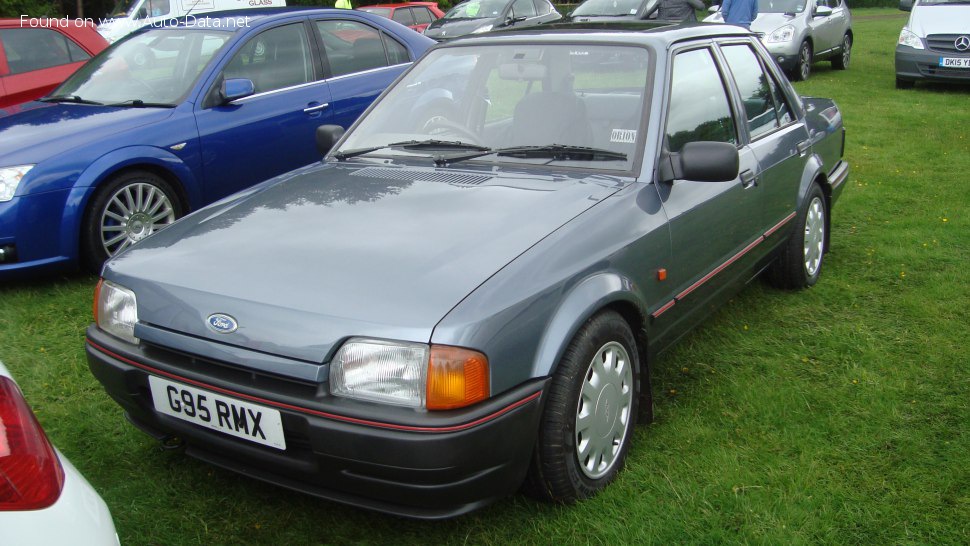
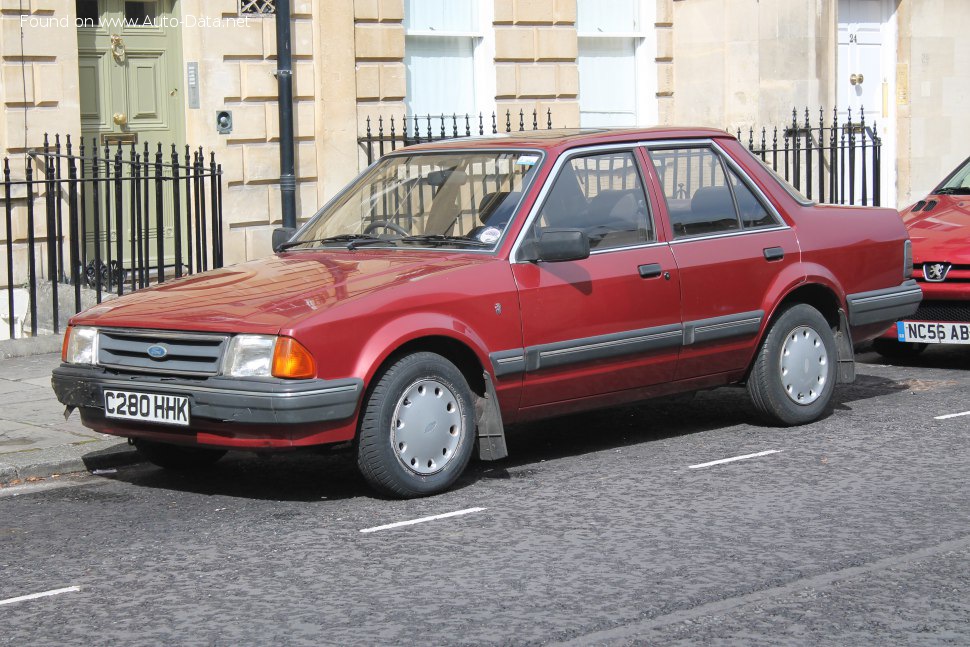
The styling of the first-generation Ford Orion was a study in 1980s conservative design, a direct reflection of its target audience. It adhered strictly to the three-box sedan layout, characterized by a distinct engine compartment, passenger cabin, and trunk. From the front bumper to the B-pillar, it was virtually indistinguishable from the Escort, featuring the same gentle wedge profile and large, rectangular headlamps that were characteristic of Ford’s design language at the time.
The transformation occurred from the C-pillar rearward. The design team skillfully integrated a well-proportioned trunk that avoided the tacked-on look that plagued some hatchback-to-sedan conversions of the era. The roofline extended gracefully into a sizable rear deck, flanked by large, simple taillight clusters. The overall look was clean, unpretentious, and aimed squarely at a demographic that valued function over flamboyant styling. While it may not have been a head-turner, its understated elegance and balanced proportions gave it a respectable presence on the road. The Ford Orion I (AFD) 1.3 (69 Hp) models, positioned as the entry-level sedans, typically came with steel wheels and modest trim, reinforcing their role as sensible workhorses of the range, prioritizing durability and affordability.
Interior, Comfort, and Unmatched Practicality
Stepping inside the Ford Orion I (AFD) 1.3 (69 Hp) was a familiar experience for anyone acquainted with the Mark III Escort. The dashboard architecture was carried over directly, featuring a logical and easy-to-read instrument binnacle and straightforward controls for heating and ventilation. The materials were typical of the era—a sea of hard-wearing plastics and durable fabrics, designed for longevity and resilience rather than outright luxury. Ergonomics were straightforward, with all essential controls within easy reach of the driver.
However, the Orion’s true trump card, and the primary reason for its existence, was its boot space, and it delivered in spectacular fashion. The trunk was cavernous for a car of its class, offering a luggage capacity of 530 liters (approximately 18.7 cubic feet) that dwarfed not only its Escort sibling but also many larger, more expensive vehicles. This made the Orion an instant favorite with families, sales representatives, and anyone who needed to transport bulky items regularly without resorting to a larger, less fuel-efficient car. The passenger cabin itself offered reasonable space for four adults, with adequate headroom and legroom for typical journeys, making it a comfortable family car. In higher trim levels, features like a sunroof, tinted glass, and a radio/cassette player could be specified, elevating the comfort level and perceived value. But even in its more basic form, the Orion’s interior was a comfortable and functional environment built for the rigors of daily use, emphasizing durability and ease of maintenance.
Engine & Performance: The Heart of the Ford Orion I (AFD) 1.3 (69 Hp)
The powertrain is the defining characteristic of this specific model, and the 1.3-liter CVH engine was a cornerstone of Ford’s small-car lineup in the 1980s. CVH stands for Compound Valve-angle Hemispherical combustion chamber, a design intended to promote better fuel and air mixture for improved efficiency and power output compared to older engine designs. This engine family was known for its lively character and relatively good fuel economy, a crucial factor in the European market.
In the Ford Orion I (AFD) 1.3 (69 Hp), this naturally aspirated petrol engine produced a modest 69 horsepower (51 kW) at 6000 rpm and a respectable 73.76 lb.-ft. (100 Nm) of torque at 3500 rpm for its size. Mated typically to a 4-speed manual transmission, with an optional 5-speed manual available, power was sent to the front wheels. This engine was never designed for blistering performance; instead, its virtues lay in its reliability, mechanical simplicity, and excellent fuel economy. The combined fuel consumption was approximately 7.5 liters per 100 kilometers, which translates to roughly 31.3 miles per gallon (US), making it a very economical choice for daily commuting and longer trips.
On the road, the 69 horsepower provided adequate performance for the daily grind. Acceleration was steady rather than spirited, with a 0-62 mph (0-100 km/h) time in the region of 13.6 seconds. Its top speed of 98 mph (157 km/h) was sufficient for the highways of the day, making it a capable, if not exciting, long-distance cruiser, especially with the 5-speed gearbox that lowered engine RPMs at speed, contributing to quieter operation and better fuel efficiency. The engine’s real strength was its in-town drivability and low running costs. It was a dependable unit that was easy to service, and parts were plentiful and affordable, reinforcing the Orion’s reputation as a sensible and economical choice for the cost-conscious motorist.
Driving Dynamics: A Capable and Comfortable Ride
By inheriting the Escort’s proven chassis and suspension setup, the Ford Orion was blessed with competent and predictable handling characteristics. The platform featured independent MacPherson struts at the front, a widely adopted and effective design for front-wheel-drive cars, and a fully independent rear suspension with transverse arms, a layout that was quite sophisticated for a mainstream family car at the time. This advanced rear setup contributed significantly to the car’s ride quality and stability.
This suspension configuration provided a comfortable and compliant ride, adept at soaking up the bumps and imperfections of 1980s European roads. While the soft suspension tuning prioritized comfort over razor-sharp handling, the Orion remained stable and composed through corners, exhibiting predictable understeer at the limit. The steering was light and generally precise, making it an easy car to maneuver in tight urban environments and to park. The added weight of the trunk at the rear helped to balance the car’s weight distribution, contributing to its stable feel, particularly at higher speeds and during crosswinds. It was not a sports sedan, nor did it pretend to be, but its chassis provided a feeling of safety, security, and predictability that its target audience greatly appreciated, making long journeys less fatiguing.
Technical Specifications: Ford Orion I (AFD) 1.3 (69 Hp)
| Specification Category | Detail |
|---|---|
| General Information | |
| Brand | Ford |
| Model | Orion |
| Generation | I (AFD) |
| Body Type | Sedan |
| Doors | 4 |
| Seats | 5 |
| Start of Production | 1983 |
| End of Production | 1986 |
| Engine Specifications | |
| Engine Code | JPA (CVH) |
| Displacement | 1296 cm³ (79.1 cu. in.) |
| Power Output | 69 Hp (51 kW) @ 6000 rpm |
| Torque | 100 Nm (73.76 lb.-ft.) @ 3500 rpm |
| Engine Aspiration | Naturally Aspirated |
| Fuel System | Carburetor |
| Cylinders | 4 (In-line) |
| Valves per Cylinder | 2 |
| Bore | 80 mm |
| Stroke | 64.5 mm |
| Performance Specs | |
| Fuel Type | Petrol (Gasoline) |
| Top Speed | 157 km/h (98 mph) |
| Acceleration (0-100 km/h) | 13.6 seconds |
| Fuel Consumption (Combined) | Approx. 7.5 L/100 km |
| Drivetrain & Transmission | |
| Powertrain Architecture | Internal Combustion Engine |
| Drive Wheel | Front-wheel drive (FWD) |
| Transmission | 4-speed manual / 5-speed manual (optional) |
| Dimensions & Weight | |
| Length | 4227 mm (166.42 in.) |
| Width | 1640 mm (64.57 in.) |
| Height | 1395 mm (54.92 in.) |
| Wheelbase | 2400 mm (94.49 in.) |
| Front Track | 1400 mm |
| Rear Track | 1425 mm |
| Curb Weight | Approx. 915 kg (2017 lbs) |
| Trunk (Boot) Capacity | 530 Litres |
| Chassis & Brakes | |
| Front Suspension | Independent, MacPherson struts |
| Rear Suspension | Independent, Trailing arms |
| Front Brakes | Discs |
| Rear Brakes | Drums |
| Tires | 155/80 R13 |
Legacy & Market Impact: An Unsung Hero of the 1980s European Market
The Ford Orion I (AFD) 1.3 (69 Hp) was never designed to be the most exciting or glamorous car on the road. Its purpose was far more noble and pragmatic: to provide reliable, practical, and affordable transportation for thousands of families and individuals across Europe. It succeeded in this mission unequivocally, becoming a familiar sight on roads from the UK to Germany and beyond.
In its primary markets, the Orion faced stiff competition from other European manufacturers who also offered conventional sedans based on popular hatchback platforms. Key rivals included the Vauxhall Cavalier (Opel Ascona), Volkswagen Jetta (based on the Golf), Renault 9/11, and Fiat Regata. What set the Orion apart was its clever packaging, particularly its class-leading trunk space, combined with the widespread Ford dealership network and the proven reliability of its Escort underpinnings. Its conservative styling appealed to a broad demographic, from private buyers seeking a dependable family car to fleet operators looking for robust and economical vehicles.
The Orion played a crucial role in cementing Ford’s dominance in the European family car market of the 1980s. It broadened the appeal of the Escort platform, offering a more traditional alternative to the hatchback trend. Its mechanical simplicity meant lower maintenance costs and greater longevity, enhancing its reputation as a sensible and shrewd purchase. While it may not have garnered the enthusiast following of some other models, its impact on everyday motoring for millions of Europeans was profound. It was a vehicle that simply got the job done, day in and day out, with minimal fuss.
Today, the first-generation Ford Orion, particularly in its more basic 1.3-liter form, stands as a testament to an era of sensible, functional automotive design. It represents a period when practicality and affordability were paramount, and manufacturers focused on delivering honest, dependable transportation. While many examples have succumbed to time and the elements, those that remain are cherished by enthusiasts for their nostalgic charm and the sheer robustness of their engineering. The Ford Orion I (AFD) 1.3 (69 Hp), though an unsung hero, undeniably played a crucial role in the automotive landscape of its time.