
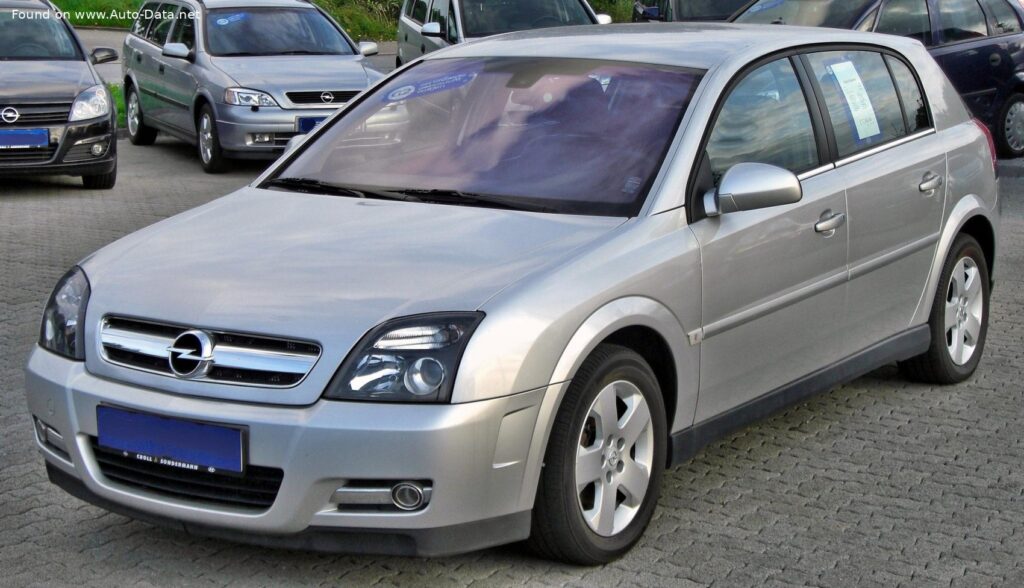
The Opel Signum 2.2 DTI ECOTEC (125 Hp): A Niche European Executive Hatchback
The Opel Signum, specifically the 2.2 DTI ECOTEC (125 Hp) variant produced from May 2003 to November 2004, represented a distinctive and somewhat unconventional offering in the European automotive landscape. Positioned by General Motors’ European subsidiary, Opel (and Vauxhall in the UK), the Signum was an attempt to carve out a new niche in the D-segment (mid-size car category). Unlike traditional sedans or station wagons, the Signum adopted a unique “executive hatchback” or “large five-door liftback” body style, emphasizing rear passenger comfort and cargo versatility. It was effectively a more premium, elongated variant of the Opel Vectra C, sharing its platform but featuring a longer wheelbase to provide superior legroom for rear occupants.
While never officially sold in the United States, the Opel Signum serves as an interesting case study in European automotive design and market strategy. It aimed to blend the spaciousness and practicality of an estate car with the refined aesthetics and driving dynamics of an executive sedan, all within a five-door format. The 2.2 DTI ECOTEC model, powered by a robust diesel engine, was a quintessential European powertrain choice, balancing performance with impressive fuel economy, a critical factor for buyers in its primary markets.
Engine and Performance of the Opel Signum
At the heart of the Opel Signum 2.2 DTI ECOTEC (125 Hp) was a 2.2-liter (2171 cm³ or 132.48 cu. in.) inline-four diesel engine, designated with the internal code Y22DTR. This powerplant was a key component of Opel’s “ECOTEC” family, signifying an emphasis on efficiency and ecological considerations for its era. Utilizing a common rail direct injection system and augmented by a turbocharger and intercooler, the engine delivered a respectable 125 horsepower at 4000 rpm. Its strength, however, lay in its torque output: a substantial 280 Nm (206.52 lb.-ft.) available from a low 1500 rpm. This characteristic torque curve made the Signum a capable cruiser, providing ample pulling power for highway driving and overtaking maneuvers, even when fully laden.
Power was delivered to the front wheels via a 5-speed manual transmission, a common and reliable setup for European vehicles of this segment. Performance figures for the 2.2 DTI ECOTEC variant were competitive for a diesel-powered executive car of its time. The Signum could accelerate from 0 to 60 mph in an estimated 10.6 seconds, with a maximum speed of 124.9 mph (201 km/h). Its fuel economy was particularly noteworthy, with a combined cycle rating of 37.3 US mpg (6.3 l/100 km). This efficiency, coupled with a 16.11 US gallon (61 liter) fuel tank, provided a significant cruising range, a desirable trait for long-distance European travel.
Design and Features of the Opel Signum
The Opel Signum’s most distinguishing characteristic was its unique body style. While officially classified as a hatchback, its extended wheelbase of 111.42 inches (2830 mm) – significantly longer than the standard Vectra C sedan – allowed for exceptional rear passenger space. This design choice was deliberate, aiming to offer limousine-like legroom in the back, combined with the practicality of a large tailgate and flexible cargo area. The overall length measured 182.52 inches (4636 mm), with a width of 70.79 inches (1798 mm) and a height of 57.48 inches (1460 mm). The drag coefficient (Cd) of 0.33 was a respectable figure for a car of its size and shape, contributing to both fuel efficiency and reduced wind noise.
Inside, the Signum offered seating for five, with a particular focus on the rear cabin. Many Signum models featured Opel’s “FlexSpace” seating system, which allowed the two outer rear seats to slide fore and aft, recline, and even fold individually, providing unparalleled versatility for passengers or cargo. The center rear seat could often transform into a storage console or armrest. Cargo capacity ranged from a minimum of 12.89 cu. ft. (365 liters) with all seats in place, expanding to a generous 49.79 cu. ft. (1410 liters) with the rear seats folded, making it highly practical for families or those needing flexible load-carrying capabilities.
Standard features for the era included power steering (hydraulic rack and pinion), anti-lock braking system (ABS), and a comprehensive set of airbags, reflecting the growing emphasis on safety in early 2000s European vehicles. The suspension system, featuring coil springs at both front and rear, was tuned for a comfortable yet composed ride, suitable for diverse European road conditions.
Technical Specifications: Opel Signum 2.2 DTI ECOTEC (125 Hp)
| Category | Specification |
|---|---|
| Brand | Opel |
| Model | Signum |
| Generation | Signum |
| Engine Type | 2.2 DTI ECOTEC (125 Hp) |
| Production Start | May, 2003 |
| Production End | November, 2004 |
| Powertrain Architecture | Internal Combustion Engine (Front, Transverse) |
| Body Type | Hatchback |
| Seats | 5 |
| Doors | 5 |
| Performance Specs | |
| Fuel Type | Diesel |
| Fuel Consumption (Urban) | 8.5 l/100 km (27.7 US mpg) |
| Fuel Consumption (Extra Urban) | 5.0 l/100 km (47 US mpg) |
| Fuel Consumption (Combined) | 6.3 l/100 km (37.3 US mpg) |
| Acceleration 0-60 mph | 10.6 sec |
| Acceleration 0-62 mph (0-100 km/h) | 11.2 sec |
| Maximum Speed | 124.9 mph (201 km/h) |
| Weight-to-Power Ratio | 12.9 kg/Hp, 77.6 Hp/tonne |
| Weight-to-Torque Ratio | 5.8 kg/Nm, 173.9 Nm/tonne |
| Engine Specs | |
| Power | 125 Hp @ 4000 rpm |
| Power per liter | 57.6 Hp/l |
| Torque | 280 Nm (206.52 lb.-ft.) @ 1500 rpm |
| Engine Model/Code | Y22DTR |
| Engine Displacement | 2171 cm³ (132.48 cu. in.) |
| Number of Cylinders | 4 |
| Engine Configuration | Inline |
| Cylinder Bore | 84 mm (3.31 in.) |
| Piston Stroke | 98 mm (3.86 in.) |
| Compression Ratio | 18.5:1 |
| Valves per Cylinder | 4 |
| Fuel Injection System | Diesel Commonrail |
| Engine Aspiration | Turbocharger, Intercooler |
| Valvetrain | OHC |
| Engine Oil Capacity | 5.5 l (5.81 US qt) |
| Coolant Capacity | 7.3 l (7.71 US qt) |
| Space, Volume and Weights | |
| Kerb Weight | 1610 kg (3549.44 lbs.) |
| Max. Weight | 2125 kg (4684.82 lbs.) |
| Max Load | 515 kg (1135.38 lbs.) |
| Trunk (Boot) Space – Minimum | 365 l (12.89 cu. ft.) |
| Trunk (Boot) Space – Maximum | 1410 l (49.79 cu. ft.) |
| Fuel Tank Capacity | 61 l (16.11 US gal) |
| Dimensions | |
| Length | 4636 mm (182.52 in.) |
| Width | 1798 mm (70.79 in.) |
| Height | 1460 mm (57.48 in.) |
| Wheelbase | 2830 mm (111.42 in.) |
| Front Track | 1524 mm (60 in.) |
| Rear Track | 1525 mm (60.04 in.) |
| Drag Coefficient (Cd) | 0.33 |
| Drivetrain, Brakes and Suspension Specs | |
| Drivetrain Architecture | Front-wheel drive, Internal Combustion Engine |
| Drive Wheel | Front wheel drive |
| Number of Gears/Gearbox Type | 5 gears, manual transmission |
| Front Suspension | Coil spring |
| Rear Suspension | Coil spring |
| Front Brakes | Ventilated discs |
| Rear Brakes | Disc |
| Assisting Systems | ABS (Anti-lock Braking System) |
| Steering Type | Steering rack and pinion |
| Power Steering | Hydraulic Steering |
| Tires Size | 215/55 R16 |
| Wheel Rims Size | 6.5J x 16 |
Legacy and Market Impact of the Opel Signum
The Opel Signum, particularly the 2.2 DTI ECOTEC (125 Hp) variant, was a bold experiment by Opel to address a perceived gap in the European market. It attempted to combine the prestige of an executive car with the practical advantages of a flexible interior and hatchback versatility. Its primary competitors in the D-segment included established players like the Ford Mondeo, Volkswagen Passat, and Renault Laguna, as well as more unconventional offerings such as the Renault Vel Satis, which also aimed for a unique blend of luxury and practicality. However, the Signum struggled to find a strong foothold in the market.
Its unique body style, while offering genuine advantages in terms of space and flexibility, was perhaps too unconventional for many buyers accustomed to traditional sedan or wagon formats. The styling, often criticized as somewhat awkward or anonymous, didn’t always convey the premium image Opel intended. Despite its comfortable ride, efficient diesel powertrains, and well-appointed interior, the Signum’s sales never quite met expectations. It was often overshadowed by its more conventional Vectra sibling and faced stiff competition from more premium brands in the executive segment.
Nevertheless, the Opel Signum holds a specific place in Opel’s history as an attempt to innovate within a highly competitive segment. It demonstrated Opel’s willingness to experiment with new body styles and interior configurations to meet evolving consumer needs, particularly the demand for greater flexibility and space without necessarily opting for a full-size SUV or traditional station wagon. While its production run for this specific engine ended in late 2004, the Signum continued in other forms until 2008, eventually making way for the Insignia, which adopted a more conventional approach. Today, the Opel Signum is remembered as an interesting, if commercially challenging, foray into the executive hatchback segment, prized by those who appreciate its unique blend of comfort, practicality, and diesel efficiency.
