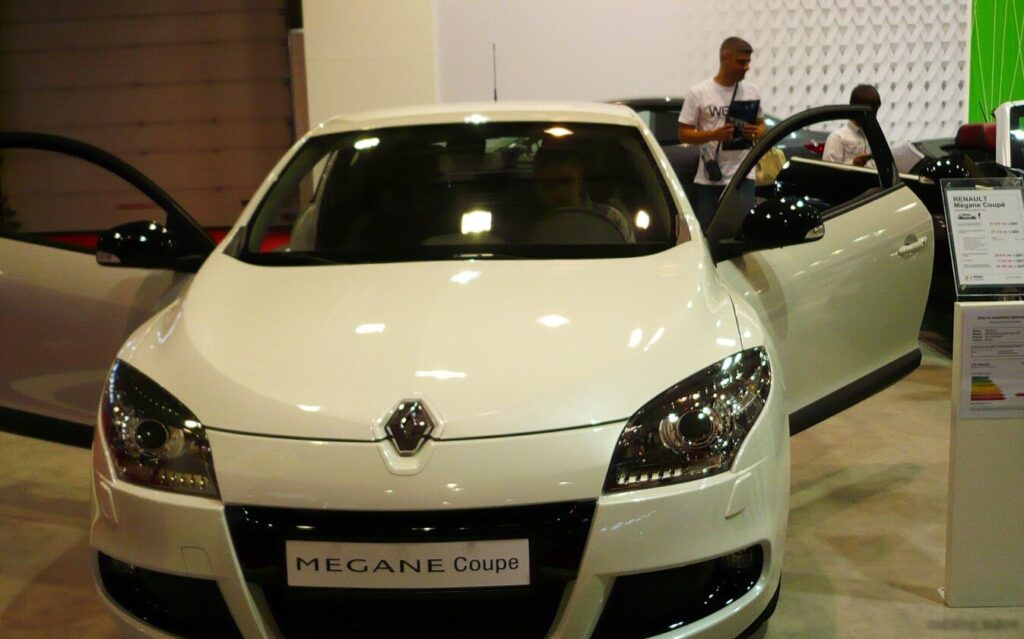
The Renault Megane III CC (Phase III, 2014) 1.5 dCi (110 Hp): A European Convertible Diesel
The Renault Megane III CC (Phase III, 2014) 1.5 dCi (110 Hp) represents a distinctive chapter in the compact coupe-cabriolet segment, a niche particularly popular in the European market during the late 2000s and early 2010s. Produced from 2014 to 2016, this iteration was part of the third generation of the Renault Megane, specifically the “Phase III” facelift of the Coupe-Cabriolet (CC) variant. While never officially sold in the United States, this vehicle offered a compelling blend of open-air motoring, practical seating for four, and remarkable fuel efficiency, thanks to its advanced diesel powertrain. Its primary role was to provide an accessible and stylish convertible option for European consumers, competing against other retractable hardtop models in its class.
The Megane III CC distinguished itself with its sleek design, a substantial glass roof panel within the folding hardtop, and a focus on comfort and usability. The 2014 Phase III update brought subtle styling enhancements and technological refinements, keeping the model competitive in a demanding market. This particular variant, powered by the 1.5 dCi diesel engine, underscored Renault’s commitment to offering economical and environmentally conscious options, even in a lifestyle-oriented vehicle.
Engine and Performance: The Efficient Heart of the Renault Megane III CC
Under the hood of the Renault Megane III CC 1.5 dCi (110 Hp) lies Renault’s highly regarded K9K engine, a 1.5-liter (1461 cm³ or 89.16 cu. in.) inline four-cylinder diesel unit. This powerplant is a testament to European engineering’s focus on efficiency and torque delivery. Equipped with a turbocharger and intercooler, along with a sophisticated common rail direct fuel injection system, the engine produces a respectable 110 horsepower at 4000 rpm. Its power output per liter stands at a commendable 75.3 horsepower per liter, indicating a well-tuned and potent small-displacement diesel.
However, the true strength of this diesel engine lies in its torque. It generates a robust 260 Nm (191.77 lb.-ft.) of torque, available at a low 1750 rpm. This characteristic low-end torque is crucial for a vehicle like the Megane CC, providing effortless acceleration and flexible driving, especially in urban environments or when cruising on the highway. Power is delivered to the front wheels via a smooth-shifting 6-speed manual transmission, offering the driver engaging control over the powertrain.
In terms of acceleration, the Megane III CC 1.5 dCi performs adequately for its class, reaching 60 mph from a standstill in an estimated 11.8 seconds (0-100 km/h in 12.4 seconds). Its maximum speed is rated at 118.06 mph (190 km/h), making it perfectly suitable for European highway speeds. What truly sets this variant apart is its exceptional fuel economy. The combined cycle fuel consumption is an impressive 4.5 liters per 100 kilometers, translating to approximately 52.3 US mpg. Urban consumption is rated between 48 and 46.1 US mpg, while extra-urban driving yields an outstanding 56 US mpg. These figures, coupled with CO2 emissions ranging from 115-119 g/km, highlight its compliance with the Euro 5b emission standard and its eco-friendly credentials for the time. The inclusion of a particulate filter further demonstrates its commitment to reduced emissions.
Design and Features: Open-Air Versatility and European Style
The Renault Megane III CC (Phase III, 2014) is defined by its coupe-cabriolet body type, a design philosophy that offers the best of both worlds: the security and refinement of a coupe with the exhilaration of an open-top convertible. The car features two doors and seating for four, although the rear seats are, as is common in this segment, best suited for shorter journeys or smaller occupants.
Measuring 176.57 inches (4485 mm) in length, 71.3 inches (1811 mm) in width (81.57 inches or 2072 mm including mirrors), and 56.46 inches (1434 mm) in height, the Megane CC strikes a balanced and elegant profile. Its wheelbase of 102.72 inches (2609 mm) contributes to a stable ride. The key design feature is its retractable hardtop, which folds neatly into the trunk, transforming the car from a sleek coupe to an open-air cruiser in a matter of seconds. A notable design element often highlighted is the large panoramic glass roof panel integrated into the hardtop, providing an airy cabin even when the top is up.
The Phase III facelift introduced subtle but effective updates, including revised front fascia elements, new wheel designs, and updated interior trim options, aligning its aesthetics with Renault’s contemporary design language. Standard features for safety included an Anti-lock Braking System (ABS), which was crucial for maintaining control under heavy braking. The steering system employed a rack and pinion setup with electric power steering, offering a light and responsive feel suitable for both city driving and highway cruising. The vehicle’s suspension comprised an independent MacPherson strut design at the front and a semi-independent, coil spring setup at the rear, providing a comfortable ride quality characteristic of European compact cars. Braking was handled by ventilated discs at the front and drum brakes at the rear, a common setup for cars in this class prioritizing cost and effective stopping power.
Practicality was also a consideration, with trunk space ranging from 7.45 cu. ft. (211 liters) with the top down to a more generous 14.73 cu. ft. (417 liters) with the top up, allowing for reasonable cargo capacity depending on the desired configuration. The fuel tank capacity of 15.85 US gallons (60 liters) further enhanced its long-distance touring capabilities, especially given its excellent diesel fuel economy.
Technical Specifications: Renault Megane III CC (Phase III, 2014) 1.5 dCi (110 Hp)
| Category | Specification | US Equivalent / Notes |
|---|---|---|
| General Information | ||
| Brand | Renault | |
| Model | Megane | |
| Generation | Megane III CC (Phase III, 2014) | |
| Type (Engine) | 1.5 dCi (110 Hp) | |
| Start of Production | 2014 year | |
| End of Production | 2016 year | |
| Powertrain Architecture | Internal Combustion engine | |
| Body Type | Coupe – Cabriolet | 2 Doors, 4 Seats |
| Seats | 4 | |
| Doors | 2 | |
| Performance Specs | ||
| Fuel Consumption (Urban) | 4.9-5.1 l/100 km | 48 – 46.1 US mpg |
| Fuel Consumption (Extra Urban) | 4.2 l/100 km | 56 US mpg |
| Fuel Consumption (Combined) | 4.5 l/100 km | 52.3 US mpg |
| CO2 Emissions | 115-119 g/km | |
| Fuel Type | Diesel | |
| Acceleration 0 – 60 mph | 11.8 sec | Calculated by Auto-Data.net |
| Acceleration 0 – 100 km/h | 12.4 sec | |
| Maximum Speed | 190 km/h | 118.06 mph |
| Emission Standard | Euro 5 b | |
| Weight-to-Power Ratio | 14.3 kg/Hp | 69.8 Hp/tonne |
| Weight-to-Torque Ratio | 6.1 kg/Nm | 165 Nm/tonne |
| Engine Specs | ||
| Power | 110 Hp @ 4000 rpm | |
| Power per Liter | 75.3 Hp/l | |
| Torque | 260 Nm @ 1750 rpm | 191.77 lb.-ft. @ 1750 rpm |
| Engine Layout | Front, Transverse | |
| Engine Model/Code | K9K | |
| Engine Displacement | 1461 cm³ | 1.5 Liters / 89.16 cu. in. |
| Number of Cylinders | 4 | Inline configuration |
| Cylinder Bore | 76 mm | 2.99 in. |
| Piston Stroke | 80.5 mm | 3.17 in. |
| Compression Ratio | 15.2:1 | |
| Valves per Cylinder | 2 | |
| Fuel Injection System | Diesel Commonrail | |
| Engine Aspiration | Turbocharger, Intercooler | |
| Engine Oil Capacity | 4.5 l | 4.76 US qt |
| Coolant Capacity | 6.5 l | 6.87 US qt |
| Engine Systems | Particulate filter | |
| Space, Volume and Weights | ||
| Kerb Weight | 1576 kg | 3474.49 lbs. |
| Max. Weight | 1985 kg | 4376.18 lbs. |
| Max Load | 409 kg | 901.69 lbs. |
| Trunk (boot) Space – Minimum | 211 l | 7.45 cu. ft. (Top down) |
| Trunk (boot) Space – Maximum | 417 l | 14.73 cu. ft. (Top up) |
| Fuel Tank Capacity | 60 l | 15.85 US gal |
| Permitted Trailer Load (with brakes) | 750 kg | 1653.47 lbs. |
| Permitted Trailer Load (without brakes) | 750 kg | 1653.47 lbs. |
| Dimensions | ||
| Length | 4485 mm | 176.57 in. |
| Width | 1811 mm | 71.3 in. |
| Width Including Mirrors | 2072 mm | 81.57 in. |
| Height | 1434 mm | 56.46 in. |
| Wheelbase | 2609 mm | 102.72 in. |
| Front Track | 1546 mm | 60.87 in. |
| Rear (Back) Track | 1547 mm | 60.91 in. |
| Front Overhang | 862 mm | 33.94 in. |
| Rear Overhang | 1014 mm | 39.92 in. |
| Ride Height (Ground Clearance) | 120 mm | 4.72 in. |
| Drag Coefficient (Cd) | 0.310 | |
| Minimum Turning Circle (Diameter) | 10.95 m | 35.93 ft. |
| Drivetrain, Brakes and Suspension Specs | ||
| Drivetrain Architecture | Internal Combustion engine drives front wheels | Front-wheel drive |
| Drive Wheel | Front wheel drive | |
| Number of Gears and Type | 6 gears, manual transmission | |
| Front Suspension | Independent type McPherson | |
| Rear Suspension | Semi-independent, coil spring | |
| Front Brakes | Ventilated discs | |
| Rear Brakes | Drum | |
| Assisting Systems | ABS (Anti-lock braking system) | |
| Steering Type | Steering rack and pinion | |
| Power Steering | Electric Steering | |
| Tire Sizes | 205/55 R16; 205/50 R17; 225/40 R18 | |
| Wheel Rim Sizes | 6.5J x 16; 7J x 17; 7.5J x 18 |
Legacy and Market Impact of the Renault Megane III CC
The Renault Megane III CC, particularly in its Phase III 2014 guise with the 1.5 dCi engine, carved out a significant niche in the European automotive landscape. Its reputation was built on a foundation of stylish design, the versatility of a retractable hardtop, and, crucially for the European market, exceptional fuel economy and lower running costs offered by its diesel powertrain. While the coupe-cabriolet segment has seen a decline in recent years, the Megane CC was a strong contender during its production run.
In Europe, the Megane III CC faced competition from a range of rivals, including the Peugeot 308 CC, Volkswagen Eos, and Opel Astra TwinTop. Each offered their own interpretation of the convertible hardtop concept, but the Megane often stood out for its distinctive styling, particularly the large glass roof panel, and Renault’s strong brand presence across the continent. Its blend of practicality – offering four seats, albeit with compromises in the rear, and a decent trunk when the roof was up – combined with the emotional appeal of open-top driving, made it a popular choice for those seeking a single car that could fulfill multiple roles.
The 1.5 dCi engine variant was particularly impactful, catering to a market where diesel engines were, and to some extent still are, highly valued for their efficiency and torque. Its ability to deliver over 50 US mpg in combined driving was a major selling point, making it an economically sensible choice for daily commuting and longer journeys, while still offering the lifestyle benefits of a convertible. This helped to position the Megane CC as a smart purchase rather than just an indulgence.
Historically, the Megane CC continued Renault’s legacy of offering accessible and innovative vehicles to a broad audience. It represented a sophisticated evolution from earlier soft-top models and played a role in popularizing the retractable hardtop design in the compact segment. Although the Megane CC, like many other coupe-cabriolets, eventually faded from production as consumer preferences shifted towards SUVs and more conventional body styles, its contribution to accessible open-air motoring in Europe remains notable. For automotive enthusiasts and casual drivers alike in its primary market, the Megane III CC was a stylish, efficient, and versatile option that delivered on its promise of an enjoyable driving experience, whether cruising with the top down on a scenic route or commuting efficiently on a rainy day. Its absence from the US market meant American consumers missed out on a uniquely European blend of style, practicality, and diesel efficiency in a convertible package.