Volkswagen Polo II Classic (86C) 1.3 D (45 Hp): A European Workhorse
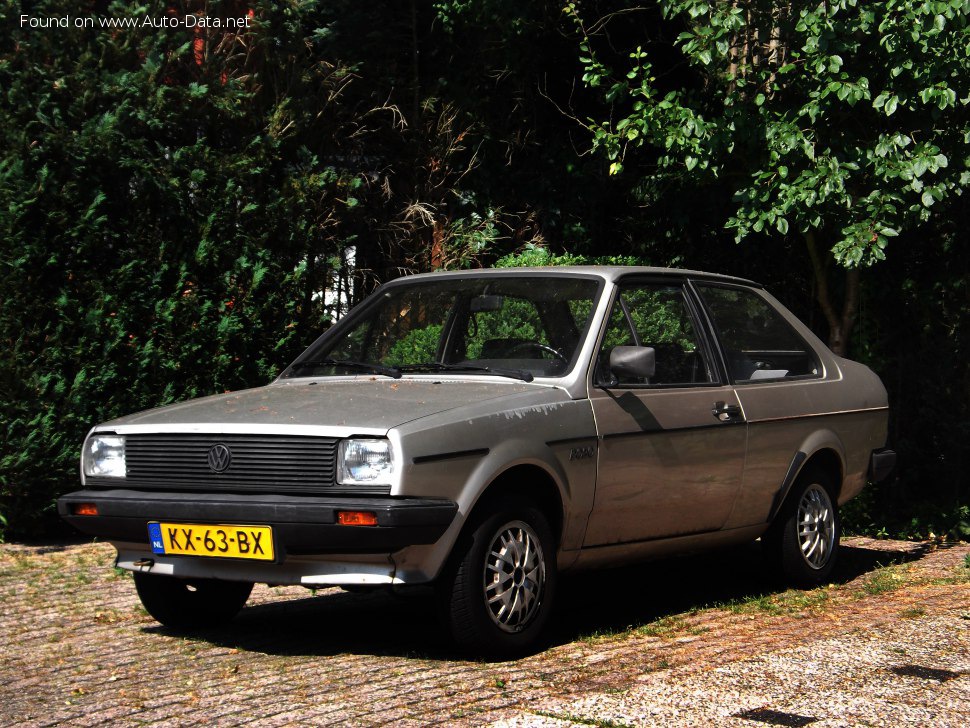
The Volkswagen Polo II Classic (86C) 1.3 D (45 Hp) represents a significant chapter in the history of Volkswagen’s ubiquitous supermini, the Polo. Launched in 1988, this particular variant belonged to the second generation of the Polo, known internally as the Type 86C, which had been introduced in 1981. While the Polo was primarily known as a hatchback, the “Classic” designation specifically referred to the two-door sedan body style, offering a more traditional and often more practical solution for certain European markets. This diesel-powered iteration, produced between 1988 and 1990, was engineered for economy and durability, embodying the no-nonsense approach to compact motoring that defined Volkswagen’s reputation in its primary European strongholds. It was never officially sold in the United States, but its design philosophy and mechanical robustness offer insight into global automotive trends of the late 1980s.
Genesis and Market Positioning of the Polo II Classic (86C)
The second-generation Polo, the 86C, marked a substantial evolution from its more angular predecessor. While retaining the compact footprint essential for urban driving and fuel efficiency, the 86C introduced a more rounded, contemporary design that aligned with emerging aerodynamic trends. The “Classic” variant, in its two-door sedan form, presented an alternative to the more common hatchback and “coupe” (a slightly sportier hatchback with a raked rear window) body styles. This sedan offered a more defined trunk space, appealing to buyers who prioritized conventional luggage separation over the hatchback’s versatile but open cargo area. Positioned in the highly competitive European supermini segment, the Polo II Classic competed against stalwarts like the Ford Fiesta, Opel Corsa (Vauxhall Nova in the UK), Fiat Uno, and Peugeot 205, carving out its niche as a reliable, economical, and well-built option.
Engine and Performance: The Volkswagen Polo II Classic (86C) 1.3 D (45 Hp) Powertrain
At the heart of the Volkswagen Polo II Classic (86C) 1.3 D (45 Hp) was a modest yet highly efficient diesel engine, a testament to the growing demand for fuel economy in Europe during the late 1980s. This powertrain featured a 1.3-liter (1272 cm3 or 77.62 cu. in.) naturally aspirated inline four-cylinder diesel unit. Designated with the engine code MN, this powerplant was transversely mounted at the front of the vehicle, driving the front wheels. It produced a peak power output of 45 horsepower at 4900 rpm, which, while seemingly low by modern standards, was entirely adequate for its intended purpose as an urban commuter and economical long-distance cruiser.
Torque figures were equally pragmatic, with the engine generating 73 Nm (equivalent to 53.84 lb-ft) at a relatively low 3100 rpm. This characteristic low-end torque was typical of naturally aspirated diesels of the era, providing decent tractability in city traffic without needing to rev the engine excessively. Power was transferred to the front wheels via a robust 5-speed manual transmission, offering drivers precise control and the ability to optimize fuel consumption through careful gear selection.
Performance metrics for the 1.3 D (45 Hp) were geared towards practicality rather than outright speed. The vehicle could accelerate from 0 to 60 mph in approximately 20.9 seconds, with a top speed of 86.99 mph (140 km/h). These figures underscored its role as a sensible, economical mode of transport, perfectly suited for the varied road conditions and fuel price sensitivities prevalent across Europe. The engine’s design, with a bore of 75 mm (2.95 in) and a piston stroke of 72 mm (2.83 in), emphasized durability and efficiency, making it a reliable companion for its owners. The engine oil capacity was 3.5 liters (3.7 US quarts), and the cooling system held 5.6 liters (5.92 US quarts).
Design and Features: Form Follows Function
The design of the Volkswagen Polo II Classic (86C) was a hallmark of sensible German engineering. Its two-door sedan body type was characterized by clean lines and a functional aesthetic, prioritizing interior space and cargo volume over flamboyant styling. The overall length of 146.65 inches (3725 mm), a width of 61.81 inches (1570 mm), and a height of 53.15 inches (1350 mm) contributed to its compact footprint, making it nimble in city environments and easy to park. Despite its small exterior dimensions, a wheelbase of 91.93 inches (2335 mm) helped maximize interior room for its four occupants.
Inside, the Polo II Classic offered a straightforward and ergonomic cabin. While not luxurious, the materials were durable, and the layout was intuitive, reflecting Volkswagen’s reputation for build quality. The trunk (boot) space was a key selling point for the sedan variant, offering a minimum of 8.48 cu. ft. (240 liters), which could be expanded significantly to 32.31 cu. ft. (915 liters) by folding down the rear seats, providing impressive versatility for a car of its size. The fuel tank capacity of 11.1 US gallons (42 liters), combined with the diesel engine’s efficiency, ensured a substantial driving range between fill-ups.
The vehicle’s chassis was designed for predictable handling and a comfortable ride, typical for a car in its class. It featured disc brakes at the front and drum brakes at the rear, a common and cost-effective setup for compact cars of the period. The Polo II Classic rode on 13-inch wheels, fitted with 155/70 R13 tires, providing a good balance of grip and ride comfort. With a kerb weight of just 1686.54 lbs (765 kg) and a maximum load capacity of 1025.15 lbs (465 kg), the car was lightweight yet capable of carrying a respectable amount of cargo or passengers. The ground clearance of 4.13 inches (105 mm) was suitable for most road conditions.
Technical Specifications
| Category | Specification |
|---|---|
| Brand | Volkswagen |
| Model | Polo |
| Generation | Polo II Classic (86C) |
| Type (Engine) | 1.3 D (45 Hp) |
| Production Start | 1988 year |
| Production End | 1990 year |
| Powertrain Architecture | Internal Combustion engine |
| Body Type | Sedan |
| Seats | 4 |
| Doors | 2 |
| Performance Specs | |
| Fuel Type | Diesel |
| Acceleration 0 – 60 mph | 20.9 sec |
| Maximum Speed | 86.99 mph (140 km/h) |
| Weight-to-power ratio | 17 kg/Hp, 58.8 Hp/tonne |
| Weight-to-torque ratio | 10.5 kg/Nm, 95.4 Nm/tonne |
| Engine Specs | |
| Power | 45 Hp @ 4900 rpm |
| Power per liter | 35.4 Hp/l |
| Torque | 73 Nm (53.84 lb.-ft.) @ 3100 rpm |
| Engine Layout | Front, Transverse |
| Engine Model/Code | MN |
| Engine Displacement | 1272 cm3 (1.3 l, 77.62 cu. in.) |
| Number of Cylinders | 4 |
| Engine Configuration | Inline |
| Cylinder Bore | 75 mm (2.95 in.) |
| Piston Stroke | 72 mm (2.83 in.) |
| Engine Aspiration | Naturally aspirated engine |
| Engine Oil Capacity | 3.5 l (3.7 US qt) |
| Coolant Capacity | 5.6 l (5.92 US qt) |
| Space, Volume and Weights | |
| Kerb Weight | 765 kg (1686.54 lbs.) |
| Max. Weight | 1230 kg (2711.69 lbs.) |
| Max Load | 465 kg (1025.15 lbs.) |
| Trunk (boot) space – minimum | 240 l (8.48 cu. ft.) |
| Trunk (boot) space – maximum | 915 l (32.31 cu. ft.) |
| Fuel Tank Capacity | 42 l (11.1 US gal) |
| Dimensions | |
| Length | 3725 mm (146.65 in.) |
| Width | 1570 mm (61.81 in.) |
| Height | 1350 mm (53.15 in.) |
| Wheelbase | 2335 mm (91.93 in.) |
| Front Track | 1320 mm (51.97 in.) |
| Rear (Back) Track | 1345 mm (52.95 in.) |
| Ride Height (Ground Clearance) | 105 mm (4.13 in.) |
| Drivetrain, Brakes and Suspension Specs | |
| Drivetrain Architecture | Front wheel drive, Internal Combustion engine |
| Drive Wheel | Front wheel drive |
| Number of Gears and Type of Gearbox | 5 gears, manual transmission |
| Front Brakes | Disc |
| Rear Brakes | Drum |
| Tires Size | 155/70 R13 |
| Wheel Rims Size | 13 |
Legacy and Market Impact
The Volkswagen Polo II Classic (86C) 1.3 D (45 Hp) played a crucial, albeit understated, role in the European automotive landscape of the late 1980s. Its reputation was built on a foundation of reliability, outstanding fuel economy, and practical utility. For many buyers, particularly in markets where diesel fuel was more affordable or tax-advantaged, this Polo variant offered an unbeatable combination of low running costs and Volkswagen’s renowned build quality.
In its segment, the Polo II Classic faced stiff competition. However, its distinctive sedan body style allowed it to appeal to a slightly different demographic than the ubiquitous hatchbacks. While other superminis like the Renault 5, Citroën AX, and Opel Corsa offered similar performance and efficiency, the Polo often stood out for its perceived robustness and higher residual values. Volkswagen’s commitment to producing a diverse range of body styles within the Polo lineup ensured that they captured a broader market share, catering to varied customer preferences across different European nations.
Historically, this specific model underscores a period when European manufacturers were deeply invested in developing small, efficient diesel engines for the mass market. The 45-horsepower 1.3-liter diesel engine, while not a powerhouse, was a symbol of economical motoring, allowing families and individuals to cover significant distances with minimal fuel expenditure. Its simple, naturally aspirated design also contributed to its longevity and ease of maintenance, further cementing its status as a dependable choice.
The Polo II Classic (86C) contributed to the enduring legacy of the Polo nameplate, establishing it as a versatile and reliable compact car. It demonstrated Volkswagen’s ability to offer practical, well-engineered vehicles that met the specific demands of European consumers, even if these particular variants never made their way to American shores. Today, it is remembered as a quintessential example of a European supermini from its era, a car that prioritized function and frugality without compromising on the fundamental qualities of a Volkswagen.