
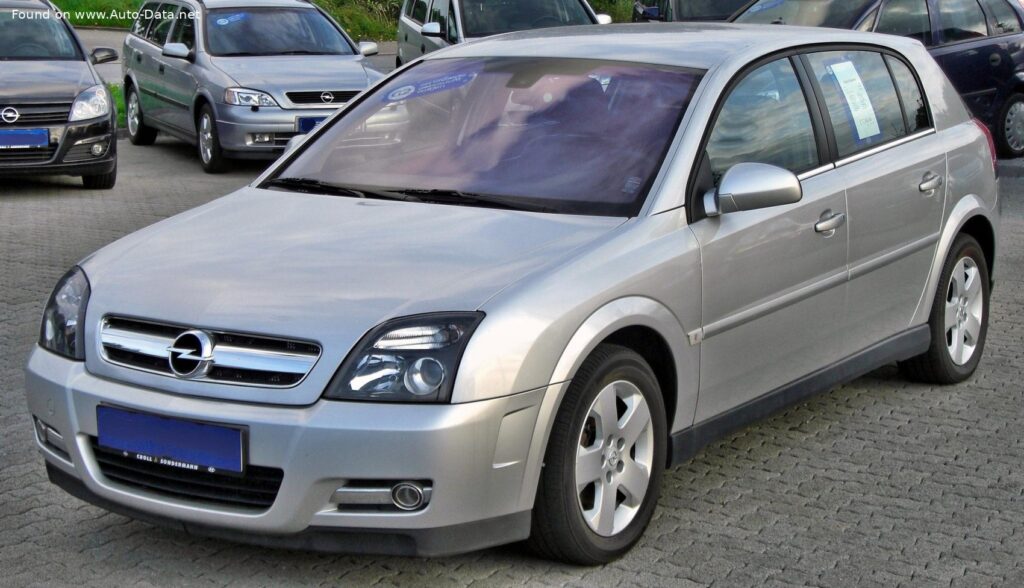
The Opel Signum 2.2 DTI ECOTEC: A European Experiment in Versatility
The Opel Signum 2.2 DTI ECOTEC, produced from May 2003 to November 2004 for this specific variant, represented a distinctive and ambitious venture by German automaker Opel within the European D-segment. Positioned uniquely between a traditional large family sedan and a conventional station wagon, the Signum was designed to offer executive-level comfort and exceptional interior flexibility, leveraging a stretched version of the Vectra C platform. It aimed to carve out a niche for discerning buyers seeking more space and versatility than a standard sedan, without the bulk or image of a full-size wagon. While never officially sold in the United States, the Signum was a significant model for Opel and its British counterpart, Vauxhall, in their home European markets, showcasing innovative design and packaging concepts for the early 2000s.
Engineering and Performance of the Opel Signum 2.2 DTI ECOTEC
At the heart of this particular Opel Signum variant was the 2.2-liter DTI ECOTEC diesel engine, a powerplant designed to deliver a balance of usable power, respectable fuel economy, and lower emissions for its era. The ECOTEC designation, a hallmark of Opel’s engine technology, emphasized efficiency and environmental consciousness. This inline four-cylinder engine, with a displacement of 2171 cubic centimeters (2.2 liters), utilized a common rail direct injection system, a sophisticated technology for diesel engines at the time, coupled with a turbocharger and intercooler to optimize performance and efficiency. It produced a solid 125 horsepower at 3250 rpm, providing ample motivation for the vehicle. More importantly for real-world driving, the engine delivered a robust 280 Newton-meters (206.52 lb.-ft.) of torque across a broad and accessible rev range, from 1500 to 3000 rpm. This meant strong pull from low engine speeds, ideal for relaxed cruising and confident overtaking.
Power was delivered to the front wheels via a five-speed automatic transmission, which emphasized smooth shifts and comfortable driving dynamics rather than outright sportiness. This powertrain combination allowed the Signum 2.2 DTI ECOTEC to accelerate from 0 to 60 mph in a respectable 11.6 seconds, with a maximum speed of 123.03 mph. Fuel economy figures were competitive for its class and time, with a combined NEDC rating of 31.8 to 31.4 US mpg, showcasing the inherent efficiency of its diesel engine. CO2 emissions ranged from 200-203 g/km, adhering to the Euro 3 emission standard prevalent during its production period. The engine’s design, featuring a DOHC valvetrain with four valves per cylinder, contributed to its efficient combustion and performance characteristics.
Design, Features, and Interior Versatility
The Opel Signum’s body style was its most distinctive feature – a five-door hatchback, though its elongated profile often led it to be described as a “lifestyle estate” or a large liftback. Measuring 182.52 inches in length, 70.79 inches in width (80.16 inches including mirrors), and 57.72 inches in height, the Signum possessed a substantial road presence. Its extended 111.42-inch wheelbase, shared with the Vectra C Caravan, was a cornerstone of its design philosophy, providing exceptional interior space, particularly for rear passengers. This long wheelbase was key to its unique selling proposition: offering executive-class rear legroom in a mainstream package.
The interior was configured for five occupants, with a strong emphasis on rear-seat comfort and adaptability. The Signum featured Opel’s “FlexSpace” seating system, which allowed the two outer rear seats to slide, recline, and even fold individually, while the central rear seat could be folded down to form an armrest with integrated storage and cupholders. This modularity was a significant innovation, offering versatility akin to an MPV (multi-purpose vehicle) within a more car-like form factor. Cargo capacity was impressive, ranging from a generous 30.9 cubic feet with the rear seats in place, expanding to a cavernous 49.79 cubic feet with the seats folded down. This made the Signum a highly practical vehicle for both family duties and long-distance travel.
From a chassis perspective, the Signum was equipped with an independent McPherson strut front suspension and an independent multi-link rear suspension, both featuring transverse stabilizers. This setup aimed to provide a comfortable ride quality characteristic of larger European cars, combined with stable handling. Braking duties were handled by ventilated discs at the front and solid discs at the rear, augmented by an Anti-lock Braking System (ABS) for enhanced safety. The electric power steering system, a rack and pinion setup, offered precise control and ease of maneuvering, especially in urban environments, with a minimum turning circle of 39.11 feet. Standard tire sizes included 215/55 R16, with 215/50 R17 available for those seeking a sportier aesthetic.
Technical Specifications: Opel Signum 2.2 DTI ECOTEC (125 Hp) Automatic (2003-2004)
| Category | Specification | US Equivalent / Notes |
|---|---|---|
| General Information | ||
| Brand | Opel | |
| Model | Signum | |
| Generation | Signum | |
| Type (Engine) | 2.2 DTI ECOTEC (125 Hp) Automatic | |
| Production Start | May, 2003 | |
| Production End | November, 2004 | |
| Powertrain Architecture | Internal Combustion engine | |
| Body Type | Hatchback | 5 Doors, 5 Seats |
| Performance Specs | ||
| Fuel Consumption (Urban NEDC) | 10.5-10.6 l/100 km | 22.4 – 22.2 US mpg |
| Fuel Consumption (Extra Urban NEDC) | 5.6-5.7 l/100 km | 42 – 41.3 US mpg |
| Fuel Consumption (Combined NEDC) | 7.4-7.5 l/100 km | 31.8 – 31.4 US mpg |
| CO2 Emissions (NEDC) | 200-203 g/km | |
| Fuel Type | Diesel | |
| Acceleration 0-60 mph | 11.6 sec | |
| Maximum Speed | 198 km/h | 123.03 mph |
| Emission Standard | Euro 3 | |
| Engine Specs | ||
| Power | 125 Hp @ 3250 rpm | |
| Power per liter | 57.6 Hp/l | |
| Torque | 280 Nm @ 1500-3000 rpm | 206.52 lb.-ft. @ 1500-3000 rpm |
| Engine Layout | Front, Transverse | |
| Engine Model/Code | Y22DTR | |
| Engine Displacement | 2171 cm3 | 132.48 cu. in. (2.2 Liters) |
| Number of Cylinders | 4 | Inline configuration |
| Cylinder Bore | 84 mm | 3.31 in. |
| Piston Stroke | 98 mm | 3.86 in. |
| Compression Ratio | 18.5:1 | |
| Valves per Cylinder | 4 | |
| Fuel Injection System | Diesel Commonrail | |
| Engine Aspiration | Turbocharger, Intercooler | |
| Valvetrain | DOHC | |
| Engine Oil Capacity | 5.5 l | 5.81 US qt |
| Coolant Capacity | 7.8 l | 8.24 US qt |
| Space, Volume and Weights | ||
| Trunk Space (Minimum) | 875 l | 30.9 cu. ft. |
| Trunk Space (Maximum) | 1410 l | 49.79 cu. ft. |
| Max. Roof Load | 100 kg | 220.46 lbs. |
| Permitted Trailer Load (with brakes, 8%) | 1800 kg | 3968.32 lbs. |
| Permitted Trailer Load (with brakes, 12%) | 1500 kg | 3306.93 lbs. |
| Permitted Trailer Load (without brakes) | 750 kg | 1653.47 lbs. |
| Dimensions | ||
| Length | 4636 mm | 182.52 in. |
| Width | 1798 mm | 70.79 in. |
| Width (incl. mirrors) | 2036 mm | 80.16 in. |
| Height | 1466 mm | 57.72 in. |
| Wheelbase | 2830 mm | 111.42 in. |
| Front Track | 1536 mm | 60.47 in. |
| Rear Track | 1525 mm | 60.04 in. |
| Minimum Turning Circle | 11.92 m | 39.11 ft. |
| Drivetrain, Brakes and Suspension | ||
| Drivetrain Architecture | Front-wheel drive | Internal Combustion Engine (ICE) drives front wheels |
| Number of Gears/Gearbox Type | 5 gears, automatic transmission | |
| Front Suspension | Independent McPherson, Transverse stabilizer | |
| Rear Suspension | Independent multi-link, Transverse stabilizer | |
| Front Brakes | Ventilated discs | |
| Rear Brakes | Disc | |
| Assisting Systems | ABS (Anti-lock braking system) | |
| Steering Type | Steering rack and pinion | |
| Power Steering | Electric Steering | |
| Tires Size | 215/55 R16; 215/50 R17 | |
| Wheel Rims Size | 6.5J x 16; 7J x 17 |
Legacy and Market Impact of the Opel Signum
The Opel Signum, particularly models like the 2.2 DTI ECOTEC Automatic, holds a unique place in Opel’s history as an innovative, albeit ultimately niche, product. Launched in a segment dominated by traditional sedans and wagons, the Signum attempted to blend the best attributes of both, adding MPV-like interior flexibility. Its extended wheelbase and focus on rear-seat passenger comfort and modularity were genuinely forward-thinking for a mainstream European automaker in the early 2000s.
Despite its technical merits and well-executed interior, the Signum struggled to find widespread market acceptance. Its distinctive “large hatchback” body style, while offering practical advantages, perhaps alienated buyers who preferred the more conventional aesthetics of a sedan or the clear utility of a full wagon. It occupied an awkward space in the market, often considered too expensive for a mainstream Opel and not quite premium enough to challenge established executive cars. Competitors in its primary European market included traditional D-segment stalwarts like the Volkswagen Passat, Ford Mondeo, Renault Laguna, and Peugeot 407, all of which offered more conventional body styles that resonated more strongly with the general public.
The Signum’s reputation today is that of an interesting experiment – a car that was arguably ahead of its time in terms of interior flexibility and packaging but ultimately misunderstood by the market. Its legacy lies in demonstrating Opel’s willingness to innovate and challenge established norms, even if the commercial success was limited. For those who appreciated its unique blend of space, comfort, and diesel efficiency, particularly the 2.2 DTI ECOTEC variant, the Signum offered a compelling alternative to more conventional choices, providing a comfortable and capable long-distance cruiser with exceptional versatility. Its relatively short production run (the Signum model line concluded in 2008) underscores its status as a bold but ultimately niche offering in the competitive European automotive landscape.
