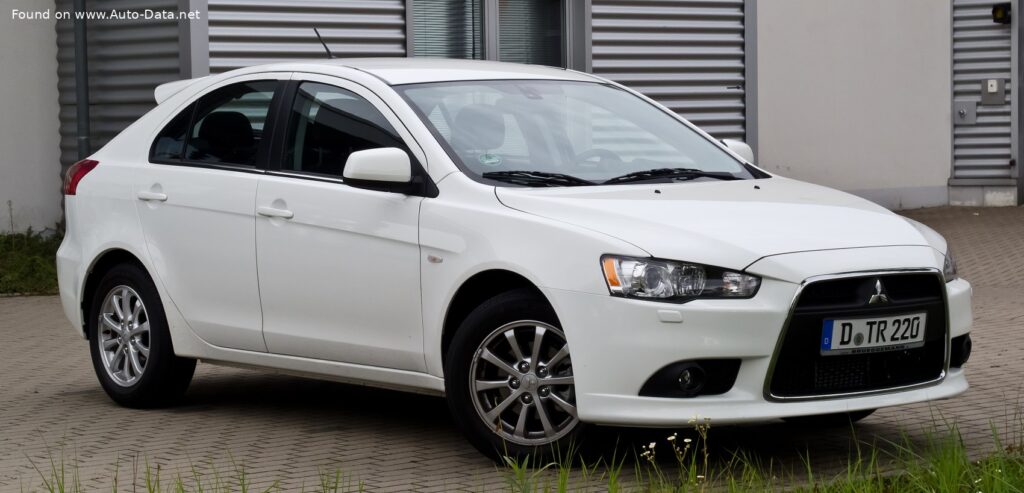
The Mitsubishi Lancer Sportback IX (GS44S) 2.0 DI-D (140 Hp) DPF: A European-Focused Hatchback
The Mitsubishi Lancer Sportback IX (GS44S) 2.0 DI-D (140 Hp) DPF represents a significant offering within the C-segment hatchback market, specifically tailored for European preferences. Produced between June 2008 and May 2010, this model combined the bold, rally-inspired aesthetics of the ninth-generation Lancer sedan with the enhanced practicality of a five-door hatchback body style. Developed during a period when diesel powertrains were highly favored across Europe for their fuel efficiency and robust torque, Mitsubishi strategically opted to integrate a proven 2.0-liter turbocharged diesel engine sourced from Volkswagen. The inclusion of a Diesel Particulate Filter (DPF) was crucial, ensuring compliance with the stringent Euro 4 emissions standards and positioning the Lancer Sportback as a contemporary and environmentally conscious choice for European families and commuters.
History and Development of the Mitsubishi Lancer Sportback IX (GS44S) 2.0 DI-D (140 Hp) DPF
The ninth-generation Mitsubishi Lancer, globally recognized by its CY chassis code, debuted in 2007. It was underpinned by the Mitsubishi GS platform, also known as Project Global, a sophisticated mid-size platform collaboratively engineered by Mitsubishi Motors and the former DaimlerChrysler. This advanced architecture provided the Lancer with substantial improvements in structural rigidity, enhanced safety features, and refined handling dynamics, setting it apart from its predecessors.
While the sedan variant initially launched, Mitsubishi unveiled the five-door hatchback, christened the Lancer Sportback, at the 2008 Paris Motor Show. Its introduction was a direct strategic response to the overwhelming popularity of hatchbacks in the European market, a segment traditionally dominated by established players such as the Volkswagen Golf, Ford Focus, and Opel Astra. Mitsubishi aimed to carve out a distinct niche by offering a vehicle that boasted more aggressive, rally-inspired styling and upheld the brand’s reputation for Japanese reliability and durability.
The pivotal decision to utilize a third-party diesel engine was entirely market-driven. At the time, Mitsubishi’s core expertise resided primarily in gasoline engine development. To rapidly introduce a competitive diesel option without incurring extensive research and development costs, the company forged an agreement with Volkswagen. This partnership allowed Mitsubishi to integrate VW’s highly regarded 2.0-liter TDI Pumpe-Düse (PD) engine, which Mitsubishi subsequently re-badged as DI-D (Direct Injection Diesel). This powertrain proved critical for the Lancer Sportback’s competitive viability and commercial success in European countries where taxation structures and consumer preferences heavily favored diesel-powered vehicles.
Design and Features
Exterior Styling
The Lancer Sportback IX inherited its striking and aggressive front-end design directly from its sedan counterpart. This included the brand’s distinctive “jet fighter” grille, a design motif reportedly inspired by the Mitsubishi F-2 fighter jet, which bestowed the car with a formidable and instantly recognizable road presence. Sharp, angular headlights seamlessly swept back into the fenders, perfectly complementing the sculpted hood and the prominent, assertive front bumper.
From the A-pillar rearward, the Sportback adopted a unique and highly functional design. Its roofline gracefully sloped towards the rear, culminating in a distinctive slanted rear window and an integrated roof spoiler. This clever design created a sleek, coupe-like silhouette, effectively merging sporty aesthetics with the inherent practicality of a hatchback. The rear fascia was completed by a large, wide-opening tailgate, designed to facilitate effortless loading and unloading of cargo. This harmonious blend of sporting visual appeal and functional design was a key selling point, appealing to buyers who desired a practical vehicle that eschewed a utilitarian appearance.
Interior and Practicality
Inside, the cabin of the Lancer Sportback was characterized by a driver-focused and functional layout. The dashboard design was clean and ergonomic, featuring clear instrumentation housed within a deeply hooded binnacle to minimize glare. While critics often noted the material quality as prioritizing durability over premium feel, with a prevalence of hard plastics, the overall fit and finish were robust and well-executed. The vehicle comfortably accommodated five adults, with the rear seats offering commendable legroom and headroom for its class.
The hatchback body style inherently made the Lancer Sportback a highly practical vehicle. The rear tailgate opened to reveal a luggage compartment with a minimum capacity of 344 liters (12.15 cubic feet). While not the absolute largest in its segment, the space was well-shaped and highly usable. A standout feature was the auto-folding rear seat function, which allowed the 60/40 split-folding rear seats to be easily lowered via convenient levers located in the trunk. This expanded the cargo area to a cavernous 1,349 liters (47.64 cubic feet), a significant increase that transformed the vehicle’s utility. This impressive versatility made the Sportback suitable for a wide range of needs, from daily errands to transporting bulky items, thus appealing to active individuals and small families alike.
Powertrain and Performance of the Mitsubishi Lancer Sportback IX (GS44S) 2.0 DI-D (140 Hp) DPF
At the core of this particular Lancer Sportback model was its 2.0-liter diesel engine, a unit renowned for its robust performance and efficiency. This transversely mounted, inline-four engine utilized Volkswagen’s advanced Pumpe-Düse (unit injector) technology, a system celebrated for delivering high injection pressures crucial for highly efficient combustion. Augmented by a turbocharger and an intercooler, the engine generated a healthy 140 horsepower (103 kW) at 4000 rpm.
Of greater significance for real-world driving was its substantial torque output of 310 Nm (228.6 lb-ft), available from a remarkably low 1750 rpm. This abundant low-end pulling power endowed the Lancer Sportback with strong in-gear acceleration, making it feel highly responsive during urban driving and effortlessly capable during highway overtaking maneuvers. The engine’s power was channeled to the front wheels through a precise six-speed manual transmission, carefully geared to leverage the diesel’s potent yet relatively narrow powerband.
Performance for a family hatchback of its era was brisk. The top speed was officially rated at 204 km/h (126.76 mph), and while official 0-100 km/h (0-62 mph) acceleration times varied slightly by market, they typically fell into the sub-10-second range, establishing it as a competitive performer. The engine’s character was known for being somewhat more vocal than later common-rail diesel designs, but it was widely lauded for its robust performance and exceptional fuel efficiency.
Fuel consumption was a major selling point and a significant strength. According to official figures, the Mitsubishi Lancer Sportback IX (GS44S) 2.0 DI-D (140 Hp) DPF achieved an impressive combined economy of 6.3 liters per 100 kilometers (equivalent to approximately 37.3 US mpg). In urban driving conditions, consumption was rated at 8.3 l/100 km (28.3 US mpg), while extra-urban or highway driving saw this figure drop to an outstanding 5.1 l/100 km (46.1 US mpg). Equipped with a 59-liter (15.59 US gallon) fuel tank, this provided the car with a theoretical driving range exceeding 900 kilometers (over 560 miles) on a single tank. The mandatory inclusion of a Diesel Particulate Filter (DPF) was vital for meeting Euro 4 emission standards by effectively trapping and incinerating harmful soot particles from the exhaust gases.
Chassis, Suspension, and Handling
The Lancer Sportback was constructed upon a rigid and meticulously engineered platform, providing a solid foundation for its sophisticated suspension system. At the front, it utilized an independent McPherson strut setup, a widely adopted and effective design for front-wheel-drive vehicles that achieves an excellent balance between ride comfort, handling precision, and packaging efficiency.
The rear suspension featured a more advanced independent multi-link arrangement. This sophisticated setup allowed for superior control over wheel movement, significantly enhancing stability during cornering and improving ride quality over varied road surfaces compared to the simpler torsion-beam axles employed by some rivals. The suspension was tuned to be on the firmer side, a characteristic reflecting the “Sportback” moniker. This calibration resulted in minimal body roll and confident, engaging handling dynamics, though it occasionally translated to a slightly stiffer ride over sharp bumps.
Steering was managed by a hydraulic power-assisted rack-and-pinion system. This type of steering was highly regarded for delivering excellent feedback and a strong, connected feel to the road, attributes often diminished in the later transition to more efficient but less communicative electric power steering systems. The car boasted a tight turning circle of 10 meters (32.81 feet), making it remarkably maneuverable in congested urban environments. Braking performance was assured by ventilated disc brakes at the front and solid discs at the rear, with ABS (Anti-lock Braking System) included as a standard safety feature. Standard wheel and tire packages comprised 205/60 R16 tires on 16-inch rims, with an optional upgrade to 215/45 R18 tires available for enhanced grip and a more aggressive, sportier aesthetic.
Legacy and Market Impact
The Mitsubishi Lancer Sportback IX (GS44S) 2.0 DI-D (140 Hp) DPF was a highly competent and compelling entrant into the intensely competitive European C-segment market. It successfully fused the aggressive, rally-bred styling synonymous with the Lancer family with the everyday usability and inherent versatility of a five-door hatchback. By strategically adopting a proven and highly efficient Volkswagen diesel engine, Mitsubishi delivered a vehicle that effectively met the critical demands of European consumers for strong performance, excellent fuel economy, and abundant low-end torque.
While it may have sometimes been overshadowed by more mainstream and heavily marketed European competitors, its distinctive looks, engaging driving dynamics, and the inherent reliability associated with Japanese engineering made it a unique and often underrated alternative. The Sportback offered a compelling package for those who sought a practical family car that didn’t compromise on style or driving pleasure. Today, it continues to represent a solid choice on the used car market for discerning buyers seeking a practical, economical, and reliable vehicle with a notable dose of sporting character and a unique European-centric powertrain. Its brief but impactful production run left a mark as a practical and spirited option within its class.
Full Technical Specifications
| Category | Specification |
|---|---|
General Information |
|
| Brand | Mitsubishi |
| Model | Lancer |
| Generation | Lancer Sportback IX (GS44S) |
| Engine Type | 2.0 DI-D (140 Hp) DPF |
| Production Start | June 2008 |
| Production End | May 2010 |
| Body Type | Hatchback |
| Seats | 5 |
| Doors | 5 |
Performance Specs |
|
| Fuel Type | Diesel |
| Fuel Consumption (Urban) | 8.3 l/100 km (28.3 US mpg / 34 UK mpg) |
| Fuel Consumption (Extra-Urban) | 5.1 l/100 km (46.1 US mpg / 55.4 UK mpg) |
| Fuel Consumption (Combined) | 6.3 l/100 km (37.3 US mpg / 44.8 UK mpg) |
| Maximum Speed | 204 km/h (126.76 mph) |
| Emission Standard | Euro 4 |
Engine Specs |
|
| Power | 140 Hp @ 4000 rpm |
| Torque | 310 Nm @ 1750 rpm (228.64 lb.-ft.) |
| Engine Layout | Front, Transverse |
| Engine Displacement | 1968 cm³ (120.09 cu. in.) |
| Number of Cylinders | 4 |
| Engine Configuration | Inline |
| Cylinder Bore | 81 mm (3.19 in.) |
| Piston Stroke | 95.5 mm (3.76 in.) |
| Compression Ratio | 18:1 |
| Valves per Cylinder | 4 |
| Valvetrain | DOHC |
| Fuel System | Diesel Common Rail (Unit Injector Pumpe-Düse) |
| Aspiration | Turbocharger, Intercooler |
| Engine Systems | Diesel Particulate Filter (DPF) |
| Coolant Capacity | 7.5 l (7.93 US qt / 6.6 UK qt) |
| Engine Oil Capacity | 5.3 l (5.6 US qt / 4.66 UK qt) |
Dimensions & Weights |
|
| Length | 4585 mm (180.51 in.) |
| Width | 1760 mm (69.29 in.) |
| Height | 1515 mm (59.65 in.) |
| Wheelbase | 2635 mm (103.74 in.) |
| Front/Rear Track | 1530 mm / 1530 mm (60.24 in.) |
| Turning Circle (Diameter) | 10 m (32.81 ft.) |
| Trunk Space (Min) | 344 l (12.15 cu. ft.) |
| Trunk Space (Max) | 1349 l (47.64 cu. ft.) |
| Fuel Tank Capacity | 59 l (15.59 US gal / 12.98 UK gal) |
Drivetrain & Suspension |
|
| Drivetrain Architecture | Front-wheel drive |
| Front Suspension | Independent, McPherson strut |
| Rear Suspension | Independent, Multi-link |
| Front Brakes | Ventilated Discs |
| Rear Brakes | Disc |
| Assisting Systems | ABS (Anti-lock braking system) |
| Steering Type | Rack and pinion |
| Power Steering | Hydraulic Steering |
| Tire Size | Standard: 205/60 R16; Optional: 215/45 R18 |
| Wheel Rim Size | Standard: 6.5JJ x 16; Optional: 7JJ x 18 |