Ford Orion I (AFD): A European Compact Sedan’s Story
The Ford Orion I (AFD) represents a significant chapter in Ford of Europe’s strategy during the 1980s. Launched in 1983, the Orion was essentially the sedan variant of the highly successful third-generation Ford Escort, designed to appeal to buyers who preferred the more traditional three-box configuration over the prevalent hatchback design. Positioned as a slightly more upscale and conventional alternative to its Escort sibling, the Orion aimed to capture a segment of the market that valued classic sedan styling, a larger, separate trunk, and a more executive appearance. While never officially sold in the United States, the Orion played a crucial role in Ford’s European lineup, providing a direct competitor to popular models like the Volkswagen Jetta and Opel Kadett sedan. This particular iteration, the 1.6 i (105 Hp) model, offered a blend of respectable performance and fuel efficiency for its time, embodying the practical and accessible motoring philosophy that defined Ford’s offerings in the European compact segment.
Engine and Performance of the Ford Orion I (AFD) 1.6 i
Under the hood of the Ford Orion I (AFD) 1.6 i lay a 1.6-liter (1597 cc) inline-four gasoline engine, a staple of Ford’s European powertrain offerings during the mid-1980s. This particular unit, designated as the ‘i’ model, indicated the presence of electronic fuel injection, a relatively advanced feature for a mainstream compact car in 1983. Unlike carbureted versions, fuel injection offered more precise fuel delivery, leading to improved fuel economy, smoother power delivery, and better emissions control, even before stringent regulations became widespread. The engine was naturally aspirated, meaning it relied solely on atmospheric pressure to draw air into its cylinders, without the aid of turbocharging or supercharging.
This 1.6-liter engine produced a healthy 105 horsepower (Hp), a commendable figure for a compact sedan of its era. To put this in context, many base model compacts at the time offered significantly less power, often in the 60-80 Hp range. The 105 Hp output provided the Orion with brisk acceleration and sufficient power for highway cruising, making it a capable performer for both urban commutes and longer journeys across Europe. Torque figures, though not explicitly provided in the raw data, would have been adequate for its weight and intended purpose, likely peaking in the mid-range RPMs, characteristic of a naturally aspirated gasoline engine. This power delivery made the Orion 1.6 i feel lively and responsive, particularly when paired with its likely manual transmission options, which were standard for European compacts. The engine’s design emphasized reliability and ease of maintenance, reflecting Ford’s commitment to producing dependable vehicles for the mass market. Its internal combustion architecture was conventional, featuring an overhead camshaft design, which was a common and proven layout for efficiency and performance in that period.
Design and Features: The Ford Orion I (AFD) Sedan
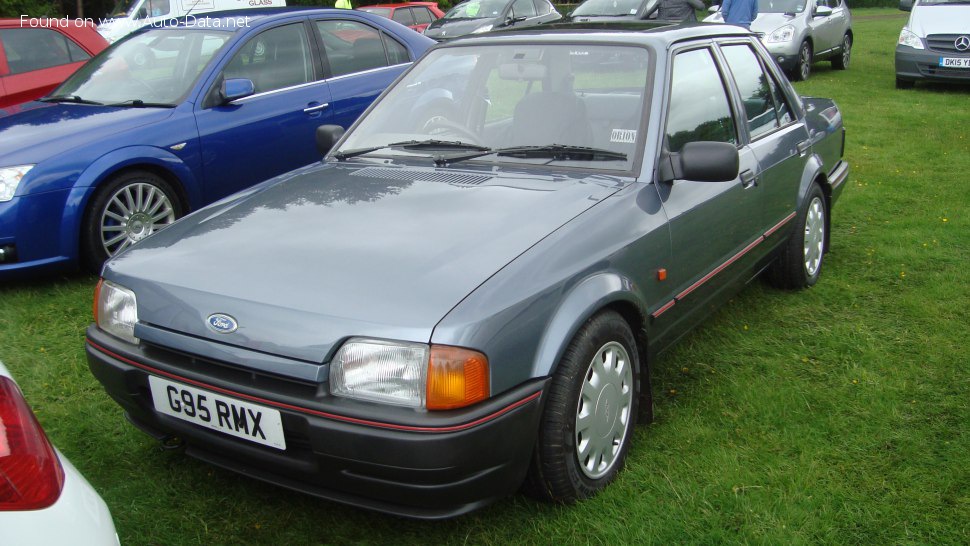
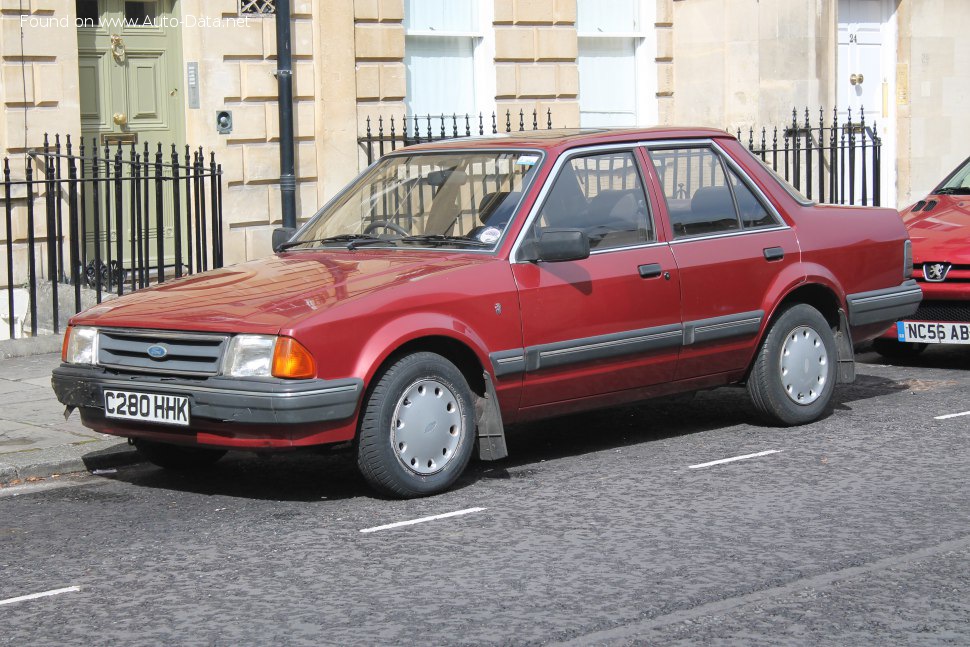
The design of the Ford Orion I (AFD) was a direct derivative of the Escort Mk3, but with a crucial distinction: its sedan body type. While the Escort was revolutionary for Ford with its ‘Erica’ platform and front-wheel-drive layout, its hatchback form factor wasn’t universally appealing. Many European buyers, particularly in markets like Germany, Spain, and even the UK, still preferred the more formal and secure feel of a traditional sedan. The Orion filled this niche perfectly. Its styling was clean, angular, and functional, characteristic of early 1980s automotive design. The front fascia shared much with the Escort, featuring rectangular headlights and a simple grille, but the rear half of the car was entirely distinct.
The addition of a separate trunk not only gave the Orion a more mature and upscale appearance but also provided a significant advantage in terms of luggage capacity and security. Unlike a hatchback where the cargo area is open to the cabin, the Orion’s trunk offered better noise isolation and a more secure space for belongings, out of sight. This was a key selling point for families and business users. Inside, the Orion offered a practical and ergonomic cabin. While materials might have been durable rather than luxurious, the layout was straightforward, with clear instrumentation and accessible controls. Seating for five was standard, and comfort for four adults on longer trips was generally good for a compact car of its time.
Features, typical for a compact sedan in the mid-1980s, would have included a basic heating and ventilation system, possibly an AM/FM radio, and manual windows as standard. Higher trim levels, or optional extras, might have offered power windows, a sunroof, or more advanced stereo systems. Safety features were rudimentary by modern standards, primarily consisting of three-point seatbelts for front occupants and lap belts for rear passengers. However, the Orion benefited from the Escort’s modern unibody construction, which incorporated crumple zones designed to absorb impact energy, a step forward in passive safety for mass-market vehicles. The sedan’s structure also offered a slightly stiffer body shell compared to its hatchback counterpart, potentially contributing to a more refined ride quality.
Technical Specifications: Ford Orion I (AFD) 1.6 i (105 Hp)
| Category | Specification |
|---|---|
| Brand | Ford |
| Model | Orion |
| Generation | Orion I (AFD) |
| Type (Engine) | 1.6 i (105 Hp) |
| Start of Production | 1983 year |
| End of Production | 1986 year |
| Powertrain Architecture | Internal Combustion engine |
| Body type | Sedan |
| Fuel Type | Petrol (Gasoline) |
| Power | 105 Hp |
| Engine aspiration | Naturally aspirated engine |
| Drivetrain | Internal Combustion engine |
Legacy and Market Impact of the Ford Orion I (AFD)
The Ford Orion I (AFD) carved out a significant niche for itself in the highly competitive European compact car market. Its primary mission was to offer a more conventional, three-box alternative to the popular Escort hatchback, and in this, it largely succeeded. The Orion was particularly popular in markets where sedans traditionally held a stronger appeal, such as Spain, Italy, and certain Eastern European countries, as well as being a strong seller in the UK. It was often perceived as a more sophisticated and mature choice than the Escort, appealing to slightly older demographics or those seeking a small family car with a more executive feel.
Competitors for the Orion I were numerous and formidable. Volkswagen offered the Jetta, essentially a sedan version of the Golf, which was a direct rival in terms of concept and market positioning. Opel (Vauxhall in the UK) countered with sedan versions of its Kadett (later Astra), while French manufacturers like Renault had the 9/11 series, and Fiat offered the Regata. The Orion held its own against these rivals by leveraging Ford’s extensive dealer network, reputation for robust engineering, and competitive pricing. The 1.6 i (105 Hp) variant, in particular, offered a compelling package of performance and practicality that was difficult to match for the price.
The Orion’s historical significance lies in its demonstration of Ford’s adaptability to market demands. While the hatchback was becoming increasingly dominant, Ford recognized that a substantial portion of buyers still desired the traditional sedan form. The Orion proved that a well-executed sedan derivative of a successful compact platform could thrive. It helped to solidify Ford’s position as a leader in the European mass market, offering a comprehensive range of body styles to suit diverse customer preferences. Furthermore, the use of electronic fuel injection in a mainstream model like the 1.6 i highlighted Ford’s commitment to adopting more advanced technologies for improved efficiency and driveability, setting a precedent for future models.
Over its production run from 1983 to 1986, the first-generation Orion established a strong foundation for its successors. Its legacy is one of a practical, reliable, and subtly stylish compact sedan that provided a crucial bridge between the Escort’s youthful appeal and the more conservative tastes of a significant segment of the European car-buying public. Though it may not be as widely recognized globally as some of its more iconic Ford siblings, the Orion I (AFD) 1.6 i (105 Hp) remains a testament to Ford of Europe’s strategic acumen and engineering capabilities during a pivotal decade in automotive history.