Seat Ibiza IV ST (facelift 2015): A European Compact Workhorse
The Seat Ibiza IV ST (facelift 2015) represents a significant evolution in SEAT’s popular B-segment offering, specifically targeting the compact station wagon market in Europe. Launched in May 2015 and produced until 2017, this refreshed fourth-generation Ibiza ST (Sport Tourer) aimed to bolster its appeal with updated styling, enhanced technology, and more efficient powertrains. While the SEAT brand is not officially sold in the United States, the Ibiza is a cornerstone model for the Spanish automaker, known for injecting a sportier flair into the Volkswagen Group’s small car platforms. This particular variant, equipped with the 1.4 TDI (75 Hp) engine, epitomized the European emphasis on fuel efficiency and practical versatility, offering a compelling blend of low running costs and ample cargo capacity within a compact footprint.
Positioned as a more dynamic and stylish alternative to its platform siblings like the Volkswagen Polo and Skoda Fabia, the Ibiza ST catered to a demographic seeking the practicality of a station wagon without the larger dimensions or higher costs associated with C-segment vehicles. The 2015 facelift brought a host of improvements, from subtle exterior tweaks to a thoroughly revised interior and updated engine options, ensuring the Ibiza remained competitive in a fiercely contested segment. The 1.4 TDI engine, a three-cylinder turbodiesel, was a testament to SEAT’s commitment to delivering economical and environmentally conscious solutions for daily driving, making the Seat Ibiza IV ST (facelift 2015) a highly relevant choice for European consumers.
Engine and Performance: The Efficient 1.4 TDI
At the heart of this particular Seat Ibiza IV ST (facelift 2015) model was the highly efficient 1.4-liter, three-cylinder TDI (Turbocharged Direct Injection) diesel engine, a unit engineered to deliver impressive fuel economy and robust low-end torque. This powerplant, identified by the CUSA engine code, produced a modest but highly usable 75 horsepower at 3500 rpm. More significantly for its intended purpose, it generated a substantial 154.89 lb.-ft. (210 Nm) of torque, available across a broad rev range from 1750 to 2000 rpm. This torque delivery was crucial for brisk acceleration in urban environments and relaxed cruising on highways, especially considering the vehicle’s compact size.
The engine’s architecture featured an inline three-cylinder configuration with a bore of 3.13 inches (79.5 mm) and a piston stroke of 3.76 inches (95.5 mm), resulting in a displacement of 86.78 cubic inches (1422 cm³). A high compression ratio of 16.2:1, combined with a common rail diesel fuel injection system and a turbocharger with an intercooler, ensured optimal combustion efficiency and power delivery. This advanced setup allowed the Ibiza ST 1.4 TDI to achieve remarkable fuel economy figures, boasting a combined rating of 67.2 US mpg (3.5 liters per 100 km). Furthermore, its CO2 emissions were exceptionally low at 90 g/km, adhering to the stringent Euro 6 emission standard, which made it an attractive option for environmentally conscious buyers in Europe where diesel engines were still prevalent.
Performance-wise, the Ibiza IV ST 1.4 TDI was designed more for economy and practicality than outright speed. It accelerated from 0 to 60 mph in 12.8 seconds and reached a maximum speed of 107.5 mph (173 km/h). Power was transmitted to the front wheels via a smooth-shifting 5-speed manual transmission, a common and reliable setup for vehicles in this class. The vehicle’s weight-to-power ratio stood at 15.1 kg/Hp (66.4 Hp/tonne), while the weight-to-torque ratio was 5.4 kg/Nm (185.8 Nm/tonne), indicating its strong capability in managing loads despite its modest horsepower. The engine’s oil capacity was 4.33 US quarts (4.1 liters), and it featured a particulate filter, a standard component in modern European diesels to reduce harmful emissions.
Design and Features: Practicality Meets Modernity
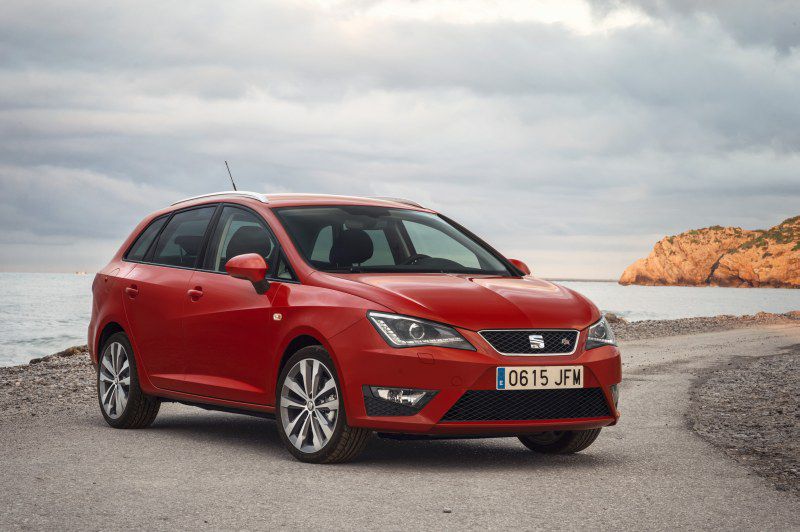
The Seat Ibiza IV ST (facelift 2015) retained the practical and versatile station wagon (estate) body type, distinguished by its five doors and seating for five occupants. The ST designation, for Sport Tourer, underscored SEAT’s effort to blend utility with a dynamic aesthetic. The 2015 facelift introduced several design refinements, including a sharper front fascia with revised headlights and a more pronounced grille, giving the Ibiza a more contemporary and assertive look. The overall dimensions were compact, with a length of 166.77 inches (4236 mm), a width of 66.65 inches (1693 mm), and a height of 56.89 inches (1445 mm), making it highly maneuverable in congested urban environments while still offering a respectable interior volume.
Despite its compact exterior, the Ibiza ST excelled in cargo capacity. It offered a generous minimum trunk space of 15.19 cubic feet (430 liters), which was a significant advantage over its hatchback counterpart and a key selling point for families or individuals requiring extra storage. The wheelbase measured 97.2 inches (2469 mm), contributing to a stable ride, while the front and rear tracks were 57.68 inches (1465 mm) and 57.36 inches (1457 mm), respectively. The minimum turning circle of 32.81 feet (10 meters) further enhanced its agility in tight spaces.
Underneath, the Ibiza featured a well-engineered chassis. The front suspension was an independent McPherson type with coil springs and an anti-roll bar, providing responsive handling and comfortable ride characteristics. The rear suspension utilized a semi-independent setup with coil springs, balancing ride comfort with load-carrying capability. Braking duties were handled by ventilated discs at the front for effective stopping power, complemented by drum brakes at the rear. An Anti-lock Braking System (ABS) was standard, enhancing safety. The vehicle rolled on 15-inch wheel rims fitted with 185/60 R15 tires, offering a good balance of grip and ride comfort. The steering system was a responsive rack and pinion setup, characteristic of SEAT’s focus on a more engaging driving experience.
Technical Specifications: Seat Ibiza IV ST (facelift 2015) 1.4 TDI (75 Hp)
| Category | Specification | US Equivalent / Notes |
|---|---|---|
| General Information | ||
| Brand | Seat | |
| Model | Ibiza | |
| Generation | Ibiza IV ST (facelift 2015) | |
| Type (Engine) | 1.4 TDI (75 Hp) | |
| Start of Production | May, 2015 | |
| End of Production | 2017 | |
| Powertrain Architecture | Internal Combustion Engine | |
| Body Type | Station wagon (estate) | |
| Seats | 5 | |
| Doors | 5 | |
| Performance Specs | ||
| Fuel Consumption (combined) | 3.5 l/100 km | 67.2 US mpg |
| CO2 Emissions | 90 g/km | |
| Fuel Type | Diesel | |
| Acceleration 0 – 60 mph | 12.8 sec | |
| Maximum Speed | 173 km/h | 107.5 mph |
| Emission Standard | Euro 6 | |
| Weight-to-Power Ratio | 15.1 kg/Hp | 66.4 Hp/tonne |
| Weight-to-Torque Ratio | 5.4 kg/Nm | 185.8 Nm/tonne |
| Engine Specs | ||
| Power | 75 Hp @ 3500 rpm | |
| Power per liter | 52.7 Hp/l | |
| Torque | 210 Nm @ 1750-2000 rpm | 154.89 lb.-ft. @ 1750-2000 rpm |
| Engine Layout | Front, Transverse | |
| Engine Model/Code | CUSA | |
| Engine Displacement | 1422 cm³ | 86.78 cu. in. |
| Number of Cylinders | 3 | |
| Engine Configuration | Inline | |
| Cylinder Bore | 79.5 mm | 3.13 in. |
| Piston Stroke | 95.5 mm | 3.76 in. |
| Compression Ratio | 16.2:1 | |
| Valves per Cylinder | 4 | |
| Fuel Injection System | Diesel Commonrail | |
| Engine Aspiration | Turbocharger, Intercooler | |
| Engine Oil Capacity | 4.1 l | 4.33 US qt |
| Coolant Capacity | 8 l | 8.45 US qt |
| Engine Systems | Particulate filter | |
| Space, Volume and Weights | ||
| Kerb Weight | 1130 kg | 2491.22 lbs. |
| Maximum Weight | 1670 kg | 3681.72 lbs. |
| Maximum Load | 540 kg | 1190.5 lbs. |
| Trunk (boot) Space – minimum | 430 l | 15.19 cu. ft. |
| Fuel Tank Capacity | 45 l | 11.89 US gal |
| Dimensions | ||
| Length | 4236 mm | 166.77 in. |
| Width | 1693 mm | 66.65 in. |
| Height | 1445 mm | 56.89 in. |
| Wheelbase | 2469 mm | 97.2 in. |
| Front Track | 1465 mm | 57.68 in. |
| Rear (Back) Track | 1457 mm | 57.36 in. |
| Minimum Turning Circle | 10 m | 32.81 ft. |
| Drivetrain, Brakes and Suspension | ||
| Drivetrain Architecture | Front-wheel drive, Internal Combustion Engine | |
| Drive Wheel | Front wheel drive | |
| Number of Gears | 5 gears, manual transmission | |
| Front Suspension | Independent, McPherson with coil spring and anti-roll bar | |
| Rear Suspension | Semi-independent, coil spring | |
| Front Brakes | Ventilated discs | |
| Rear Brakes | Drum | |
| Assisting Systems | ABS (Anti-lock braking system) | |
| Steering Type | Steering rack and pinion | |
| Tires Size | 185/60 R15 | |
| Wheel Rims Size | 15 inches |
Legacy and Market Impact in Europe
The Seat Ibiza has long been a pivotal model for SEAT, acting as its best-selling vehicle for many years and often defining the brand’s position as the sportier, more youthful arm of the Volkswagen Group. The fourth-generation Ibiza, and particularly its 2015 facelift, played a crucial role in maintaining SEAT’s market share in the highly competitive European B-segment. The ST (Sport Tourer) variant, with its emphasis on practicality, carved out a niche for itself among buyers who needed more space than a traditional hatchback but still desired the compact dimensions and agile handling of a subcompact car.
In its primary European market, the Seat Ibiza IV ST (facelift 2015) 1.4 TDI (75 Hp) competed against a strong lineup of rivals, including the Skoda Fabia Combi (its platform sibling), the Renault Clio Estate, and the Peugeot 208 SW. What set the Ibiza ST apart was its distinctive Spanish design flair, often perceived as more expressive and dynamic than its German or Czech counterparts, combined with SEAT’s reputation for a slightly firmer, more engaging driving experience. The 1.4 TDI variant, in particular, was lauded for its exceptional fuel economy and low running costs, making it an ideal choice for both private owners and fleet operators looking to minimize expenses without sacrificing utility.
The Ibiza ST’s legacy is rooted in its ability to offer a compelling package of style, practicality, and efficiency. For European consumers, where diesel engines historically held a strong position due to their torque and fuel economy, the 1.4 TDI engine was a significant draw. It provided sufficient power for daily commutes and family trips, while its miserly fuel consumption and Euro 6 compliance addressed growing environmental concerns. Although the station wagon body style in the B-segment began to face increasing pressure from the rise of compact SUVs and crossovers towards the end of its production run, the Ibiza ST remained a testament to the enduring appeal of a well-executed, traditional compact estate. It solidified SEAT’s image as a brand capable of delivering stylish, functional, and economically sensible vehicles, leaving a lasting impact on its segment for those who valued utility and efficiency above all else.