As an international automotive expert, I’m pleased to provide a detailed analysis of the Rover 75 Tourer (facelift 2004) 1.8 T (150 Hp) Automatic, a vehicle that represents a unique chapter in British automotive history.
The Rover 75 Tourer (facelift 2004): A British Executive Wagon
The Rover 75, first introduced in 1998, was a mid-size executive car produced by the British manufacturer Rover Group and later by MG Rover. The model under review, the Rover 75 Tourer (facelift 2004) 1.8 T (150 Hp) Automatic, represents the refreshed iteration of the popular station wagon (or “estate” as it’s known in Europe) variant. Launched in 2004, this facelifted model aimed to modernize the 75’s styling and appeal, offering a blend of traditional British luxury and practicality to its primary European markets. Despite its relatively short production run from 2004 to 2005, coinciding with the challenging final years of MG Rover, the 75 Tourer stood out for its distinctive design, comfortable ride, and a valiant effort to compete in a highly competitive segment dominated by German and other European manufacturers. This particular variant, equipped with a turbocharged 1.8-liter engine and an automatic transmission, offered a compelling package for buyers seeking refinement and versatility.
Powertrain and Performance Characteristics
At the heart of the Rover 75 Tourer (facelift 2004) 1.8 T (150 Hp) Automatic lies a robust 1.8-liter (1796 cm3 or 109.6 cu. in.) inline-four petrol engine, designated by the code 18K4G. This engine was a significant offering, featuring a turbocharger and intercooler, which allowed it to produce a respectable 150 horsepower at 5500 rpm. This power output, combined with a healthy 158.58 lb-ft (215 Nm) of torque arriving early at just 2100 rpm, provided the Tourer with a responsive and flexible driving experience. The engine’s DOHC (Double Overhead Camshaft) valvetrain with four valves per cylinder ensured efficient breathing and performance, while its multi-port manifold injection system precisely managed fuel delivery.
Power was delivered to the front wheels via a 5-speed automatic transmission, emphasizing smooth shifts and a relaxed driving demeanor, fitting for its executive segment positioning. While not a performance-oriented vehicle, the 1.8 T automatic variant was capable of accelerating from 0 to 60 mph in 10 seconds and achieving a top speed of 124.27 mph (200 km/h). Fuel economy figures for the combined cycle were rated at 26.4 US mpg (8.9 l/100 km), with urban consumption at 18.4 US mpg (12.8 l/100 km) and extra-urban at 35.6 US mpg (6.6 l/100 km). With CO2 emissions of 214 g/km, the vehicle met the Euro 3 emission standard, reflecting the environmental considerations of its time.
Design Evolution and Practicality
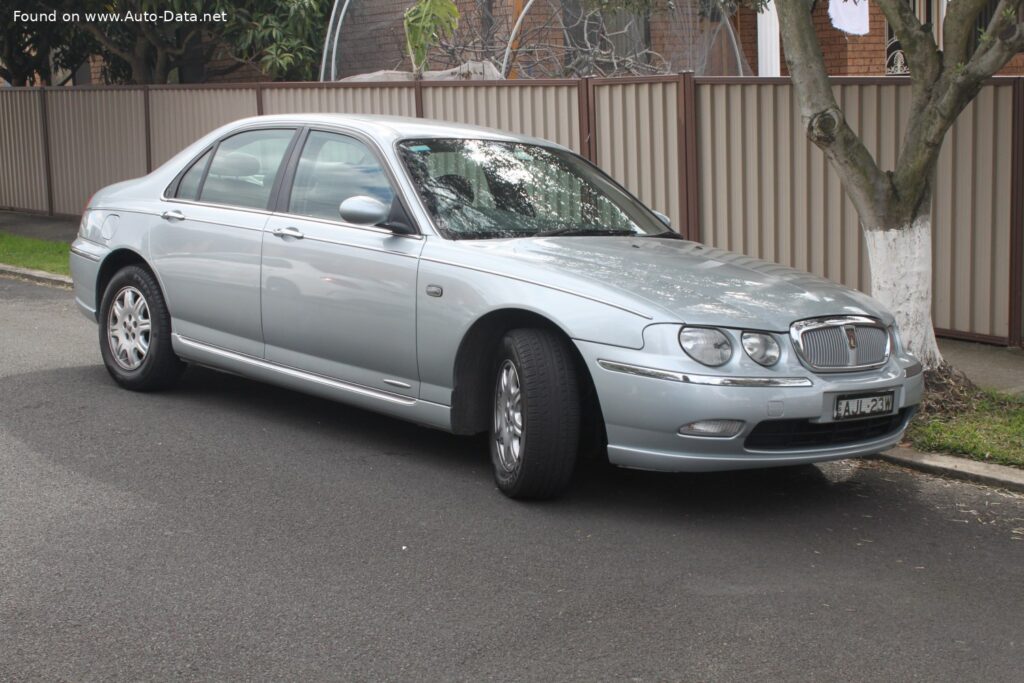
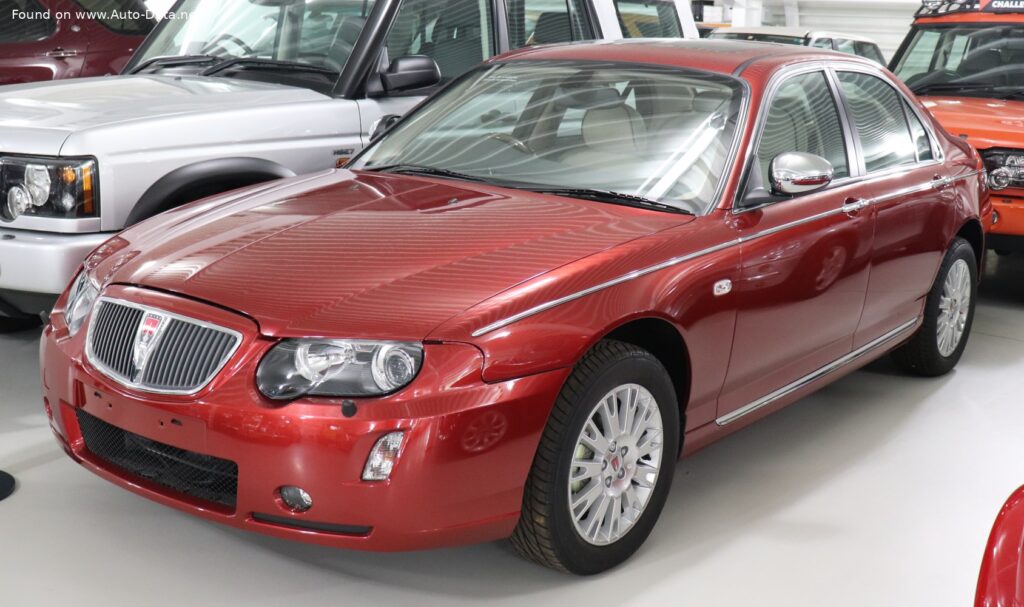
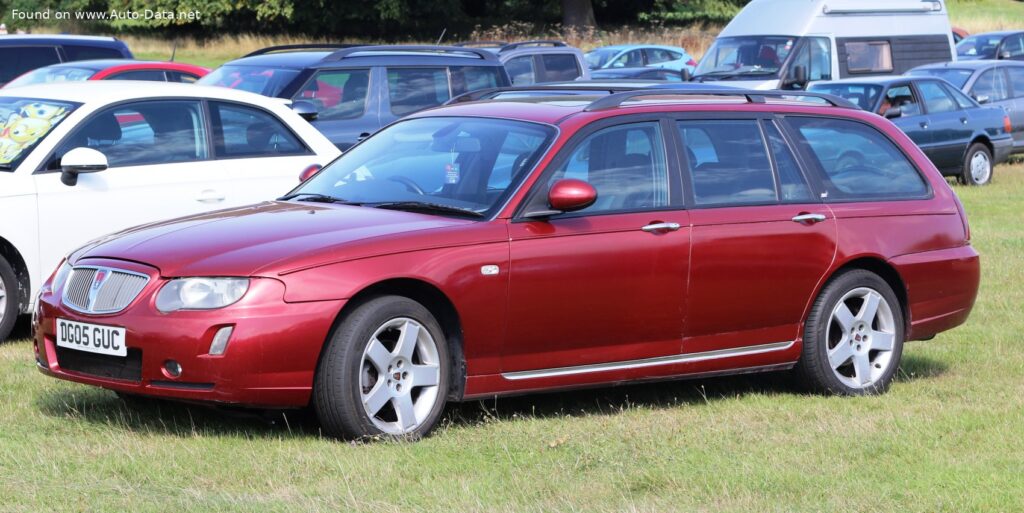
The 2004 facelift brought subtle yet effective changes to the Rover 75’s exterior, primarily focusing on updated headlights, grille, and bumpers to give it a more contemporary appearance without losing its distinctive retro-futuristic charm. The Tourer body style, a five-door station wagon, was central to its appeal, offering significantly enhanced practicality over the sedan. With a length of 188.58 inches (4790 mm) and a width of 70 inches (1778 mm), the 75 Tourer commanded a presence on the road, while its 108.11-inch (2746 mm) wheelbase contributed to a stable and comfortable ride. The vehicle’s turning circle of 37.17 feet (11.33 m) provided reasonable maneuverability for its size.
Inside, the Rover 75 Tourer was designed to accommodate five occupants in comfort. The station wagon configuration provided ample cargo space, with a minimum trunk volume of 14.13 cubic feet (400 liters), expanding significantly to 43.15 cubic feet (1222 liters) with the rear seats folded down. This made it a highly versatile vehicle for families and those requiring substantial hauling capacity. Standard features included hydraulic power steering, front ventilated disc brakes, and rear disc brakes, complemented by an Anti-lock Braking System (ABS) for enhanced safety. The suspension system featured an independent McPherson setup with coil springs and an anti-roll bar at the front, paired with an independent multi-link spring suspension with a stabilizer at the rear, contributing to the car’s renowned ride comfort and composed handling. Various tire and wheel rim sizes were available, ranging from 15-inch to 16-inch options, allowing for a degree of customization in ride and aesthetics.
Technical Deep Dive: Specifications
Below are the detailed technical specifications for the Rover 75 Tourer (facelift 2004) 1.8 T (150 Hp) Automatic:
| Category | Specification | Value |
|---|---|---|
| General Information | ||
| Brand | Rover | |
| Model | 75 | |
| Generation | 75 Tourer (facelift 2004) | |
| Type (Engine) | 1.8 T (150 Hp) Automatic | |
| Start of Production | 2004 year | |
| End of Production | 2005 year | |
| Powertrain Architecture | Internal Combustion engine | |
| Body type | Station wagon (estate) | |
| Seats | 5 | |
| Doors | 5 | |
| Performance Specifications | ||
| Fuel consumption (economy) – urban | 12.8 l/100 km (18.4 US mpg) | |
| Fuel consumption (economy) – extra urban | 6.6 l/100 km (35.6 US mpg) | |
| Fuel consumption (economy) – combined | 8.9 l/100 km (26.4 US mpg) | |
| CO2 emissions | 214 g/km | |
| Fuel Type | Petrol (Gasoline) | |
| Acceleration 0 – 60 mph | 10 sec | |
| Maximum speed | 124.27 mph (200 km/h) | |
| Emission standard | Euro 3 | |
| Weight-to-power ratio | 10.5 kg/Hp (95.5 Hp/tonne) | |
| Weight-to-torque ratio | 7.3 kg/Nm (136.9 Nm/tonne) | |
| Engine Specifications | ||
| Power | 150 Hp @ 5500 rpm | |
| Power per liter | 83.5 Hp/l | |
| Torque | 158.58 lb.-ft. (215 Nm) @ 2100 rpm | |
| Engine layout | Front, Transverse | |
| Engine Model/Code | 18K4G | |
| Engine displacement | 1.8 liters (1796 cm3 / 109.6 cu. in.) | |
| Number of cylinders | 4 | |
| Engine configuration | Inline | |
| Cylinder Bore | 3.15 in. (80 mm) | |
| Piston Stroke | 3.52 in. (89.3 mm) | |
| Compression ratio | 9.2:1 | |
| Number of valves per cylinder | 4 | |
| Fuel injection system | Multi-port manifold injection | |
| Engine aspiration | Turbocharger, Intercooler | |
| Valvetrain | DOHC | |
| Engine oil capacity | 4.76 US qt (4.5 l) | |
| Coolant capacity | 6.55 US qt (6.2 l) | |
| Space, Volume and Weights | ||
| Kerb Weight | 3461.26 – 3692.74 lbs. (1570-1675 kg) | |
| Max. weight (GVWR) | 4607.66 lbs. (2090 kg) | |
| Max load | 914.92 – 1146.4 lbs. (415-520 kg) | |
| Trunk (boot) space – minimum | 14.13 cu. ft. (400 l) | |
| Trunk (boot) space – maximum | 43.15 cu. ft. (1222 l) | |
| Fuel tank capacity | 17.17 US gal (65 l) | |
| Max. roof load | 220.46 lbs. (100 kg) | |
| Permitted trailer load with brakes (12%) | 3527.4 lbs. (1600 kg) | |
| Permitted trailer load without brakes | 1653.47 lbs. (750 kg) | |
| Permitted towbar download | 220.46 lbs. (100 kg) | |
| Dimensions | ||
| Length | 188.58 in. (4790 mm) | |
| Width | 70 in. (1778 mm) | |
| Width including mirrors | 77.56 in. (1970 mm) | |
| Wheelbase | 108.11 in. (2746 mm) | |
| Front track | 59.49 in. (1511 mm) | |
| Rear (Back) track | 59.21 in. (1504 mm) | |
| Minimum turning circle (turning diameter) | 37.17 ft. (11.33 m) | |
| Drivetrain, Brakes and Suspension | ||
| Drivetrain Architecture | Front wheel drive, Internal Combustion engine | |
| Drive wheel | Front wheel drive | |
| Number of gears and type of gearbox | 5 gears, automatic transmission | |
| Front suspension | Independent, type McPherson with coil spring and anti-roll bar | |
| Rear suspension | Independent multi-link spring suspension with stabilizer | |
| Front brakes | Ventilated discs | |
| Rear brakes | Disc | |
| Assisting systems | ABS (Anti-lock braking system) | |
| Steering type | Steering rack and pinion | |
| Power steering | Hydraulic Steering | |
| Tires size | 195/65 R15; 205/60 R15; 215/55 R16 | |
| Wheel rims size | 6J x 15; 6.5J x 16 | |
Legacy and Market Impact in Europe
The Rover 75 Tourer, particularly the facelifted 2004 model, holds a unique place in European automotive history, especially as one of the last vehicles produced by the original Rover company. It was never officially sold in the United States, making its impact primarily felt across the UK and continental Europe. The 75 was generally well-regarded for its distinctive “retro” styling, which evoked classic British luxury cars of the past, combined with a surprisingly refined and comfortable ride quality that often surpassed its price point. Its interior was praised for its quality materials and traditional ambiance, distinguishing it from the more clinically modern designs of its German rivals.
In its primary markets, the Rover 75 Tourer competed against a diverse array of mid-size executive station wagons. Key competitors included established players like the Volkswagen Passat Variant, Ford Mondeo Estate, Opel/Vauxhall Vectra Estate, and to some extent, entry-level premium offerings like the BMW 3 Series Touring and Audi A4 Avant. While the Rover 75 often struggled against the brand prestige and perceived reliability of its German counterparts, it carved out a niche for buyers who valued comfort, traditional styling, and a touch of British eccentricity. The 1.8 T engine, in particular, offered a good balance of performance and efficiency, making it a sensible choice for many.
However, the 75 Tourer’s legacy is inextricably linked to the ultimate collapse of MG Rover in 2005. Despite its merits, the car faced an uphill battle against the backdrop of its manufacturer’s chronic financial instability and an aging brand image. The facelift in 2004 was a last-ditch effort to keep the model competitive, but it came too late to reverse the company’s fortunes. Today, the Rover 75 Tourer is appreciated by enthusiasts for its comfortable ride, distinctive character, and as a poignant reminder of the final chapter of a once-great British marque. It remains a testament to the engineering and design talent that existed within Rover, even in its twilight years, offering a compelling blend of practicality and old-world charm that continues to appeal to a dedicated following.